1. Is the Hoist Motor Single-Speed, Dual-Speed, or Variable Frequency Controlled?
How to Precisely Control Lifting Speed for Delicate and Fragile Loads**
In modern industrial material handling, lifting is no longer a simple matter of moving heavy objects from point A to point B. As manufacturing precision increases and product value rises, the ability to control lifting speed accurately and smoothly has become a decisive factor in equipment selection. This is especially true when handling delicate, fragile, or high-value loads, where sudden acceleration, vibration, or impact can lead to costly damage.
As one of the experienced electric hoist manufacturers and hoist manufacturers and suppliers, Hangzhou Apollo Lifting Equipment Co., Ltd. frequently receives a critical technical question from global clients:
Is the hoist motor single-speed, dual-speed, or variable frequency controlled—and how does this affect precise lifting operations?
This article provides a comprehensive technical guide to hoist motor speed types, their performance characteristics, and best practices for achieving precise, safe lifting of sensitive materials.
1.1 Why Lifting Speed Control Matters in Modern Industry
In traditional lifting applications, speed was often secondary to load capacity. Today, however, industries such as precision manufacturing, warehousing, clean energy, electronics, and mining require controlled motion rather than raw power.
Uncontrolled lifting speed may result in:
- Load swing and instability
- Sudden shock loads on mechanical components
- Damage to fragile products
- Reduced equipment lifespan
As a provider of heavy lifting solutions, Hangzhou Apollo emphasizes that lifting speed control is not only a comfort feature—it is a core safety and quality requirement.
2. Key Motor Speed Configurations in Electric Hoists
Electric hoists can be classified into three main motor speed types. Understanding these configurations is essential when selecting equipment from reliable electric hoist suppliers or crane hoist manufacturers.
2.1 Single-Speed Hoist Motors
2.1.1 Technical Characteristics
A single-speed motor operates at a fixed rotational speed determined by its design and power frequency. The hoist lifts and lowers loads at one constant speed once activated.
Key features include:
- Simple motor structure
- Basic control system
- Lower initial cost
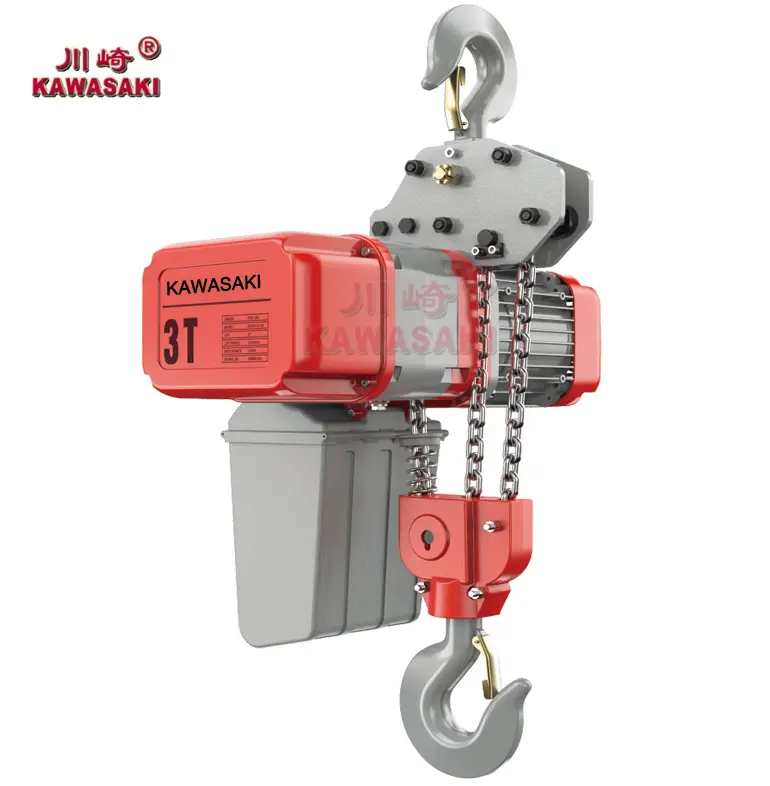
Single-speed designs are still common among entry-level electric chain hoist models and basic lifting systems.
2.1.2 Limitations for Precision Lifting
While suitable for robust loads, single-speed hoists present challenges when handling fragile items:
- Abrupt start and stop
- No fine speed adjustment
- Increased risk of load shock
For applications requiring careful placement, single-speed hoists are generally not recommended.
2.2 Dual-Speed Hoist Motors
2.2.1 How Dual-Speed Systems Work
Dual-speed hoists provide two predefined lifting speeds—typically:
- A high speed for rapid positioning
- A low speed for precise handling
This is achieved through:
- Dual-winding motors
- Pole-changing motors
- Electrical switching systems
Many chain hoist manufacturers and wire rope hoist suppliers offer dual-speed configurations as a practical upgrade over single-speed systems.
2.2.2 Advantages for Delicate Load Handling
Dual-speed hoists offer:
- Better control during final positioning
- Reduced impact during load engagement
- Improved operational flexibility
However, speed selection remains step-based rather than continuous, which limits ultra-fine control.
2.3 Variable Frequency Drive (VFD) Hoist Motors
2.3.1 Principle of Frequency-Controlled Lifting
Variable frequency controlled hoists use a VFD (Variable Frequency Drive) to regulate motor speed by adjusting input frequency and voltage. This allows stepless, continuous speed control.
Among modern electric wire rope hoist manufacturers, VFD technology is now widely adopted for high-end applications.
2.3.2 Benefits for Precision and Safety
Frequency-controlled hoists provide:
- Smooth acceleration and deceleration
- Precise low-speed positioning
- Reduced mechanical wear
- Enhanced load stability
For delicate or high-value loads, VFD-controlled hoists are considered the optimal solution.
3. Comparative Analysis of Hoist Speed Types
| Feature | Single-Speed | Dual-Speed | VFD-Controlled |
|---|---|---|---|
| Speed Flexibility | Fixed | Two-step | Stepless |
| Start/Stop Smoothness | Low | Medium | High |
| Precision Handling | Poor | Moderate | Excellent |
| Equipment Stress | High | Medium | Low |
| Suitable for Fragile Loads | No | Limited | Yes |
As experienced hoist manufacturers and suppliers, Hangzhou Apollo recommends selecting speed type based on load sensitivity, positioning accuracy, and duty cycle.
4. How to Precisely Control Lifting Speed for Fragile Loads
Speed control is not achieved by the motor alone. It requires an integrated system approach.
4.1 Soft Start and Soft Stop Technology
Soft start and stop functions gradually ramp motor speed:
- Eliminates sudden jerks
- Prevents load shock
- Reduces swing
VFD-equipped electric chain hoist systems inherently support programmable acceleration curves.
4.2 Load Monitoring and Torque Control
Advanced hoists incorporate:
- Load sensors
- Torque feedback loops
These systems adjust speed automatically when:
- Load weight changes
- Resistance increases
- Sudden imbalance occurs
This is critical in industries using heavy lifting solutions with mixed load profiles.
4.3 Precision Control Interfaces
Modern hoists may include:
- Variable-speed pendant controls

- Remote controllers with proportional input
- PLC or automation system integration
This allows operators to fine-tune lifting speed in real time, especially in automated warehouse overhead crane and industrial lifting crane systems.
5. Best Practices for Handling Delicate and Fragile Loads
Based on Apollo’s project experience as one of the trusted electric hoist manufacturers, the following best practices are recommended:
5.1 Select the Right Hoist Type
- Prefer VFD-controlled hoists for fragile loads
- Match hoist capacity closely to load weight
- Avoid oversized systems that reduce control sensitivity
5.2 Optimize Mechanical Components
- Use precision gearboxes
- Ensure high-quality wire ropes or load chains
- Maintain proper lubrication and alignment
Reliable wire rope hoist suppliers and chain hoist manufacturers prioritize component quality for this reason.
5.3 Operator Training and Procedures
Even the best equipment requires:
- Proper operator training
- Defined lifting procedures
- Controlled positioning protocols
Technology and human factors must work together.
6. Application Scenarios Requiring Precise Speed Control
Precise speed control is essential in:
- Precision manufacturing lines
- Electronics and semiconductor handling
- Glass, ceramics, and composite materials
- Mining maintenance operations
- Automated warehouses
In such environments, frequency-controlled hoists supplied by professional crane hoist manufacturers significantly reduce operational risk.
7. Future Trends in Hoist Speed Control Technology
The next generation of hoisting equipment will integrate:
- Smart sensors and IoT monitoring
- AI-assisted motion control
- Energy-efficient regenerative drives
- Predictive maintenance systems
As forward-looking electric hoist suppliers, Hangzhou Apollo continuously invests in these technologies to support global clients.
8. Conclusion
Electric hoist motors are available in single-speed, dual-speed, and variable frequency-controlled configurations, each serving different operational needs. However, when the application involves delicate, fragile, or high-value loads, precise speed control becomes non-negotiable.
Among all options, VFD-controlled electric chain hoists and wire rope hoists provide the highest level of precision, safety, and operational stability. By combining advanced motor control, intelligent feedback systems, and robust mechanical design, modern hoists can meet the most demanding industrial requirements.
As one of the experienced hoist manufacturers and suppliers, Hangzhou Apollo Lifting Equipment Co., Ltd. is committed to delivering reliable, customized, and technologically advanced heavy lifting solutions—helping customers worldwide lift not just heavier, but smarter and safer.