In the demanding world of industrial material handling, selecting the right lifting equipment is a critical decision that impacts productivity, safety, and total cost of ownership. For procurement managers, plant engineers, and facility operators, the choice often narrows down to two primary technologies: the wire rope hoist and the electric chain hoist. While both serve the fundamental purpose of lifting and lowering loads, their design philosophies, performance profiles, and ideal applications differ significantly.
As a leading hoist manufacturer and supplier of integrated heavy lifting solutions, Hangzhou Apollo Lifting Equipment Co., Ltd. is committed to providing not just equipment, but the expertise to select it. This guide offers a detailed, objective comparison to empower you with the knowledge needed to make the optimal choice for your specific operational requirements.
1. Foundational Design and Operating Principles
The core distinction lies in the lifting medium and the mechanism for storing it, which dictates each hoist’s inherent characteristics.
1.1 The Wire Rope Hoist: Engineered for Power and Reach
The wire rope hoist utilizes a multi-strand, high-tensile steel wire rope as its lifting medium. This rope typically features a core (either fibre or steel) that provides flexibility, strength, and resistance to crushing forces. The operating principle involves an electric motor driving a high-ratio gearbox, which rotates a grooved drum. The wire rope winds and unwinds in organized layers onto this drum. A key design implication is that the physical size of the hoist, particularly its length, is directly proportional to the required lift height and rope capacity, as the drum must accommodate all layers of rope.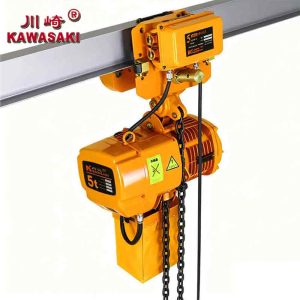
1.2 The Electric Chain Hoist: Compact and Robust
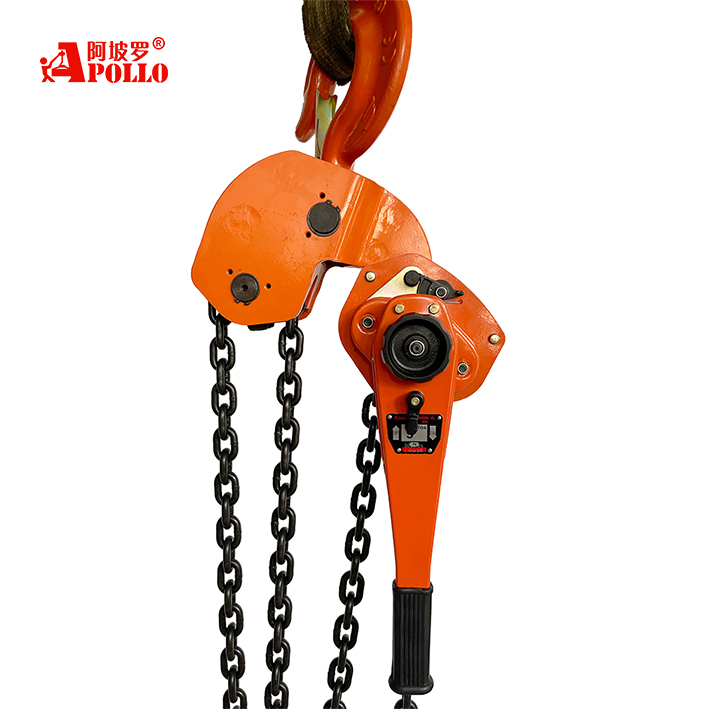
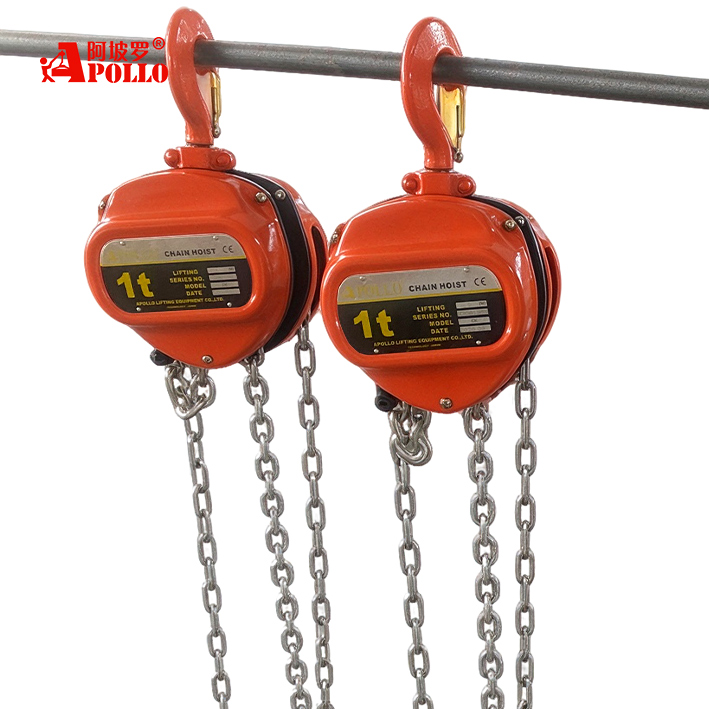
In contrast, the electric chain hoist employs a welded-link load chain, usually manufactured from high-grade alloy steel (such as Grade 80 or 100). Its operation centers on a motor-driven gear system that rotates a lifting sprocket. The teeth of this sprocket engage with individual chain links, pulling the chain in a vertical motion. Excess chain collects freely in a dedicated chain container or bag. This design offers a significant advantage in applications with limited headroom, as the lift height has minimal impact on the size of the hoist body itself.
2. Detailed Performance and Application Comparison
Understanding these fundamental design differences translates into clear, practical performance trade-offs that directly influence application suitability.
| Performance Factor | Wire Rope Hoist | Electric Chain Hoist |
| Capacity Range | Excels in heavy-duty applications. Standard from 1 ton upwards to 50, 100+ tons. Ideal for heavy lifting solutions. | Dominant in low to medium capacities (0.25 to 25 tons). Advanced alloys are expanding this range. |
| Duty Cycle & Intensity | Designed for sustained, intensive use (high FEM classes: 4m, 5m). Perfect for production lines, steel mills, and repetitive operations. | Suited for periodic lifting, maintenance work, and applications with frequent but non-continuous operation. |
| Lift Speed & Control | Generally offers faster lifting speeds for equivalent power. Readily accommodates Variable Frequency Drives (VFD) for precise positioning. | Typically features standard fixed speeds. VFDs are available on higher-end models for improved control. |
| Headroom Requirement | Requires greater minimum headroom due to drum diameter and rope layering. | Superior for low-headroom applications. Minimal hook approach distance maximizes usable lift height. |
| Environmental Suitability | Robust in abrasive/dirty environments (e.g., foundries, mining operations). Easier to inspect for rope wear. | Excellent for corrosive settings (chemical, marine, food & beverage) with stainless steel chains. Cleaner operation in sensitive areas. |
| Maintenance Focus | Maintenance involves rope inspection, drum/sheave monitoring, and gearbox lubrication. Rope replacement is more complex. | Focus on chain lubrication, visual link inspection, and keeping the chain container debris-free. Chain replacement is relatively straightforward. |
2.3 Total Cost of Ownership (TCO) Considerations
While an initial purchase price comparison might favor an electric chain hoist for capacities below 10 tons, a truly informed decision requires a rigorous TCO analysis. This comprehensive view shifts the focus from upfront capital expenditure to the total financial impact over the equipment’s operational lifespan, where the true value of engineering quality is realized.
- Maintenance Costs & Component Lifecycle: A Tale of Two Systems
The maintenance profiles and associated costs differ fundamentally. For a chain hoist, the primary wear components are the load chain and the sprocket. While chain inspection is straightforward, in high-cycle or abrasive environments, chain replacement intervals can be significant. A key cost factor is the entire chain length, which must be replaced as a unit. For a wire rope hoist, the wire rope itself is the main consumable. However, its wear is more gradual and measurable (via broken wire counts), allowing for proactive replacement planning. Crucially, high-quality wire rope often demonstrates a longer service life relative to its cost in severe duty cycles. Furthermore, the drum and gearbox in a well-built wire rope hoist are designed for decades of service, often outlasting multiple rope replacements, whereas a chain hoist’s lower-cost gearmotor may face different long-term wear challenges under equivalent heavy use. - Energy Efficiency & Operational Economics
This is a frequently overlooked but critical TCO component. Wire rope hoists, particularly in medium to high-capacity ranges, often utilize more efficient helical or bevel-helical gearboxes and require less peak current to initiate lifting due to their higher mechanical advantage and lower system inertia (from a compact drum versus a loose chain bundle). Over thousands of cycles annually, this efficiency delta translates into tangible reductions in electricity consumption. For operations with multiple hoists, this accumulated saving can be substantial. Additionally, their suitability for Variable Frequency Drives (VFDs) not only enhances control but can further optimize energy use during partial-load operations. - The Paramount Cost of Downtime and Reliability
The most substantial TCO variable is often not a line item on a maintenance budget, but the cost of unplanned downtime. A hoist failure on a critical production line or in a just-in-time logistics hub can halt operations, incurring costs orders of magnitude higher than the hoist itself. Here, the robustness inherent in a correctly specified hoist pays continuous dividends. A wire rope hoist built for FEM 5m duty in a steel mill is engineered with significant safety and durability margins, resulting in predictable, extended service intervals and far lower probability of catastrophic failure. This inherent reliability, a hallmark of equipment from established hoist manufacturers like Hangzhou Apollo who employ rigorous design standards and quality components, is an insurance policy against disruptive and costly operational stoppages. The long-term value lies not merely in the product’s longevity, but in its sustained availability to generate revenue.
3. Application-Based Selection Guidelines
The optimal choice is always context-dependent. A hoist is not an isolated tool but a core component within a broader operational ecosystem. The following guidelines match hoist type to common industrial scenarios, delving into the specific technical and operational rationales behind each recommendation to facilitate precise specification.
For High-Bay Warehouses & Low Headroom Shops: The electric chain hoist is typically the best choice due to its minimal hook approach (the distance from the beam to the hook), maximizing usable vertical space. This is not merely a minor advantage but a critical determinant of storage density and operational efficiency. In a high-bay setup, every centimeter of vertical space is valuable cubic storage. A wire rope hoist’s drum, requiring space for multiple rope layers, can consume an additional 30-60 cm or more of headroom. This directly translates to forfeited storage tiers or lower ceiling clearance. Furthermore, for modular or warehouse overhead crane systems servicing aisles, the compact and lightweight nature of chain hoists reduces the structural load on the building and allows for more streamlined, cost-effective support structures. The chain’s ability to be fully enclosed also minimizes the risk of contaminating stored goods with grease or wire rope debris.
For Steel Service Centers & Heavy Fabrication: Here, the wire rope hoist is the unequivocal industry standard. The decision is driven by the relentless demands of heavy lifting solutions: extreme duty cycles (often FEM 4m, 5m, or 6m), multi-shift operation, and handling abrasive, hot, or sharp-edged loads. Wire rope hoists offer superior thermal resilience; their drums and ropes can better dissipate heat generated during continuous operation. The faster line speeds (often 8-20 m/min or higher for mid-range capacities) drastically reduce cycle times when moving heavy coils, plates, or castings. Crucially, the wire rope’s interaction with sheaves and drums is more forgiving under misalignment caused by swinging loads, a common occurrence with magnets or industrial lifting clamps. The robust construction aligns with the needs of industrial crane manufacturers designing for decades of severe service.
For Corrosive or Clean Environments: An electric chain hoist with a stainless steel load chain, and often a fully enclosed, wash-down duty motor/gearbox, provides a holistic solution. The entire load-bearing assembly (chain) is inherently corrosion-resistant and easy to sanitize. Unlike wire rope, where moisture and chemicals can penetrate the core, leading to internal corrosion and sudden failure, stainless steel chain’s integrity is visually verifiable. For food processing or pharmaceutical applications, this design eliminates porous materials that can harbor bacteria. In chemical plants or marine settings, the hoist can be specified with additional protections like epoxy paints or specialized seals. This makes the chain hoist not just a tool but a compliant component within stringent hygiene or safety protocols, a key consideration for responsible hoist suppliers.
For General Assembly & Maintenance: The electric chain hoist shines here due to its operational versatility and economic efficiency. These environments typically involve diverse, intermittent lifting tasks—from positioning machinery components to engine hoisting. The lower initial acquisition cost for standard duty models (FEM 1Am to 2m) offers excellent value. Many models are lightweight and can be easily integrated into portable gantries or jib cranes, offering mobility that a comparable wire rope hoist cannot match. The simplicity of chain inspection and lower-cost chain replacement aligns with maintenance departments’ workflows and budgets. For machine shop cranes or material lift applications where precision spotting of sub-ton loads is common, the chain’s minimal stretch can offer an edge in control.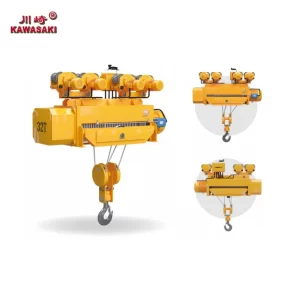
4. The Apollo Advantage: Engineering Expertise and Integrated Solutions
At Hangzhou Apollo Lifting Equipment Co., Ltd., we provide more than just equipment; we deliver certainty through engineering excellence. Our dual expertise as both wire rope hoist suppliers and chain hoist manufacturers allows us to offer unbiased, application-driven recommendations.
4.1 Custom Engineering and System Integration
We understand that standard solutions don’t always fit unique challenges. Our engineering team can adapt designs for special voltage requirements, specific lift speeds, or extreme environmental conditions. Furthermore, as experienced crane hoist manufacturers, we ensure perfect integration of the hoist with overhead crane systems, runway beams, and control interfaces, guaranteeing seamless and safe operation.
4.2 Global Support and Lifecycle Partnership
Our partnership extends beyond the point of sale. With a global network supporting installation, commissioning, preventive maintenance, and readily available spare parts, we ensure your heavy lifting solutions continue to operate at peak performance throughout their entire lifecycle, minimizing downtime and protecting your investment.
5. Conclusion: Making the Informed, Optimal Choice
In summary, the decision between a wire rope and chain hoist is not about identifying a universally superior technology, but about matching the right tool to the specific job.
Selection Summary:
- Choose a Wire Rope Hoistwhen priorities are: Very High Capacity, High/Continuous Duty Cycle, Fast Lifting Speeds, and integration into heavy-duty systems.
- Choose an Electric Chain Hoistwhen priorities are: Low Headroom, Low-Medium Capacity, Corrosive/Clean Environments, and cost-effective performance for periodic use.
By leveraging the technical expertise and comprehensive support of Hangzhou Apollo Lifting Equipment Co., Ltd., you secure not just a piece of lifting equipment, but a reliable, efficient, and safe heavy lifting solution engineered for long-term productivity and value.