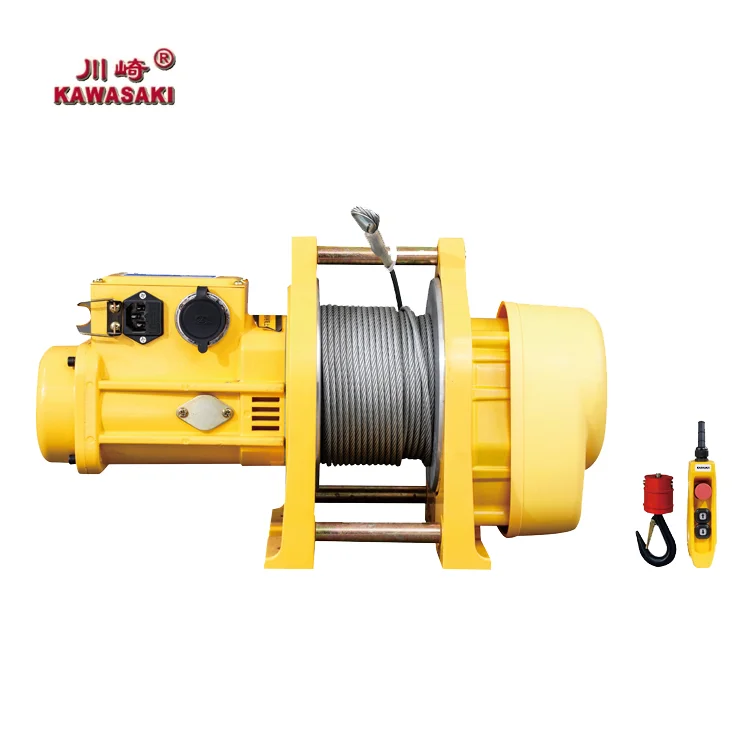
Introduction: The Critical Role of Wire Rope in Hoist Performance and Safety
In the domain of heavy lifting solutions, the electric wire rope hoist is a cornerstone of efficiency and power. However, its robust performance and, more importantly, its fundamental safety, hinge upon a single, crucial component: the wire rope itself. Often referred to as the “lifeline” of the hoist, the wire rope is the direct link between the lifting mechanism and the load. Selecting the incorrect rope or failing to replace it at the right time can lead to reduced equipment lifespan, unexpected downtime, and severe safety hazards. As leading electric wire rope hoist manufacturers and crane hoist manufacturers, Hangzhou Apollo Lifting Equipment Co., Ltd. understands that informed decisions about wire rope are not optional—they are integral to operational integrity. This guide provides a comprehensive, professional framework to help equipment managers, plant engineers, and safety officers navigate the complexities of wire rope selection based on usage, and to establish clear standards and procedures for its replacement.
Part 1: Key Factors Dictating Wire Rope Selection – A Triad of Considerations
Choosing the right wire rope is a systematic engineering decision based on three pillars: material (grade), construction, and diameter. Each factor interacts with the specific usage of your industrial lifting crane.
1. Material and Grade: The Foundation of Strength and Flexibility
Wire rope is primarily made from carbon steel, with its strength denoted by a “grade.” Common grades include:
-
Improved Plow Steel (IPS): A standard, versatile grade offering a good balance of strength, wear resistance, and cost. Suitable for general industrial applications.
-
Extra Improved Plow Steel (EIPS): Provides approximately 15% higher strength than IPS. Ideal for heavy lifting hoist suppliers designing equipment for more demanding cycles or where weight reduction of the rope itself is beneficial.
-
Extra Extra Improved Plow Steel (EEIPS): Offers the highest strength-to-weight ratio, approximately 25% stronger than IPS. Used in extreme applications like deep mining (electric hoist for mining operations) or where very high capacities and lift heights are required.
-
Stainless Steel: Used in environments highly corrosive to carbon steel, such as marine applications, chemical plants, or food processing. It has lower strength than steel grades of the same diameter.
Apollo Insight: As hoist manufacturers, we match the rope grade to the hoist’s designed duty class (FEM, HMI, or other standards). Using a lower-grade rope than specified risks failure, while a higher-grade rope may be less flexible and not optimize cost.
2. Construction: The Blueprint for Performance
Construction refers to how the wires are arranged into strands and how the strands are laid around the core. It defines the rope’s flexibility, crush resistance, and wear characteristics.
-
Strand Pattern: Common patterns are 6×19 (6 strands with 19 wires each) and 6×36. A 6×19 rope has larger outer wires, offering superior abrasion resistance—a key consideration for wire rope hoist suppliers serving industries like construction or scrap handling. A 6×36 rope, with more, finer wires, is more flexible and fatigue-resistant, better suited for applications with small sheaves or frequent bending.
-
Lay Type: “Regular lay” (wires twist in one direction, strands in the opposite) is stable and resistant to rotation. “Lang’s lay” (wires and strands twist in the same direction) is more flexible and wear-resistant but has a tendency to spin. The choice impacts application in various types of crane in industry.
-
Core Type: The core supports the strands. Independent Wire Rope Core (IWRC) is the standard for heavy lifting solutions, offering higher strength, better heat resistance, and support against crushing. Fiber Core (FC) provides greater flexibility but is less strong and susceptible to damage from moisture and heat.
3. Diameter: The Direct Link to Capacity and Compatibility
Diameter is non-negotiable. It must match the hoist manufacturer’s specifications.
-
Capacity: The rope diameter is engineered to provide the necessary safety factor (typically 5:1 or higher for lifting) for the hoist’s rated capacity. Never substitute with a smaller diameter.
-
Compatibility: The rope must properly seat in the drum grooves and interface correctly with the sheaves. An incorrect diameter can cause improper spooling, accelerated wear, and damage to the equipment. Reputable hoist suppliers always specify the exact diameter and tolerance.
Part 2: Matching Selection to Application – A Practical Guide
The theoretical triad must be applied to real-world conditions. Here’s how usage dictates choice:
-
General Manufacturing & Warehousing: For standard warehouse overhead cranes and machine shop cranes, an IPS or EIPS grade, 6×19 IWRC construction provides an excellent balance of durability, abrasion resistance, and value.
-
Severe-Duty & Heavy Cycling: In steel mills, foundries, or with large crane manufacturers’ products in busy ports, prioritize abrasion and heat resistance. EIPS or EEIPS grade with a 6×19 or 6×25 filler wire construction (enhanced crush resistance) with IWRC is typical.
-
High-Lift & Mining Applications: For electric hoists for mining operations or tower cranes, fatigue resistance over small sheaves is critical. EEIPS grade with a more flexible construction like 6×36 or 8×19 IWRC may be specified to handle numerous bend cycles.
-
Corrosive Environments: In marine settings, chemical plants, or food processing, stainless steel ropes are necessary, though their maintenance and inspection regime differs.
Part 3: When to Replace: Standards, Signs, and Safety Protocols
Proactive replacement is a pillar of preventive maintenance. Waiting for a catastrophic failure is not an option.
1. Quantitative Replacement Standards:
-
Visible Broken Wires: Standards (e.g., ISO 4309, ASME B30.7) specify allowable numbers of broken wires in specific rope lengths (e.g., 10 random diameters, one lay length). Generally, 6 or more broken wires in one rope lay, or 3 or more in one strand in a lay, necessitate immediate replacement.
-
Diameter Reduction: Measure with calipers. A reduction of more than 5-7% from nominal diameter (varies by standard) indicates core failure or excessive wear and requires replacement.
-
Corrosion Loss: Severe pitting or corrosion that compromises wire integrity is a definitive criterion.
-
Heat Damage: Any evidence of rope exposure to high heat (discoloration, temper loss) warrants replacement, as tensile strength is irreversibly reduced.
2. Qualitative Signs and Damage:
-
Kinking, Birdcaging, or Crushing: Any distortion of the rope’s geometry is a severe defect.
-
Extreme Wear (“Peaking”) on Outer Wires: Wires become pointed rather than rounded.
-
Damaged or Worn Core (IWRC): If inner wires are breaking, it’s a critical failure point.
-
Reduced Rope Lay Length: Indicates core failure or excessive stretch.
Part 4: Best Practices for Replacement and Considerations
-
Source Genuine or OEM-Equivalent Parts: Always use rope that meets or exceeds the original specifications from your hoist manufacturer. As integrated hoist manufacturers and suppliers, Apollo provides certified replacement ropes engineered for optimal performance and longevity with our equipment.
-
Professional Installation is Key: Replacement involves proper unspooling, tensioning, and securing of rope ends. Incorrect installation can induce twist, damage, or immediate failure. Consider using services from qualified crane parts suppliers or the manufacturer.
-
Pre-Stretching: For some high-precision applications (e.g., certain port crane manufacturers’ equipment), pre-stretched rope minimizes initial elongation and maintains accurate hook positioning.
-
Break-In Period: After replacement, operate the hoist under light loads for several cycles to allow the rope to seat properly into the drum and sheave grooves.
-
Documentation and Traceability: Maintain a log for each hoist, recording rope installation dates, inspections, and replacement history. Use ropes with traceable manufacturing codes.
Part 5: The Future and Apollo’s Commitment to Your Lifeline
The future of wire rope involves advancements in materials, such as higher-grade steels and synthetic core hybrids, and integrated monitoring. Sensor technologies are emerging to provide real-time data on rope tension, broken wires, and wear, moving maintenance from schedule-based to predictive.
At Hangzhou Apollo Lifting Equipment Co., Ltd., our expertise as leading hoist manufacturers encompasses the entire system, including its most vital component. We don’t just sell hoists; we provide enduring heavy lifting solutions backed by strict quality control from raw material to finished product. Our global service network ensures that whether you need technical advice on rope selection for a harsh environment, genuine replacement parts, or professional maintenance support, we are your reliable partner.
Understanding and properly managing your wire rope is the ultimate act of operational diligence. It protects your personnel, your assets, and your productivity. By making informed selections and adhering to rigorous replacement standards, you ensure that the lifeline of your lift remains strong, secure, and reliable.
For expert guidance on wire rope selection, genuine replacement components, and comprehensive support for your electric wire rope hoists, contact the specialists at Hangzhou Apollo Lifting Equipment Co., Ltd.