
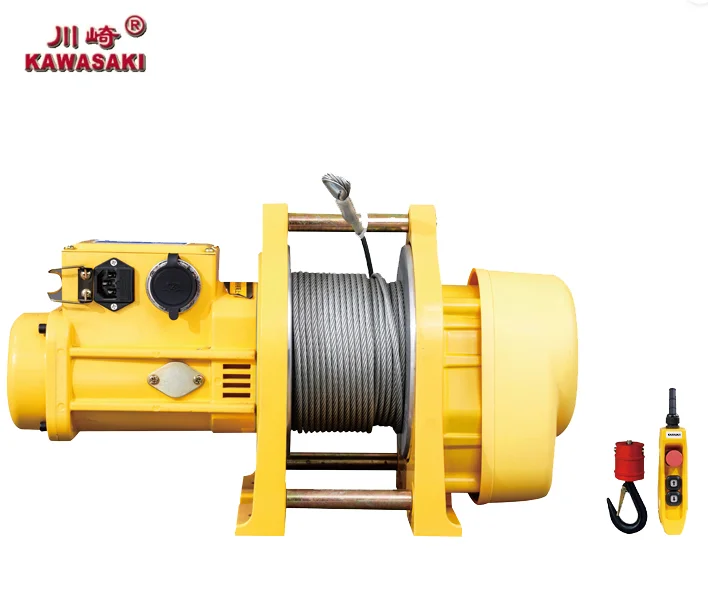
In the demanding environments of manufacturing plants, mining operations, construction sites, and warehouses, the smooth, reliable operation of lifting equipment is non-negotiable. Among the most critical pieces of equipment is the electric wire rope hoist—a powerhouse for heavy lifting solutions. When an electric wire rope hoist begins emitting unusual noises or exhibiting excessive vibration, it is far more than a simple operational annoyance; it is a potent early warning signal. For equipment procurement managers, plant operations heads, and project engineers, ignoring these signs can lead to catastrophic downtime, costly repairs, and, most critically, severe safety hazards.
This guide serves as a deep technical exploration into the root causes, diagnostic methodologies, and resolution strategies for abnormal noise and vibration in electric wire rope hoists. As leading electric wire rope hoist manufacturers and crane hoist manufacturers, Hangzhou Apollo Lifting Equipment Co., Ltd. leverages decades of industry experience to provide this authoritative resource. Our goal is to equip you with the knowledge to identify potential issues early, make informed maintenance decisions, and ensure the longevity and safety of your lifting operations. Understanding these phenomena is key to selecting reliable wire rope hoist suppliers and top hoist manufacturers who prioritize engineered durability.
Part 1: Understanding the Problem – Sources and Implications of Noise & Vibration
Abnormal acoustic and vibrational signatures in hoists typically originate from three primary domains: mechanical, electrical, and load-related. Precise identification is the first step toward an effective solution.
1.1 Mechanical Sources:
-
Wear and Misalignment: This is the most common culprit. Worn or damaged gear teeth in the reduction gearbox will produce a rhythmic grinding or knocking sound, often accompanied by vibration synchronous with motor speed. Similarly, misaligned couplings between the motor and gearbox generate severe vibration and a distinctive “wobbling” noise.
-
Bearing Failure: Faulty bearings in the motor, gearbox, or sheave assemblies emit high-frequency squealing, grinding, or rumbling sounds. Vibration levels will spike, and the bearing housing may overheat.
-
Wire Rope and Sheave Interaction: A damaged, corroded, or improperly spooled wire rope can cause slapping, popping, or screeching noises. Electric hoist manufacturers design sheaves with specific grooves; mismatched rope diameter or a worn, “out-of-round” sheave will disrupt smooth travel, creating vibration and accelerated wear.
-
Brake Issues: A dragging or partially engaged brake can produce a constant grinding hum and overheating. Conversely, a brake that chatters upon engagement causes a violent shuddering vibration and a loud clattering sound.
1.2 Electrical Sources:
-
Motor Problems: Issues within the electric motor itself are frequent sources. Phase loss or imbalance creates a loud, painful hum and causes the motor to vibrate excessively. Damaged rotor bars or eccentric rotors lead to a cyclical vibration and buzzing that varies with load. For electric hoist for mining operations, where power supply can be variable, these issues are particularly prevalent.
-
Variable Frequency Drive (VFD) Interference: Modern hoists often use VFDs for speed control. Improperly configured drive parameters (e.g., carrier frequency) or electromagnetic interference can induce a high-pitched whine in the motor and cause irregular vibration.
1.3 Load and Structural Sources:
-
Imbalanced or Overload Loads: Lifting a load that is not correctly centered or is beyond the hoist’s rated capacity strains all components. This can induce a low-frequency swaying motion and generalized shaking throughout the system.
-
Structural Resonance: The hoist, as part of a larger system like an overhead crane from overhead crane manufacturers, can excite the natural frequency of the supporting beam or framework. This produces a pronounced, often alarming, booming or oscillating vibration that peaks at certain speeds or load weights.
The implications of unchecked noise and vibration are severe: accelerated component fatigue, premature failure of crane parts suppliers-provided components, unsafe working conditions, and unplanned operational stoppages.
Part 2: Key Factors in Diagnosis and Analysis
A systematic approach to diagnosis is crucial. Leading hoist manufacturers and service teams follow a rigorous process.
2.1 The Diagnostic Protocol:
-
Sensory Observation: Precisely document the noise type (grind, hum, screech), vibration point (motor, gearbox, hook), and when it occurs (start-up, running, braking, under load).
-
Instrument-Assisted Analysis: Use vibration analysis tools and acoustic emission sensors to quantify the issue. Spectrum analysis can pinpoint frequencies linked to specific components like bearing defects or gear mesh.
-
Process of Elimination: Isolate variables. Does the issue occur with no load? Does it change with lifting vs. lowering? Is it present across all speed settings?
2.2 The Role of Quality and Design:
Many operational issues are traceable back to initial product quality. This is where the choice of top hoist manufacturers becomes paramount. Factors include:
-
Precision Manufacturing: Gearboxes manufactured to micron-level tolerances inherently run quieter and smoother.
-
Component Selection: The use of high-grade, forged alloy steel for gears and sheaves, and premium-class bearings from trusted crane parts suppliers.
-
Dynamic Balancing: Motors and rotating assemblies that are dynamically balanced minimize inherent vibrational forces.
-
Robust Design: Adequate structural rigidity in the hoist housing to dampen operational forces.
At Hangzhou Apollo, our identity as one of the premier electric hoist manufacturers is built on a foundation of custom design and rigorous quality control. Every component, from the drum to the smallest bearing, is sourced and manufactured to exceed international standards, ensuring our electric chain hoist and wire rope models operate with signature smoothness and reliability.
Part 3: Comparative Analysis of Resolution Pathways
Once diagnosed, the path to resolution depends on the severity and root cause.
3.1 Corrective Maintenance vs. Proactive Replacement:
-
Corrective Maintenance involves repairing the specific faulty component—replacing a worn bearing, realigning a coupling, or dressing a damaged wire rope. This is cost-effective for isolated, non-catastrophic failures.
-
Proactive/Preventive Replacement is advisable when critical, high-wear components are near the end of their service life or when a failure indicates systemic wear. Replacing an entire gear set, rather than a single damaged gear, often ensures longer-term reliability.
3.2 Component Upgrade vs. Complete System Retrofit:
For older hoists, a strategic upgrade can be more economical than a full replacement. Upgrading to a modern, sensor-controlled brake or a premium-grade wire rope can resolve specific noise/vibration issues. However, if the hoist frame, motor, and gearbox are all showing advanced age, a complete retrofit with a new hoist from leading electric wire rope hoist manufacturers offers better long-term value, enhanced safety features, and improved energy efficiency.
3.3 The Custom Engineering Solution:
Standard, off-the-shelf hoists may not always be the answer, especially in specialized applications like ports (requiring port crane manufacturers expertise) or heavy industrial foundries. Abnormal vibrations can sometimes stem from unique operational cycles or environmental factors. This is where hoist manufacturers with strong engineering capabilities, like Hangzhou Apollo, provide invaluable heavy lifting solutions. Our team can analyze the specific application and design customizations—such as special-duty motors, enhanced cooling systems, or proprietary damping mounts—to eliminate the problem at its source.
Part 4: Best Practices for Prevention and Optimal Operation
Prevention is invariably more cost-effective than cure. Adopting these best practices extends equipment life and ensures silent, smooth operation.
4.1 A Rigorous Adherence to Scheduled Maintenance:
Implement and religiously follow a manufacturer-recommended maintenance schedule. This includes:
-
Regular Lubrication: Using the correct grade of lubricant in gearboxes and bearings.
-
Torque Checking: Ensuring all bolts, especially on couplings and motor mounts, are to specification.
-
Wire Rope Inspection: Frequent checks for wear, broken strands, and proper spooling.
-
Brake Adjustment: Verifying brake clearance and lining thickness periodically.
4.2 Operator Training and Load Management:
Ensure all personnel are trained in proper hoist operation, emphasizing smooth acceleration/deceleration and correct load rigging to avoid off-center lifts. Utilize appropriate accessories from reputable lifting clamp manufacturers or magnetic lifter suppliers to secure loads properly.
4.3 Environmental Considerations and System Integration:
Protect hoists from extreme contaminants like abrasive dust or corrosive chemicals. Ensure the supporting structure, whether a warehouse overhead crane or a construction crane gantry, is adequately designed and maintained. The hoist and its supporting crane from industrial crane manufacturers must be viewed as an integrated system.
Part 5: The Future of Hoist Health Monitoring and Industry Trends
The industry is moving towards predictive maintenance and smarter systems. As forward-thinking crane hoist manufacturers, we see the integration of IoT (Internet of Things) sensors as the next frontier. These sensors can continuously monitor vibration spectra, temperature, and acoustic emissions, providing real-time data to predict failures long before they become audible or cause downtime.
Furthermore, the drive for energy efficiency is leading to advanced motor designs and optimized drive electronics that inherently operate more smoothly and quietly. The future belongs to leading crane manufacturers and hoist manufacturers who can seamlessly blend robust mechanical design with intelligent digital monitoring, offering not just equipment, but guaranteed uptime and performance.
Conclusion: Partnering for Performance and Safety
Abnormal noise and vibration in your electric wire rope hoist are clear calls to action. Addressing them requires a blend of technical knowledge, systematic diagnosis, and a commitment to quality—both in ongoing maintenance and in the initial selection of equipment.
Choosing a supplier is not merely a procurement decision; it is a long-term partnership for operational safety and efficiency. Hangzhou Apollo Lifting Equipment Co., Ltd. stands as a partner committed to this philosophy. As experienced electric hoist manufacturers and wire rope hoist suppliers, we combine stringent quality control, global service support, and deep application engineering expertise to deliver heavy lifting solutions that perform reliably and quietly, day in and day out.
We invite you to view this not just as a guide, but as a testament to our dedication to knowledge leadership. When your operations demand silence, smoothness, and supreme reliability, partner with a manufacturer who listens—both to the needs of your business and to the silent language of your machinery.