
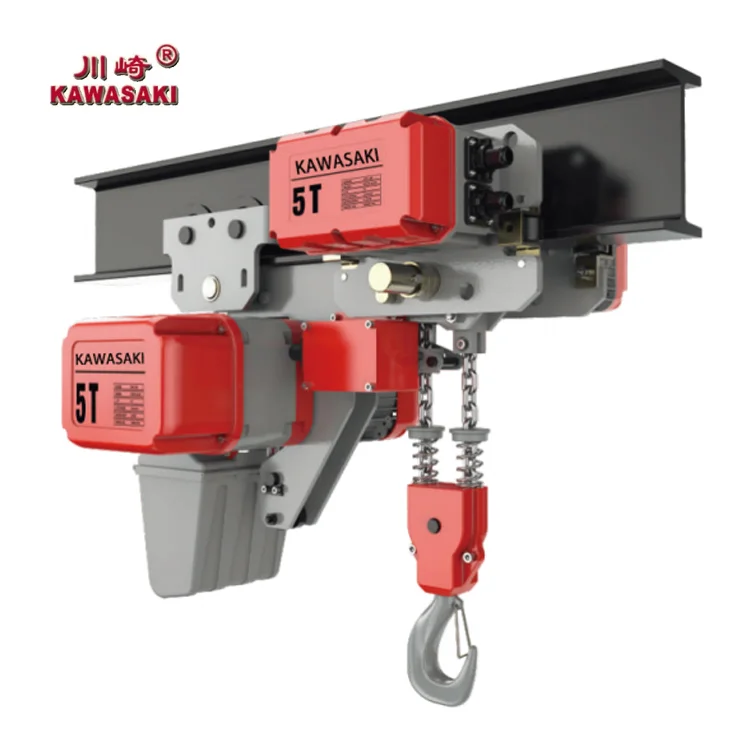
Introduction: The Evolution of Safety in Industrial Lifting
For decades, the conversation surrounding hoist safety has been dominated by two critical, yet conventional, components: the limit switch and the mechanical brake. These are the fundamental guardians against over-travel and load drops, and their reliability is non-negotiable. However, as a leading entity among hoist manufacturers and suppliers, we at Hangzhou Apollo Lifting Equipment Co., Ltd. recognize that the industry is undergoing a paradigm shift.
Today’s industrial environments—from busy machine shop cranes to demanding electric hoist for mining operations—demand more than just mechanical redundancy. Modern safety is predictive, intelligent, and holistic. It is no longer just about stopping a lift when something goes wrong; it is about engineering systems that prevent the error from occurring in the first place.
For procurement managers, plant supervisors, and project engineers, understanding these “deep safety” features is essential for selecting equipment that protects both your workforce and your operational uptime. This guide explores the advanced technologies that separate standard lifting equipment from truly intelligent heavy lifting solutions.
1. The Shift from Passive to Active Safety Systems
Traditional safety mechanisms are largely passive or reactive. A limit switch is struck, and the hoist stops. An overload occurs, and a slip clutch activates. While effective, these systems only engage after a fault condition has been met.
The first layer of “deep safety” involves moving from passive protection to active prevention. This involves:
-
True-Load Monitoring and Dynamic Display: Modern electric wire rope hoists and electric chain hoists are increasingly equipped with load sensors that provide a real-time readout to the operator. However, advanced systems go further by tracking the history of loads. If a hoist begins to show signs of repeated near-overload conditions, the system flags this as a potential process issue, prompting a review of lifting procedures before a mechanical failure occurs.
-
Anti-Sway Technology: In high-speed or precision environments, uncontrolled load sway is a major hazard. Advanced variable frequency drives (VFDs) now incorporate software algorithms that automatically adjust the trolley and bridge speeds to dampen load swing. This isn’t just about efficiency; it is about preventing collisions with personnel or surrounding infrastructure—a critical feature for warehouse overhead crane applications.

2. Intelligent Drive and Control Philosophies
The integration of smart electronics has transformed the role of the hoist motor and controls from simple workhorses to intelligent safety devices.
-
Torque Limiting & Anti-Snag Protection: Unlike a traditional mechanical clutch which can wear out or require calibration, electronic torque limiting monitors the motor’s current in real-time. If the hoist encounters an unexpected snag while lifting or lowering, the system detects the spike in torque and instantly cuts power or reverses slightly. This protects the load, the hoist, and the operator from the consequences of two-blocking or catching a corner on a structure.
-
Positioning with Precision: While upper and lower limit switches are standard, deep safety includes “soft limit” programming. Using an absolute encoder, the hoist control system always knows the exact position of the hook. Operators can program specific “safe zones” where the hoist automatically slows down, preventing high-speed impacts with the end stops. This level of control is why discerning clients seek out top hoist manufacturers who integrate encoder feedback as standard, not as an expensive add-on.
3. Redundancy in the Unseen: Mechanical and Electrical
True safety lies in redundancy—ensuring that if one system fails, another takes over seamlessly. This philosophy is now extending deeper into the hoist’s core components.
-
Dual Braking Systems with Independent Circuits: The standard is one brake. Deep safety involves two brakes operating independently. For example, an electric chain hoist might feature a primary DC disc brake on the motor and a secondary, mechanically actuated load brake on the gearbox output shaft. These systems operate independently, meaning that if one fails, the other holds the load.
-
IP Rating and Component Protection: A deep safety feature often overlooked is the environmental protection of the electrical components. In dusty or wet environments, standard contactors can fail, leading to erratic behavior. Hoist manufacturers committed to safety, like Hangzhou Apollo, prioritize high IP ratings (e.g., IP55 or higher) on the control box and motor. This prevents short circuits and ensures reliable operation, which is a non-negotiable safety requirement for electric hoist for mining operations where dust and particulate are prevalent.
4. The Human Factor: Ergonomic and Interface Safety
Safety isn’t solely about the machine; it’s about the human-machine interface. A tired or frustrated operator is an unsafe operator. Deep safety design considers ergonomics as a critical component.
-
Load-Sensing Pendant Controls: Advanced pendants now offer variable speed control that is proportional to the force applied to the button, giving the operator an unparalleled “feel” for the load. This tactile feedback allows for micro-speed positioning, drastically reducing the risk of jarring movements.
-
Wireless Controls with Haptic Feedback: Modern industrial cranes are increasingly controlled via wireless units. Deep safety here involves secure, encrypted signals to prevent interference, and status indicators (LEDs or vibrations) that confirm the command has been received, eliminating the guesswork for the operator on the shop floor.
5. Why Partner with a Knowledge Leader?
Navigating these advanced safety options can be complex. Selecting the right combination of features for your specific application requires a partner who understands both the technology and the environment. This is where Hangzhou Apollo Lifting Equipment Co., Ltd. distinguishes itself among global crane hoist suppliers.
With years of experience serving industries from logistics to heavy fabrication, we don’t just supply equipment; we engineer heavy lifting solutions. As dedicated electric hoist suppliers and chain hoist manufacturers, our approach integrates:
-
Custom Design: We recognize that a solution for a warehouse crane type may differ vastly from a solution for a loader crane. We tailor safety packages to the specific risk profile of your operation.
-
Rigorous Quality Control: Every hoist, whether an electric wire rope hoist or an industrial manual hoist, undergoes stringent testing to ensure that every safety layer functions in perfect harmony before it leaves our facility.
-
Global Compliance: We adhere to international standards, ensuring that our equipment meets the safety expectations of markets worldwide.
The Future: Predictive Analytics and Connectivity
Looking ahead, the next frontier for deep safety is connectivity. The “smart hoist” will be a node on the Industrial Internet of Things (IIoT). By collecting data on run hours, number of starts/stops, and brake wear, the hoist will be able to predict its own maintenance needs. Imagine a system that alerts you to a worn contactor or a degrading brake three weeks before it becomes a critical failure. This shift from reactive maintenance to predictive maintenance is the ultimate layer of safety and efficiency. Leading overhead crane manufacturers are already integrating these diagnostic capabilities, and at Apollo, we are continuously innovating to bring these technologies to our clients.
Conclusion: A Holistic View of Hoist Safety
When evaluating new lifting equipment, it is vital to look beyond the spec sheet’s basic features. The true measure of safety lies in the intelligent systems working behind the scenes—the software preventing sway, the dual brakes providing redundancy, and the ergonomics reducing operator fatigue.
For project engineers and operations leaders seeking reliable partners, choosing from the myriad of crane manufacturers and hoist suppliers requires a focus on engineering depth. At Hangzhou Apollo Lifting Equipment Co., Ltd., we believe that the best safety device is a well-engineered hoist. Whether you require a robust electric chain hoist for a busy workshop or specialized crane parts suppliers for an existing system, our commitment is to provide lifting solutions that protect your most valuable assets: your people and your productivity.
Contact us today to discuss how our advanced safety features can be integrated into your next material handling project.