
In the demanding world of industrial material handling, operational efficiency is often measured by uptime. A common question from plant managers, procurement officers, and project engineers is straightforward yet critical: Can I run my electric hoist continuously?
The short answer is no—not if you expect it to last. However, the complete answer is far more nuanced. The ability of an electric hoist to operate for extended periods isn’t a matter of luck; it is a function of precise engineering, correct classification, and intelligent application.
At Hangzhou Apollo Lifting Equipment Co., Ltd. , we have spent decades engineering lifting solutions for some of the harshest industrial environments. We understand that treating a hoist as a “run-until-failure” tool leads to catastrophic downtime, safety hazards, and unexpected capital expenditure. This guide will delve into the technical reality behind continuous hoist operation, helping you select the right equipment to maximize productivity without compromising safety or longevity.
1. The Myth of “Continuous Operation”: Understanding Duty Cycle
The most critical concept to grasp is Duty Cycle. Unlike a standard electric motor that might run continuously (like a fan), lifting equipment operates under a classification system defined by international standards (ISO/FEM).
Electric hoists are not rated by “hours of operation” alone but by “Duty Class” (e.g., M3, M4, M5, M6, M7). This classification is determined by the average load and the number of operating hours per day.
-
M3 – M4 (Light to Medium Duty): Suitable for assembly lines, maintenance shops, and light warehousing. These hoists are designed for intermittent use. They typically operate at 25% to 40% duty cycle—meaning in a 10-minute period, they should run for only 2.5 to 4 minutes and rest for the remainder to cool down.
-
M5 – M6 (Heavy Duty): Designed for machine shops, steel service centers, and high-volume manufacturing. These hoists often feature higher-grade motors, thermal protection, and heavy-duty braking systems, allowing for 50% to 60% duty cycles.
-
M7 (Continuous Duty): Reserved for foundries, power plants, and automated production lines where the hoist runs almost constantly. These units require specialized cooling systems and 100% duty cycle capability.
Key Takeaway: If you attempt to run a standard M3-class chain hoist or wire rope hoist on a continuous basis, you will exceed the thermal limits of the motor and the mechanical endurance of the braking system, leading to premature failure.
2. Critical Factors Limiting Continuous Operation
When evaluating heavy lifting solutions for continuous operation, three primary components dictate the hoist’s endurance limit.
A. Thermal Tolerance of the Motor
The motor is the heart of the hoist. During operation, electrical resistance generates heat. Industrial hoist manufacturers and suppliers design motors with specific insulation classes (Class F or H). If the motor cannot dissipate heat faster than it generates it, the insulation breaks down, resulting in a short circuit or burnout.
-
The Risk: Thermal cycling (rapid heating and cooling) causes condensation inside the motor housing, leading to rust and eventual failure if the duty cycle is mismatched.
B. Brake System Reliability
The brake is the most safety-critical component. In a standard electric chain hoist, the brake is often integrated with the motor (conical rotor brake).
-
Continuous use causes the brake friction surfaces to glaze over or wear out rapidly.
-
Overheating can cause “thermal fade,” where the brake fails to hold the load when the motor stops—a dangerous condition known as “slipping.”
C. Mechanical Wear and Lubrication
Mechanical components—gears, bearings, chains, and wire ropes—require lubrication to manage friction.
-
Continuous operation does not allow lubricant to settle back into critical areas.
-
High-frequency starts/stops create shock loads that fatigue gear teeth and stretch chains.
3. Types of Hoists and Their Suitability for Extended Use
Choosing the right configuration is essential for optimizing productivity. Below is an analysis of how different lifting technologies handle prolonged operation.
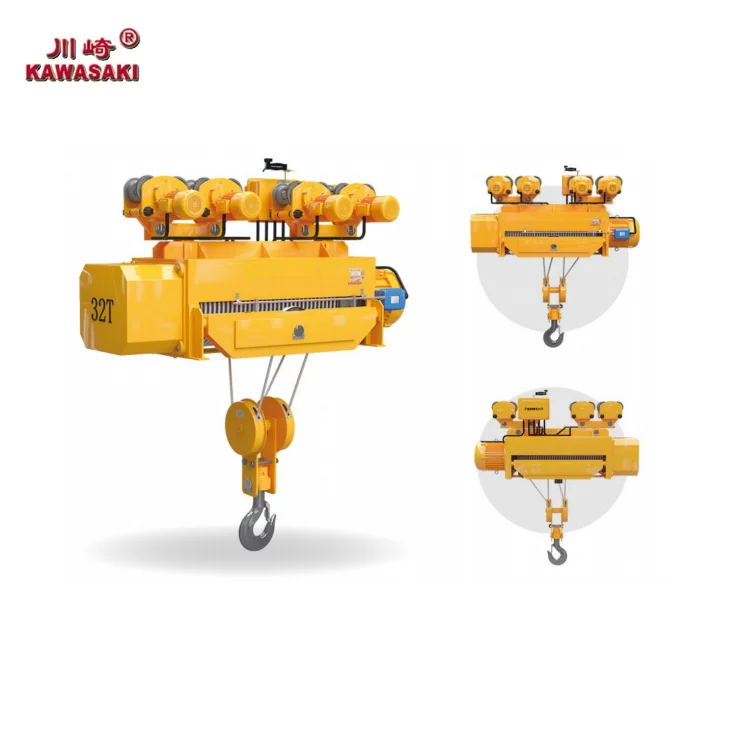
Wire Rope Electric Hoists
Wire rope hoist suppliers often market these as the go-to solution for high-intensity applications.
-
Pros: Wire rope hoists generally feature larger motors and better heat dissipation than similarly sized chain hoists. They are ideal for high-lift heights and high-speed applications.
-
Continuous Use: A wire rope electric hoist with a high duty rating (M5 or above) is often the best choice for applications like crane used in construction or industrial lifting crane environments where cycles per hour are high.
-
Consideration: The wire rope itself is a consumable. In continuous operation, rope fatigue and spooling accuracy become critical. High-quality electric wire rope hoist manufacturers incorporate rope guides and limit switches designed to withstand thousands of cycles without mis-spooling.
Electric Chain Hoists
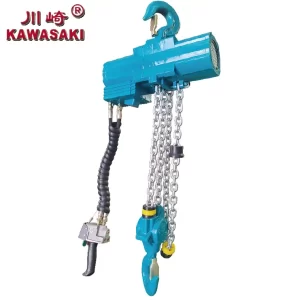
For precision and durability in dirty environments, the electric chain hoist is a robust contender.
-
Pros: Chains are generally more resistant to abrasion and chemical damage than wire ropes. For applications involving machine shop cranes or environments with debris, chain hoists offer superior longevity.
-
Continuous Use: While durable, standard chain hoists have lower thermal capacity than wire rope models. However, heavy lifting hoist suppliers now offer dual-speed and inverter-driven chain hoists that allow for smooth acceleration, reducing the thermal shock on the motor and brake, thereby enabling longer operational windows.
Manual and Industrial Manual Hoists
While not “electric,” manual hoist suppliers often provide complementary solutions for positions where power is unavailable or where precise, infrequent positioning is required.
-
Continuous Use: These are not designed for continuous operation but are invaluable for backup systems or maintenance bays where human fatigue is the limiting factor.
4. Best Practices: How to Maximize Continuous Operation Safely
If your operation requires high-frequency lifting, simply buying a standard electric hoist for mining operations or general warehousing is not enough. You must implement a strategy based on engineering principles.
1. Select by Duty Class, Not Just Capacity
The biggest mistake buyers make is selecting a hoist solely by tonnage. Two 5-ton hoists are not the same. An M3-rated hoist lift manufacturer’s product is designed for sporadic use, while an M6-rated unit is built for production.
-
Recommendation: Calculate your average load (not just maximum load) and your operating cycles per hour. Present these figures to reputable hoist manufacturers and suppliers to ensure the FEM/ISO classification matches your workflow.
2. Implement VFD (Variable Frequency Drive) Controls
Modern leading crane manufacturers are increasingly integrating VFDs into their hoists.
-
Why it matters: VFDs eliminate the mechanical shock of “across-the-line” starting. By ramping the motor speed smoothly, they reduce heat spikes and mechanical stress on the gearbox and brakes.
-
For precision: This is essential for handling sensitive materials. If your operation requires moving expensive molds or fragile components, a VFD allows for millimeter-level positioning without the wear associated with mechanical braking.
3. Adhere to Thermal Protection Protocols
Never bypass thermal overload protectors. These sensors are designed to shut the hoist down before the motor reaches a temperature that would damage insulation or demagnetize the rotor.
-
Best Practice: If a hoist trips on thermal overload, allow it to cool completely before resetting. Repeated resets indicate that the selected hoist is under-specified for the application.
4. Rigorous Maintenance Scheduling
Continuous operation demands continuous maintenance. For heavy lifting solutions, we recommend:
-
Daily: Visual inspection of chains/wire ropes for deformation or corrosion.
-
Monthly: Brake adjustment check. For electric chain hoist suppliers, ensuring the chain is properly lubricated is non-negotiable.
-
Quarterly: Gearbox oil analysis to detect early metal fatigue.
5. Future Trends: Smart Hoists and Predictive Maintenance
The industry is evolving beyond static duty ratings. As a premier hoist manufacturers and suppliers entity, Hangzhou Apollo Lifting Equipment Co., Ltd. is at the forefront of integrating IoT (Internet of Things) capabilities into lifting equipment.
-
Smart Monitoring: Modern overhead crane manufacturers are embedding sensors that track motor temperature, brake wear, and operational cycles in real-time. This data is sent to cloud platforms, alerting maintenance teams before a component fails during continuous operation.
-
Energy Regeneration: For high-frequency applications like warehouse overhead crane systems, new inverter technology allows for energy regeneration, reducing heat buildup and operational costs.
-
Modular Design: The future of crane hoist manufacturers lies in modularity. Instead of replacing an entire hoist when duty requirements increase, manufacturers now offer upgradeable cooling fans, larger brake modules, and reinforced gearboxes to adapt to more continuous operation demands.
6. Why Partner with Hangzhou Apollo Lifting Equipment Co., Ltd.?
Selecting the right equipment for continuous operation is a complex engineering challenge. At Hangzhou Apollo Lifting Equipment Co., Ltd. , we combine decades of global manufacturing experience with a deep commitment to safety and innovation.
Whether you are sourcing electric winch suppliers for a remote site, evaluating top hoist manufacturers for a new factory, or need specialized industrial lifting clamps and magnetic lifter suppliers for a unique application, our expertise ensures you get a system engineered for your specific duty cycle.
We don’t just sell crane parts suppliers components; we deliver heavy lifting solutions backed by:
-
Custom Engineering: Tailored duty cycles, lift heights, and control systems to match your operational intensity.
-
Global Standards Compliance: All our equipment meets stringent international safety standards, ensuring reliability even in crane used in industry settings with 24/7 demands.
-
End-to-End Support: From loader crane manufacturers consulting to after-sales parts supply, we ensure your uptime remains uninterrupted.
Conclusion
So, can an electric hoist run continuously? Yes, but only if it was designed to do so.
Running a light-duty hoist continuously is a recipe for motor burnout, brake failure, and safety violations. To achieve true productivity, you must move beyond asking “what is the lifting capacity?” to asking “what is the duty classification?”
By understanding the thermal dynamics of the motor, the mechanical limits of the drive train, and the importance of smart control systems, you can select a crane hoist that delivers reliable, continuous performance.
For professional guidance on selecting the right types of crane in industry for your specific operational demands, or to explore our extensive range of industrial manual hoists and high-performance electric hoists, contact the experts at Hangzhou Apollo Lifting Equipment Co., Ltd. today. We build lifting solutions that last—as long as you need them to.