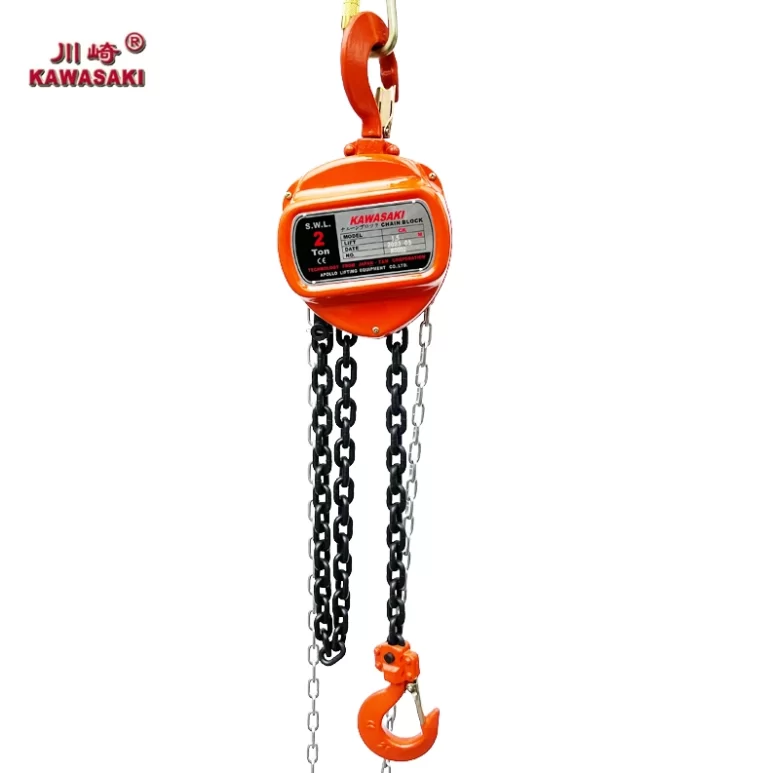
Manual lifting systems still play a critical role in workshops, plants, and job sites where power access is limited or control precision matters more than speed. From chain hoists to beam trolleys, performance depends less on electronics and more on how levers, gears, and pawls work together under load. Understanding these mechanics helps buyers choose the right equipment and helps operators get longer service life from it.
This guide breaks down the core mechanical principles behind manual systems and shows how they are applied in real Kawasaki hoisting products supplied by Apollo Hoist. The focus stays practical, grounded in daily industrial use rather than theory alone.
What Are The Key Mechanical Principles Affecting Manual System Performance?
Before comparing products, it helps to look at what actually makes a manual system work. Small design choices in leverage, gearing, and braking can change how a hoist feels in the hand and how safe it remains over time.
Lever And Pawl Interaction Fundamentals
A short pause is needed here, because many failures start at this point. The lever and pawl system is the heart of load holding. When the operator pulls the hand chain or lever, the pawl locks into the ratchet teeth, stopping reverse movement once force is released.
In high-quality manual hoists, the pawl geometry is shaped to seat fully even when the load shifts slightly. Poor designs rely on shallow engagement, which can slip as components wear. Kawasaki manual hoists use hardened pawls and precise tooth spacing so the load stays where it should, even during stop-and-go lifting.
This detail matters most in slow lifts where the load hangs for long periods, such as equipment positioning or maintenance work.
Gear Ratios And Mechanical Advantage
After the pawl locks the load, gears do the heavy work. Gear ratio defines how much force the operator needs to apply versus how fast the load moves. Higher ratios reduce effort but increase chain travel.
For example, in chain hoists used daily in assembly lines, smoother gear engagement matters more than speed. Kawasaki hoists use heat-treated gears with consistent tooth profiles, reducing the “jerky” feel common in low-grade units. Over time, this also lowers gear edge wear, which directly affects lifting accuracy.
Mechanical advantage is not just about strength. It affects operator fatigue, especially during repetitive lifts.
Load Transmission And Wear Considerations
Load does not move straight from hook to chain. It passes through hooks, load chains, gears, shafts, and bearings. Each contact point creates friction and wear.
Apollo-supplied Kawasaki hoists use high-strength alloy chains (T80 or higher) and controlled surface finishes to slow chain stretch and reduce internal abrasion. Even small improvements here extend inspection cycles and lower downtime.
Understanding how load travels through the system helps explain why material choice matters as much as rated capacity.
How Do Manual Hoists Apply These Principles In Real Applications?
Theory only becomes useful when it shows up in daily operation. Kawasaki hoisting equipment provides clear examples of how these mechanical ideas turn into working tools on site.
Kawasaki Manual Hoist Chain Hoist CK Features
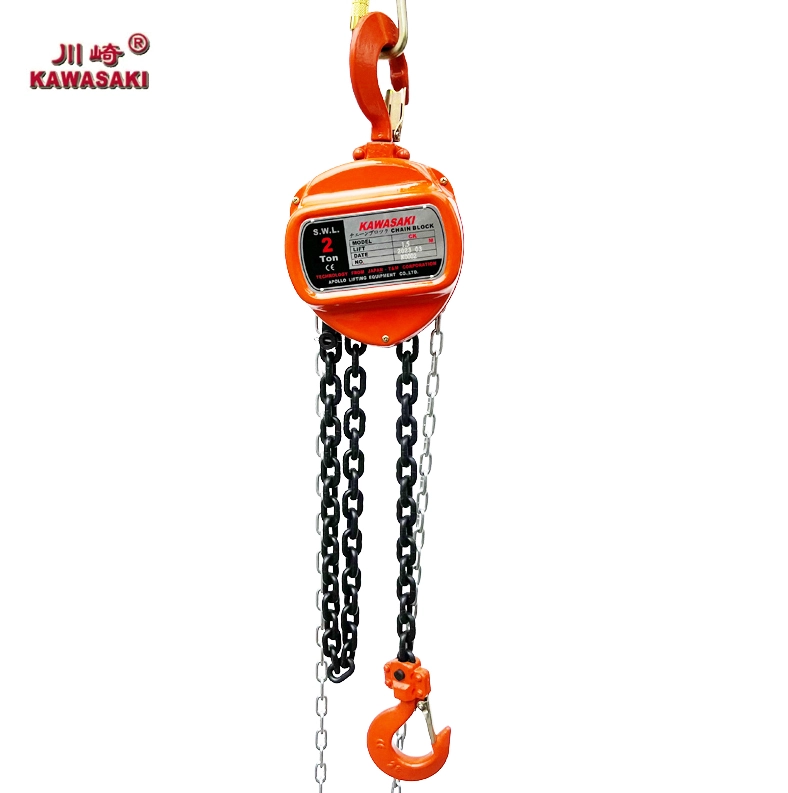
This section connects the basics to a real product. The Kawasaki Manual Hoist Chain Hoist CK is designed for steady lifting in workshops, warehouses, and installation sites.
Its internal gear train uses hardened gears paired with a stable pawl system, allowing smooth lifting even near rated load. The chain wheel alignment reduces side pull, which helps prevent uneven chain wear. Operators often notice that the hand chain runs cleanly without sudden resistance spikes.
Another practical detail is the option for surface-treated chains, such as blackened or nickel-plated finishes. These slow rust in humid environments, keeping the pawl and gear engagement consistent over time.
Kawasaki Explosion-Proof Hoist HBSQ 3T Capabilities
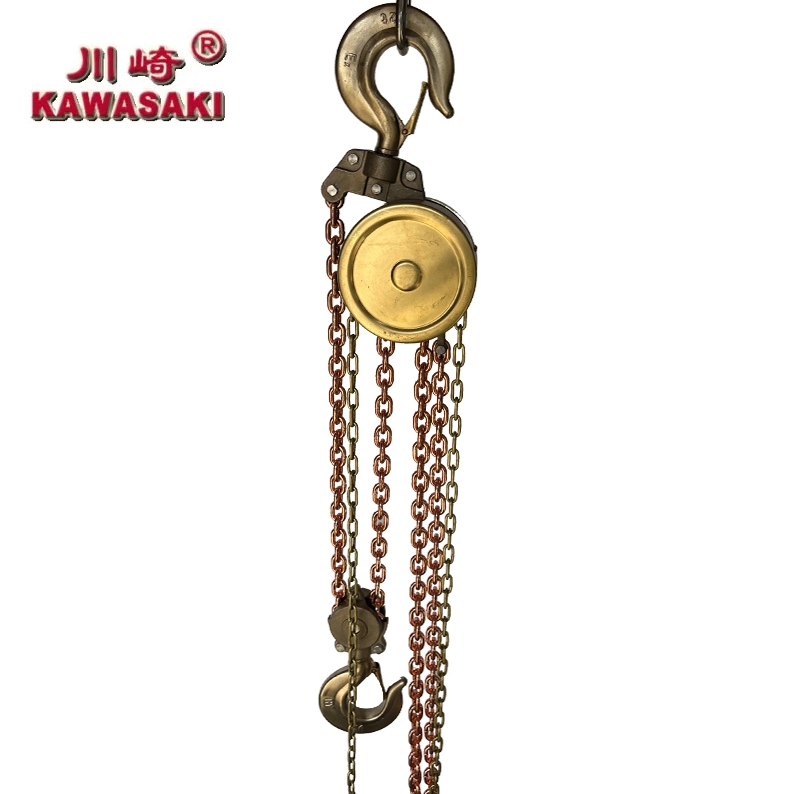
Although electrically driven, the explosion-proof hoist still relies on mechanical braking and gear holding principles similar to manual systems. This makes it relevant in environments where manual safety logic must back up powered lifting.
The HBSQ 3T uses enclosed braking components and controlled gear engagement to prevent load drop during sudden stops. In chemical plants, refineries, or grain handling facilities, this design limits internal sparks and mechanical shock.
Apollo Hoist supplies this model to customers who need power lifting but still demand mechanical reliability when conditions turn harsh.
Kawasaki Beam Trolley TBE Integration Benefits
Lifting is only half the job. Load movement along a beam adds another layer of mechanical demand. The Kawasaki Beam Trolley TBE uses plain or geared travel systems that rely on balanced wheel loads and simple gear transmission.
When paired with a manual chain hoist like the CK, the trolley allows controlled horizontal movement without twisting the load chain. Gear spacing and wheel alignment help the trolley roll smoothly, even on slightly uneven beams.
This combination is common in workshops where overhead cranes are not practical but flexible lifting paths are still needed.
Why Choose Apollo Manual Hoist Solutions Over Standard Options?
At this point, product choice becomes a business decision. The difference between standard hoists and Apollo-supplied Kawasaki equipment often shows after months of use, not on day one.
Enhanced Durability With Kawasaki Manual Hoist Chain Hoist CK
Durability comes from small things done right. Thicker hooks, consistent heat treatment, and controlled assembly reduce early wear. The CK series is built for repeated lifting rather than occasional use.
Apollo Hoist also supports OEM customization, allowing changes in chain material, finish, and packaging. This helps distributors and project buyers match the hoist to real job conditions instead of settling for a generic setup.
Increased Safety With Kawasaki Explosion-Proof Hoist HBSQ 3T
Safety is not only about certifications. It shows in braking response, load stability, and predictable stopping behavior. The HBSQ 3T meets explosion-proof requirements while keeping mechanical systems simple and robust.
For operators working in flammable or dusty environments, this balance reduces risk without adding complex maintenance steps.
Improved Mobility With Kawasaki Beam Trolley TBE
Mobility often decides productivity. A hoist that lifts well but travels poorly slows the entire workflow. The TBE trolley supports smooth movement with minimal side load on the hoist body.
This reduces chain swing and keeps pawl engagement stable during travel, which directly affects long-term safety.
What Factors Should Engineers Evaluate When Selecting A Manual Hoist?
Choosing a hoist is not only about rated tonnage. Several practical questions should be answered before placing an order.
Load Capacity And Duty Cycle Requirements
Rated load shows maximum capacity, but duty cycle shows real capability. Frequent lifts at lower weights still stress gears and pawls. Kawasaki hoists are designed for regular use, not just occasional lifts.
Engineers should match capacity to actual working loads, leaving room for wear and shock.
Environmental And Safety Conditions
Humidity, dust, chemicals, and temperature swings all affect mechanical parts. Chain finishes, sealed gear housings, and braking materials matter more than paint color.
Apollo Hoist offers guidance on matching product configurations to site conditions, reducing early failure risk.
Integration With Existing Material Handling Systems
Hoists rarely work alone. Beam size, trolley fit, hook clearance, and lifting height all affect system performance. Choosing compatible components avoids forced modifications later.
How Can Maintenance And Design Improve Long-Term Performance?
Even the best design needs care. Simple habits keep manual systems working as intended.
Routine Inspection Of Pawl And Gear Engagement
Checking pawl seating and gear teeth wear prevents sudden failures. Early signs often include uneven hand chain movement or unusual noise.
Lubrication And Corrosion Prevention Practices
Correct lubrication reduces friction without attracting debris. Chain surface protection slows rust, which helps gears and pawls engage cleanly.
Upgrading Components To Extend Service Life
Replacing worn chains or hooks early costs less than replacing the whole hoist. Apollo Hoist provides spare parts and guidance to support long service life.
FAQs
Q1: How often should a manual chain hoist be inspected?
A: Light-use hoists should be checked at least every six months. In daily industrial use, monthly visual checks and annual detailed inspections are common practice.
Q2: Can a beam trolley be used with different hoist brands?
A: Yes, but fit matters. Beam width, flange thickness, and hook size must match to avoid side load or unstable travel.
Q3: Is an explosion-proof hoist necessary if lifting is infrequent?
A: If the environment includes flammable gas or dust, frequency does not reduce risk. Proper equipment selection is still required.