

What Defines the Core Functional Differences Between a Pulley and a Sheave?
When people talk about lifting tools, it’s easy to mix up the terms pulley and sheave. Both guide a rope, wire rope, or chain, and both help move loads. Still, in real industrial systems, the way they’re built and the way they handle force make them stand apart. Understanding these differences helps factories, workshops, and construction teams build safer and smoother lifting setups.
Mechanical Structure and Groove Design
A pulley is usually a simple wheel used to change direction or share load. A sheave, meanwhile, is built with deeper grooves and smoother machining to handle wire rope or chain under heavier tension. This design makes a sheave more suitable for powered hoisting equipment.
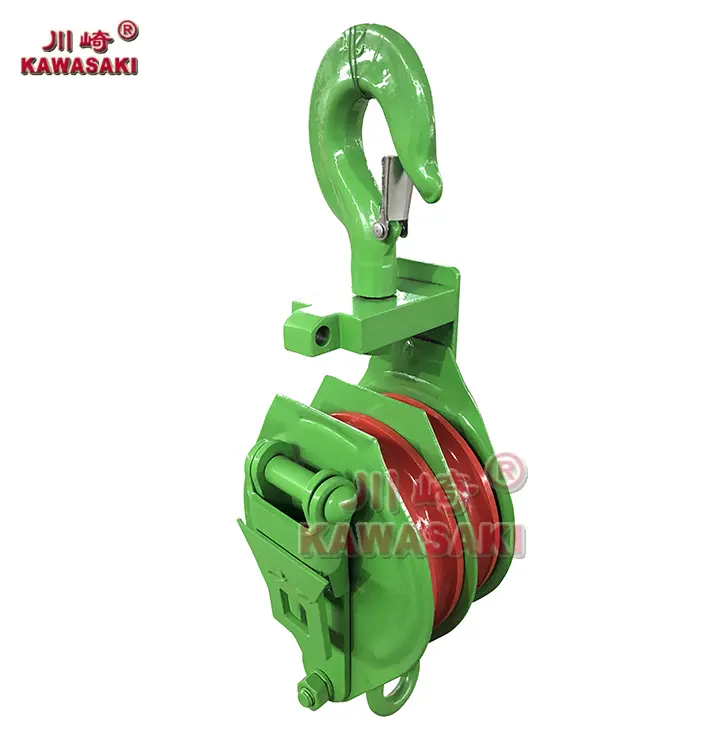
Apollo’s KAWASAKI Pulley Block CQ is a good example—its powder-coat finish, strong steel body, and groove accuracy help the rope stay steady even under 2–85MT load ranges. Each unit is tested with 200% overload before packaging, adding another layer of reliability.
Load Direction and Rope/Chain Compatibility
Pulley wheels can guide anything from a basic hand rope to light chain. Sheaves are usually matched with steel wire rope because wire rope needs a well-machined path to avoid wear. That’s why most electric hoists rely on sheaves in their internal layout.
Apollo’s wire rope hoists—such as the KAWASAKI Electric Wire Rope Hoist DC—build their lifting system around sheaves with clean grooves to reduce rubbing and help the rope travel in a stable pattern.
Application Roles in Lifting, Rigging, and Industrial Systems
In general workshops, pulleys remain common for simple direction changes. But in higher-load or longer-lifting-distance setups, sheaves handle the job better. They are part of the load-bearing system, not just a turning point.
Because Apollo supplies both manual pulley blocks and powered hoists, users in construction, manufacturing, and logistics can match the right component to the right job instead of forcing one tool into every situation.
How Do Pulleys and Sheaves Contribute Differently to Lifting Equipment Performance?
The overall lifting performance of a hoist depends heavily on what the internal wheel is doing. Even a strong hoist loses efficiency if the guiding wheel causes drag. Pulleys and sheaves are similar in appearance, but the performance gap becomes very obvious when the load moves up and down multiple times per shift.
Efficiency Output and Friction Reduction
A sheave tends to run smoother because the groove is shaped for wire rope or chain to settle in naturally. It reduces sideways shake and lowers friction during lifting. Pulleys, especially simpler ones, may create more bounce or angle shift when the load changes direction.
Apollo’s Electric Chain Hoist DCEK and KKBB series use precisely machined wheels inside the lifting body to help the chain climb naturally. This feeling of “easy pull” during operation comes partly from how the sheave does the guiding work.
Load Stability and Movement Control
With a sheave, the movement is steadier, which matters a lot for heavy loads and long lifting heights. Factories moving molds, steel beams, or large assemblies prefer sheave-based hoists because the load doesn’t swing as much.
Apollo’s hoists often include optional upgrades like frequency conversion, two-speed motors, and customized operation functions, adding even more control to the already steady sheave-based lifting system.
Equipment Longevity and Safety Assurance
When friction is lower and movement is steadier, the entire hoist body lasts longer. Wire ropes also wear slower when paired with a properly matched sheave. This contributes to safer work sites because fewer sudden failures occur.
Apollo reinforces this with strict quality checks: whole-machine assembly inspection, load testing, and CE/GS certifications across its major product lines. Their long history in Taiwan and Japan’s R&D experience keep product reliability at a high level.
Why Are Sheaves More Commonly Integrated in Modern Hoisting Machinery?
Today’s hoisting systems focus on efficiency, long travel distance, and safe handling of higher tonnage. These factors naturally push designers toward sheave-driven mechanisms instead of basic pulley wheels. The difference is especially clear in electric hoists used in factories or construction sites.
Precision Machining for Smooth Cable Travel
Modern hoists need every millimeter to work right. A sheave’s precise groove helps the wire rope jump less and settle into its natural curve. This reduces noise, unwanted vibration, and long-term wear.
For example, Apollo’s Electric Wire Rope Hoist LES uses sheaves that cooperate closely with the drum and motor system, allowing smoother lifts across extended heights.
Adaptability to Wire Rope and High-Capacity Loads
Sheaves handle wire ropes better because the groove shape distributes pressure along the rope instead of pressing at one point. This helps the rope last longer under demanding conditions. In heavy machinery, these small gains add up to big savings.
Apollo’s high-capacity hoists, including European-style electric wire rope models, rely on durable internal sheaves designed for 24/7 industrial use. The structure suits loads reaching tens of tons, which basic pulleys simply are not made for.
Compatibility With Motorized Hoisting Systems
Motorized hoists run faster than manual systems. A simple pulley often can’t keep up with the speed and heat generated in continuous work. Sheaves can, because they’re built for those operating conditions.
Apollo supports customized voltage ranges (110V–575V), surface treatments, and chain/wire rope configurations, which makes the sheave-equipped hoist even more adaptable for different regional industrial environments.
Which Mechanical Scenarios Require a Pulley Instead of a Sheave?
Even though sheaves dominate modern machinery, pulleys still play an important role in many setups. Some tasks don’t require advanced rope handling; instead, they need something simple, durable, and easy to set up.
Simple Direction Change for Light or Medium Loads
In small workshops, repair sites, or outdoor lifting tasks, pulleys help redirect force with very little setup. They’re appreciated for being straightforward and mechanical rather than powered.
The KAWASAKI Pulley Block CQ from Apollo is commonly chosen in these environments because its heavy-duty steel structure can deal with rough outdoor handling while staying easy to maintain.
Multi-Part Line Systems in Manual Lifting
Manual lifting often uses multiple pulleys to multiply pulling force. In these systems, smooth load transfer matters, but full industrial precision isn’t always required. Pulley blocks are more practical and cost-friendly for users who need mechanical advantage without electricity.
Apollo also supplies wide ranges of manual hoists, such as the CK manual chain hoist and HBSQ explosion-proof manual hoist, which often pair well with pulley setups when working in restricted environments.
Low-Speed, High-Control Handling Tasks
Some work requires slow, deliberate adjustments. Pulley systems make sense here because there’s no fast-moving motor. Warehouse tasks, positioning jobs, or equipment installation sometimes use pulleys for controlled movement.
Apollo’s experience in manual lifting solutions—lever hoists, hand winches, beam trolleys—helps users build reliable low-speed systems without overengineering the task.
How to Select the Right Component for Hoisting Systems in Industrial Applications?
Choosing between a pulley and a sheave depends on load, environment, power source, and how often the equipment works. To build a safe lifting plan, users look at mechanical stress, rope or chain type, and long-term workload.
Consideration of Load Rating and Safety Factor
Heavy-duty tasks usually call for sheaves because they maintain shape and alignment under high pressure. Lighter or angle-change tasks lean more toward pulleys. Safety factors also differ—Apollo’s Pulley Block CQ, for example, is built with a four-times safety margin and individually overload-tested before shipping.
Material Strength, Surface Treatment, and Environmental Resistance
Harsh environments—dust, rain, heat—wear out equipment faster. This is why Apollo offers surface treatments like electroplating, oxidation, spray finishes, and chain coating options such as Dacromet or nickel plating. Matching the material to the working environment helps the hoist or pulley last longer.
Compatibility With Apollo Hoists and Customized Configurations
Since different industries run different lifting systems, having the option to customize is a big advantage. Apollo provides OEM/ODM services covering appearance color, logo, chain grade (T80/T100), voltage, accessories, and packaging. This helps users build a lifting setup where the pulley or sheave fits the overall operation instead of being a standalone part.
FAQs
Q1: Is a pulley or a sheave better for electric hoists?
A: A sheave is usually better because it handles wire rope smoothly and fits the faster working speed of motorized hoists.
Q2: Can pulley blocks be used with chain hoists?
A: Yes, many manual chain hoists can work with pulley blocks, especially in multi-part line setups that require extra lifting force.
Q3: Does Apollo offer customization for lifting wheels and hoists?
A: Yes. Apollo supports OEM/ODM options for appearance, voltage, materials, chain grade, surface finish, and packaging across most hoist and pulley products.