

When specifying an electric hoist for a factory, warehouse, or industrial facility, two technical parameters often cause confusion: lifting height and operating travel. Although they sound similar, they refer to completely different performance characteristics. Misunderstanding them can lead to incorrect equipment selection – resulting in insufficient hook coverage, safety hazards, or unnecessary capital expenditure.
As a professional with decades of experience in the material handling industry, I have seen many procurement managers and plant operators struggle with this distinction. This guide will clarify the definitions, explain how plant height influences your choice, and provide actionable recommendations – while showing how Hangzhou Apollo Lifting Equipment Co., Ltd. applies engineering rigor to solve such challenges for global customers.
1. Definitions: Lifting Height vs. Operating Travel
1.1 What Is Lifting Height?
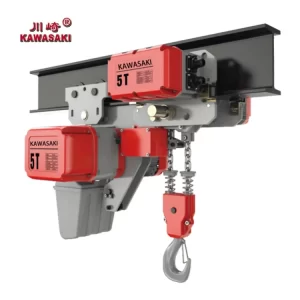
Lifting height (also called hook lift or vertical lift) is the maximum vertical distance the hook can travel from its lowest position (usually ground level or the lowest hook point) to its highest position (when the hook is fully raised). For a standard electric hoist mounted on a fixed suspension, the lifting height is determined by the length of the rope or chain stored in the hoist drum or chain container.
In simple terms: How high can your hook go above the floor? – but note that the highest point is limited by the hoist body itself.
1.2 What Is Operating Travel?
Operating travel (or travel distance) refers to the horizontal movement range of the hoist along a beam, bridge crane, or monorail system. This includes the trolley’s traverse (side-to-side) and, if part of an overhead crane, the bridge’s longitudinal travel (along the runway). Operating travel determines the coverage area – the rectangular zone the hoist can reach.
Key distinction:
-
Lifting height = vertical axis (Z-axis)
-
Operating travel = horizontal axes (X and Y axes)
1.3 Why Does the Confusion Arise?
Many buyers mistakenly use “lifting height” to describe the total vertical clearance from floor to hoist suspension point. They also confuse operating travel with the length of the runway. In reality, when selecting equipment for a given plant height, the critical factor is the usable hook height – which equals plant height minus the hoist dead dimensions and required safety clearance.
2. Key Factors to Consider When Selecting Based on Plant Height
2.1 Net Clearance Under the Hook
The usable lifting height is not the plant height. You must subtract:
-
Height of the crane girder or beam (if any)
-
Height of the hoist itself (from suspension to hook when fully raised)
-
Minimum safety gap between the hook and hoist body (usually 200–500 mm)
-
Headroom for electrical cables, chain stop, or rope dead wraps
Formula:
Usable lifting height = Plant height – (Beam depth + Hoist body height + Safety gap)
For example, a plant with a 6 m ceiling, using a 500 mm deep beam and a compact electric chain hoist of 800 mm body height, with a 300 mm safety gap, yields a usable lifting height of only 6 – (0.5+0.8+0.3) = 4.4 m.
2.2 Hook Approach Distance
This is the minimum horizontal distance from the end of the beam to the hook center. In low-headroom plants, a short hook approach is critical to maximize coverage near walls.
2.3 Rope or Chain Type
-
Wire rope hoists typically offer longer single-lift heights (up to 30–100 m) but require larger drum diameters and more headroom.
-
Electric chain hoists are more compact and often preferred for low-ceiling plants, though maximum lifting height is limited by the chain length (commonly 3–20 m).
2.4 Operating Travel and Plant Layout
If your plant has multiple bays or long aisles, the operating travel requirement may be more demanding than the lifting height. For a warehouse with 8 m ceilings but 200 m length, you would prioritize a long-travel bridge crane with extended runway, not extreme lifting height.
3. How to Choose Based on Typical Plant Height Scenarios
3.1 Low-Headroom Plants (Ceiling ≤ 5 m)
Examples: Old workshops, underground facilities, mezzanine levels.
Challenge: Very limited vertical space; any extra dead dimension eats into usable hook height.
Solution:
-
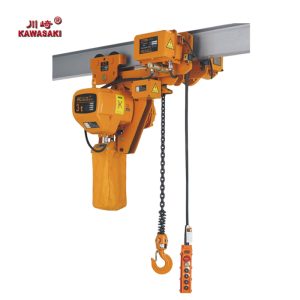
Use low-headroom electric chain hoists with side-mounted or double-reeved configurations.
-
Consider manual hoists (lever or hand chain) for occasional light lifts where power is unnecessary.
-
Avoid standard wire rope hoists, as they require more headroom.
Recommended from our expertise: Hangzhou Apollo offers compact electric chain hoists with integrated trolleys and minimal body height – ideal for retrofitting into low-clearance buildings.
3.2 Standard-Height Plants (5 m to 10 m)
Most common for general manufacturing, warehousing, and assembly lines.
Considerations:
-
Lifting height: Typically 4–8 m usable.
-
Operating travel: Determine if you need full bay coverage or just a work station.
-
For frequent heavy lifts, choose heavy lifting hoist suppliers that provide dual-speed or variable frequency drive (VFD) hoists for precise positioning.
Example selection: A 7 m plant with a 5 t load – select an electric wire rope hoist with 6 m lifting height, mounted on a top-running crane with 15 m travel.
3.3 High-Bay Plants (10 m to 30+ m)
Examples: Steel service centers, high-bay warehouses, aerospace hangars.
Challenge: Long lift distances increase risk of rope sway, multiple reeving, and longer hoist cycle times.
Solution:
-
Use wire rope hoists with large drum capacity.
-
Consider lifting clamps or magnets for handling long materials without slings.
-
For very high lifts (over 20 m), a crane hoist with a designated lifting beam and anti-sway features is recommended.
Note: Operating travel in such plants is often served by a warehouse overhead crane running on long runways. The hoist itself may be a specialized electric hoist for mining operations or heavy industrial applications.
4. Comparison of Hoist Types for Different Height & Travel Needs
| Hoist Type | Typical Lifting Height | Headroom Requirement | Operating Travel Suitability | Best For |
|---|---|---|---|---|
| Electric chain hoist | 3–20 m | Low to medium | Limited by chain length; suitable for monorails or small cranes | Low-ceiling plants, workstations, frequent short lifts |
| Electric wire rope hoist | 6–100+ m | Medium to high | Excellent; can be used on long-travel bridge cranes | High-bay plants, heavy loads, continuous duty |
| Manual chain hoist | 3–12 m | Very low | Only if mounted on a manual trolley; slow travel | Occasional use, low-budget, no power available |
| Air hoist | 5–15 m | Medium | Good for spark-sensitive areas | Explosive environments (paint booths, chemical plants) |
For applications requiring both extreme lifting height and long operating travel, top hoist manufacturers like Hangzhou Apollo provide custom solutions – e.g., a double-girder overhead crane with a high-lift wire rope hoist, complete with festoon cable systems for power travel.
5. Best Practices: Sizing Your Hoist Correctly
Step 1 – Measure Your Actual Plant Dimensions
Do not rely on nominal ceiling height. Account for:
-
Obstructions (pipes, ducts, lights)
-
Crane rail elevation
-
Floor condition (uneven floors reduce effective lift)
Step 2 – Define the Maximum Hook Height Needed
Add the height of the tallest load plus rigging (slings, lifting clamps). Then add 500 mm minimum for load clearance when moving horizontally.
Step 3 – Calculate Required Lifting Height
Add the above to the distance from floor to lowest hook position. Then add a 10–15% future expansion margin.
Step 4 – Determine Operating Travel Envelope
Map out all pick and drop points. If the travel exceeds 30 m, consider a crane used in industry with powered travel (radio remote controlled). For complex paths, a loader crane or jib crane might be more efficient than a full overhead system.
Step 5 – Select the Hoist Class (FEM/ISO duty rating)
-
Light duty (1Am, 1Bm): < 2 lifts/hour
-
Medium duty (2m): 2–8 lifts/hour
-
Heavy duty (3m, 4m): continuous operation
Step 6 – Consult a Reputable Manufacturer
Given the interplay between lifting height, operating travel, and building structure, always request a layout drawing from the supplier. Hangzhou Apollo Lifting Equipment Co., Ltd. provides free 2D/3D design assistance for every custom project – from small hand winch applications to large industrial lifting cranes.
6. How Hangzhou Apollo Solves Real-World Height & Travel Challenges
With over 20 years of manufacturing experience, Hangzhou Apollo has supplied hoist manufacturers and suppliers globally – from Southeast Asian automotive plants to Middle Eastern steel mills. Our approach to the lifting height vs. operating travel dilemma includes:
-
Modular hoist designs that separate the lifting mechanism from the trolley drive, allowing us to adjust headroom without changing the entire unit.
-
Custom chain containers for electric chain hoists – enabling lifting heights up to 25 m on standard frames.
-
Low-headroom wire rope hoists with optimized drum geometry – reducing dead space by 30% compared to conventional designs.
-
Integrated travel limit switches that prevent over-travel in both vertical and horizontal directions, ensuring safety in tight plants.
We are recognized among leading crane manufacturers for our ability to combine hoists with overhead crane manufacturers‘ components into a seamless system. Whether you need an industrial hand winch for a manual gantry or a magnetic lifter suppliers‘ solution for steel plate handling, our engineering team evaluates your plant height first – then specifies the correct lifting height and operating travel.
7. Future Trends in Hoist Height & Travel Technology
7.1 Smart Height Measurement
Laser distance sensors integrated with hoist controls now allow precise lifting height feedback – eliminating guesswork and enabling automated positioning.
7.2 Variable Frequency Drive (VFD) Travel
VFD-controlled trolleys and bridges provide smooth acceleration/deceleration, critical when operating travel distances exceed 50 m and load swing must be minimized.
7.3 Compact Hoist Designs
New permanent magnet synchronous motors (PMSM) reduce hoist body height by up to 40%, making low-headroom electric chain hoists even more effective in plants under 4 m.
7.4 Wireless Load Monitoring
Real-time load cells on the hook, paired with plant floor software, allow operators to verify that lifting height limits are not exceeded – particularly important when working near overhead obstructions.
As a forward-thinking hoist lift manufacturers, Hangzhou Apollo already offers IoT-ready hoists that communicate lifting height and travel data to your warehouse management system (WMS).
Conclusion
The difference between lifting height and operating travel is fundamental: one defines vertical reach, the other horizontal coverage. When selecting an electric hoist for your plant, always start by measuring your net usable height under the hook – then work backward to the required hoist type. For low ceilings, prioritize compact chain hoists; for high bays, wire rope hoists with sufficient drum capacity; and for long travel distances, ensure your crane runway and trolley drive are matched to the application.
Remember: the best technical specification means nothing without proper installation and safety margins. That is why Hangzhou Apollo Lifting Equipment Co., Ltd. does not just sell products – we provide site surveys, custom engineering, and after-sales support to ensure your hoist delivers its rated lifting height and smooth operating travel for decades.
If you are planning a new installation or retrofitting an existing system, contact our team. We will help you navigate the confusion of lifting height vs. operating travel – and deliver a solution that fits your plant height perfectly, whether you need a small crane for warehouse or a large crane for construction site.
Hangzhou Apollo Lifting Equipment Co., Ltd. – Your trusted partner among crane hoist manufacturers worldwide