Introduction: The Overhead Space Challenge
In industrial lifting operations, every inch of vertical clearance matters. Facility managers, project engineers, and procurement officers frequently face a critical question when specifying overhead lifting equipment: How much usable lifting height will I lose with a standard trolley-mounted hoist compared to a low headroom design? And more importantly, under what conditions is a low headroom hoist not just beneficial but absolutely necessary?
The difference in lifting height loss between a standard motorized trolley hoist and a low headroom configuration can range from 200 mm to over 600 mm (8 to 24 inches) — a gap that often determines whether a facility can handle its tallest loads or must resort to costly building modifications. For industries operating in confined spaces, such as mining, shipbuilding, prefabricated buildings, or retrofitted warehouses, understanding this trade-off is essential for safe, efficient, and cost-effective material handling.
As one of the top hoist manufacturers with decades of engineering experience, Hangzhou Apollo Lifting Equipment Co., Ltd. has helped thousands of customers worldwide optimize their lifting systems. We provide heavy lifting solutions tailored to real-world constraints — including custom low headroom electric chain hoists, explosion-proof variants, and intelligent control systems. This guide delivers a technical yet practical analysis of lifting height loss, compares standard vs. low headroom designs, and outlines clear decision criteria for your next hoist procurement.
1. Defining the Key Concept: What Is “Lifting Height Loss”?
Before comparing configurations, we must establish a precise definition. Lifting height loss (also known as “dead headroom” or “hook approach”) refers to the vertical distance from the runway rail or beam bottom to the highest position of the hoist hook when fully raised. In simpler terms: it is the unreachable space at the top of the lifting zone.
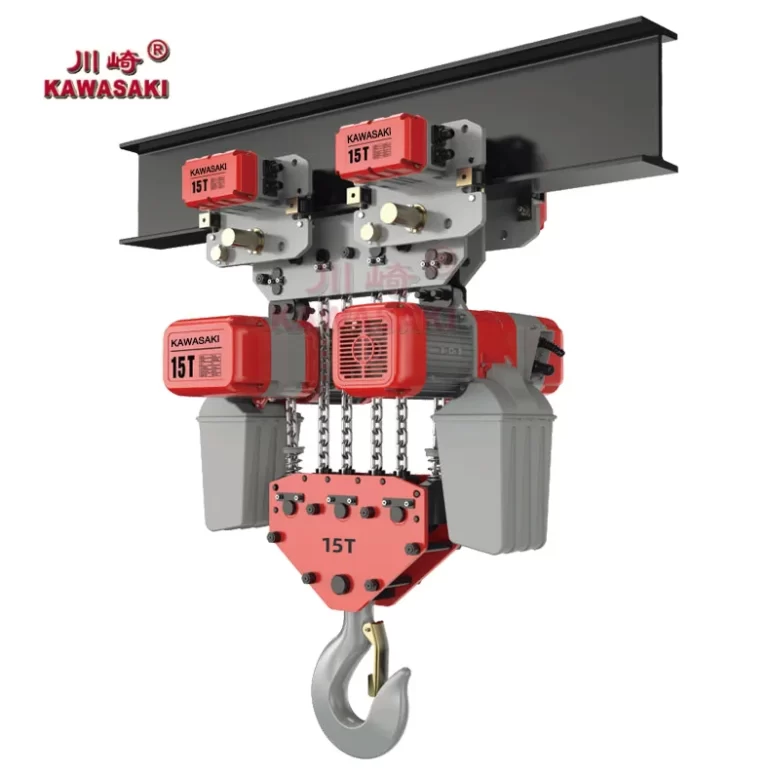
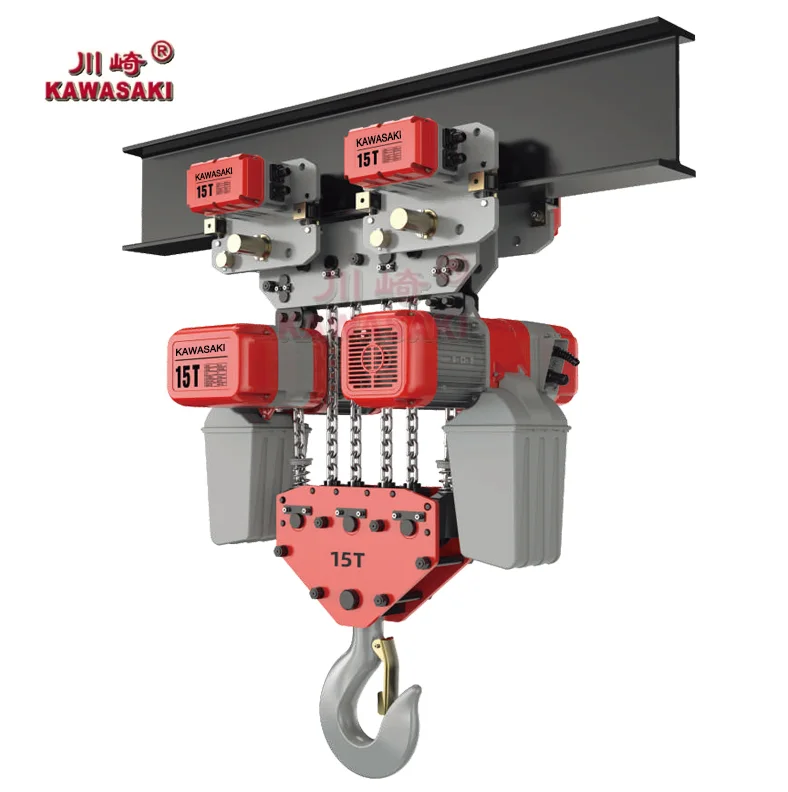
For a standard electric chain hoist mounted on a motorized or hand-geared trolley, the typical components that consume this vertical space include:
-
The trolley wheels and frame (riding on the beam flange)
-
The hoist body suspension bracket
-
The hoist’s chain guide or drum casing
-
The chain slack take-up mechanism
-
The hook block and hook itself
In a standard configuration, these elements stack vertically, creating a cumulative dimension often between 500 mm and 800 mm (20–32 inches) from the beam bottom to the hook’s highest point. This distance is pure loss — no load can occupy that space because the hook physically cannot rise further.
A low headroom hoist, on the other hand, re-engineers this stack. By laterally offsetting the hoist motor, using a side-mounted chain guide, or integrating the trolley and hoist frame into a compact unit, leading crane hoist manufacturers reduce the dead headroom to as little as 200–300 mm (8–12 inches). That means a gain of 300–500 mm (12–20 inches) in usable lifting height — often the difference between handling a tall machine part or having to tilt it dangerously.

Quantifying the Loss: Standard vs. Low Headroom
| Configuration | Typical Dead Headroom | Usable Lifting Height Gain (vs. Standard) |
|---|---|---|
| Standard motorized trolley + electric chain hoist | 550 – 750 mm | Baseline |
| Low headroom electric chain hoist | 220 – 350 mm | +250 – 450 mm |
| Ultra-low headroom (custom engineered) | 150 – 200 mm | +400 – 600 mm |
Example: In a facility with 5 meters of clear height under the beam, a standard hoist provides roughly 4.25–4.45 meters of actual lift. A low headroom hoist provides 4.65–4.78 meters — a significant 9–12% increase without any building alteration.
2. When Must You Use a Low Headroom Hoist? Four Non‑Negotiable Scenarios
While a low headroom hoist offers advantages in many settings, there are specific conditions where it becomes mandatory. Failing to specify a low headroom design in these cases leads to either impossible lifts, safety violations, or exorbitant structural modifications.
2.1 Constrained Building Clearance (Retrofits & Low Ceilings)
The most common driver is simply insufficient overhead space. Many older factories, warehouses converted from other uses, or facilities with ductwork, piping, or sprinkler systems underneath the roof trusses have a hard ceiling height that cannot be raised. If the required lifting height (from floor to top of load) plus hook approach exceeds the clear height, a standard hoist simply won’t work.
Real-world case: A food processing plant needed to lift 2.5‑meter‑high mixing vessels into a washing station with only 4.2 meters from floor to beam bottom. Standard hoist dead headroom (650 mm) + vessel height (2,500 mm) = 3,150 mm, leaving only 1,050 mm for slings and hook — insufficient. Switching to a low headroom electric chain hoist manufacturers‘ model with 280 mm dead headroom freed up 370 mm, making the lift feasible.
2.2 Maximizing Storage Density in Warehouses
In high-bay warehouses, every lost centimeter of vertical lift reduces storage capacity. When using warehouse overhead crane systems or under-running crane bridges, the difference between standard and low headroom directly translates to one additional shelf tier or taller pallet racks. For operations where cubic space is at a premium (e.g., cold storage, automated parts distribution), low headroom hoists are not an option — they are an economic necessity.
2.3 Mining & Tunnel Construction
Electric hoist for mining operations must operate in extremely confined spaces — drift mines, shaft stations, or underground crusher chambers. Ceiling heights may be dictated by rock strata rather than design. Standard hoists would leave insufficient clearance for maintenance or load passage. Low headroom designs, often with IP55 or higher protection and flame‑resistant options, are mandated by safety regulations and practical reality.
2.4 Mobile Gantry & Portable Lifting Systems
For temporary lifting setups — such as on construction sites, ship repair yards, or field service trucks — the supporting structure (gantry, A‑frame, or davit) is often limited in height by transportability. Using a crane for warehouse or small gantry with a standard hoist severely restricts lift height. Low headroom hoists allow the same gantry to handle taller equipment or vehicles, reducing the need for larger, more expensive cranes.

3. Technical Comparison: Standard Trolley Hoist vs. Low Headroom Hoist
To make an informed decision, engineers must look beyond dead headroom alone. The following comparison covers design, performance, and lifecycle factors.
| Parameter | Standard Trolley Hoist | Low Headroom Hoist |
|---|---|---|
| Dead headroom | 500 – 800 mm | 200 – 350 mm |
| Hoist motor position | In‑line with chain/lifting drum | Offset (side or rear) |
| Trolley type | Standard double‑flange wheels, often separate motor | Integrated or compact trolley, may use single‑flange or chain drive |
| Chain container | Below or beside hoist body | Side‑mounted or within frame |
| Lifting speed | Standard range (4/1 m/min to 8/2 m/min) | Slightly lower maximum speeds due to chain bending radius (usually not significant for most duty cycles) |
| Maintenance access | Easy — components exposed | More compact — some parts harder to reach; requires experienced technicians |
| Initial cost | Lower (standardized designs) | 20–35% higher (specialized engineering) |
| Typical capacity range | 0.5 – 20 t | 0.5 – 10 t (higher capacities possible with custom crane hoist manufacturers) |
| Best application | New buildings with ample height, general manufacturing | Retrofits, low ceilings, mining, mobile systems |
3.1 Does Low Headroom Compromise Safety or Durability?
A common misconception is that low headroom hoists are “weaker” or less reliable. In fact, reputable hoist manufacturers and suppliers like Hangzhou Apollo design low headroom units with the same safety factors (typically 5:1 for chain hoists) and duty classifications (FEM/ISO). The compact layout does impose stricter tolerances on chain alignment and lubrication, but with proper maintenance, service life is comparable to standard hoists.
However, one must note: low headroom designs often use a longer chain bend radius to guide the chain into a side container. This can slightly reduce lifting speed at the same motor power, but for most intermittent duty cycles (e.g., 2–4 lifts per hour), the difference is negligible.
4. Best Practice Recommendations: How to Choose
When specifying your next overhead lifting system, follow this decision flowchart:
Step 1: Calculate Your Required Lifting Height (H_req)
H_req = Load height + Sling/sling beam height + Hook travel margin (min. 100 mm) + Vertical clearance below load at top position.
Step 2: Measure Available Clear Height (H_clear)
From finished floor to the lowest overhead obstruction (beam bottom, pipe, sprinkler head, etc.).
Step 3: Determine Allowable Dead Headroom (D_allowed)
D_allowed = H_clear – H_req – (additional safety margin for hoist movement)
If D_allowed > 500 mm → Standard hoist is acceptable.
If D_allowed is between 350 mm and 500 mm → Evaluate low headroom; standard may still work with careful rigging.
If D_allowed < 350 mm → Low headroom is mandatory.
Step 4: Consider Secondary Factors
-
Lifting capacity – For >10 t, confirm with heavy lifting hoist suppliers that a low headroom design is feasible. Many electric chain hoist manufacturers offer low headroom up to 20 t with custom engineering.
-
Duty cycle – For very high frequency (Class 4m or higher), standard designs often have better heat dissipation. Consult manufacturer data.
-
Environment – Mining, foundries, or chemical plants may require low headroom combined with explosion-proof or high-temperature features. Ensure your supplier offers certifications (ATEX, IECEx, CSA).
Step 5: Partner with an Experienced Manufacturer
Not all hoist manufacturers and suppliers have mastered low headroom engineering. The compact geometry demands precise casting, robust chain guides, and thorough testing. Hangzhou Apollo Lifting Equipment Co., Ltd., recognized as one of the top hoist manufacturers globally, has delivered over 10,000 low headroom electric chain hoists across mining, automotive, logistics, and energy sectors. Our electric chain hoist suppliers network ensures fast spare parts availability, while our in-house R&D team can reduce dead headroom to as low as 150 mm for extreme applications.
5. Case Example: Retrofitting a Low Headroom Hoist in a Prefab Warehouse
A logistics company in Rotterdam operated a 40‑year‑old warehouse with a clear height under the overhead crane runway of only 4.8 meters. They needed to lift 2.2‑meter‑high roll cages onto a 1.5‑meter platform — total required lift height 3.7 meters. A standard 2‑ton electric chain hoist with motorized trolley would have a dead headroom of 650 mm, leaving only 4.15 meters from floor to hook top. After subtracting the 3.7‑meter load requirement, only 0.45 meters remained for hook approach and safety — insufficient (minimum 0.6 m).
Hangzhou Apollo provided a custom low headroom hoist with 240 mm dead headroom. The solution:
-
Usable hook travel: 4.8 m – 0.24 m = 4.56 m
-
Load requirement: 3.7 m → margin of 0.86 m, well above safety minimum.
-
The customer avoided raising the roof (estimated cost €45,000) and installed the new hoist in one shift.
This example illustrates why consulting experienced crane hoist manufacturers early in the planning process delivers both safety and ROI.
6. Future Trends: Smarter Low Headroom Hoists
The industry is moving beyond simple mechanical reduction of dead headroom. Innovations from leading crane manufacturers include:
-
Integrated variable frequency drives (VFDs) – Smooth acceleration reduces shock loads, especially important in low headroom designs where chain angles are tighter.
-
Digital load monitoring – Real‑time display of hook height, weight, and remaining lifting margin, helping operators avoid overhead collisions.
-
Modular low headroom trolleys – Quick‑change cassettes that allow a single hoist body to be used with standard or low headroom trolleys, increasing fleet flexibility.
-
Synthetic rope hoists – Some wire rope hoist suppliers are introducing low headroom wire rope hoists with smaller drum diameters than traditional designs, offering capacities >10 t with dead headroom under 300 mm.
Hangzhou Apollo is actively developing IoT‑enabled low headroom hoists that report chain wear and alignment data to a central platform, predictive maintenance. For customers requiring heavy lifting solutions in space‑constrained nuclear or offshore facilities, we offer bespoke engineering.
Conclusion: Make the Informed Choice
The question “How much lifting height loss with a low headroom hoist vs. a standard trolley hoist?” is best answered by turning it around: A low headroom hoist recovers 250–500 mm of lost lifting height compared to a standard design. That recovered height can mean the difference between a feasible lift and a dangerous workaround, or between a one‑time installation and a costly building retrofit.
You must choose a low headroom hoist when:
-
Available clear height minus required lift height leaves less than 350 mm for dead headroom.
-
You are retrofitting an existing low‑ceiling facility.
-
You operate in mining, tunneling, or mobile gantry environments.
-
You need to maximize storage density in a warehouse.
Selecting the right partner among hoist manufacturers and suppliers is equally critical. Hangzhou Apollo Lifting Equipment Co., Ltd. combines over 20 years of engineering excellence, ISO 9001:2015 certified production, and a global service network. Whether you need a standard electric chain hoist, a low headroom unit for mining, or a complete overhead crane system, our team provides heavy lifting solutions tailored to your exact height constraints and load requirements.
Contact our engineering department for a free headroom analysis — we will calculate your optimal configuration and provide a 3D CAD layout showing actual lifting height loss. Because in lifting, every millimeter counts.