
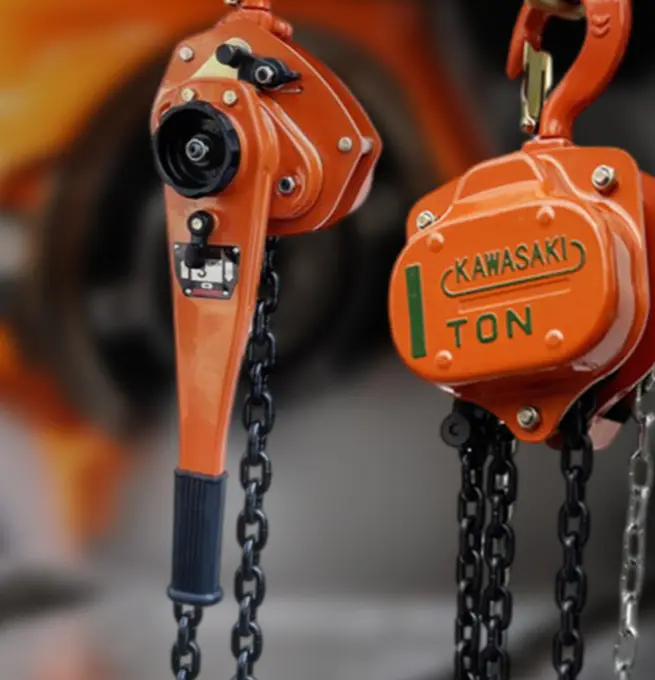
In the demanding world of material handling, efficiency and safety are paramount. Whether you’re managing a warehouse, operating a production line, or executing a complex construction project, the performance of your lifting equipment directly impacts your operational throughput and bottom line. For chain hoist manufacturers, two technical specifications stand out as the most critical for daily operation: lifting height and lifting speed. Selecting the correct combination is not merely a technicality—it is a fundamental business decision that dictates workflow efficiency, operator safety, and long-term equipment reliability. This article explores these vital parameters, providing insights to help you make an informed choice for your specific industrial needs.
The Core of Performance: Why Height and Speed Matter
Lifting height and speed are the foundational metrics that define a hoist’s capability. The lifting height determines the vertical reach of your operations, from simple workshop tasks to multi-story logistics. The lifting speed controls the cycle time of your operations, influencing how quickly materials can be moved, positioned, and processed.
For heavy lifting hoist suppliers, designing equipment involves balancing these parameters with other factors like motor power, structural integrity, and duty cycle. An underspecified hoist can become a bottleneck, while an overspecified one may represent an unnecessary capital expenditure. Understanding the standards and ranges available is the first step toward optimization. Modern electric chain hoist units offer versatile configurations, with common lifting speeds in the range of 0.45 to over 9 meters per minute and lifting heights that can be customized from a few meters to over one hundred.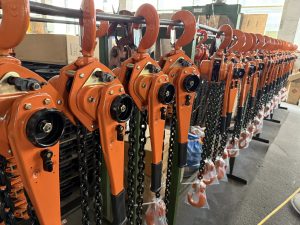
Decoding Lifting Height Requirements
The required lifting height is dictated by your physical workspace and operational process. It is the maximum vertical distance the hook must travel from its lowest to its highest point.
- Standard Ranges:Standard models from electric hoist manufacturers often offer set heights. For instance, common fixed heights include 3 meters and 6 meters for basic workshop models, suitable for loading machines or clearing workbenches. Manual chain hoists also frequently feature standard heights around 2.5 to 3 meters.
- Customized Solutions:Many industrial applications demand greater reach. Leading chain hoist manufacturers provide customizable solutions where lifting height is not a constraint. Standard customizable ranges can extend from 3 meters up to 30 meters or more for general construction and warehouse use. For specialized applications, such as in mining or shipbuilding, heavy-duty models can be engineered with lifting heights reaching 100 meters or beyond. An electric hoist for mining operations, for example, may require extreme heights for vertical shaft lifting, demanding robust design and powerful motors.
Application-Based Selection
- Manufacturing & Assembly:Typically requires 3 to 6 meters for overhead cranes and assembly line positioning.

- Warehousing & Logistics:Often needs 6 to 12 meters for stacking in racking systems and loading docks.
- Construction & Infrastructure:May require 20 to 30 meters or more for moving materials between floors or on large structural projects.
- Mining & Heavy Industry:Demands the highest custom ranges, often exceeding 30 meters, for lifting ore, equipment, and supplies from deep pits or high silos.

Optimizing Lifting Speed for Efficiency and Control
Lifting speed determines operational tempo and is crucial for tasks requiring precision. It is typically measured in meters per minute (m/min).
- The Standard Spectrum:Entry-level and general-duty electric chain hoist models commonly offer single speeds. Data shows a wide performance envelope across the industry, with speeds for standard electric chain hoists ranging from approximately 5.4 m/min to 6.6 m/min for one-ton capacity models. Specialized compact hoists can achieve even higher travel speeds.
- The Critical Role of Variable & Multi-Speed Control:For operations requiring delicate placement, such as installing machinery or aligning components, variable speed control is indispensable. Advanced hoists feature two-speed or infinitely variable frequency control (VFD) systems. A two-speed system provides a “creep” or “micro” speed for precision, often at a ratio of 1:6 or 1:10 of the main speed. For example, a hoist with a main speed of 12 m/min might have a precision speed of 2 m/min. This allows an operator to quickly lift a load to the desired area and then slowly, safely, and accurately position it.
- Speed vs. Load Trade-off:It’s essential to understand that a hoist’s rated speed is for its maximum capacity. Electric hoist suppliers note that speed can vary with load. Some models exhibit different performance profiles; for instance, one series offers a no-load speed of 2.25 m/min, which decreases to a minimum of 0.45 m/min under full load to ensure safety and control.
Application Spotlight: Matching Specifications to Industry Needs
In-Depth Analysis by Sector
1. General Manufacturing & Assembly Lines
In manufacturing environments, hoists are the workhorses of material flow, often integrated into overhead crane systems or standalone stations for repetitive tasks.
- Typical Lifting Height Requirement:Operations commonly require a range of 3 to 6 meters. This height is sufficient for unloading raw materials from delivery trucks, transferring components between workstations, positioning parts within machine tools, and handling finished goods.
- Detailed Speed & Control Needs:A moderate single speed of 4-8 m/min is often adequate for general movement. However, for assembly stations involving precise placement, two-speed or variable frequency drive (VFD) controls are critical. The micro-speed function allows operators to make fine millimeter-level adjustments safely.
- Key Considerations for Suppliers:Reliability and duty cycle are paramount. Electric chain hoist models for manufacturing are typically rated for Class M4 (FEM 9.511) or higher, indicating suitability for regular use with medium duty cycles. Leading electric hoist manufacturers design models for low maintenance to withstand continuous shift work.
2. Warehousing, Distribution & Logistics
Modern logistics centers prioritize vertical storage density and rapid turnover, placing unique demands on lifting equipment.
- Typical Lifting Height Requirement:Requirements are frequently in the 6 to 12 meter range and are often highly customizable. This accommodates high-bay racking systems and loading/unloading of tall shipping containers.
- Detailed Speed & Control Needs:Moderate to high lifting speeds (8-12 m/min or more) are prioritized to maintain fast cycle times and meet tight shipping schedules. For handling fragile goods, a dual-speed option provides the necessary control for final positioning.
- Key Considerations for Suppliers:Efficiency and durability are key. Electric hoist suppliers serving this sector often emphasize energy-efficient motors to reduce operating costs. IP54-rated protection and remote control options are highly desirable.
3. Construction & Infrastructure Projects
Construction sites are dynamic, harsh environments where equipment must be portable, rugged, and versatile.
- Typical Lifting Height Requirement:This is the most variable category, ranging from 3 meters for ground-level tasks to 30 meters or more for multi-story building projects. Heavy lifting hoist suppliers must offer extensive customization.
- Detailed Speed & Control Needs:Speed requirements are highly variable. Load control and safety under variable weather conditions are often more critical than pure speed. Variable speed is crucial for precise, safe alignment of structural components.
- Key Considerations for Suppliers:Durability is non-negotiable. Construction-grade hoists require a minimum of IP55 ingress protection against rain and pervasive dust. Portability features and compliance with rigorous safety standards are essential for risk mitigation.
4. Mining, Quarrying & Heavy Industry
These are the most demanding applications, where equipment failure can lead to catastrophic downtime and severe safety hazards.
- Typical Lifting Height Requirement:Demands are extreme and fully custom, often spanning 30 to over 100 meters. Applications include lowering personnel and equipment into vertical shafts and hoisting ore from deep pits. An electric hoist for mining operations is engineered from the ground up for these monumental tasks.
- Detailed Speed & Control Needs:Controlled, robust, and reliable speed takes precedence over sheer velocity. Advanced VFD control is almost mandatory for perfectly controlled starts and stops, preventing dangerous load swing in confined shafts.
- Key Considerations for Suppliers:This is the domain of specialized heavy lifting hoist suppliers. Equipment must be built with the highest duty cycle ratings, feature redundant braking systems, and utilize components resistant to shock loads. For hazardous areas, explosion-proof certifications (ATEX, IECEx) are required. The focus for chain hoist manufacturers here is on maximum safety and unparalleled reliability.
5. Precision Assembly & High-Value Manufacturing
This includes aerospace, automotive, and precision machining, where the value of the handled component is extremely high, and tolerances are tight.
- Typical Lifting Height Requirement:Generally ranges from 3 to 10 meters, sufficient for workshop cranes and specialized assembly jigs. The physical height is less critical than the precision of movement.
- Detailed Speed & Control Needs:Ultra-low precision speed is the absolute priority. Units must offer a true micro-speed mode—often as low as 1/10th or even 1/30th of the main speed—allowing operators to position loads with millimeter accuracy.
Key Considerations for Suppliers: The value proposition centers on control fidelity. Electric hoist manufacturers for this market utilize precision motors and high-quality variable frequency drives. Low-noise operation and clean design (for potential use in cleanrooms) are important features. The hoist acts as a precision tool.
Summary Table: Industry Specification Matrix
| Industry/Application | Lifting Height (Typical) | Speed Priority & Type | Critical Features & Considerations |
| General Manufacturing | 3m – 6m | Moderate (4-8 m/min); Dual-speed for assembly. | High duty cycle (M4+), reliability, low maintenance. |
| Warehousing & Logistics | 6m – 12m (Customizable) | Moderate to High (8-12+ m/min); Efficient cycling. | Lightweight, energy-efficient, IP54, remote control. |
| Construction | 3m – 30m+ (Highly Custom) | Variable; Controlled placement vital. | Durability (IP55+), portability, safety features. |
| Mining & Heavy Industry | 30m – 100m+ (Fully Custom) | Controlled & Robust; Safety over speed. | Extreme duty cycle (M5/M6), explosion-proofing, redundant brakes. |
| Precision Assembly | 3m – 10m | Ultra-Low Precision Speed Critical | Micro-speed accuracy, smooth control, clean/quiet operation. |
Partnering with the Right Hoist Manufacturers and Suppliers
Beyond the Product: The Value of a True Partnership
A hoist is a long-term capital investment. The right partner acts as an extension of your engineering team, providing crucial insights from specification to installation and throughout the equipment’s lifecycle. While many companies can sell you a hoist, leading electric hoist suppliers and heavy lifting hoist suppliers differentiate themselves through deep application knowledge, comprehensive support, and a commitment to compliance. This partnership model mitigates risk, optimizes your total cost of ownership, and ensures your lifting solution evolves with your needs.
Key Dimensions for Evaluating Hoist Partners
1. Technical Expertise & Consultative Approach
The first sign of a quality partner is a consultative, question-based approach. Reputable suppliers don’t just take orders; they seek to understand your unique challenges.
- In-Depth Needs Analysis:Expect prospective partners to ask detailed questions about your application: average and peak load weights, required duty cycle (e.g., FEM M4 for regular use, M5 for heavy use), ambient environment, and control preferences. They should be able to advise on the nuances of electric chain hoist specifications.
- Solution Engineering:Top-tier electric hoist manufacturers employ application engineers who can model your workflow. They help you navigate trade-offs—for example, how a higher lifting speed might affect motor sizing and duty cycle.
- Certification Guidance:A knowledgeable partner will clearly explain the relevant safety and quality certifications and ensure the proposed solution meets them.
2. Product Range, Customization & Manufacturing Capability
A supplier’s product portfolio and flexibility are strong indicators of their ability to meet your specific needs, whether standard or highly specialized.
- Breadth and Specialization:Does the supplier cater to a wide range of industries? Leading chain hoist manufacturers often have distinct product lines for different sectors. An electric hoist for mining operations requires vastly different design considerations than one for a clean-room assembly line.
- Customization Depth:True capability is demonstrated through customization options. This includes voltage and phase compatibility, control systems (pendants to radio remotes), and mechanical configurations like custom trolleys and special hooks.
- Manufacturing Quality:Inquire about their manufacturing processes, quality control checks, and testing protocols. Do they perform load testing on each unit?
3. Commitment to Quality, Safety, and Compliance
Safety is non-negotiable in material handling. Your supplier must be an unwavering ally in ensuring a safe working environment.
- Built-in Safety Features:Evaluate standard safety features: overload limit device, limit switches, a failsafe mechanical load brake, and thermal protection. Heavy lifting hoist suppliers should offer additional redundancies like dual braking systems.
- Documentation and Traceability:A reliable partner provides comprehensive documentation, including detailed manuals, test certificates, and full traceability of components.
- Regulatory Knowledge:They must be proficient in the safety regulations and standards applicable in your region and industry.
4. After-Sales Support & Total Cost of Ownership (TCO)
The cheapest hoist can become the most expensive due to downtime and repair costs. A partner focused on your TCO provides robust support.
- Service Network:For multinational operations, a global service network is essential. For local businesses, prompt regional technical support is key.
- Parts Availability and Inventory:Long-term parts availability is critical for the 15-20 year lifespan of a quality hoist. Premier suppliers maintain extensive spare parts inventories.
- Training and Resources:Do they offer operator and maintenance training? Do they provide easily accessible online resources?
5. Proven Industry Experience and References
A partner’s track record in your specific industry is invaluable evidence of their capability.
- Case Studies and Portfolios:Request examples of past projects similar to yours. A supplier experienced in your sector will understand your unique challenges.
- Client References:Speaking directly with existing clients can provide honest insights into the supplier’s reliability and service quality.
Partner Evaluation Checklist
| Evaluation Criteria | Key Questions to Ask Potential Suppliers |
| Technical Capability | Do you offer free application engineering reviews? Can you explain the duty cycle rating suitable for our use? How do you advise on speed vs. control trade-offs? |
| Product & Customization | What is your lead time for a custom lift height? Can you modify voltage/control for our facility? Do you have a model for [specific] environments? |
| Quality & Safety | Can you provide the full test certificate? What are the standard and optional safety features? Which international standards does this hoist comply with? |
| Support & TCO | What is your warranty period and coverage? What is your guaranteed spare parts availability? Do you offer on-site installation or training? |
| Experience | Can you share case studies from our industry sector? How long have you been manufacturing hoists for similar applications? |
Conclusion: Elevating Your Operations with Precision
In conclusion, defining the required lifting height and lifting speed is the cornerstone of selecting the perfect chain hoist. By thoroughly assessing your vertical space constraints and balancing the need for speed with the demand for precision and safety, you can identify a hoist that acts as a true catalyst for productivity.
We encourage you to engage with technical specialists from leading electric hoist suppliers to analyze your specific operational landscape. The right partnership will yield a lifting solution—be it a standard electric chain hoist or a custom electric hoist for mining operations—that is not just a tool, but a strategic asset engineered for performance, safety, and longevity, ultimately elevating your business to new heights of efficiency.