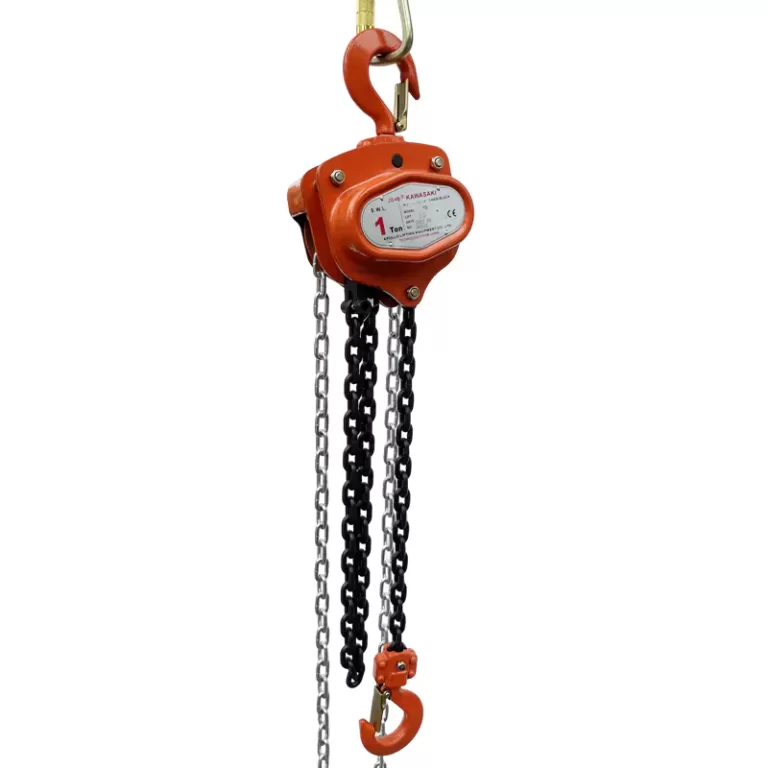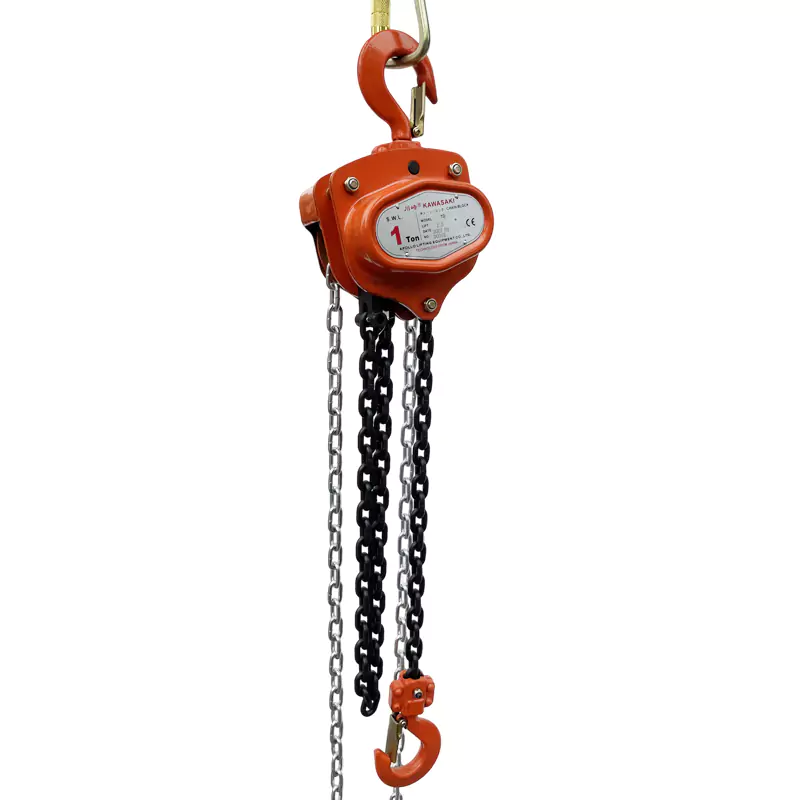
Hand pull hoists, also known as chain blocks or lever hoists, are indispensable manual lifting devices used across various industries where electrical power is unavailable or impractical. Among the different types available, the distinction between “reverse chain” and “direct chain” configurations represents a fundamental design choice that significantly impacts performance, usability, and application suitability. Understanding these differences is crucial for selecting the right hoist for specific operational requirements.
While both systems share the same fundamental purpose—enabling manual lifting of heavy loads through mechanical advantage—their differing approaches to force transmission and operational orientation make each uniquely suited to particular working environments. This article will explore the technical characteristics, advantages, limitations, and ideal use cases for both reverse chain and direct chain hand pull hoists.
Reverse Chain Hand Pull Hoists: The Traditional Workhorse
Operating Principle
Reverse chain hoists, often referred to as “standard” or “conventional” chain blocks, operate on a principle where the hand chain is pulled downward to lift the load upward. This configuration creates an intuitive pulling motion that aligns with natural body mechanics, as operators typically stand below the load and exert downward force. The mechanical system within the hoist translates this downward pull on the hand chain into upward motion of the load chain through a series of precision gears and a load brake mechanism.
Technical Characteristics
Gearing System
Typically employs a planetary gear system that provides high mechanical advantage, allowing heavy loads to be lifted with relatively minimal operator effort.
Load Brake Mechanism
Incorporates an automatic load brake that engages immediately when hand chain tension is released, preventing accidental lowering of the load.
Chain Orientation
Hand chain and load chain extend in opposite directions during operation, requiring vertical clearance both above and below the hoist mounting point.
Advantages of Reverse Chain Hoists
- Ergonomic Operation:The downward pulling motion aligns with natural body mechanics, reducing operator fatigue during extended use.
- High Mechanical Advantage:Typically offer higher gear ratios than direct chain models, making them suitable for heavier loads.
- Proven Reliability:As the traditional design, these hoists have a long track record of dependable performance in industrial applications.
- Better Load Control:The automatic brake system provides precise control during both lifting and lowering operations.
Ideal Applications
- Vertical lifting in workshops and factories with adequate overhead clearance
- Maintenance operations where operators can position themselves directly beneath the load
- Heavy-duty applications requiring lifting capacities above 5 tons
- Environments where precise load positioning is critical
Direct Chain Hand Pull Hoists: The Space-Saving Solution
Operating Principle
Direct chain hoists, sometimes called “push-pull” or “co-planar” hoists, feature a design where the hand chain and load chain move in the same direction during operation. When the operator pulls the hand chain in one direction, the load chain moves in that same direction. This configuration requires the operator to stand to the side of the load rather than directly beneath it, fundamentally changing the working posture and spatial requirements.
Technical Characteristics
Compact Gear Design
Utilizes a spur gear system that is more compact than planetary systems, resulting in a slimmer hoist profile ideal for confined spaces.
Low Headroom Design
Requires significantly less vertical clearance than reverse chain models, making them suitable for low-ceiling environments.
Lateral Operation
Operators apply force laterally rather than vertically, allowing use in situations where standing directly under the load is impossible or unsafe.
Advantages of Direct Chain Hoists
- Space Efficiency:Require minimal vertical clearance, making them ideal for low-headroom applications.
- Versatile Mounting:Can be operated from various angles and positions relative to the load.
- Improved Safety:Operators work from the side rather than beneath the load, reducing risk from potential falling objects.
- Lightweight Construction:Generally lighter and more portable than equivalent-capacity reverse chain hoists.

Ideal Applications
- Low-ceiling environments such as basements, shipholds, or underground facilities
- Horizontal pulling and tensioning applications in addition to vertical lifting
- Maintenance work in confined spaces with limited access
- Mobile applications where portability and quick setup are priorities
Comparative Analysis: Reverse Chain vs. Direct Chain
| Parameter | Reverse Chain Hoists | Direct Chain Hoists |
| Operating Principle | Hand chain pulled downward to lift load upward | Hand chain and load chain move in same direction |
| Required Headroom | Substantial vertical clearance needed | Minimal vertical clearance required |
| Operator Position | Typically directly beneath the load | Beside or to the side of the load |
| Mechanical Advantage | Generally higher (suitable for heavier loads) | Generally lower (light to medium loads) |
| Typical Capacity Range | 0.5 ton to 20+ tons | 0.25 ton to 10 tons |
| Weight & Portability | Heavier, less portable | Lighter, more portable |
| Primary Applications | Vertical lifting with adequate clearance | Confined spaces, low headroom, horizontal pulling |
| Ergonomics | Natural downward pulling motion | Lateral pulling motion, adaptable to various positions |
Selection Guidelines: Choosing the Right Hoist for Your Application
When to Choose a Reverse Chain Hoist
Select a reverse chain configuration when your application involves traditional vertical lifting in environments with adequate overhead clearance. These hoists are particularly suitable for heavy-duty industrial applications, workshop environments, maintenance operations where operators can safely position themselves beneath the load, and situations requiring precise load control and positioning. Their higher mechanical advantage makes them ideal for sustained lifting of heavy materials in manufacturing, construction, and repair facilities.
When to Choose a Direct Chain Hoist
Opt for a direct chain hoist when working in confined spaces with limited vertical clearance, such as underground facilities, shipholds, or low-ceiling industrial plants. These hoists excel in applications requiring horizontal pulling or tensioning in addition to vertical lifting. They are also preferable for mobile operations where portability is important, in safety-sensitive environments where operators should avoid working directly beneath loads, and for light to medium-duty applications where space constraints outweigh capacity requirements.
Hybrid Applications and Special Considerations
Some modern hoist designs incorporate features from both configurations to address specific application challenges. For instance, certain models offer convertible operation modes or adjustable pulling angles. When selecting between reverse and direct chain hoists, also consider factors such as frequency of use, required lifting speed, operator training, maintenance accessibility, and environmental conditions (temperature, humidity, corrosive elements).
Maintenance and Safety Considerations
Regardless of configuration, all hand pull hoists require regular inspection and maintenance to ensure safe operation. Key safety considerations include:
- Never exceed the rated capacity of the hoist
- Inspect chains regularly for wear, deformation, or damage
- Ensure proper lubrication of all moving parts according to manufacturer specifications
- Verify that load brakes engage properly before each use
- Use appropriate personal protective equipment during operation
- Follow manufacturer guidelines for inspection intervals and component replacement
For reverse chain hoists, pay particular attention to overhead clearance and ensure operators are trained to work safely beneath loads. For direct chain hoists, emphasize proper positioning to avoid awkward postures that could lead to musculoskeletal injuries during lateral pulling operations.
1. Fundamental Selection Criteria
1.1 Capacity Requirements
The first and most critical parameter is determining the required lifting capacity. This involves more than just the weight of the primary load:
Maximum Load Weight
Calculate the total weight of the heaviest item to be lifted, including any attachments, rigging, or auxiliary equipment. Always add a safety margin of 10-20% beyond the maximum anticipated load.
Frequency of Use
Determine whether the hoist will be used occasionally, frequently, or intensively. Industrial applications with continuous use require hoists with higher duty cycles and more robust construction.
Load Characteristics
Consider the nature of the load: Is it balanced or unbalanced? Does it have sharp edges? Is it fragile or temperature-sensitive? These factors may require specialized hooks, slings, or handling precautions.
1.2 Lift Height and Headroom Requirements
The required lifting height directly influences hoist selection and configuration:
| Parameter | Reverse Chain Hoists | Direct Chain Hoists | Considerations |
| Minimum Headroom | Substantial clearance required (typically 18-36 inches above hook) | Minimal clearance required (typically 6-12 inches above hook) | Measure available space from mounting point to ceiling/obstruction |
| Maximum Lift Height | Standard models: 10-20 ft; Custom: up to 100 ft | Standard models: 5-15 ft; Limited by compact design | Consider both chain length and housing dimensions |
| Hook Approach | Hook travels directly downward from mounting point | Hook travels at angle or parallel to mounting surface | Affects positioning of load beneath hoist |
2. Operational Environment Assessment
2.1 Workspace Constraints
The physical characteristics of the workspace significantly impact hoist selection:
- Ceiling Height:Low ceilings favor direct chain hoists; high ceilings accommodate either type
- Working Area Dimensions:Limited horizontal space may restrict operator positioning
- Access Points:Doorways, hatches, or other openings may limit hoist size or configuration
- Mounting Options:Availability of suitable beams, trolleys, or fixed mounting points
- Multiple Obstructions:Pipes, conduits, or equipment that may interfere with chain path
2.2 Environmental Conditions
Different environments require specific hoist features and materials:
Corrosive Environments
Marine applications, chemical plants, or outdoor use require stainless steel components, galvanized chains, or special coatings to prevent corrosion.
Temperature Extremes
For freezing conditions or high-temperature applications (above 150°F/65°C), specify temperature-appropriate lubricants and materials.
Hazardous Areas
In explosive atmospheres, non-sparking materials (bronze, aluminum bronze) may be required to prevent ignition.
Cleanroom Applications
Pharmaceutical or electronics manufacturing may require specially cleaned and packaged hoists to prevent contamination.
3. Application-Specific Selection
3.1 When to Choose a Reverse Chain Hoist
Optimal Applications:
- Vertical Lifting in Open Spaces:Workshops, factories, or outdoor areas with ample overhead clearance
- Heavy-Duty Industrial Use:Applications requiring capacities above 5 tons (10,000 lbs)
- Precision Positioning:Operations where fine control and accurate load placement are critical
- High-Frequency Operations:Production environments with repeated lifting cycles throughout the day
- Maintenance Shops:Where operators can safely position themselves beneath loads
Technical Advantages:
Reverse chain hoists typically offer higher mechanical advantages (through planetary gear systems), greater lifting heights, smoother operation under heavy loads, and more precise brake control during lowering operations.
3.2 When to Choose a Direct Chain Hoist
Optimal Applications:
- Low-Headroom Environments:Basements, shipholds, underground facilities, or areas with ceiling obstructions
- Horizontal Pulling/Tensioning:Applications requiring lateral force in addition to vertical lifting
- Confined Spaces:Tight areas where operators cannot stand directly beneath loads
- Mobile/Portable Applications:Situations requiring frequent relocation of hoisting equipment
- Light to Medium Duty:Applications with capacities under 5 tons where space constraints are primary
Technical Advantages:
Direct chain hoists provide compact designs, reduced weight for portability, versatility in mounting and pulling angles, and improved operator safety by allowing work from the side rather than beneath loads.
3.3 Hybrid and Specialized Applications
Some applications may require specialized hoist configurations or additional features:
Double Hook Arrangements
For long or unbalanced loads, consider hoists with two hooks or tandem arrangements for better weight distribution.
Explosion-Proof Requirements
In hazardous environments, select hoists with non-sparking materials and certifications for specific hazard classifications.
High-Speed Models
For applications requiring frequent lifts, some hoists offer enhanced gearing for faster lifting speeds.
Load Monitoring Systems
Integrated load cells or indicators can provide real-time weight measurement for critical applications.
4. Selection Decision Flowchart
Step 1: Determine Load Requirements
Calculate maximum load weight (including safety factor), lifting height, and frequency of use.
Step 2: Assess Workspace Constraints
Measure available headroom, working area dimensions, and identify any physical obstructions.
Step 3: Evaluate Environmental Factors
Identify temperature extremes, corrosive elements, hazardous conditions, or cleanliness requirements.
Step 4: Consider Operational Requirements
Determine need for precision positioning, horizontal pulling, portability, or special mounting.
Step 5: Make Preliminary Selection
Based on Steps 1-4, decide between reverse chain (for open spaces, heavy loads) or direct chain (for confined spaces, low headroom).
Step 6: Verify Technical Specifications
Confirm that selected hoist meets all capacity, dimension, and environmental requirements.
Step 7: Consider Safety and Compliance
Ensure hoist meets relevant safety standards (OSHA, ANSI, ISO) and includes necessary safety features.
Step 8: Final Selection and Procurement
Select specific model from reputable manufacturer, considering warranty, service, and total cost of ownership.
5. Key Technical Specifications Checklist
Before finalizing your hoist selection, verify these critical specifications:
- Rated Capacity:Clearly marked on hoist nameplate; never exceed
- Lift Height:Maximum distance between upper and lower hook positions
- Headroom Requirement:Minimum distance from mounting point to hoist housing
- Chain Specifications:Grade of chain, pitch size, and material composition
- Hook Types:Safety latch hooks, eye hooks, or specialized configurations
- Gear Ratio:Determines mechanical advantage and required pulling force
- Weight of Hoist:Important for portable applications and mounting considerations
- Duty Cycle:Number of lifts per hour and continuous operation capability
- Standards Compliance:ANSI/ASME B30.21, OSHA 1910.179, or other applicable standards
- Warranty and Service:Manufacturer support, spare parts availability, service network
6. Common Selection Mistakes to Avoid
| Mistake | Consequence | Prevention |
| Underestimating Load Weight | Overloading, hoist failure, safety hazard | Weigh loads accurately; include safety margin |
| Ignoring Headroom Requirements | Hoist won’t fit in space; limited lifting height | Measure carefully; account for all dimensions |
| Selecting Wrong Chain Type for Environment | Premature corrosion, chain failure | Match chain material to environmental conditions |
| Overlooking Duty Cycle Requirements | Premature wear, frequent breakdowns | Select hoist rated for actual usage frequency |
| Choosing Based Solely on Price | Higher long-term costs, safety compromises | Consider total cost of ownership, not just purchase price |
7. Integration with Accessories and Supporting Equipment
The hoist is often part of a larger material handling system. Consider these integration factors:
Trolley Systems
For horizontal movement, select appropriate trolleys (push, geared, or motorized) compatible with your beam type and dimensions.
Beam Clamps and Mounting Hardware
Ensure proper mounting hardware is selected for secure attachment to I-beams, structural steel, or other supports.
Load Attachments
Select appropriate slings, shackles, and lifting attachments compatible with your hoist hooks and load characteristics.
Safety Devices
Consider additional safety equipment such as overload limit switches, emergency stop mechanisms, or warning labels.
Conclusion
The choice between reverse chain and direct chain hand pull hoists represents a fundamental decision that should be based on specific application requirements, workspace constraints, and operational priorities. Reverse chain hoists remain the preferred choice for traditional vertical lifting applications with adequate headroom, offering high mechanical advantage and intuitive operation. Direct chain hoists provide a valuable alternative for space-constrained environments, offering versatility and improved safety through lateral operation.