
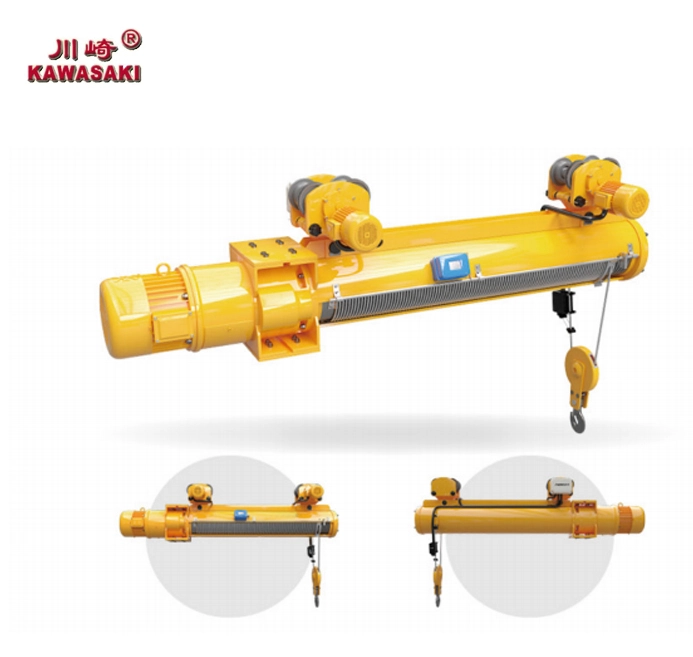
A broken wire rope is never just a component failure; it is a system alarm. In heavy industries where electric wire rope hoists form the backbone of material handling, the integrity of the wire rope is synonymous with operational safety, productivity, and cost-efficiency. For decision-makers—be it plant managers, project engineers, or procurement specialists—understanding and mitigating wire rope wear is not merely maintenance; it’s a critical risk management strategy.
This guide delves into the root causes of premature wire rope wear and failure, moving beyond superficial checks to provide a framework for proactive prevention. It consolidates expertise from the field, reflecting the engineering rigor applied by leading hoist manufacturers like Hangzhou Apollo Lifting Equipment Co., Ltd., where solving such fundamental challenges is central to delivering reliable heavy lifting solutions.
1. The High Cost of Neglect: Understanding Wire Rope Degradation
Wire rope in an electric wire rope hoist is a precision assembly of wires, strands, and a core, designed to bear immense tensile forces. Failure rarely occurs spontaneously; it is almost always the endpoint of progressive degradation. Primary failure modes include:
-
Abrasive Wear: The gradual loss of material as the rope passes over sheaves (pulleys) and drums. Visible signs include flattened outer wires and a noticeable reduction in rope diameter.
-
Fatigue Failure: Small, localized cracks develop from repeated bending under load, often seen as broken wires at points of contact with sheaves.
-
Corrosion: Chemical attack weakens wires from the inside out, leading to brittle fracture. It is particularly insidious in harsh environments like mining operations or coastal facilities.
-
Overload and Deformation: Exceeding the Working Load Limit (WLL) can cause strand distortion, “birdcaging,” or permanent rope stretch, catastrophically reducing strength.
-
Improper Spooling: Cross-winding or gaps on the drum creates pinch points, leading to severe crushing and accelerated wear.
Ignoring these signs leads to unplanned downtime, costly emergency replacements, and, most gravely, severe safety incidents. The goal is to transition from reactive replacement to predictive management.
2. Key Considerations for Analysis: A Systemic View
Addressing rope wear requires looking at the entire system. Isolating the problem to just the rope itself is a diagnostic error. Four interconnected factors must be analyzed:
-
Operational Load Dynamics: True assessment goes beyond the nominal load. Factors like shock loading (sudden starts/stops), multi-crane lifts creating side loads, and off-center lifting all impose stresses far greater than a static weight. Hoist manufacturers design for dynamic factors, but improper use voids these safety margins.
-
Environmental & Duty Cycle Stress: The operating environment is a primary accelerator. An electric hoist for mining operations faces abrasive dust, while a port crane battles saltwater corrosion. Similarly, a high-cycle warehouse hoist suffers more bending fatigue than one used intermittently. The duty cycle (starts/hour, average load) must match the hoist’s design classification.
-
Sheave and Drum Geometry: The sheave is the rope’s partner in motion. A sheave diameter too small forces an excessively tight bend, accelerating metal fatigue. Worn sheave grooves fail to support the rope properly, causing concentrated pressure and misalignment. Proper groove profile and hardness are non-negotiable for rope longevity.
-
Installation and Maintenance Practices: Even the best rope from top hoist manufacturers will fail if improperly installed. This includes incorrect tensioning, inadequate lubrication, or allowing a new rope to “turn” and unwind during first spooling. A lack of a regular inspection and lubrication regimen allows minor issues to escalate.
3. Comparative Solutions: From Component to System Level
Effective mitigation strategies operate at multiple levels, from component selection to integrated design.
| Solution Tier | Approach & Options | Key Benefits | Implementation Considerations |
|---|---|---|---|
| Tier 1: Equipment & Component Selection | Choosing the Right Hoist: Specifying a wire rope hoist with a generous sheave-to-rope diameter ratio (e.g., 20:1 or higher).
Advanced Rope Constructions: Opting for rotation-resistant ropes, ropes with independent wire rope core (IWRC), or polymer-coated wires for corrosion protection. |
Directly addresses root causes of fatigue and corrosion. Extends mean time between failures (MTBF). | Higher initial investment. Requires technical consultation with knowledgeable electric wire rope hoist manufacturers to match specification to application. |
| Tier 2: System Design & Retrofit | Optimizing the Path: Ensuring precise alignment of sheaves and drum. Installing lined (urethane or nylon) sheave grooves to reduce abrasive wear.
Adding Technology: Integrating rope condition monitoring systems that detect loss of metallic area or broken wires in real-time. |
Improves efficiency and safety of existing setups. Transforms maintenance from scheduled to condition-based. | May require downtime for installation. Retrofits need engineering approval to ensure structural integrity. |
| Tier 3: Service & Expertise | Professional Inspection & Lubrication: Implementing a program conducted by trained technicians using specialized tools and lubricants.
Root Cause Analysis (RCA): Engaging supplier engineers to perform failure analysis, moving beyond “changing the rope” to “fixing the cause.” |
Maximizes asset life. Prevents recurring problems. Builds institutional knowledge. | Relies on the quality and global reach of your supplier’s service network. This is where partners like Hangzhou Apollo Lifting Equipment differentiate, offering direct access to engineering support. |
4. Best Practices for Prevention: An Actionable Protocol
Knowledge must translate into action. We recommend instituting the following protocol:
-
A Structured Inspection Regimen:
-
Pre-shift Visual Check: Operators look for obvious damage, lubrication state, and proper spooling.
-
Monthly Detailed Inspection: A certified technician performs a hands-on check, measuring rope diameter at fixed points, counting broken wires in reference lengths, and assessing corrosion.
-
Annual Load Testing & NDT: Conduct annual load tests and, where risk is high, employ Non-Destructive Testing (NDT) methods like magnetic flux leakage to assess internal wire condition.
-
-
Operator Training and Procedure Adherence: Empower operators as the first line of defense. Train them to recognize symptoms (e.g., unusual noise, rope “jumping” in sheave grooves), enforce strict “no side-pull” rules, and mandate smooth, controlled operation to minimize dynamic loads.
-
Lubrication as a Critical Function: Lubrication reduces internal friction and provides a barrier against corrosion. Use the correct type of lubricant (penetrating vs. coating) and apply it properly to both the exterior and, critically, the core of the rope.
-
Documentation and Trend Analysis: Maintain a log for each hoist. Record inspection results, lubrication dates, and any incidents. Tracking diameter reduction or the rate of broken wire appearance over time is the most powerful predictive tool available.
5. The Future and Our Commitment at Hangzhou Apollo
The future of wire rope management lies in greater integration and intelligence. We envision heavy lifting solutions where hoists are equipped with embedded sensors, feeding data into plant-wide predictive maintenance platforms. The evolution toward smarter cranes used in industry will make failure prediction more accurate, shifting operations further from risk.
At Hangzhou Apollo Lifting Equipment Co., Ltd., our role extends beyond being electric wire rope hoist manufacturers. We act as engineering partners. From the initial design phase—where we advocate for system specifications that prioritize longevity—to our global after-sales service network providing expert audits and maintenance support, our value proposition is anchored in preventing your operational headaches.
Our commitment to stringent quality control in manufacturing, from sourcing premium rope to precision-machining sheaves, is the first, most fundamental step in this long-term partnership. By choosing a supplier invested in the total cost of ownership, you secure not just a product, but a pillar for your operation’s safety and productivity.
Disclaimer: This guide provides general technical information for educational purposes. Always adhere to the specific operational and maintenance manuals provided with your equipment, comply with all local and national safety regulations (OSHA, ISO, etc.), and consult with qualified engineers for system-specific advice.