Fundamental Technical Distinctions
Wire Rope Hoist Construction
Core Design Principle: Wire rope hoists utilize a multi-stage composite cable system engineered for tensile strength and flexibility.
- Wire Formation:Individual high-carbon steel wires, typically 0.2-5mm in diameter, are drawn to precise specifications for strength and flexibility.
- Strand Construction:Multiple wires (usually 7-61 per strand) are helically twisted around a central axis to form a strand. This twisting pattern (Lang’s lay or regular lay) determines torque characteristics and resistance to rotation.
- Rope Assembly:Multiple strands (commonly 6 or 8) are then wound in a precise helical pattern around a core. The core can be:
- Fiber Core (FC):Provides superior flexibility and cushioning but reduced heat resistance.
- Steel Core (IWRC/SC):Offers higher strength, heat resistance, and resistance to crushing.
- Lay Direction:The direction of winding (right-hand lay or left-hand lay) affects handling characteristics and compatibility with drum winding systems.
- Drum Mechanism:The rope winds onto a grooved drum, which maintains alignment and prevents overlapping, with capacity determined by drum diameter, groove pitch, and flange height.
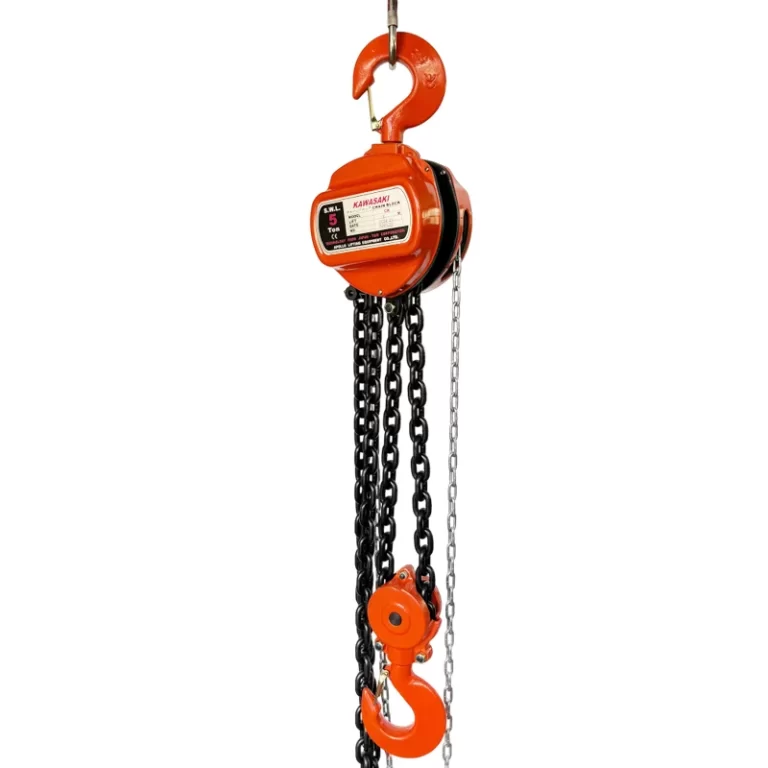
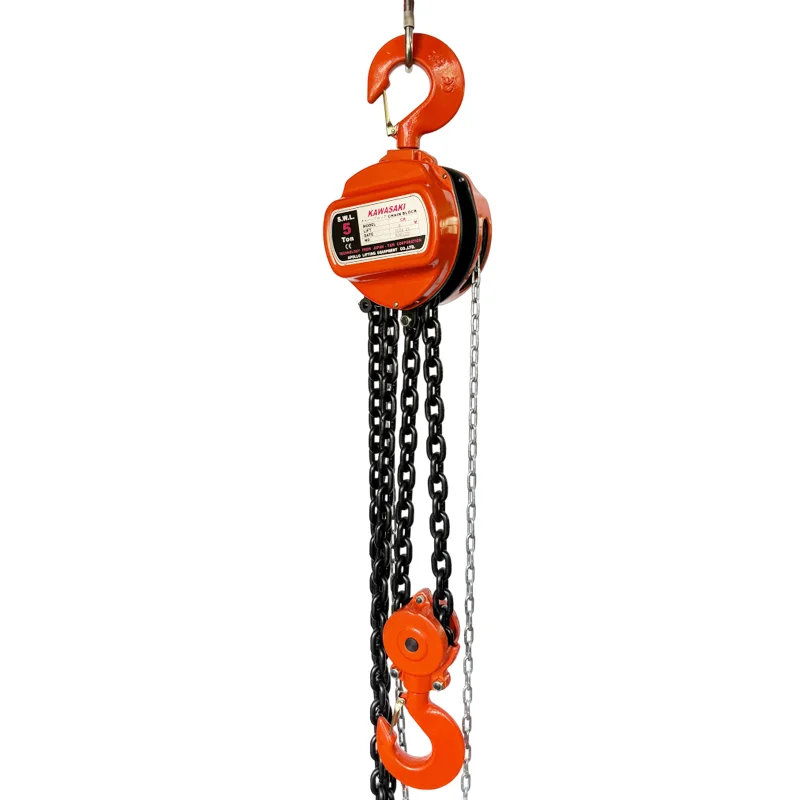
Chain Hoist Construction
Core Design Principle: Chain hoists employ a linked mechanical system designed for compactness and direct load transfer.
- Link Formation:Individual links are fabricated from alloy steel through precision forging, welding, or casting processes. Heat treatment (quenching and tempering) optimizes strength-to-weight ratio.
- Chain Types:
- Welded/Load Chain:Links are welded closed, providing smooth operation and high strength. Common in higher-capacity hoists.
- Coil Chain:Made from wound steel, offering flexibility but generally lower load capacity.
- Pitch and Gauge:The distance between link centers (pitch) and material thickness (gauge) determine load capacity, flexibility, and compatibility with sprocket systems.
- Sprocket Engagement:Instead of a drum, chain hoists use a precision-machined sprocket (pocket wheel) that engages with individual chain links. The number of teeth engaged simultaneously distributes the load.
- Storage System:Excess chain is stored in a chain container or bag, which must accommodate the chain’s natural curvature without inducing twists or knots.
How Structural Differences Drive Performance Characteristics
These fundamental structural differences create distinct performance profiles that directly influence application suitability:
- Strength & Weight Ratio:Wire rope’s composite design achieves exceptional tensile strength with relatively lightweight construction, enabling higher capacities over longer spans. Chain’s linked structure provides excellent compressive strength but adds weight per unit length.
- Flexibility & Minimum Bend Radius:The helical construction of wire rope allows it to bend smoothly over sheaves and drums with a relatively small bend radius (typically 6-10 times rope diameter). Chain links articulate at discrete points, creating a more segmented bending pattern that requires larger sprockets to reduce fatigue.
- Fatigue Resistance:Wire rope experiences distributed stress across multiple wires, with internal friction between wires absorbing operational micro-movements. Chain concentrates stress at link bearing surfaces and weld points, making it more susceptible to fatigue from twisting or side loading.
- Deformation Behavior:Under overload, wire rope typically exhibits gradual failure with visible broken wires providing warning. Chain may fail catastrophically if a master link or weld fails suddenly.
- Environmental Interaction:Wire rope’s complex interior spaces can trap moisture and contaminants, necessitating careful lubrication. Chain’s exposed surfaces are easier to inspect but more vulnerable to direct chemical attack or abrasion.
- End Connection Methods:Wire rope requires specialized terminations (sockets, clips, or swaged fittings) that must preserve rope integrity. Chain uses standardized hooks and connectors that interface directly with link geometry.
These foundational distinctions in material science and mechanical design create the performance differentials that inform the selection criteria between wire rope and chain hoist systems in industrial applications. Understanding these technical origins enables engineers to make informed decisions based on operational requirements rather than mere tradition or anecdotal preference.
Wire Rope Electric Hoists: Advantages and Limitations
Core Advantages
Wire rope hoists excel in several key areas. First, they offer superior lifting heights, often reaching 100 feet or more without compromising performance, making them ideal for high-bay warehouses and tall construction sites. Second, their lifting speeds are typically faster than chain alternatives, with some models achieving speeds up to 60 feet per minute. Third, wire rope provides excellent resistance to abrasion and cutting, especially important when handling loads with sharp edges. Additionally, modern wire rope hoists incorporate advanced safety features like torque limiters and emergency stop systems that respond within milliseconds.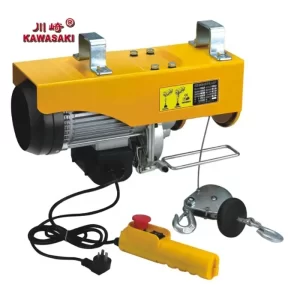
Inherent Limitations
Despite their strengths, wire rope hoists present certain limitations. They are generally heavier and require more powerful motors and structural support. Maintenance demands are higher, as wire ropes must be regularly inspected for broken wires, corrosion, and proper lubrication. Furthermore, wire rope is susceptible to crushing when improperly wound on drums, and its flexibility decreases in extremely low temperatures. Initial costs are typically higher compared to chain hoists of similar capacity.
Chain Electric Hoists: Advantages and Limitations
Core Advantages
Chain hoists offer distinct benefits in specific applications. Their compact design allows operation in confined spaces where wire rope hoists cannot fit. They are significantly lighter, making them portable and easier to install without heavy support structures. Chain hoists demonstrate excellent performance in high-temperature environments where wire rope might anneal and lose strength. Maintenance is generally simpler, with chains being easier to inspect visually for wear and damage. Additionally, chain hoists typically have lower initial purchase costs and are more tolerant of shock loading conditions.
Inherent Limitations
Chain hoists also have notable limitations. Their lifting height is constrained by practical chain management—excess chain must be properly stored, limiting maximum lift to approximately 20 feet in most models. Lifting speeds are slower, typically ranging from 2 to 20 feet per minute. Chains are more susceptible to damage from twisting and side loading, requiring careful operation. Noise levels are generally higher during operation, and chains can be vulnerable to certain chemical exposures that cause embrittlement. Finally, chain hoists have more limited capacity options in the higher ranges compared to wire rope systems.
Comparative Analysis: Direct Performance Comparison
| Performance Parameter | Wire Rope Hoist | Chain Hoist |
| Lifting Height | High (up to 100+ ft) | Limited (typically under 20 ft) |
| Lifting Speed | Fast (20-60 ft/min) | Slow to Moderate (2-20 ft/min) |
| Space Requirements | More headroom needed | Compact, minimal headroom |
| Weight & Portability | Heavier, less portable | Lighter, more portable |
| Temperature Tolerance | Limited in high heat | Excellent high-temperature performance |
| Maintenance Requirements | More frequent, specialized | Simpler, visual inspections |
| Initial Cost | Higher | Lower |
| Durability with Sharp Loads | Excellent | Vulnerable |
Ideal Application Scenarios
Wire Rope Hoist Applications
- High-Bay Warehousing:Where lifting heights exceed 20 feet and speed is essential for productivity.
- Construction Sites:For lifting materials to upper floors with varying load requirements.
- Manufacturing Facilities:In assembly lines requiring frequent lifts of heavy machinery or components.
- Shipbuilding & Maritime:Where corrosion-resistant wire ropes handle heavy loads in demanding environments.
- Aircraft Maintenance:For precision lifting of aircraft components requiring smooth operation.
Chain Hoist Applications
- Maintenance Shops:Where portability and compact design are prioritized for equipment repair.

- Foundries & Metal Processing:High-temperature environments where wire ropes would degrade.
- Confined Spaces:Maintenance work in tanks, vessels, or areas with limited headroom.
- Stage & Entertainment:For theatrical rigging where quiet operation is less critical.
- Low-Frequency Applications:Situations where hoists are used intermittently with budget constraints.
Selection Considerations and Future Trends
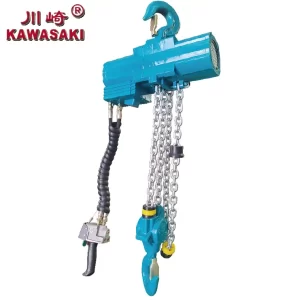
When selecting between wire rope and chain hoists, engineers must extend their analysis beyond basic load capacity and lifting height. Key considerations include the duty cycle—whether the hoist will be used intermittently or continuously in demanding applications—as this directly affects wear, heat generation, and longevity. Environmental conditions such as extreme temperatures, high humidity, or exposure to corrosive chemicals can significantly degrade components; for instance, chains may require special coatings in corrosive settings, while wire ropes might need stainless steel construction.
Installation constraints, including available headroom, footprint, and mounting structure, also guide the choice. Chain hoists often suit compact, low-headroom spaces, whereas wire rope hoists may require greater clearance for proper spooling. Furthermore, long-term maintenance readiness—access to spare parts, technical expertise, and service support—should align with the facility’s capabilities to avoid prolonged downtime.
A comprehensive evaluation should prioritize total cost of ownership over initial purchase price. This includes installation expenses, energy efficiency, routine maintenance, part replacement costs, and potential production losses from unexpected failures.
Technological advancements are increasingly blurring the traditional lines between wire rope and chain hoists. Hybrid systems, for example, incorporate high-performance synthetic ropes that combine lightweight properties with resistance to corrosion and fatigue, offering an alternative in environments where traditional metal components struggle.
Smart monitoring and IoT-enabled systems are transforming maintenance practices. Sensors now track parameters such as rope tension, chain wear, deformation, and lubrication levels, enabling predictive maintenance and reducing unplanned outages. Advances in materials science have also led to higher-strength, lightweight alloy chains and more durable, flexible wire ropes with enhanced core construction. These innovations extend operational life and push the boundaries of application for both technologies.
Looking ahead, integration with automation and digital twins—virtual models that simulate real-world performance—will further optimize hoist selection and operation. As performance gaps narrow, the decision will increasingly depend on specific use-case requirements, cost-efficiency analysis, and adaptability to smart factory ecosystems.
Conclusion
The choice between wire rope and chain electric hoists represents a fundamental engineering decision that significantly impacts operational efficiency, safety, and long-term costs. Wire rope hoists excel in applications requiring high lifting heights, faster speeds, and durability with challenging loads. Chain hoists dominate where portability, compact design, high-temperature operation, and budget considerations are paramount. Rather than declaring one technology universally superior, informed selection based on specific application requirements, operational environment, and long-term strategic planning ensures optimal performance and return on investment. As both technologies continue evolving through material science and digital integration, their complementary strengths will maintain both as essential tools in the material handling landscape for decades to come.