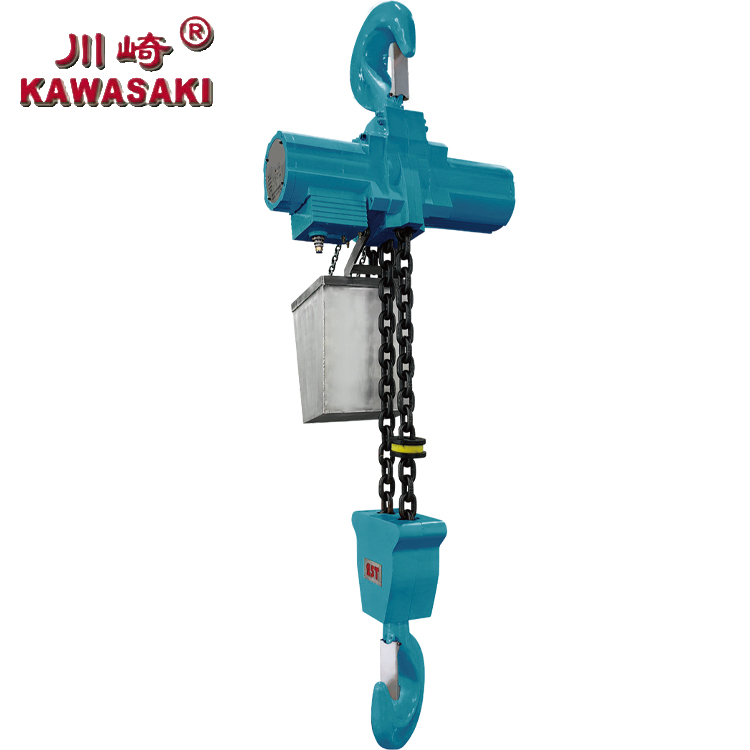
In the world of industrial lifting, it‘s a common misconception that the most important specification for an electric hoist is its maximum lifting capacity—the tons it can handle. While capacity is undeniably fundamental, experienced procurement managers and plant engineers know that focusing solely on “how much” it can lift ignores an equally critical question: “how often and how intensely?”
This is where the concept of an electric hoist‘s “Working Level” (also known as Duty Cycle or Duty Classification) takes center stage. Selecting a hoist without understanding its working level is like choosing a vehicle based only on its payload without considering whether it‘s for city driving or off-road racing. A mismatch can lead to frequent breakdowns, premature failure, and even safety hazards.
As a professional in the industry, whether you are searching for heavy lifting solutions or evaluating wire rope hoist suppliers, understanding this parameter is essential. At Hangzhou Apollo Lifting Equipment Co., Ltd. , we believe in empowering our clients with the knowledge to make informed decisions. With years of experience as leading hoist manufacturers and suppliers, we have seen how the correct application of working level classifications extends equipment life and optimizes return on investment. This guide will delve deep into what working level means and why it is the cornerstone of proper hoist selection.
What is “Working Level” (Duty Cycle)?
The working level of an electric hoist is a classification system defined by international standards (such as ISO 4301, FEM 9.511, or ASME HST) that measures the intensity of use a hoist is designed to withstand . It is a comprehensive indicator of the hoist’s “durability” and “fatigue resistance.”
Unlike a simple capacity rating, the working level takes into account several factors:
-
Load Spectrum: How often the hoist lifts light loads versus its maximum rated load.
-
Average Daily Operating Time: The total duration the hoist motor runs per day.
-
Frequency of Starts: The number of starts and stops per hour, which impacts the motor and brake wear .
Standards like ISO 4301 classify hoists from M3 (Light Duty) to M8 (Very Heavy Duty) , while the European FEM standard uses classifications like 1Bm, 1Am, 2m, and 3m . For instance, a hoist rated FEM 1Bm (ISO M3) is designed for occasional use, such as in a maintenance shop where lifts are infrequent. In contrast, a hoist rated FEM 3m (ISO M6) is engineered for intensive, continuous operations like those found in steel mills or mines .
Why Working Level Matters in Selection
Choosing the correct working level is not about getting a hoist that is “strong enough” to pick up a load; it‘s about getting one that is durable enough to handle your specific workload over its intended lifespan. Here is how it impacts your operations:
1. Preventing Thermal Overload
The primary limiting factor in a hoist‘s duty cycle is heat buildup in the motor. When a hoist runs frequently, the motor generates heat. If the running time exceeds the designed “cyclic duration factor” (c.d.f.), the motor cannot cool down sufficiently, leading to insulation breakdown and eventual burnout . A light-duty hoist used in a heavy-duty application will overheat rapidly, causing unexpected downtime.
2. Mechanical Fatigue and Lifespan
Every lift, especially at or near full capacity, causes microscopic stress on the gears, shafts, and structure. Classifications like M5, M6, or M7 are calculated with a theoretical total running time (e.g., 1,600 hours for M5 vs. 12,500 hours for M8) . Selecting a hoist with a working level too low for your application means you will mechanically “use up” its lifespan much faster than anticipated.
3. Operational Safety and Compliance
Using a hoist outside of its design parameters increases the risk of mechanical failure. International standards and safety regulations require that the equipment is suitable for the intended use. As overhead crane manufacturers, we ensure that every hoist we supply is matched to the operational demands to guarantee not only performance but also the safety of your personnel.
A Closer Look at Common Duty Classifications
To help you translate your application needs into the correct specification, here is a breakdown of common working levels according to ISO and FEM standards :
| Working Level (ISO/FEM) | Common Description | Typical Applications | Average Daily Running Time | Load Characteristics |
|---|---|---|---|---|
| M3 / 1Bm | Light Duty | Maintenance shops, occasional installation, infrequent use | Up to 1-2 hours | Rarely lifting full capacity |
| M4 / 1Am | Medium Duty | General warehouses, light assembly lines, machine shops | 2-4 hours | Moderate loads, intermittent use |
| M5 / 2m | Heavy Duty | General manufacturing, production lines, foundries | 4-8 hours | Frequent lifting of rated loads |
| M6 / 3m | Extra Heavy Duty | High-volume production, steel yards, ports, mines | 8-16 hours | Continuous operation, frequent full-load lifts |
| M7-M8 / 4m-5m | Ultra Duty | Continuous processes, bulk handling, 24/7 operations | 16-24 hours | Severe duty, constant max loads |
Note: It is crucial to consult with experienced industrial crane manufacturers like our team at Hangzhou Apollo to map your specific operational data—such as load spectrum and cycles per hour—to the correct classification.
The Apollo Approach: Integrating Working Level into Heavy Lifting Solutions
At Hangzhou Apollo Lifting Equipment Co., Ltd., our role as a provider of comprehensive heavy lifting solutions goes beyond simply supplying equipment. We apply a consultative approach to every project. When we collaborate with clients—whether they require an electric chain hoist for a fabrication shop or a specialized electric hoist for mining operations—our first step is always to analyze the working parameters.
We adhere strictly to international standards, ensuring that our hoists are not just built with high-quality materials, but are also correctly rated for their intended class. Our engineering team utilizes advanced design principles similar to European-style hoists, which focus on optimizing the hoist’s profile while maintaining the necessary duty cycle capabilities . This ensures that you receive a hoist that performs reliably without being unnecessarily over-engineered (and overpriced) for your needs.
Best Practices for Specifying Your Next Hoist
To ensure you select the right equipment, we recommend following this checklist:
1. Audit Your Application
Don’t just look at the maximum load. Document the average load weight compared to the max load. Calculate the number of lifts per hour and the total running time of your crane or hoist per day. This data is the foundation for determining your required working level .
2. Match the Hoist to the Task, Not Just the Budget
It can be tempting to choose a lower-cost hoist with a lighter duty rating if it meets the tonnage requirement. However, consider the Total Cost of Ownership. A light-duty M3 hoist used in an M5 environment will fail prematurely, leading to higher maintenance costs and production losses.
3. Consider Future Needs
Is your production expected to increase? Will your facility run additional shifts? Specifying a hoist with a slightly higher working level (e.g., choosing M5 instead of M4) can provide valuable headroom for future operational demands without requiring a complete equipment overhaul.
4. Consult Reputable Suppliers
Work with established electric hoist suppliers who understand the nuances of these classifications. A reliable partner will ask you detailed questions about your usage patterns, not just the weight you need to lift.
Future Trends in Hoist Design and Duty Cycles
The industry is seeing a shift towards more intelligent and efficient designs. Leading hoist manufacturers are now integrating Variable Frequency Drives (VFDs) as standard on many models. VFDs allow for smoother acceleration and deceleration, which reduces mechanical shock and can effectively manage the thermal load on the motor, enhancing the practical duty cycle of the hoist .
Furthermore, the adoption of IoT (Internet of Things) and smart monitoring systems is on the rise. These systems can track the actual usage and load spectrum in real-time, providing data that helps maintenance teams predict wear and verify that the hoist is operating within its designed working level. As a forward-thinking company, Hangzhou Apollo is committed to integrating these intelligent features into our product lines, ensuring that we remain at the forefront of the lifting industry.
Conclusion
The working level of an electric hoist is a fundamental specification that protects your investment, ensures operational safety, and maximizes productivity. Whether you are managing a large-scale industrial facility or a specialized workshop, taking the time to understand and correctly apply duty cycle classifications is essential.
At Hangzhou Apollo Lifting Equipment Co., Ltd. , we pride ourselves on being more than just hoist manufacturers and suppliers. We are your partners in heavy lifting solutions, dedicated to providing equipment that is perfectly suited to your operational demands. With a commitment to rigorous quality control, customized engineering, and global service, we help you lift smarter, safer, and more efficiently.
When you are ready to select your next hoist, look beyond the tonnage. Look at the working level, and choose a partner with the expertise to guide you. Choose Hangzhou Apollo. For more information on our full range of products—from industrial crane manufacturers to specialized lifting solutions—please contact our team of experts today.