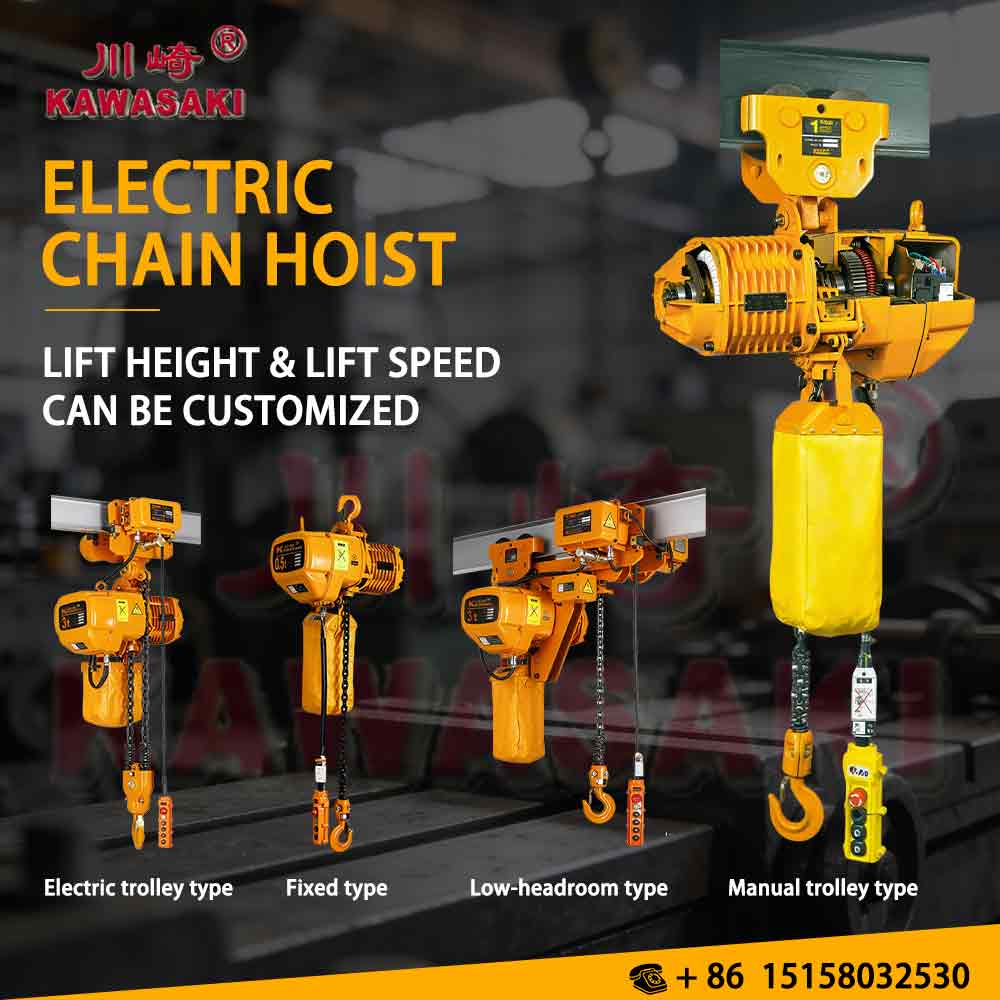
Introduction: Unlocking the Full Potential of Your Lifting Equipment
In the demanding landscape of modern manufacturing, warehousing, and heavy fabrication, the decision between a fixed lifting point and a traveling overhead system carries profound implications for workflow efficiency. Often, an operation begins with a simple, stationary electric hoist mounted to a rigid ceiling bracket or a gantry leg. As production needs evolve, the requirement to move loads horizontally—to traverse from a machining center to an assembly station or to cover multiple work cells—becomes undeniable.
This is where the conversation shifts from replacement to retrofit. Plant managers and maintenance engineers frequently ask: “Can I simply buy a trolley and attach my existing hoist to it? Will that compromise the integrity and safety of the entire lifting apparatus?”
At Hangzhou Apollo Lifting Equipment Co., Ltd., as established hoist manufacturers and trusted crane parts suppliers globally, we recognize this junction between cost-efficiency and safety compliance. This technical guide provides a definitive, engineering-backed roadmap for converting a fixed-mount electric chain hoist or wire rope hoist into a fully mobile, trolley-mounted system. We will dissect the necessary components, the critical structural interfaces, and the rigorous safety validation required to ensure the modified assembly performs as reliably as a factory-built crane hoist.
Part 1: Understanding the Engineering Baseline – Fixed vs. Mobile Load Paths
Before purchasing a single part, it is imperative to understand what changes from a structural and dynamic perspective when a hoist transitions from stationary to mobile. Overhead crane manufacturers design their systems from the ground up to handle specific dynamic forces. A retrofit alters those force vectors.
-
Fixed Mount (Static Load): The hoist body is rigidly bolted to a structure. The primary forces are vertical (gravity) and, during lift start/stop, a minor torsional reaction. The mounting bolts are loaded primarily in tension and shear.
-
Trolley Mount (Mobile Load): The hoist body is now suspended from a wheeled carriage on a beam. The system experiences trolley acceleration and deceleration forces (longitudinal inertia). Additionally, as the load swings—and it will swing during cross travel—the hoist body experiences lateral pendulum forces and side-thrust against the trolley side plates.
Failing to account for these new dynamic forces is the most common reason retrofitted electric hoists suffer from premature bearing failure, cracked suspension brackets, or, in worst-case scenarios, detachment from the trolley.
Part 2: The Bill of Materials – Essential Components for the Conversion
Converting a stationary hoist to a running configuration is not a single-part swap. It is an assembly of matched components. As a comprehensive hoist suppliers resource, Hangzhou Apollo categorizes these required parts into three critical tiers:
Tier 1: The Motion Chassis (The Trolley)
This is the primary crane parts suppliers component. You must select the correct trolley type based on the beam profile and the hoist’s rated capacity.
-
Manual Push/Pull Trolley: Suitable for light-duty warehouse overhead crane applications where positioning is infrequent and precision is required without motor vibration. These are robust and cost-effective but require physical effort to move the load.
-
Motorized (Electric) Trolley: Essential for industrial crane applications with heavy loads (over 2 tons) or long travel distances. This requires matching the trolley motor horsepower to the total weight (hoist dead weight + working load limit).
-
Geared Trolley (Hand Chain): A middle ground used in hazardous environments or where electrical supply for travel is limited.
Tier 2: The Suspension Interface (The Critical Link)
This is the most overlooked yet most safety-critical aspect of the conversion. The hoist body does not simply bolt to the trolley side plates using off-the-shelf hardware.
-
Suspension Brackets / Lug Plates: Hoist manufacturers design specific suspension plates for fixed vs. trolley mounts. A fixed-mount hoist top hook lug is often too narrow or has a hole geometry designed for a static pin, not a pivoting suspension shaft.
-
The Pivot Pin / Shaft: Electric chain hoist models, especially larger capacities from chain hoist suppliers, require a robust pivot shaft that allows the hoist body to “float” slightly. This floating action compensates for minor runway beam irregularities and prevents the trolley wheels from lifting off the flange.
-
The Danger Zone: Bolting the hoist body rigidly to the trolley frame eliminates this pivot. This forces the trolley wheels to act as suspension. Under a swinging load, one wheel will inevitably lift off the track, leading to derailment or catastrophic skewing.
Tier 3: Electrical and Control Integration
For motorized trolley conversions of electric wire rope hoist manufacturers models, this tier is complex.
-
Festooning System or Cable Trolleys: A fixed hoist has a stationary power cord. A traveling hoist requires a cable management system to feed power along the entire runway length.
-
Control Pendant Consolidation: If adding a motorized trolley, you now have two motions (Lift and Traverse). The pendant must be upgraded from a 2-button to a 4-button or 6-button station, requiring a new wiring schematic or the addition of a collector rail/cable carrier system.
Part 3: Safety Implications and Structural Integrity Analysis
The question “Does it affect overall safety?” receives a definitive YES from leading crane manufacturers and regulatory bodies. The nature of that impact can be positive (increased flexibility with proper engineering) or negative (catastrophic failure with improper installation).
3.1. The Capacity De-Rating Myth vs. Reality
A common misconception is that adding a trolley automatically reduces the lifting capacity of the hoist. This is generally false for standard beam flanges.
-
The Hoist’s Core Capacity: The lifting mechanism (gear train, motor, brake, chain/sprocket) does not change its internal load rating.
-
The Trolley’s Capacity: The trolley wheels, bearings, and side plates are rated for a specific maximum load. As long as the trolley’s capacity equals or exceeds the hoist’s capacity, the lifting capacity is maintained.
-
The Beam Flange Capacity: This is the true limit. When a trolley runs on an I-beam, the flange is in bending. Converting a fixed point to a moving load introduces cyclic fatigue to the beam flange. Overhead crane manufacturers calculate beam stresses based on wheel loads. A retrofit requires an engineering check of the existing runway beam to ensure it can handle the concentrated wheel pressure of a crane hoist trolley, which is often higher than the static point load of a fixed bracket.
3.2. Dynamic Stability and Load Swing Mitigation
Fixed hoists induce vertical swing. Trolley-mounted hoists induce vertical and horizontal swing (pendulum effect during acceleration/deceleration).
-
Safety Risk: Increased load swing radius increases the risk of collision with personnel, racking, or nearby equipment.
-
Component Stress: Lateral swing applies side-load forces to the industrial manual hoists body and the trolley side plates. Side plates that were only engineered for vertical gravity now experience cyclical bending fatigue. This is why electric hoist manufacturers like Hangzhou Apollo design our trolley side plates with significant safety factors to accommodate these lateral forces in all our heavy lifting solutions.
3.3. Documentation and Traceability
From a compliance and insurance perspective, modifying a hoist changes its “birth certificate.”
-
Certification: The original Declaration of Conformity (CE, ASME B30.16) applies only to the hoist as a stationary unit. The new assembly (hoist + trolley + suspension) technically constitutes a new machine.
-
Liability: If a failure occurs due to a non-OEM retrofit bracket, the liability shifts from the hoist manufacturers to the entity performing the modification. To mitigate this, Hangzhou Apollo offers Pre-Engineered Retrofit Kits. These kits include matched suspension components that have been FEM-analyzed and fatigue-tested as a complete crane hoist assembly, preserving the integrity of the original warranty and safety envelope.

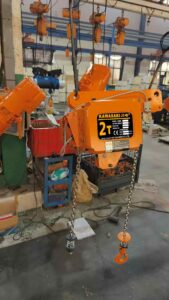
Part 4: Step-by-Step Retrofit Best Practices
Based on our experience supporting crane suppliers and end-users worldwide, here is a best-practice protocol for executing a safe conversion.
Phase 1: Geometric Compatibility Audit
-
Measure Beam Flange Width: I-beams (S-shape) and Wide Flange beams (W-shape) have different flange slopes and widths. Trolleys are adjustable within a range.
-
Measure Headroom Clearance: Adding a trolley frame and suspension lug increases the “C” dimension (the distance from the beam bottom to the hook saddle). Ensure you do not lose critical lift height needed for machine shop cranes or low-clearance warehouse crane types.
Phase 2: Component Selection
-
Do Not Mix Brands Blindly: While some suspension hole patterns are standard (e.g., 4-hole lug), the pivot geometry is often proprietary. Using a Brand X trolley with a Brand Y electric chain hoist may result in a sloppy pivot connection that amplifies vibration and wears out suspension holes.
-
Opt for Matched Kits: As top hoist lift manufacturers, we strongly recommend sourcing the trolley and suspension hardware from the same OEM as the hoist, or from a qualified crane hoist supplier who can guarantee dimensional fit.
Phase 3: Installation and Torque Validation
-
Suspension Pin Fit: The pin should be a close-tolerance fit (sliding fit, not loose clearance).
-
Anti-Rotation Features: The suspension bolt must have a locking mechanism (castle nut with cotter pin or Nyloc nut) to prevent the nut from backing off due to the constant vibration of crane used in industry travel.
Phase 4: Post-Modification Load Test
-
Static Test: Lift 125% of rated capacity with the trolley parked. Check for deflection or deformation of the new suspension brackets.
-
Dynamic Test: Lift rated load and traverse the full length of the beam. Stop abruptly. Observe if the trolley skews or if the electric winch suppliers components (if any) are stressed. Listen for clicking indicating loose wheels.
Part 5: When Retrofitting Makes Sense vs. When to Buy New
As a partner offering heavy lifting hoist suppliers services and material lift manufacturers solutions, Hangzhou Apollo provides candid guidance on the economic viability of a retrofit.
| Scenario | Recommendation | Reasoning |
|---|---|---|
| Hoist is < 5 Years Old / Low Duty Cycle | Retrofit with OEM Kit | The hoist has significant remaining life. A proper trolley kit maximizes ROI. |
| Hoist is > 10 Years Old / High Cycle | Replace with New Trolley Hoist Package | Gear train wear and motor insulation aging mean the hoist is nearing overhaul. A new integrated electric chain hoist with factory trolley is more cost-effective long-term. |
| Application is Hazardous/Mining | Factory-Built Crane Hoist Only | For electric hoist for mining operations or explosive environments, field modifications are strictly prohibited by code. New, certified equipment is mandatory. |
| Special Beam Profile (Patented Track) | Consult Engineering | Standard I-beam trolleys will not fit proprietary overhead crane manufacturers track profiles like Trambeam or Monorail. Special adapter kits are required. |
Part 6: The Hangzhou Apollo Advantage – Engineered Retrofits for Global Industry
At Hangzhou Apollo Lifting Equipment Co., Ltd., our expertise extends far beyond the sale of an electric hoist. As recognized top hoist manufacturers and a premier chain hoist supplier in the global market, we specialize in seamless integration.
We understand that for construction crane for sale dealers, port crane manufacturers, and industrial crane manufacturers, downtime during a modification is revenue lost. Our value proposition addresses the pain points identified in this guide:
-
Proprietary Suspension Kits: We design and stock suspension interfaces that allow our electric chain hoist suppliers network to upgrade fixed units to mobile units without welding or drilling on the hoist chassis. Our precision-machined lugs ensure perfect load transfer from the hoist body to the trolley pivot.
-
Rigorous Quality Control: Every crane parts suppliers component we provide for retrofitting—whether a wheel set for a manual hoist suppliers order or a motorized drive unit for an industrial lifting crane—undergoes the same ISO-certified inspection as our new crane hoist manufacturers production lines.
-
Global Technical Support: Our engineering team provides complimentary beam flange analysis and trolley sizing calculations to ensure your retrofit project meets the safety standards of leading crane manufacturers worldwide.

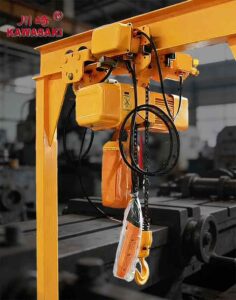
Part 7: The Future of Mobility – Modular Lifting Systems
Looking ahead, the distinction between “fixed” and “running” is blurring. The future trend among small cranes manufacturers and large crane manufacturers alike is Modularity.
We are seeing the rise of quick-disconnect trolley interfaces. These allow a single electric chain hoist to be easily detached from a fixed jib crane mount and snapped into a portable warehouse overhead crane trolley or a loader crane manufacturers beam in minutes.
This “equipment sharing” model maximizes utilization rates for heavy lifting solutions without compromising safety. Hangzhou Apollo is at the forefront of developing these universal adapter interfaces, ensuring that the equipment you invest in today remains adaptable to the unknown production challenges of tomorrow.
Conclusion: Safety is in the Details
Converting a fixed hoist to a running trolley is not a matter of simply “adding wheels.” It is an engineering exercise in managing dynamic loads, material fatigue, and interface geometry.
For the procurement manager or facility engineer considering this upgrade, the safest path is not the shortest path—it is the informed path. By understanding the critical role of the suspension pivot, matching trolley capacity to hoist capacity, and ensuring the runway beam can handle the new wheel loads, you can unlock the full productivity of an industrial crane system without introducing hidden liabilities.
At Hangzhou Apollo Lifting Equipment Co., Ltd. , we do more than supply electric hoists and crane parts. We empower our clients to make smart, safe, and efficient equipment decisions. Whether you are looking for a simple manual push trolley for a machine shop or a fully integrated motorized solution for a construction crane for sale fleet, trust our team to deliver the precision, quality, and support that keeps your loads moving straight and your operations running safely. Contact our technical sales department to discuss your specific hoist model and runway configuration. We are ready to help you engineer a solution that fits.