Introduction: The Puzzling Specification Sheet
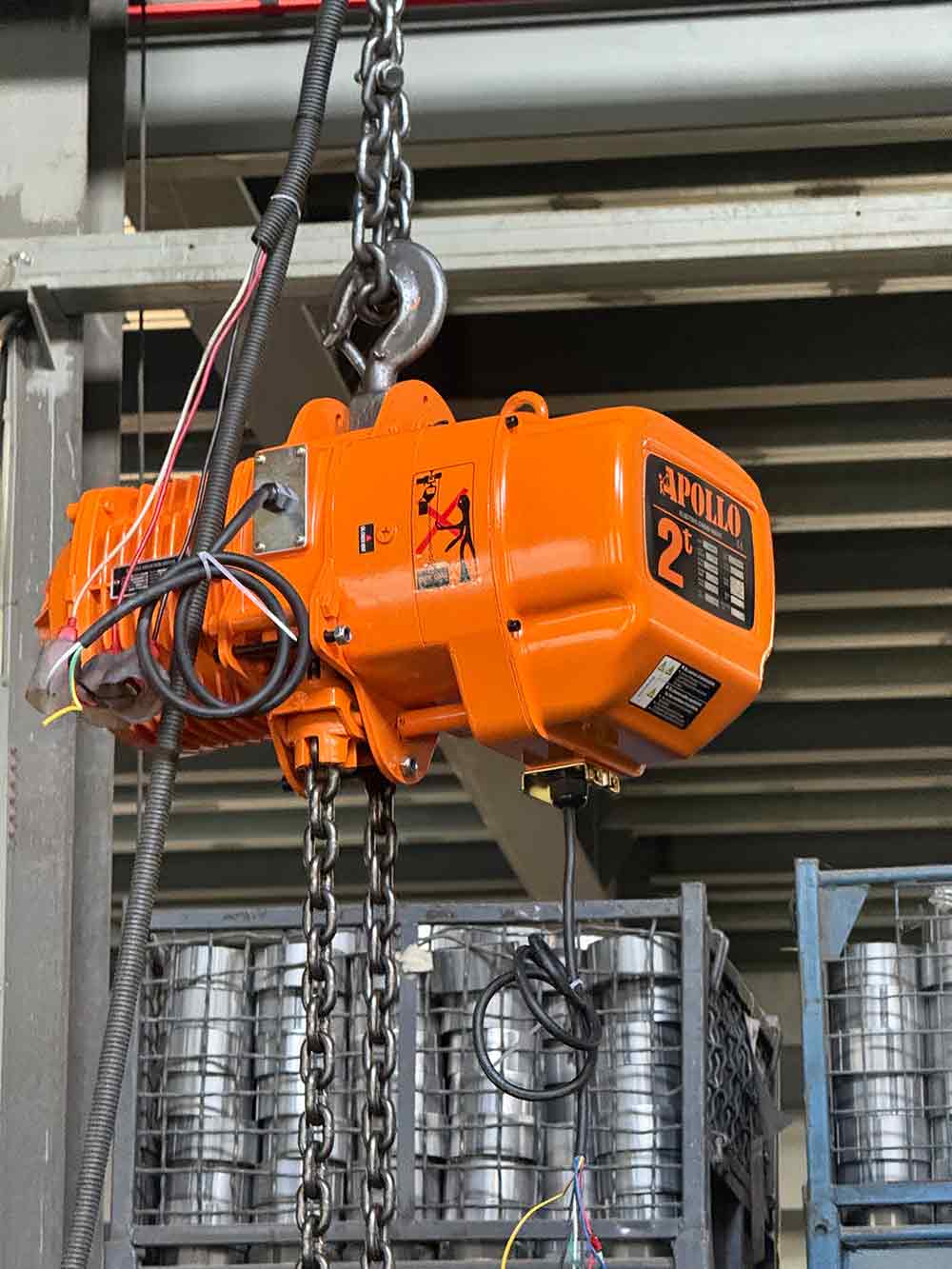
Picture this: You’re a project engineer or a procurement manager tasked with sourcing a 2-ton electric chain hoist for a new production line. You receive proposals from various electric hoist suppliers. The technical sheets all arrive, and they all state a capacity of 2,000 kilograms. Yet, a critical discrepancy leaps out. One model from a reputable hoist manufacturer is driven by a 3.0 kW motor, while another, equally robust-looking 2-ton electric chain hoist from a different chain hoist manufacturer, is powered by a 4.5 kW unit. Why the 50% disparity in motor power for the exact same lifting capacity?
Is the higher-powered unit simply over-engineered, wasting energy and your company’s capital? Or, conversely, is the lower-powered model a compromised solution, destined to fail prematurely under real-world stress? This scenario is not a sign of manufacturer inconsistency; it is a fundamental indicator of design philosophy, application intent, and a deep understanding of lifting mechanics. At Hangzhou Apollo Lifting Equipment Co., Ltd., we believe that transparency in these differences is the cornerstone of a true partnership. This guide dives into the physics behind the spec sheet, explaining what motor power truly means for thermal management, starting torque, and the ultimate workhorse capability of your lifting equipment.
1. The F1 vs. The Family Car: Why One Size Doesn’t Fit All in Lifting
The first concept to grasp is that a 2-ton hoist is not a 2-ton hoist. The capacity is simply a maximum safe working load limit. It tells you nothing about how or how often that load can be moved. This is where the critical, yet often overlooked, engineering principle of the duty cycle (or motor rating) comes into play.
Leading hoist manufacturers classify their products according to FEM (Federation Europeenne de la Manutention) or ISO service groups, such as 1Am, 1Bm, 2m, 3m, and 4m. A 2-ton hoist rated for a light duty cycle (e.g., FEM 1Bm, used occasionally for infrequent maintenance) requires a motor just powerful enough to lift the load and overcome basic mechanical friction. A 3.0 kW motor is often perfectly sufficient here.
However, a 2-ton hoist designed for heavy-duty process lifting (e.g., FEM 3m or 4m), perhaps in an automotive factory or a foundry, is a completely different beast. It must be able to lift its full load hundreds of times per day, often in high ambient temperatures, without pausing long enough for the motor to fully cool down. This is analogous to the difference between a family sedan and a Formula 1 car. Both can reach 100 km/h, but the F1 machine is designed to do it repeatedly, under maximum stress, for an entire Grand Prix, while the family car would overheat and fail if subjected to the same rigorous treatment. The larger motor on the heavy-duty hoist isn’t just about more power; it’s about power redundancy, and this redundancy directly impacts three critical performance pillars: temperature rise, starting torque, and sustained operational capability.
2. The Thermal Battle: How Power Redundancy Manages Heat and Extends Motor Life
The single greatest enemy of any electric motor is heat. Excessive temperature degrades winding insulation, leading to short circuits, motor burnout, and unexpected downtime. This is precisely where a seemingly overpowered motor becomes the greatest asset in your operation.
An electric motor converts electrical energy into mechanical work, but this conversion is never 100% efficient. The energy lost manifests as heat, primarily due to resistance in the copper windings (I²R losses). The rate of heat generation is directly tied to the percentage of the motor’s full load being utilized. For an identical 2-ton lift, a smaller 3.0 kW motor might be running at 90% of its continuous rated capacity, generating heat near its thermal limit. If the ambient temperature in your facility is high, or if the duty cycle is exceeded even slightly, the motor temperature will soar past the insulation’s safe thermal class, accelerating its aging.
In contrast, that same 2-ton load on a 4.5 kW hoist represents only about 60% of the motor’s potential output. The motor is in a state of deep “thermal relaxation.” It generates significantly less internal heat and, crucially, has a much larger thermal mass and cooling surface area relative to the work being asked of it. This power redundancy provides a formidable thermal buffer. As a trusted electric wire rope hoist manufacturer and electric chain hoist specialist, Apollo integrates advanced motor insulation (Class H as standard in many models) and designs that prioritize cooling. But the principle remains universal: a motor running comfortably below its peak rating is a cool, happy motor. For owners of warehouse overhead crane systems or those engaged in heavy lifting solutions, this directly translates to an exponentially longer motor life, reduced maintenance costs, and zero unplanned production stoppages. The initial extra cost of the motor is amortized many times over through reliability.
3. Breaking Inertia: The Critical Role of Starting Torque
Lifting a static, 2-ton steel coil is fundamentally different from holding it mid-air. The initial moment of lifting requires overcoming inertia—the object’s resistance to change from a state of rest. This demand manifests as a massive spike in the required torque, known as breakdown or pull-up torque.
A motor’s torque curve is not flat. As a squirrel-cage induction motor starts, it draws a huge inrush of current (often 6-8 times the full load current) to generate the magnetic field necessary to produce high starting torque. A smaller motor, having a lower overall torque capacity, will struggle more during this critical phase. This struggle manifests as a slower, labored start-up that “bogs down” the mechanism. Every second of this hesitation is another second of ultra-high current flowing through the windings, creating a punishing thermal shock. Over thousands of cycles, this shock mechanically and electrically fatigues the motor and the entire drivetrain.
A hoist from a forward-thinking chain hoist supplier with a larger motor possesses a much higher torque reserve. It can summon a surge of power to break the load free from inertia smoothly and almost instantaneously. This achieves two things: it prevents the deep, current-induced voltage sag that can affect other sensitive equipment on the same power grid, and it dramatically reduces the duration of the inrush current, protecting the motor from cumulative thermal damage. For applications in machine shop cranes or precision assembly, this smooth, jerk-free start is not just a performance benefit; it’s a safety and process quality requirement. The invisible hand of power redundancy ensures load control begins in the very first millisecond of the lift.
4. Sustained Excellence: Duty Cycle and True Continuous Capability
The term “2-ton capacity” is meaningless without context. The real question is: “Can it lift 2 tons, 150 times an hour, over an 8-hour shift, for a decade?” This is the difference between a theoretical maximum and a continuous operational rating, and it’s the bedrock of engineering at any serious hoist lift manufacturer.
The VFDM (Variable Frequency Drive Motor) or dual-speed motors often found in smaller hoists may offer great positioning control but can be thermally limited for continuous high-cycle use. A dedicated, high-duty-class hoist with a larger, non-VFD motor can often prove more reliable in a purely high-cycle production environment where precision speed control isn’t the primary goal. The larger mass of copper and iron in the motor acts as a heat sink, absorbing the thermal pulses of repetitive starts and stops.
Let’s consider a high-bay warehouse using a warehouse crane. If the crane hoist manufacturer specified a hoist based on the absolute minimum motor size, the system will be a constant source of a bottleneck. The operator might be forced to wait idle for the motor to cool down after a particularly intense period. This “work-rest-work” pattern is a silent productivity killer. A heavy-duty 2-ton hoist from a provider of comprehensive heavy lifting hoist suppliers, however, is engineered for a 60% or even 80% CDF (Cyclic Duration Factor). Its power redundancy means it can hum along at a high pace, shift after shift, without ever tripping a thermal overload. This uninterrupted workflow is the true definition of capacity. When Apollo engineers work with clients on heavy lifting solutions, we calculate not just the load, but the load spectrum over the entire service life of the equipment, ensuring the hoist’s thermodynamic foundation is sized correctly from day one.
5. The Comparative Analysis: Price-Driven vs. Purpose-Driven Solutions
The market is divided. On one side, there is a commoditized segment, often from anonymous electric hoist suppliers who compete purely on the lowest upfront cost. Their strategy is predictable: they will strip the specification down to the barest minimum. Their 2-ton hoist will have a 3.0 kW motor, a minimal duty cycle rating, and will be perfectly adequate for a hobbyist’s garage or a very light warehouse application. It is a tool for a task, not a system for an operation.
On the other side are the purpose-driven hoist manufacturers, a category in which Hangzhou Apollo Lifting Equipment Co., Ltd. firmly stands. Our approach is one of application engineering. When we engage with a client, our first question is never “What price do you need?” but rather “Tell us about your process.” We analyze the working environment: is it dusty, humid, hot? We calculate the load spectrum: how many lifts per hour, at what percentage of maximum capacity? We consider the safety margins: what is the cost of a failure? For a crane for warehouse use, the answer will be vastly different than for an electric hoist for mining operations.
It is at this junction that a company’s true value emerges. A single, standardized model can never serve all these masters. This is why Apollo offers a comprehensive range, from robust electric chain hoist units for general fabrication to truly heavy-duty electric wire rope hoist manufacturers solutions capable of non-stop production. Our value proposition is not about having a single, cheap answer; it’s about having the engineering depth and product portfolio to provide the right answer—a solution that balances the initial capital expenditure against the total cost of ownership over 10, 15, or 20 years. Our global service network further supports this, ensuring that the designed-in reliability of our powerful hoists is sustained throughout their long working lives.
6. Expert Best Practices: Specifying a Hoist for True Operational Fitness
To the procurement manager or plant engineer tasked with a new specification, moving beyond a simple “2-ton” requirement is your most powerful tool. Here is a best-practice framework:
-
Demand the Duty Cycle Declaration: Insist that the chain hoist manufacturers you evaluate clearly state the FEM/ISO service class for which the hoist is mechanically and thermally rated. A “2-ton, 1Am” hoist is not a substitute for a “2-ton, 3m” hoist.
-
Look Beyond the “List Price” and Toward Power: When comparing two seemingly identical hoists, pay attention to the motor nameplate power (kW) and the insulation class (e.g., F, H). The higher-power motor is usually the tip of an iceberg that indicates a heavier gearbox, a larger drum or load sheave, and a more robust brake—a system built for longevity.
-
Audit Your Load Spectrum, Not Just Your Maximum Load: If 95% of your lifts are under 1 ton, but 5% hit the full 2-ton mark, the hoist must still be thermally rated for the frequent part-load cycles. A larger motor provides the thermal headroom to handle the everyday 1-ton lifts with near-absolute indifference, staying cool for the heavier work.
-
Consider the Ambient Theater: A foundry or a steel mill in summer is a torture chamber for lifting equipment. The ambient heat reduces the motor’s ability to shed its internal heat. Power redundancy is no longer a luxury; it is the only way to prevent frequent thermal tripping. Partner with a provider like Apollo that understands these specific industrial climates and can integrate options like high-temperature windings or additional cooling.
-
Future-Proof Your Facility: Your operations may change. A production line might increase its pace. A 4.5 kW, 60% CDF hoist provides inherent flexibility. A 3.0 kW hoist at its absolute thermal limit has zero reserve for any process intensification. Specifying robust, heavy lifting solutions from the start is an investment in adaptability.
Conclusion: The Power of Wisdom Over Watage
The question of why some 2-ton hoists have much higher motor power than others is, ultimately, a question of engineering honesty and operational foresight. The answer, as we have explored, lies deep within the laws of thermodynamics and mechanical stress. Power redundancy is not an inefficiency to be cost-engineered out. It is the hidden fortress that guards against destructive temperature rise, ensures smooth starting torque under the harshest conditions, and guarantees the uninterrupted, continuous work capability that modern industry demands.
As a leading voice among global hoist manufacturers, Hangzhou Apollo Lifting Equipment Co., Ltd. does not see a hoist as a mere commodity defined by its lowest line-item price. We see it as a precision-crafted system where every element—from the heat-treated gear train to the oversized motor and the electromagnetic brake—serves a single purpose: decades of safe, predictable, and productive service. For those who specify, procure, and rely on lifting equipment, the lesson is clear. Look beyond the glossy headline of capacity. Interrogate the motor’s power not as a number, but as a narrative of thermal resilience, mechanical grit, and the design life your operation truly requires. Partner with a supplier who asks the right questions and engineers the answers, ensuring your lift is always within its strongest, coolest, and most efficient comfort zone.