
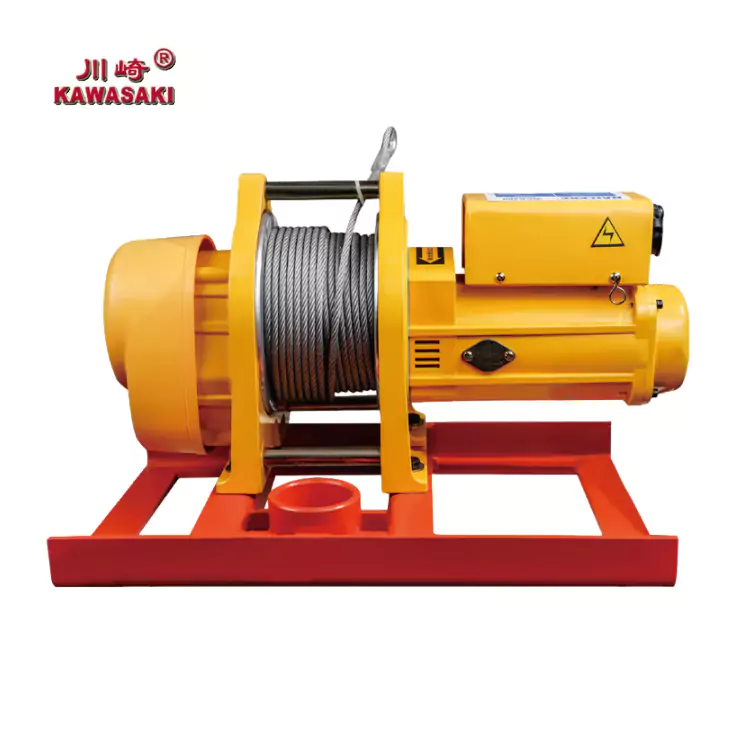
In the demanding environments of manufacturing, construction, mining, and logistics, the seamless operation of lifting equipment is synonymous with productivity and safety. Among the most reliable workhorses is the electric wire rope hoist. However, few situations are as perplexing and urgent as when the hoist’s motor audibly runs, yet the load hook remains stubbornly stationary, refusing to lift or lower. This symptom signals an internal failure that has decoupled motor rotation from the load drum, bringing operations to an immediate standstill and posing potential safety risks.
For equipment managers and maintenance engineers, this scenario demands a systematic, knowledgeable approach to diagnosis and resolution. A misdiagnosis can lead to prolonged downtime, costly unnecessary part replacements, or unsafe makeshift repairs. This guide provides a professional, in-depth analysis of this specific failure mode, offering a logical troubleshooting framework, comparing solution pathways, and outlining best practices to minimize future occurrences. As a leading electric wire rope hoist manufacturer and a trusted crane parts supplier, Hangzhou Apollo Lifting Equipment Co., Ltd. draws upon decades of engineering expertise to equip you with the insights needed to address this challenge effectively and maintain operational continuity.
Part 1: Deconstructing the Problem – The Power Transmission Chain
An electric wire rope hoist is a precisely integrated system. When the motor runs but the hook doesn’t move, the failure lies somewhere in the power transmission chain after the motor but before the drum. The kinetic energy generated by the motor is failing to translate into rotational force on the drum that spools the wire rope. The primary suspects reside in the following key components, listed in a logical diagnostic order:
-
The Coupling or Gearbox Interface: This is the direct link between the motor shaft and the gearbox input shaft. A failed shear pin, a broken flexible coupling, or severely worn splines can cause the motor to spin freely without transferring torque to the reduction gears.
-
The Gearbox Internals: The multi-stage reduction gearbox is the heart of the hoist, creating the necessary torque to lift heavy loads. Catastrophic gear tooth failure, a broken shaft within the gearbox, or complete loss of lubrication leading to seized bearings will stop power transmission.
-
The Drum Assembly and Brake System: The drum, mounted on the output shaft of the gearbox, is the final component in the chain. While less common as a sole cause for a complete stoppage, a seized drum bearing or a malfunctioning electric brake that fails to release (and is incorrectly engaged) can prevent motion. It’s crucial to distinguish if the brake is the cause or a symptom.
-
Control and Power Quality Issues (Secondary Cause): While the motor runs, it might not be running correctly. A severe phase loss in a three-phase motor after startup, or significant voltage drop, can cause the motor to hum and turn with insufficient torque to lift the load, though it may sometimes turn unloaded. This can mimic a mechanical failure.
Part 2: Systematic Diagnostic & Troubleshooting Procedure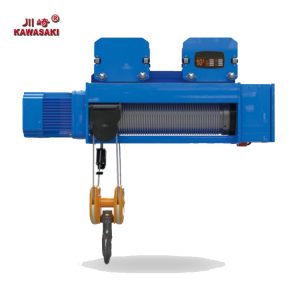
A haphazard approach wastes time. Follow this structured diagnostic pathway to identify the root cause efficiently and safely.
Step 1: Safety First and Initial Observations
-
Isolate the hoist from power following lock-out tag-out (LOTO) procedures.
-
Visually inspect for obvious signs: oil leaks from the gearbox, broken coupling guards, loose bolts, or disconnected linkage.
-
Manually check for freewheel capability (if the hoist design allows it). An inability to freewheel often points to a seized gearbox or brake.
Step 2: Isolate the Section – Motor vs. Mechanical Drive
-
With power isolated and LOTO confirmed, attempt to rotate the motor fan or coupling by hand (if accessible). Then, attempt to rotate the drum by hand.
-
If the motor shaft turns independently of the drum/gearbox input, the fault is confirmed in the coupling or connection.
-
If the motor and input shaft turn as one unit but the drum does not, the fault lies within the gearbox or drum assembly.
Step 3: Inspect the Coupling and Brake
-
Remove the coupling guard. Inspect shear pins—are they sheared? Examine flexible coupling elements for tearing, cracking, or disintegration.
-
For keyed or splined connections, check for wear, stripping, or a loose setscrew.
-
Inspect the mechanical brake assembly (if separate from the motor brake). Is it fully released? Are the linings excessively worn or contaminated?
Step 4: Investigate the Gearbox
-
Check the gearbox oil level and condition. Metallic particles on the dipstick or a “burned” smell indicate severe internal wear or failure.
-
Listen for unusual sounds during a very brief powered test (if safe to do so). Grinding, knocking, or a high-pitched whine are telltale signs of gear damage.
-
This step often requires the expertise of a certified technician from your hoist supplier or manufacturer.
Step 5: Electrical Verification
-
Using a multimeter, verify that all three phases are present at the motor terminals under load. A voltage imbalance or phase loss can cause insufficient torque.
-
Check control circuits, especially for the brake release solenoid or motor brake. A faulty rectifier or solenoid can prevent the brake from fully disengaging.
Part 3: Solution Pathways: Repair, Replace, or Upgrade?
Once diagnosed, you face a critical decision. The choice depends on the severity of the damage, cost, downtime implications, and the age of the hoist.
-
Component-Level Repair:
-
Scenario: Isolated failure like a sheared pin, replaced coupling, or external brake adjustment/relining.
-
Pros: Fastest, most cost-effective for minor issues. Relies on readily available standard parts from a reliable crane parts supplier.
-
Cons: Not viable for internal gearbox damage. May be a temporary fix if underlying issues (misalignment, overloading) are not addressed.
-
-
Unit Replacement (Gearbox or Motor-Gearbox Assembly):
-
Scenario: Confirmed internal gearbox failure (broken gears/shafts) or a failed integrated motor-brake unit.
-
Pros: A definitive solution that restores the hoist to its original specification. Companies like Hangzhou Apollo Lifting Equipment offer compatible replacement units designed for durability and easy integration.

-
Cons: Higher cost than simple repair. Requires technical skill for installation and alignment. For older hoists, finding an exact match may be challenging.
-
-
Complete Hoist Replacement:
-
Scenario: Repeated failures, an aging hoist (e.g., >15-20 years), widespread corrosion, or when the failure reveals a capacity that is no longer adequate for the application.
-
Pros: Opportunity to upgrade to a more efficient, modern hoist with better safety features, controls, and warranty. Provides a fresh start for your heavy lifting solutions. Leading hoist manufacturers now offer advanced models with variable frequency drives (VFDs) for smoother operation and reduced mechanical stress.
-
Cons: Highest upfront capital cost. Requires potential modifications to the supporting structure or crane bridge.
-
Part 4: Best Practices for Prevention and Maximized Uptime
Proactive maintenance is the most powerful tool to prevent “motor runs, no lift” failures.
-
Adhere to a Preventive Maintenance (PM) Schedule: Follow the manufacturer’s PM guide rigorously. This includes regular inspection of couplings, brake performance checks, and monitoring gearbox oil for level and contamination.
-
Implement Strict Load Management: Never exceed the Working Load Limit (WLL). Use industrial lifting clamps and other attachments correctly. Shock loading from abrupt starts/stops is a primary cause of coupling and gear damage.
-
Ensure Proper Alignment: After any maintenance involving motor or gearbox removal, realign components precisely to prevent premature coupling and bearing wear.
-
Use Quality Replacement Parts: When repairs are needed, insist on genuine or OEM-equivalent parts from reputable wire rope hoist suppliers. Inferior parts compromise safety and longevity.
-
Invest in Operator Training: Ensure operators understand load dynamics, recognize unusual sounds or behaviors, and perform pre-operation inspections.
-
Partner with a Specialist: Establish a relationship with a trusted electric hoist manufacturer or service provider. Companies like Hangzhou Apollo Lifting Equipment Co., Ltd. not only supply robust equipment but also offer global service support, detailed technical documentation, and customized maintenance plans. Our commitment to stringent quality control and engineering excellence ensures every hoist is built for reliability, reducing the risk of such operational failures.
Part 5: Future Trends: Smart Hoists and Predictive Maintenance
The future of industrial lifting lies in connectivity and data. The next generation of electric wire rope hoists incorporates IoT sensors that monitor gearbox temperature, vibration analysis, motor current draw, and brake wear in real-time. This shift from preventive to predictive maintenance means potential issues like gear tooth wear or bearing degradation can be identified weeks before a catastrophic failure, scheduling repairs during planned downtime.
As a forward-looking crane manufacturer, we are integrating these smart technologies into our solutions, empowering clients to move beyond reactive troubleshooting to truly intelligent asset management.
Conclusion: Knowledge as the Foundation of Reliability
The frustrating event of a hoist motor running without corresponding hook movement is a clear call to action—a signal to inspect the critical mechanical linkage at the core of your lifting device. By understanding the power transmission chain, following a disciplined diagnostic procedure, and weighing solution options against long-term operational goals, you can transform a downtime incident into an opportunity for system improvement.
Ultimately, the reliability of your material handling system depends on three pillars: the quality of the original equipment, the rigor of your maintenance culture, and the expertise of your technical partners. Hangzhou Apollo Lifting Equipment Co., Ltd. stands ready to support all three. From providing dependable electric chain hoists and wire rope hoists for mining operations to complex overhead crane systems, our focus is on delivering not just products, but enduring heavy lifting solutions backed by profound engineering knowledge and a global service commitment. When performance is non-negotiable, partnering with a knowledgeable hoist manufacturer is your most strategic lift.