Introduction
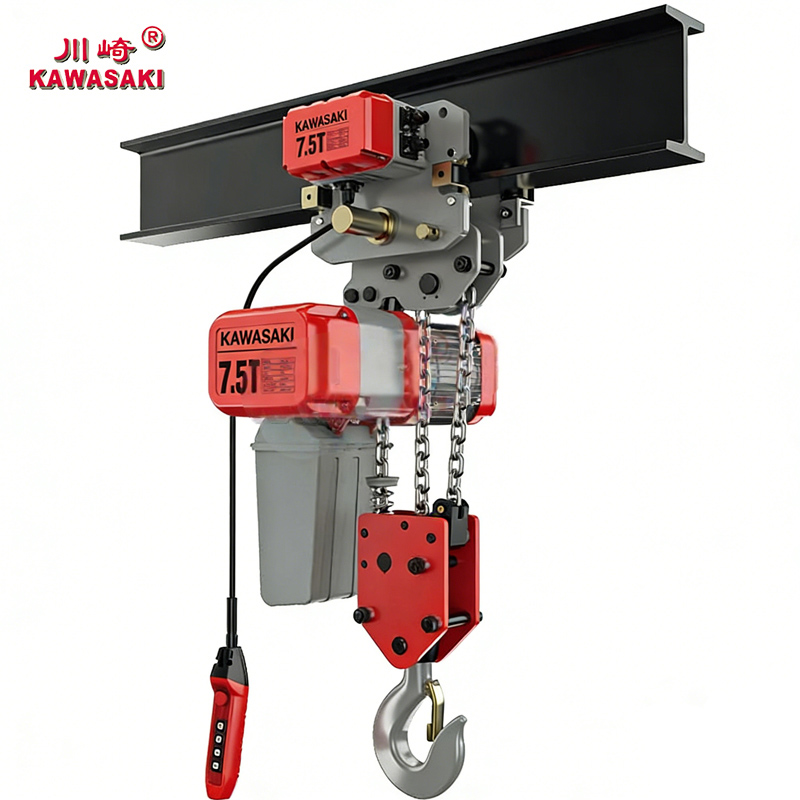
In modern material handling, the electric hoist stands as one of the most fundamental pieces of equipment. It is the workhorse behind factory assembly lines, warehouse loading docks, mining operations, and construction sites. When engineers and procurement managers evaluate electric hoist manufacturers, they frequently focus on load capacity, lifting height, and duty classification. Yet one question arises again and again from project engineers and plant operators alike: how should the lifting speed and travel speed of an electric hoist be matched to achieve the highest safety, longest service life, and best cycle-time efficiency?
The answer is not as simple as choosing the fastest motor. Improper speed pairing—such as a hoist that lifts extremely quickly but crawls along the runway—can create bottlenecks, excessive wear, and even dangerous load swing. Conversely, a hoist that races horizontally but lifts too slowly wastes the advantage of fast cross-travel. Achieving harmony between lifting and traversing motions is the hallmark of a well-engineered heavy lifting solution. This article provides a comprehensive technical guide on how to strike the right balance, drawing on the deep application know-how shared by leading hoist manufacturers and crane hoist manufacturers.
1. Understanding Electric Hoist Speed Parameters
Before diving into matching strategies, it is essential to clarify what the two speed parameters mean in real-world operation.
-
Lifting speed (m/min or ft/min): The vertical speed at which the load hook rises or descends. In an electric chain hoist, this is determined by the motor output, gearbox reduction ratio, and chain sprocket diameter. In wire rope hoists, the drum diameter and reeving arrangement play the same role.
-
Travel speed (m/min or ft/min): The horizontal speed of the hoist along the monorail beam or crane bridge. For an electric trolley, this is governed by its travel motor and wheel diameter; for a manually pushed trolley, it is limited purely by operator effort. Top-tier hoist lift manufacturers typically offer multiple travel speed options ranging from 10 m/min for precise positioning up to 32 m/min or more for long-distance bay transfers.
Additionally, a critical third dimension—cross-travel speed—enters the picture when the hoist is mounted on an overhead crane with bridge movement. In that scenario, the synchronization of hoist, trolley, and bridge speeds becomes a three-variable optimization problem, one that experienced wire rope hoist suppliers and electric wire rope hoist manufacturers regularly help clients solve.
2. Why Speed Matching Matters: The Cycle-Time and Safety Nexus
A crane duty cycle consists of several phases: hook lowering, load attachment, lifting, horizontal travel, load lowering, unhooking, and return empty. In many industrial settings, the horizontal travel distance far exceeds the lift height—think of a warehouse bay 60 meters long but only 8 meters high. In such cases, traversing speed often dominates the total cycle time. However, lifting speed sets the sensitivity of vertical positioning, especially when loads must be landed gently onto fixtures, CNC machine tables, or mold cavities.
When lifting speed is significantly faster than an operator can finely control, over-lowering becomes a risk, leading to impact damage on both the load and the hoist structure. If travel speed is too high relative to lifting capability, heavy loads will swing excessively during acceleration and deceleration, requiring additional waiting time for the pendulum motion to dampen. This absorbed time negates the nominal speed advantage. The core principle is this: a well-matched speed pairing minimizes the total effective cycle time, not the theoretical maximum speed of any single motion.
As electric hoist manufacturers with decades of engineering experience, Hangzhou Apollo Lifting Equipment Co., Ltd. has consistently observed that the most efficient industrial lifting systems are those where speeds are tuned to each other and to the specific application, rather than selected from a one-size-fits-all catalog.
3. Key Factors Influencing Speed Selection and Matching
3.1 Load Spectrum and Duty Classification
The first filter for any speed decision is the FEM / ISO duty group (e.g., 1Am, 2m, 3m, 4m). A light-duty electric chain hoist used occasionally for maintenance may efficiently operate at relatively high single speeds. A heavy-duty wire rope hoist in a steel plant, handling near-capacity loads continuously, requires lower speeds to manage heat buildup, mechanical stress, and precise load placement. Leading hoist manufacturers provide motor insulation class data and contactor ratings that directly link duty cycles to permissible speed ranges.
3.2 Lift Height vs. Travel Distance Ratio
If the ratio of horizontal runway length to lifting height is large (for example, > 10:1), prioritize travel speed optimization. Under such conditions, two-speed travel or variable-frequency drive (VFD) control on horizontal axes yields tangible productivity gains. If the ratio is small (e.g., a compressor testing cell where loads are lifted 15 meters but moved only 3 meters laterally), lifting speed becomes the dominant factor.
3.3 Precision Requirements
This factor often overrides pure speed considerations. In assembly operations, machine tool loading, or mold handling, the final approach speed matters far more than the full-load high speed. The solution offered by many crane hoist manufacturers is a dual-speed or VFD-controlled hoist that delivers a fast main speed for the bulk of the lift and a creep speed (often 1/6 to 1/10 of the main speed) for the final positioning phase. The travel motion must also be capable of the same inching precision to avoid side-loading the hook when lowering into tight pockets.
3.4 Environmental Conditions
Outdoor cranes subject to wind require guarded travel speeds. Mining operations, frequently served by electric hoist for mining operations, often specify reduced travel speeds to cope with dust, uneven rail conditions, and swing induced by wind across open pits. In such conditions, a robustly matched conservative speed set from electric wire rope hoist manufacturers prevents derailment risks and extends gearbox life.
4. Speed Combination Types and Their Application Profiles
4.1 Single-Speed Lifting + Single-Speed Travel
The simplest and most cost-effective configuration. Suitable for infrequent maintenance work, small workshops, and manual hoist back-up stations. Typically, lifting speeds of 4–5 m/min and travel speeds around 20 m/min form a baseline that matches human reaction times reasonably well. However, when both speeds are fixed, the operator must rely on jogging—repeatedly tapping the control button—to achieve fine positioning. This accelerates contactor wear and can overheat motors. In such cases, consulting hoist lift manufacturers for an electrical upgrade to two-speed controls is a practical mid-life improvement.
4.2 Two-Speed Lifting + Single-Speed Travel
A common step-up configuration found in many standard electric chain hoist systems up to 5 tonnes. The lifting motion has a high speed (e.g., 8 m/min) and low speed (e.g., 1.3 m/min), while travel remains single-speed (e.g., 20 m/min). This pairing works well when precise vertical placement is more critical than horizontal positioning—for instance, loading pallets onto racking in a warehouse overhead crane setup. The travel speed is sufficient to cover the aisle lengths, while the slow lifting speed allows gentle landing.
4.3 Single-Speed Lifting + VFD Travel
An intelligent configuration seen in advanced material transfer cars and long-bay cranes. Where lifting is relatively constant (loads always move between the same two heights within a narrow vertical window), the lifting speed can stay single-speed, but the travel drive uses a VFD to ramp smoothly and cruise at high speed. This minimizes load swing without compromising cycle time. Recognized wire rope hoist suppliers and crane integrators specifically recommend VFD travel in warehouse crane types that transport suspended goods over 30 meters, where the pendulum effect is most severe.
4.4 VFD Lifting + VFD Travel: The Full-Motion Control Solution
For truly demanding heavy lifting solutions, full VFD control on both axes is the state of the art. This allows independent adjustment of acceleration ramps, deceleration ramps, and creep speeds for both lifting and traversing. The critical insight from top hoist manufacturers is that the acceleration time constants for the two axes should be tuned together: a lifting motion that accelerates too quickly relative to travel can cause a vertical jerk that excites load swing. Matching the ramp profiles creates a smooth, coupled movement where the load follows a predictable trajectory. In industries like automotive press shops or turbine assembly, this level of integration from crane hoist manufacturers is mandatory for both productivity and safety.
5. Best Practices for Speed Matching: A Systematic Approach
Drawing on field data from electric hoist manufacturers worldwide and from Hangzhou Apollo’s own project portfolio, the following best-practice methodology helps engineers converge on the right speed combination.
Step 1 – Define the representative duty cycle. Time-study the sequence: lower, attach, lift, travel, lower, detach, return. Identify the critical path motions that govern overall takt time.
Step 2 – Select the travel speed first for long-distance applications, or lifting speed first for high-lift applications. As a rule of thumb, the maximum travel speed should not exceed a value where the stopping distance (at maximum load) remains within a safe zone established by the end-user’s risk assessment. For a typical 20-tonne overhead crane, a travel speed of 20–25 m/min is often the sweet spot between rapid transfer and controllable deceleration.
Step 3 – Set the lifting speed envelope with the creep-speed requirement as the anchor. Start from the required final positioning speed (e.g., 0.8 m/min for mold insertion) and multiply by the speed ratio the motor and inverter can handle (commonly 6:1 or 10:1). This gives the maximum high lifting speed. An electric chain hoist with a 6:1 dual-speed motor might yield a 5.0 / 0.8 m/min combination, while a VFD-controlled electric wire rope hoist can deliver a wider ratio.
Step 4 – Benchmark against proven installations. Consult the technical libraries of established hoist manufacturers and crane hoist manufacturers. For example, warehouse overhead cranes typically pair lifting speeds of 5–8 m/min with travel speeds of 20–32 m/min. In contrast, a heavy foundry crane handling ladles might limit lifting speeds to 1.6–3.2 m/min and travel speeds to 10–16 m/min, with both motions equipped with VFD braking.
Step 5 – Validate through dynamic load testing. No simulation replaces empirical load-swing measurement. Hangzhou Apollo Lifting Equipment Co., Ltd. performs standard dynamic tests on every custom-engineered hoist and crane system before shipment, precisely recording speed ramps, hook displacement, and sway angles. This ensures that the speed pairing delivered to the customer’s site performs exactly as engineered.
6. The Role of Customization and Expert Support
A key differentiator among electric hoist manufacturers and hoist lift manufacturers is the willingness to move beyond catalog specifications and design application-specific speed curves. Certain specialized applications demand non-standard solutions: a slow-speed hoist for glass panel installation might require a lifting speed of only 0.5 m/min with a 20 m/min rapid travel to move between panels; a textile machinery factory might need identical high speeds for both axes to keep up with a continuous production line.
Hangzhou Apollo Lifting Equipment Co., Ltd. has accumulated extensive experience as both a chain hoist manufacturer and electric wire rope hoist manufacturer. The company’s engineering team regularly supplies customized motor windings, inverter programming, and gearbox ratios to meet precise speed combination requirements. Supported by rigorous quality control—from material sourcing to final load testing—Apollo ensures that each hoist’s lifting and travel performance remains stable throughout its service life, even under harsh conditions.
7. Future Trends: Adaptive Speed Harmony
The next evolution of speed matching comes from sensors and software. Intelligent cranes now use real-time camera systems and laser rangefinders to automatically switch speed profiles based on the distance to the target. When the hook is far away in the high-bay, lifting and travel speeds ramp up to maximum; as the load approaches the preset landing zone, both axes smoothly decelerate to a synchronized creep speed. This “adaptive speed” technology, once only available from a handful of leading crane manufacturers, is quickly becoming more accessible.
Another trend reshaping the landscape is IoT-based condition monitoring. By logging millions of speed-cycle data points, crane parts suppliers and service providers can now recommend the optimal speed settings for actual usage patterns observed over months of operation—often unlocking productivity gains of 10–15% without any hardware change. As the industry moves toward predictive maintenance, the question “What is the best speed pairing?” will increasingly be answered not by static tables but by data-driven digital twins of the entire lifting installation.
8. Conclusion
The seemingly simple choice of lifting and travel speeds for an electric hoist is, in reality, a multidimensional engineering decision. It directly determines productivity, operator safety, component durability, and the total cost of ownership. Whether opting for a standard electric chain hoist with dual-speed lifting or a fully VFD-controlled wire rope system from electric wire rope hoist manufacturers, the essential rule remains: match speeds not to the hoist alone, but to the complete material handling task.
For plant managers and technical buyers, the most prudent strategy is to partner with hoist manufacturers who bring both broad product portfolios and deep application experience. As a specialized provider of heavy lifting solutions, Hangzhou Apollo Lifting Equipment Co., Ltd. works alongside clients worldwide to analyze their unique operational profiles, propose validated speed combinations, and deliver hoist and crane systems that work in perfect mechanical and electrical harmony. In the end, the right speed match is not the one on paper—it is the one that keeps your load steady, your cycle time short, and your operators safe every shift.