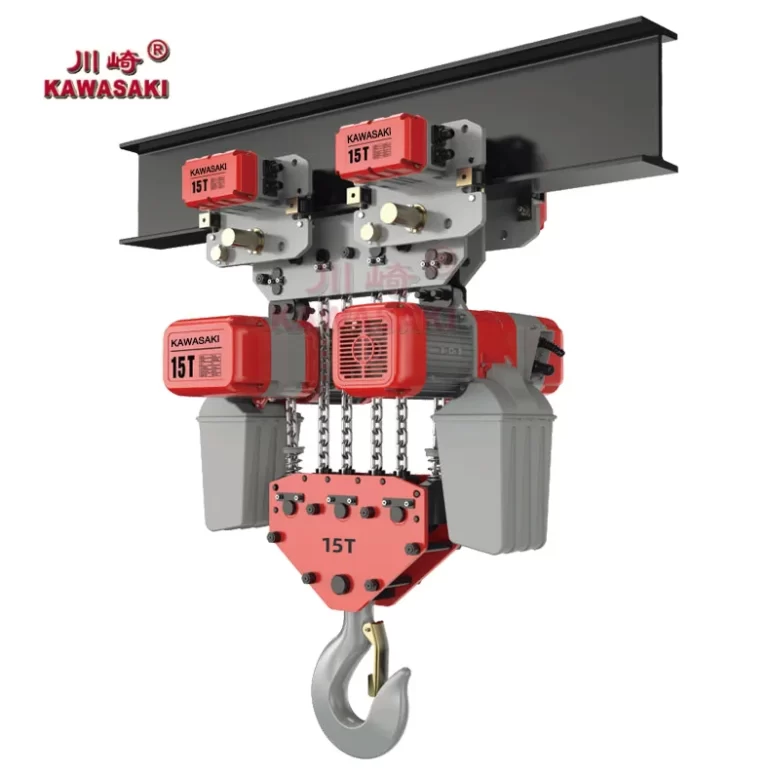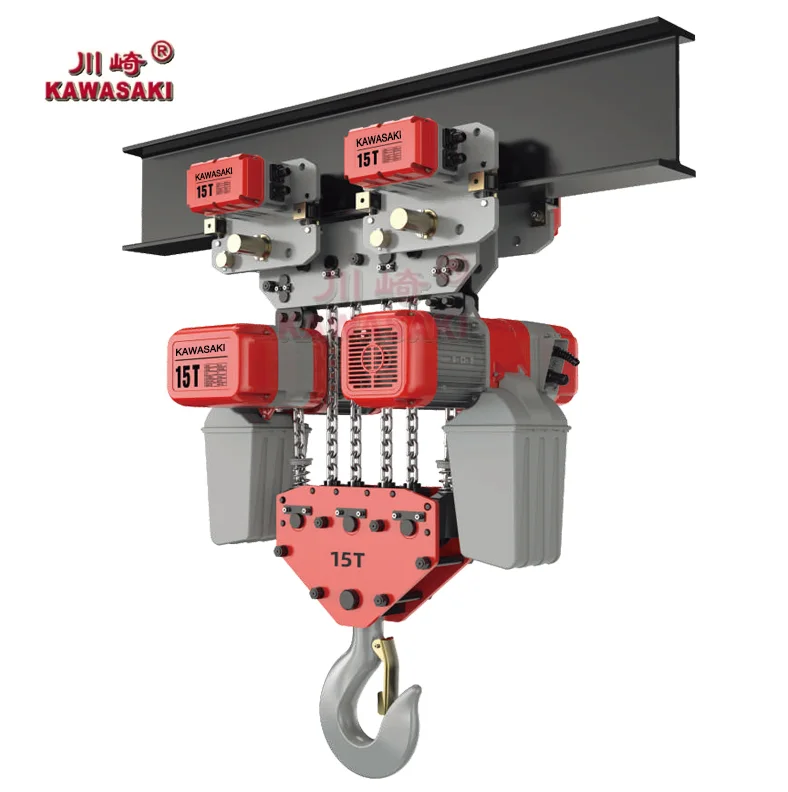
In the world of industrial material handling, precision and safety are non-negotiable. For operations managers, project engineers, and procurement specialists, the equipment on the shop floor represents both the engine of productivity and a source of potential risk. Among the most critical pieces of equipment in any facility—from a busy warehouse to a large-scale construction site—is the electric hoist.
At Hangzhou Apollo Lifting Equipment Co., Ltd., a premier name among electric hoist manufacturers, we have spent decades engineering heavy lifting solutions for the most demanding environments. We understand that when a hoist fails, it doesn’t just stop a workflow; it jeopardizes safety and profitability.
One of the most alarming and misunderstood malfunctions an operator can witness is load “slipping” or “drifting.” This article serves as a definitive technical guide to understanding this phenomenon. We will delve into its root causes, provide a structured approach to diagnosis, and outline the professional procedures for adjustment and repair, reinforcing our commitment to being your trusted partner in lifting safety and efficiency.
Part 1: What Exactly is “Slipping” in an Electric Hoist?
“Slipping,” often referred to as “load drift” or “brake failure,” occurs when an energized or suspended load descends unintentionally without activation of the lowering control. It is a critical safety hazard that demands immediate attention.
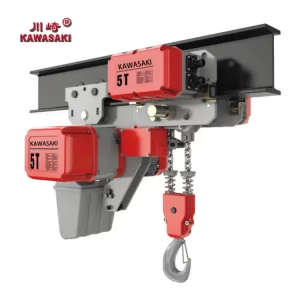
To understand slipping, one must first understand the anatomy of a hoist’s holding mechanism. In a standard electric hoist—whether an electric wire rope hoist or an electric chain hoist—the primary components responsible for holding a load are:
-
The Motor Brake: Almost always an electrically released, spring-set friction brake. When power is applied to the motor to lift or lower, a solenoid or electromagnet compresses a spring, releasing the brake. When power is cut, the spring engages, applying friction to a disk or drum to stop and hold the motor shaft.
-
The Load Brake (or Mechanical Brake): Often a secondary, independent braking system. Common designs include the Weston screw-and-ratchet mechanism or a cone brake. This is a purely mechanical brake that automatically engages when torque from the motor is removed. It acts as a fail-safe, holding the load even if the primary motor brake were to fail partially. In worm-gear drives, the gear train itself provides a degree of self-locking, though a load brake is still critical.

Slipping occurs when one or both of these systems fail to exert sufficient holding force to counteract the gravitational pull of the load.
Part 2: The Root Causes: Why Does a Hoist Slip?
Slipping is rarely a random event. It is the culmination of wear, environmental factors, or improper maintenance. For professionals seeking heavy lifting solutions, understanding these causes is the first step toward prevention. As leading hoist manufacturers and suppliers, we categorize the common culprits into three primary areas:
1. Brake System Wear and Contamination (The Most Common Culprit)
-
Friction Lining Wear: The friction disks or pads in the motor brake have a finite service life. Over thousands of cycles, the lining material wears thin, reducing clamping force and the coefficient of friction. This is the most common reason for gradual, progressive slipping.
-
Contamination: In harsh environments like mines or foundries, dust, grease, or oil can contaminate the brake lining. A thin film of oil on a brake disk drastically reduces its ability to grip. This is a frequent concern for operations like electric hoist for mining operations, where airborne particulate is a constant challenge.
-
Glazing: Overheating the brake can cause the friction material to harden and “glaze,” creating a smooth, glass-like surface that fails to provide adequate friction.
2. Mechanical Failure and Misadjustment
-
Incorrect Brake Gap: The air gap between the stationary and rotating parts of the brake increases as linings wear. If this gap is not periodically adjusted, the solenoid or magnet may not have enough stroke to fully release the brake, or conversely, the spring may not be able to fully compress the gap to set the brake, leading to partial engagement and slippage.
-
Broken or Weakened Springs: The compression springs in the motor brake are responsible for setting the brake. Over time, a spring can fatigue, crack, or break, significantly reducing the holding force.
-
Worn Load Brake Components: In a Weston-style load brake, the ratchet teeth or the cam surfaces can wear down, preventing the mechanism from fully locking.
3. Electrical and Control Issues
-
Loss of Voltage: If the electrical circuit that releases the brake (the rectifier or contactor) fails, the brake might not receive the signal to release, causing the motor to fight against the brake. Conversely, if the circuit fails to de-energize, the brake might not set, causing the load to drop.
-
Contactor Welding: A welded contactor in the lowering circuit could keep the motor energized even when the pendant button is released, causing the hoist to continue lowering. While less common, this is often misinterpreted as mechanical slipping.
-
Phase Loss or Imbalance: In three-phase hoists, losing a phase can cause the motor to lose torque. Under load, a motor with insufficient torque can stall and begin to rotate backward, effectively dropping the load as the brake may not be designed to hold a dynamic load in this scenario.
Part 3: Diagnosis: A Systematic Approach for Professionals
Before any repair begins, a precise diagnosis is essential. As a responsible crane hoist manufacturer, we advise a strict lockout/tagout (LOTO) procedure before any inspection.
Step 1: Identify the Type of Slip
-
Is it a “drop” or a “drift”? A sudden, free-fall drop usually points to a catastrophic mechanical failure in the load path (e.g., broken gear or coupling). A slow, creeping drift typically indicates brake wear or contamination.
-
Does it happen immediately or after time? Slipping that occurs after the hoist has been holding for a while can indicate a hydraulic issue (like a leaking cylinder in older designs) or a thermal issue causing a loss of friction.
Step 2: Isolate the System
-
Motor Brake Test: Raise a test load a few feet off the ground. Apply the electrical brake by releasing the pendant. Observe if the load holds. Then, with the load still suspended, an experienced technician can often check the motor brake’s air gap and manual release linkage according to the manufacturer’s specifications.
-
Load Brake Test: Listen for “clicking” sounds when lowering. The load brake should create a distinct ratcheting sound. If it’s silent, the mechanism may be broken. For hoists with a separate mechanical load brake, this system must be inspected internally.
Step 3: Electrical Check
Using a multimeter, a technician should verify the correct voltage at the motor and the brake rectifier. They should check the continuity of the brake coil and the condition of the contactors. For top hoist manufacturers like Hangzhou Apollo, these diagnostics are clearly outlined in the technical manual.
Part 4: Solutions: How to Adjust or Repair a Slipping Hoist
The solution depends entirely on the diagnosis. As a leading provider of industrial crane manufacturers‘ components, we advocate for repairs that restore the equipment to OEM specifications. Here are the standard corrective actions:
1. Adjusting the Motor Brake (The Most Common Fix)
Most modern hoists feature an adjustable motor brake.
-
Process: Access the brake assembly by removing the cover on the motor’s non-drive end. Using a feeler gauge, measure the air gap between the armature and the magnet body or the friction disk and pressure plate.
-
Adjustment: Compare this measurement to the value specified in the manual (usually found on a tag attached to the hoist or in the service documentation from electric hoist manufacturers). If the gap is too wide, it is typically adjusted by tightening a set of nuts or bolts, compressing the spring assembly slightly to reduce the gap. It is critical to use a torque wrench and follow the specific pattern to ensure even pressure. Over-tightening can prevent the brake from releasing.
2. Replacing Worn Brake Components
If the lining is worn beyond its service limit or is contaminated with oil, adjustment is not enough. The friction disks must be replaced.
-
Procedure: The brake must be fully disassembled. All friction disks and pressure plates should be inspected. If any are warped, cracked, or below the minimum thickness, they must be replaced. Springs should also be tested for compression force and replaced if any are found to be weak.
-
The Apollo Standard: At Hangzhou Apollo Lifting Equipment Co., Ltd., we design our brakes with easily serviceable modules. As a trusted partner among hoist manufacturers and suppliers, we ensure that replacement parts are readily available and that the design allows for simple, safe replacement without specialized tools, minimizing downtime.
3. Replacing or Servicing the Load Brake
The load brake is a more complex repair. On wire rope hoist suppliers‘ models, this often involves disassembling the gearbox.
-
Procedure: The load brake assembly is removed, and components like the ratchet wheel, cams, and friction discs are inspected for wear. The load brake relies on precise surface finishes; any pitting or galling requires part replacement. Reassembly and lubrication must be done with surgical precision.
4. Electrical Repairs
-
Rectifiers and Contactors: A failed brake rectifier (which converts AC to DC for the brake) will be replaced. Welded or pitted contactors must be swapped out. These are standard parts for any crane hoist supplier‘s inventory.
Part 5: The Preventive Advantage: Best Practices for Reliability
For any professional managing Types of crane in industry or a warehouse overhead crane, a reactive maintenance approach is expensive and dangerous. A proactive strategy is the true hallmark of a world-class operation.
-
Adhere to a Rigorous Inspection Schedule: Daily visual checks and monthly operational tests are the baseline. A comprehensive annual inspection by a qualified technician should be non-negotiable.
-
Monitor Environmental Factors: If your hoist operates in a dusty or corrosive environment, consider consulting with crane manufacturers about enhanced sealing or specialized coatings. For extreme applications like large crane manufacturers serving ports or mines, this is critical.
-
Never Bypass Safety Devices: It is a dangerous and all-too-common practice to disable limit switches or brakes to “get the job done.” This invites catastrophic failure.
-
Invest in Quality and Training: Partner with a reputable electric hoist suppliers who provide comprehensive documentation and support. Equally important is investing in training for your operators and maintenance staff. They should understand the equipment’s limitations and the early warning signs of trouble.
Part 6: The Future of Hoist Safety and Intelligence
The industry is evolving. At Hangzhou Apollo, as innovators among leading crane manufacturers, we are integrating smart technologies to make “slipping” a thing of the past.
-
Predictive Maintenance: Future hoists will use sensors to monitor brake wear in real-time, predicting failure before it happens and alerting managers via IoT platforms. This is a core part of the next generation of heavy lifting solutions.
-
Advanced Materials: The development of new, high-friction, long-life composite materials for brake linings will extend service intervals and provide greater safety margins for industrial lifting crane applications.
-
Regenerative Drives: In variable frequency drive (VFD) controlled hoists, the drive itself can provide controlled braking, reducing the mechanical strain and wear on the traditional friction brake.
Conclusion: Your Partner in Safe Lifting
Load slippage in an electric hoist is a serious issue that signals a breakdown in the safety systems designed to protect your people and products. Whether you operate a simple manual hoist suppliers‘ unit for light work or a complex overhead crane manufacturers‘ system for multi-ton lifts, the principles of diagnosis and repair remain rooted in mechanical integrity and electrical precision.
For over two decades, Hangzhou Apollo Lifting Equipment Co., Ltd. has stood at the forefront of the industry. As one of the premier crane manufacturers in China, we don’t just manufacture equipment; we engineer peace of mind. From rigorous quality control in our electric chain hoist production lines to custom-engineered solutions for global clients, our goal is to provide lifting equipment that performs safely and reliably, day in and day out.
If you are facing persistent issues with your lifting equipment, or if you are seeking a partner who understands the intricate demands of modern industry, contact the experts at Hangzhou Apollo. Let us help you lift your business to new heights of safety and productivity.