In systems for lifting and rigging, tiny parts shoulder major tasks. Words like pulley and sheave pop up often in shops, plants, and work spots, now and then as if they point to identical items. In quite a few situations, they indeed align. Yet in factory lifting, particularly when handling hoists and hefty weights, the split counts.
For purchasers, site engineers, and traders dealing with skilled lifting tools, getting this split aids in steering clear of detail slip-ups and lifts general system results. Businesses such as Hangzhou Apollo Lifting Machinery, running under the KAWASAKI name, build both pulley blocks and electric hoists, and these parts fill vital spots. Selecting the proper system begins with grasping the fundamentals.
What Are Pulley And Sheave
Before setting them side by side, it pays to outline each word sharply. In daily talk, they switch places easily, but in gear layout, fine splits appear.
Definition Of A Pulley
A pulley counts as a full gear tool that holds a slotted wheel fixed on a rod or pin, often within a frame or shell. It serves to alter force path or secure gear edge when raising weights.
In lift tasks, a pulley might stand alone or join a bigger setup. For instance, a pulley block merges one or several pulleys inside a metal cover, thus making a direct-ready lift piece.
Definition Of A Sheave
A sheave points straight to the slotted wheel in the pulley setup. It stands as the turning wheel that holds up and directs the rope, wire rope, or chain.
In sketch plans and item details, experts commonly pick the term “sheave” when noting the wheel proper, chiefly in wire rope networks like electric wire rope hoists.
Historical And Industrial Context Of Both Terms
In history, “pulley” acted as the broad word in building and routine gear jobs. “Sheave” grew more usual in factory tools, cranes, lifts, and sea tasks where exactness holds weight.
In today’s hoist networks, mostly those shaped to ISO and CE guidelines, the split proves handy. A pulley forms the setup, whereas the sheave forms the active wheel within it.
How Do Pulley And Sheave Differ
With the core outlines now plain, the following step involves seeing where the true split emerges in actual use.
Functional Difference Between Pulley And Sheave
The pulley carries out the main gear role, which means rerouting force and easing the pull required to raise a weight. Meanwhile, the sheave carries out the touch role, which involves backing the rope and shifting the weight via turns.
In networks with multiple sheaves, various sheaves fix inside a single block. Moreover, the count and size of sheaves shape load holding and gear edge directly. Therefore, although the pulley block serves as the network, the sheaves act as the key weight-support pieces.
Structural And Design Differences
A pulley setup contains side panels, supports, pin rods, and guard shells. In addition, it might contain hooks, links, or attach points.
The sheave in itself usually builds from shaped steel or sturdy alloy, complete with a neatly cut slot that suits the rope size. In strong-duty tasks, fitting slot layout stops rope damage and boosts service length.
For case, in a skilled pulley block marked from 2MT to 85MT, such as the KAWASAKI Pulley Block CQ, the frame’s firmness and sheave grade both set safe results.
Typical Use Cases Where Each Is Preferred
The word pulley arises typically in wide lift chats and item titles, for example pulley blocks in build spots.
The word sheave shows up more in expert chats, like wire rope path networks inside electric hoists or crane rolls. Experts listing a wire rope hoist will eye sheave size ratios keenly to lessen rope tiredness.
Why It Matters In Hoisting And Rigging Applications
Getting the words straight goes beyond mere talk. It shapes safety, network layout, and buy picks.
Load Distribution And Mechanical Advantage Considerations
In pulley blocks with several sheaves, the sheave count sets how weight spreads over rope lengths. Greater sheave numbers generally bring lower pull force and sounder weight evenness.
In lifts of large holding, such as plant sites or metal shops, picking the right pulley block with fitting safety edge stays key. The KAWASAKI Pulley Block CQ provides rated weights from 2MT to 85MT and includes a 4 times safety edge. Also, each item meets 200% overload checks before packing. Such grade watch holds as essential in actual factory places.
Safety And Operational Efficiency
A badly laid-out sheave slot can harm wire rope, boost drag, and cut lift output. In electric hoists, a faulty sheave size might trim rope span notably.
Electric wire rope networks, for example the KAWASAKI Electric Wire Rope Hoist DC, depend on well-fit sheaves to keep smooth lift flow. This hoist style finds broad use where taller lift heights and bigger holdings fit. Lifts powered by motors further require steady rope path, which relies much on sheave exactness.
Maintenance And Lifespan Implications
Sheaves face steady touch with rope or chain, so wear arrives surely as time passes. Fine alloy steel and suitable surface care lengthen service span.
Apollo’s build steps include complete gear setup check and plant output trials. These cover lift holding, work firmness, and safety views. Hence, when the sheave and pulley frame shape under ISO9001 grade lead and CE guidelines, lasting firmness turns more foreseeable.
How Apollo Products Fit Into The Picture
Once getting the gear split, it grows simpler to spot how these parts work in full lift networks.
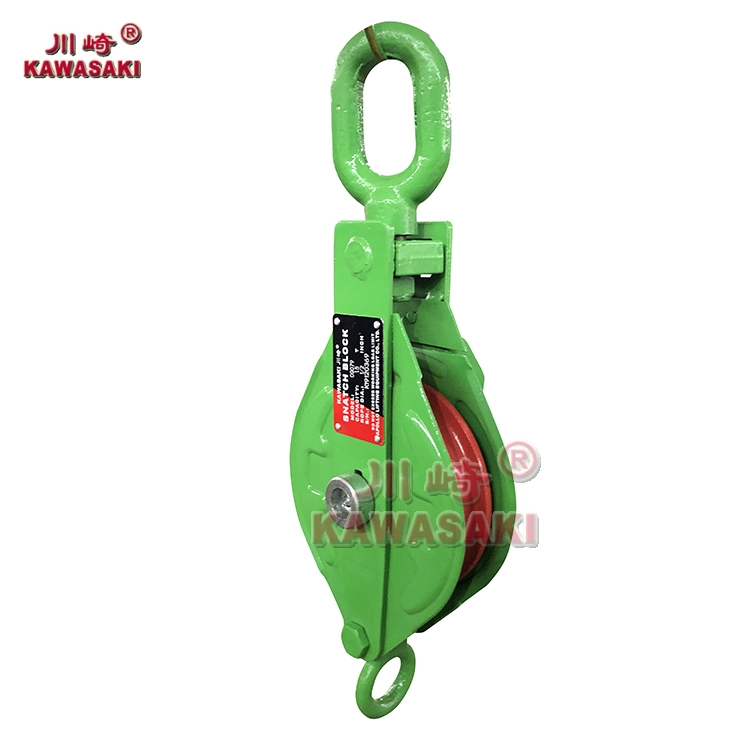
Kawasaki Pulley Block CQ – Ideal For Complex Rigging
The KAWASAKI Pulley Block CQ shapes for tough rigging jobs. With a lasting powder coat layer and solid frame, it works amid rough site states. Rated weights span from 2MT to 85MT, thus fitting it for building, ship building, and plant upkeep.
Its tall safety edge and single overload checks mirror Apollo’s lengthy build skill from 1986. In setups of multiple sheaves, the block spreads weight soundly and eases pull on the rope network.
Kawasaki Electric Wire Rope Hoist DC – Built For Heavy-Duty Industrial Lifting
The KAWASAKI Electric Wire Rope Hoist DC mixes motor push with thoughtfully shaped rope and sheave networks. It backs taller lift heights and larger holdings versus hand hoists.
Tailor picks like blast-proof, dust-proof, rain-proof, and speed shift lead make it fit for diverse places. Power picks from 110V to 575V permit world-wide reach. In wire rope hoists, the grade of inner sheaves fills a core spot in even work.
Kawasaki Hook Type Electric Chain Hoist DCEK – Compact And Reliable
For mid-strong lifts and snug spots, the KAWASAKI Hook Type Electric Chain Hoist DCEK gives a small answer. Although chain hoists avoid wire rope sheaves similarly, the idea of led weight shift stays alike.
Chain stock tailor, surface cares, and OEM mark picks aid traders and site builders seeking fit answers. With monthly give of thousands of items, Apollo aids big buys and lasting links.
Which Product Should You Choose Based On Your Needs
Picking between a pulley block and an electric hoist hinges on job scale, lift rate, and work spot.
For Multi-Sheave Rigging And Heavy Loads
Hand or half-hand rigging plans gain from strong pulley blocks. They remain plain, trustworthy, and apt for field jobs lacking power feed.
For Electric Wire Rope Systems In Industrial Settings
Plant sites, store areas, and metal works commonly need motor-run lifts with greater output. Electric wire rope hoists with fittingly shaped sheaves offer smoother lifts and higher holdings.
For Compact Chain Hoist Lifting Requirements
When spot confines and weights stay average, electric chain hoists deliver firm results with simpler setup. They gain wide use in shops, make lines, and upkeep jobs.
Conclusion
The split between a pulley and a sheave might appear slight at initial view. In routine speech, the words blend. In factory lifting, though, the pulley marks the complete setup, while the sheave marks the slotted wheel that meets rope or chain directly.
Getting this split aids purchasers in selecting proper tools and speaking plainly with makers. In lifts of high holding, minor tech points frequently bring large shifts.
With years of build skill, ISO-checked output, and firm OEM skills, Apollo’s KAWASAKI name provides pulley blocks and electric hoists shaped for actual factory work. From strong multi-sheave networks to forward electric hoists, the proper lift answer begins with proper parts.
FAQ
Q1: Is a sheave stronger than a pulley?
A: A sheave counts as part of a pulley setup. Strength rests on the full layout, stuffs, and safety edge of the whole pulley block, not merely the wheel in itself.
Q2: When should a pulley block be used instead of an electric hoist?
A: Pulley blocks suit when power feed limits or plain rigging needs. Electric hoists fit better for steady lifts, higher weights, and taller lift heights.
Q3: How important is sheave diameter in wire rope hoists?
A: Sheave size shapes rope damage and bend strain directly. Fitting size boosts rope span and upholds firm lift results.