News

kawasaki-electric-wire-rope-hoist-les

Electric Hoist vs. EOT Cranes: Which Is Right for Your Project?

Table of Contents

Choosing between electric hoists and EOT cranes comes down to your project requirements and how the cranes are going to be used. They are more appropriate for industrial settings where high capacity and broad coverage are required. By assessing the load capacity, workspace size, and operational requirements, you will ascertain which is best for your application.

Understanding Electric Hoists and EOT Cranes

If you are reading about how to choose the right lifting equipment for your project, you are probably faced with the decision to choose between an electric hoist and an EOT crane. While both are used for lifting and transporting heavy loads, there the similarities end and they each offer different features, benefits and applications.

Key Features of EOT Cranes

EOT cranes are one of the most commonly used cranes in industries. They are ideal for heavy-duty operations due to their high load-bearing ability. One is a gantry crane, which has its transport arrangement and is mainly used in shops and construction sites where heavy items are handled. Their overhead structure allows them to cover larger areas — giving the robot ample opportunity for movement throughout the workspace.

Key Features of Electric Hoists

Electric hoists, however, have their distinct advantages that can meet a variety of different operational needs. A prominent aspect of theirs is mobility and flexibility. Unlike EOT cranes which need to be installed on a fixed location, an electric hoist can be moved and adjusted to a particular task. These are especially helpful in areas where space is a little tight or areas where you routinely have to reorganize.

Comparing Applications and Suitability

Understanding where each system excels will guide you in choosing the right equipment for your needs.

Typical Use Cases for EOT Cranes

In cases where high load capacity is of utmost importance, EOT cranes are fully suited to the task. These are common in big plants, shipbuilding yards, and building sites where heavy weights should be transported over long ranges.

Typical Use Cases for Electric Hoists

Electric hoists, on the other hand, are frequently utilized on industrial and manufacturing sites, where people perform repetitive lifts of light to moderate loads. They are ideal for assembly lines or warehouses where you need fast and reliable lifting, thanks to their cost-effectiveness and efficiency.

Industrial and Manufacturing Environments

In these settings, electric hoists contribute significantly to productivity by reducing manual labor and speeding up operations. Their compact size allows them to be integrated into existing systems without major modifications.

Construction and Maintenance Tasks

Electric hoists also play a vital role in construction sites for lifting tools or materials to elevated areas. Their portability ensures they can be easily transported between job sites as needed.

Evaluating the Advantages of Each System

When evaluating which system might best suit your project needs, consider the inherent advantages each offers.

Benefits of Using Electric Hoists

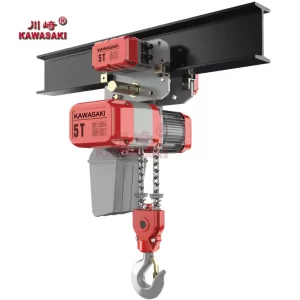
The primary benefits of electric hoists include their cost-effectiveness, as they generally require less investment than large crane systems. Additionally, their ease of installation means reduced downtime during setup or maintenance periods.
kawasaki-normal-operation-electric-chain-hoist-dcer-5t-1

Cost-Effectiveness and Efficiency

Electric hoists provide an effective balancing solution without losing performance, making them a good option for improving the balance in your corporate budget with the right balance between maintaining daily business operations and operating expenses. Electric hoists are a cost-effective offering without toning down the performance, making them favorable as businesses intend to stretch their budget plans while getting back to speed in doing things.

Ease of Installation and Maintenance

Their straightforward design facilitates quick installations and minimal maintenance requirements, allowing businesses to focus on core activities rather than equipment upkeep.

To learn more about utilizing these tools for your specific application needs, visit APOLLO‘s website for customizable solutions for any potential or existing industry.

Benefits of Using EOT Cranes

For projects demanding substantial weight handling capabilities, EOT cranes offer unmatched advantages such as enhanced safety features that ensure secure operation even under challenging conditions.

High Load Capacity and Durability

With their robust construction, EOT cranes are built to withstand rigorous use over time while maintaining high-performance levels across various industrial applications.

Enhanced Safety Features

Naturally, safety plays a significant role when dealing with heavy loads for this reason. EOT cranes come with advanced safety mechanisms to ensure operator safety and materials during operations as well.

Factors to Consider When Choosing Between Electric Hoists and EOT Cranes

Project Size and Scope Considerations

The size of your project is the main consideration when choosing between electric hoists and EOT cranes. Electric hoists are suited for smaller projects or areas with less overhead. Because of their compact design and how easy they are to install, they’re ideal if you need to set up quickly and move often. On the other hand, EOT cranes are more appropriate for large-scale industrial use that involves transporting heavy loads over wide open spaces. These overhead structures enable them to cover a lot of ground when it comes to workspace and make them almost necessary for facilities such as shipyards or large manufacturing plants.

Specific Load Requirements

It is important to know the load requirements. Electric hoists have a great diversity of load-handling applications with moderate weight, the capacities are impressive too, depending on the type of hoist. They are ideal for repetitive lifting activities in manufacturing or assembly lines. Meanwhile, the design of EOT cranes allows them to work with very heavy loads, since they are manufactured in a robust shape with an extremely high load capacity.

Recommendations for Selecting the Right Equipment with APOLLO Products

Overview of APOLLO’s Electric Hoist Solutions

What makes APOLLO’s products unique is that they are manufactured to high-quality standards, so they are reliable and efficient in all applications. It can be customized according to customers: function customization, appearance customization, material customization, voltage customization, surface treatment customization, and packaging customization.

Matching APOLLO Products to Project Needs

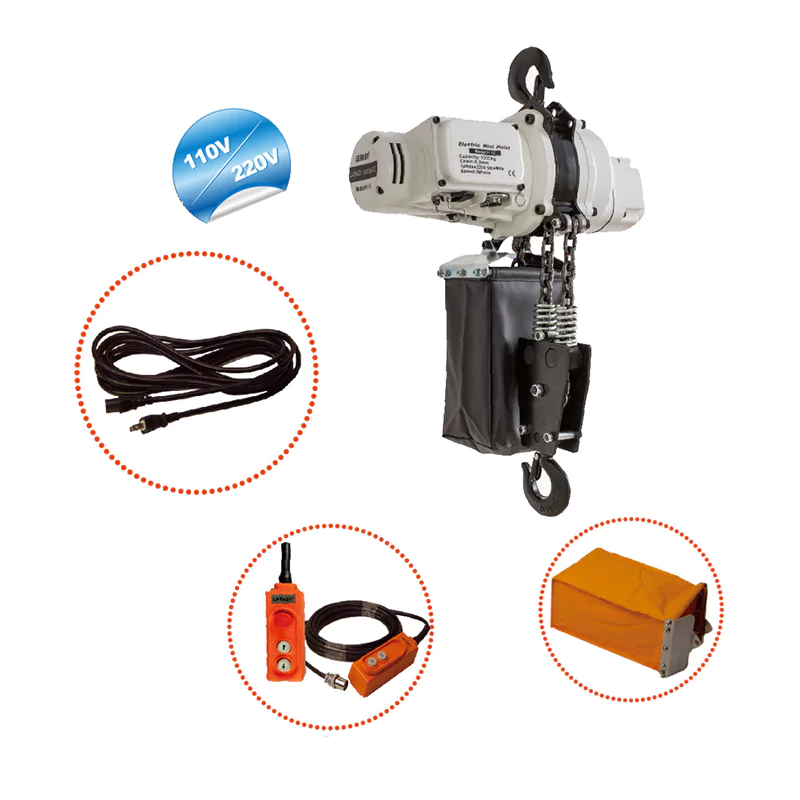
Match your project needs with the capabilities of its products. If you need something that can move around with you, you can also have its electric chain hoists, which can be easily set up, maintained, or repaired and still have large lifting capacities. These types of hoists are well suited when the working area is limited or there is a need for constant movement.

For larger projects demanding higher load capacities, its electric wire rope hoists provide robust solutions with enhanced safety features. They are engineered to handle rigorous use over time while maintaining high-performance levels.

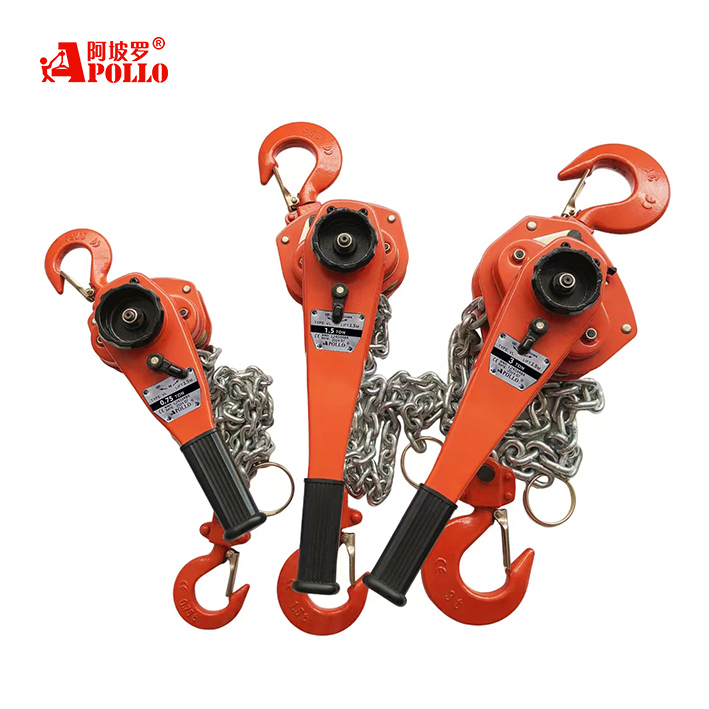
Its manual hoists also address cases where you want or need to go manual due to the particularities of your project. Such products are made with 360° operation, stage upside-down hoist functions, load-limiting and many more functionalities.

Once you assess the overall size, scale and load specifications of your project and match that with APOLLO’s varied product offerings, then you can choose a solution to keep your operations efficient and safe.

FAQs

Q1: When I want to choose between an electric hoist or an EOT crane, what should I keep in mind?

A: Project scale, specific load requirements, workspace, mobility, budget, installation complexity, and your long-term maintenance plans.

Q2: Are electric hoists for outside use?

A: Yes, all models have some sort of weather resistance, whether they’re dust-proofed or rain-proofed designed for outdoor use.

Q3: Can I have my lifting equipment made to order?

A: Absolutely! Customizations such as explosion-proof or visual customizations like changing color to meet operational requirements or brand needs.
 

You might also enjoy

load chain
Chain Hoist Load Chain Grades Explained: G80, G100, and Other Options Introduction The load chain is the most important bearing element of every chain hoist. Although customers always check the lifting capacity, lifting height, and price, the quality of the load chain influences its strength, reliability, safety, and performance. For distributors, wholesalers, industrial contractors, and OEM brand owners, the knowledge about chain grades is vital in terms of procuring chain hoists in different markets. Using an incorrect chain grade may cause problems including low lifespan, non-certification of the product, warranties claims, and more operating costs in the future. This guide explains the differences between G80, G100, and other chain grades, helping international buyers choose the most suitable option based on application requirements, regulatory standards, and procurement objectives. Why Load Chain Grade Matters The load chain transfers the entire lifting force during operation. Its quality directly affects: Lifting safety Working load limit (WLL) Fatigue resistance Wear resistance Product lifespan Certification compliance Maintenance costs Although two chain hoists may have the same rated capacity, differences in chain material and manufacturing quality can significantly impact performance. For B2B buyers, chain grade should be considered alongside supplier quality control, testing procedures, and certification documentation. Understanding Chain Grades Chain grades indicate the mechanical properties and strength level of alloy steel lifting chains. The most common grades used in lifting applications include: Chain Grade Typical Strength Level Common Applications G43 Medium strength Transport and general utility G70 Transport chain Cargo securing G80 High-strength lifting chain Most manual chain hoists G100 Premium lifting chain Heavy-duty lifting systems G120 Ultra-high-strength chain Specialized lifting equipment Not all chain grades are suitable for overhead lifting applications. For industrial chain hoists, G80 and G100 remain the most widely used options. G80 Chain: The Industry Standard G80 chain is the most commonly used load chain for manual chain hoists and many electric chain hoists worldwide. Key characteristics include: Heat-treated alloy steel construction High tensile strength Good fatigue resistance Proven lifting performance Broad international acceptance Advantages: Cost-effective Widely available Suitable for most industrial lifting tasks Compatible with common international standards Typical applications: Manufacturing plants Construction sites Warehouses Maintenance operations Equipment installation projects For many distributors and importers, G80 chain hoists provide the best balance between performance and cost. G100 Chain: Higher Strength, Lower Weight G100 chain represents a newer generation of lifting chain technology. Compared with G80 chain, G100 generally offers approximately 20–25% higher strength. Advantages include: Higher working load capacity Improved strength-to-weight ratio Reduced chain weight Enhanced lifting efficiency Better performance in demanding applications Typical applications: Heavy industrial environments Offshore projects Mining operations Steel fabrication facilities High-frequency lifting operations However, G100 chain hoists typically carry a higher purchase price. For buyers targeting premium industrial markets, the increased performance may justify the additional investment. G120 Chain: Is It Necessary? Some manufacturers now offer G120 lifting chain systems. Benefits include: Higher strength levels Reduced chain size requirements Weight reduction opportunities However, G120 remains relatively uncommon in standard chain hoists. Challenges include: Higher cost Limited availability More specialized replacement requirements For most distributors and industrial buyers, G80 and G100 remain the most practical choices. Comparing G80 and G100 Chains Feature G80 G100 Strength High Very High Cost Lower Higher Market Availability Excellent Good Replacement Parts Availability Excellent Good Industrial Applications General Heavy-duty OEM Demand High Growing Global Acceptance Very High High For most standard lifting applications, G80 provides excellent value. For premium lifting equipment and specialized industrial sectors, G100 may offer competitive advantages. How Certifications Affect Chain Selection International buyers often require compliance with recognized standards. Depending on the target market, chain hoists may require: CE compliance ISO 9001 manufacturing systems GS certification UKCA compliance Third-party testing reports Certification requirements often influence the choice of load chain supplier and manufacturing process. Buyers should request: Material certificates Mechanical property reports Load test records Quality inspection documentation Reliable documentation simplifies customs clearance, market entry, and customer acceptance. OEM and Private Label Considerations For distributors and brand owners, chain grade selection also affects OEM projects. Common OEM customization options include: Private logo branding Customized load chain specifications Branded packaging Instruction manual localization Product labeling Market-specific compliance markings When evaluating OEM suppliers, buyers should confirm whether chain grades can be customized according to local market requirements. Some regions may primarily demand G80 products, while others increasingly favor G100 lifting systems. Quality Control: What Buyers Should Verify Chain quality varies significantly among manufacturers. Before placing bulk orders, buyers should assess: Raw Material Traceability Quality manufacturers maintain complete records for: Steel sourcing Heat treatment processes Batch identification Material testing Load Testing Procedures Every chain hoist should undergo appropriate testing before shipment. Typical tests include: Proof load testing Functional testing Brake testing Visual inspection Production Consistency Consistent manufacturing reduces: Warranty claims Product recalls Customer complaints Unexpected failures For long-term distributors, supplier quality consistency is often more important than achieving the lowest purchase price. Lead Time and Supply Chain Considerations Reliable supply is critical for distributors and project contractors. When sourcing chain hoists, buyers should evaluate: Monthly production capacity Standard lead times Peak-season delivery performance Inventory management capabilities Emergency order support Manufacturers with stable production systems are better positioned to support long-term partnerships. After-Sales Support and Spare Parts Availability The availability of replacement chains and spare parts directly impacts product lifecycle value. Buyers should confirm: Replacement chain availability Spare part inventory Technical support response times Warranty policies Product documentation support Strong after-sales support can significantly reduce downtime and maintenance costs. How to Choose the Right Chain Grade The optimal chain grade depends on application requirements. Choose G80 If: Cost efficiency is important Applications are general industrial lifting Replacement parts availability is a priority Broad market acceptance is required Choose G100 If: Higher lifting performance is needed Weight reduction is important Equipment operates under demanding conditions Target customers require premium specifications Consider G120 Only If: Specialized applications justify the investment Engineering requirements demand maximum strength Long-term replacement support is available Need Help Selecting the Right Chain Hoist for Your Market? The selection of the right load chain grade is an exercise of compromise between safety considerations, certification standards, positioning strategy, and overall acquisition costs. If you are looking for chain hoists for any industrial use, distribution channels, rent-a-warehouse or OEM branding programs, our team can help to select the best chain hoist for your business. We offer: G80 and G100 chain hoists OEM and private label manufacturing Custom packaging and branding CE and ISO-compliant production Bulk order support Technical documentation and testing reports Flexible lead times Spare parts and after-sales support Contact us today to discuss your requirements, request product specifications, or receive a customized quotation. Website: Apollo Hoist Official Website Inquiry Page: Contact Apollo Hoist Today Email: sales@apollohoist.com WhatsApp / Phone: +86 18989488615 Conclusion Chain grade is among the critical considerations that affect the performance, safety, and longevity of a chain hoist. While the G80 grade chain continues to be the standard in many industrial settings, G100 chain has continued to win favor in more rigorous settings where higher efficiency is needed. For international buyers, it is important that chain selection goes beyond just technical specifications and includes certification conformity, OEM customizing capability, manufacturing quality, reliable supply chain, and post-sales service. Through cooperation with a reputable manufacturer and choosing the right chain grade, buyers can gain more competitive products and minimize risks.
Introduction The...
Apollo Custom Wire Rope Hoist OEM for Steel Structure & Warehouse Projects
Why Choose...
Must-Have Safety Features for Modern Electric Hoists in 2026
Introduction Electric...
lever hoist
How to Select the Right Lever Hoist Rated Load for Vertical Lifting, Horizontal Tensioning, and Equipment Positioning
Introduction Choosing...