Introduction
By 2026, industrial lifting is changing because of sustainability rules, automation, and the need for systems that save energy. Electric chain hoists now play a main role in safe and exact lifting work in manufacturing, logistics, and construction. Among these, Apollo electric chain hoists shine due to their flexibility, steady output, and skill to follow growing global rules.
Electric chain hoists serve as vital tools for regular handling of heavy items where accuracy and trustworthiness are most important. They make it easier to move materials up and down in production lines, warehouses, or assembly plants. In such spots, any break in work turns right into reduced output.
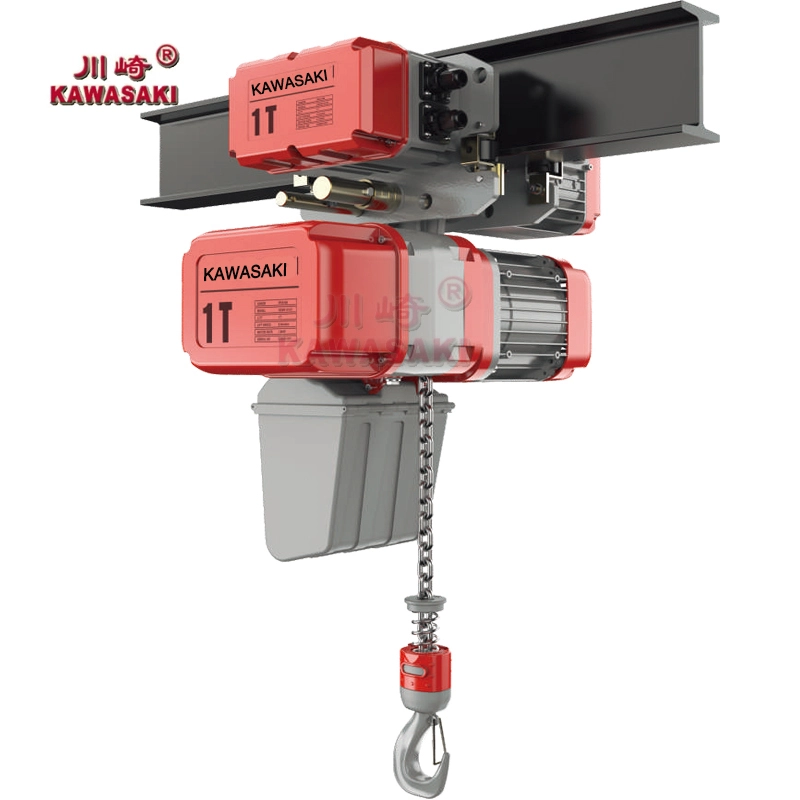
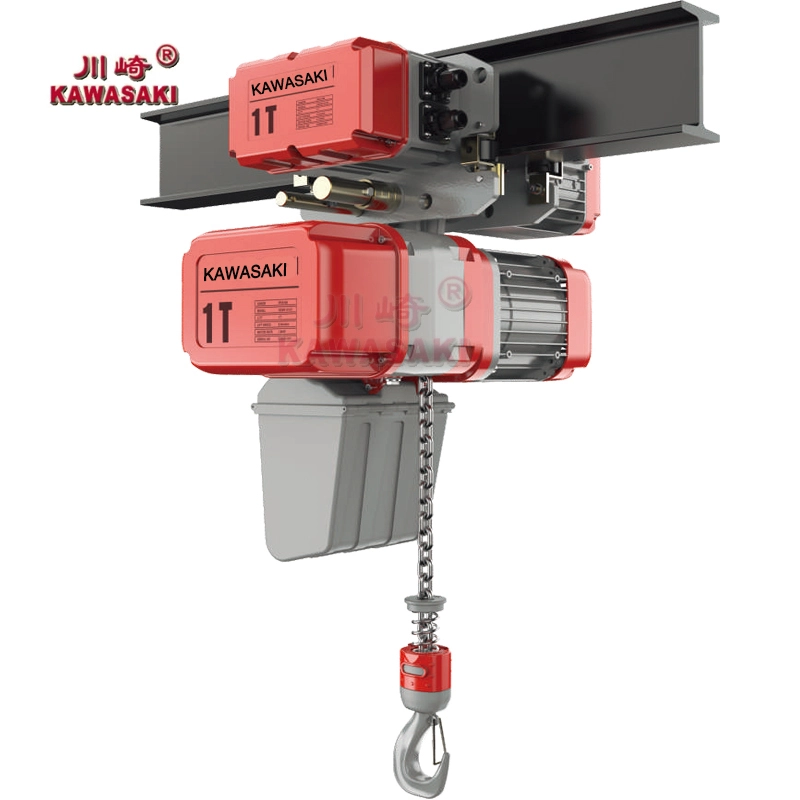
This article offers a step-by-step guide to choosing the right Apollo electric chain hoist (including Kawasaki-branded models like KKBB and DCEK series) suited to 2026 industrial needs. It highlights energy savings, improved safety, broad options for changes, and following growing global rules.
Define Your Operational Requirements
Load Capacity and Duty Cycle
The first step in picking an Apollo electric chain hoist is figuring out load capacity and duty cycle. For light manufacturing jobs or repair work, a 0.5-ton model might work fine. Yet, ongoing or demanding lifting, such as in steel work or car putting together, needs higher capacities that go up to several tons. The duty cycle explains how long the hoist can run before it cools off. Settings with constant use require motors made for long running without getting too hot.
Lift Height, Speed, and Frequency
Lift height needs to fit the facility setup, whether it is a small workshop or a tall warehouse. Speed counts too. Production lines usually gain from fast models that shorten cycle times, and they do this without risking safety. If loads get raised often all day, search for models with heat guards and auto braking setups. These keep things steady as time passes.
Environment Assessment
Conditions in the surroundings have a big part in the choice. Dusty places gain from models that keep out dust. Wet or sea areas need options that resist rain or rust. Risky spots, like oil refineries, call for setups that prevent explosions with ATEX/IP-rated traits. Apollo provides function changes, including explosion-proof, dust-proof, rain-proof, frequency conversion, and two-speed choices. These ensure solid work in hard industrial places. A complete range of electric chain hoists is available to find the right configuration for your specific environment.
Power/Voltage Compatibility
Facilities around the world use different voltages, from 110V single-phase to 575V three-phase. Apollo electric chain hoists allow voltage changes (single-phase or three-phase, 110V–575V range). This helps with easy fitting worldwide. They use motors that save energy, keep solid torque, and cut down on power use.
Evaluate Core Features and Apollo Advantages
Safety Mechanisms
Safety ranks highest in industrial lifting. Apollo (Kawasaki-branded) electric chain hoists include multiple guards: overload limiters to stop chain stress; limit switches for exact stop points; emergency stops for quick halting; automatic braking systems; and thermal protection to avoid motor overheating. (Note: Dual mechanical brakes are highlighted in KKBB models.)
Precision and Control
For tasks that need careful placing, like putting together machine parts or handling breakable items, exact control matters a lot. Pendant or remote controls let workers handle speed changes without trouble. Variable frequency drives allow slow speedup and slowdown. This cuts down on swinging during lifts.
Durability and Build Quality
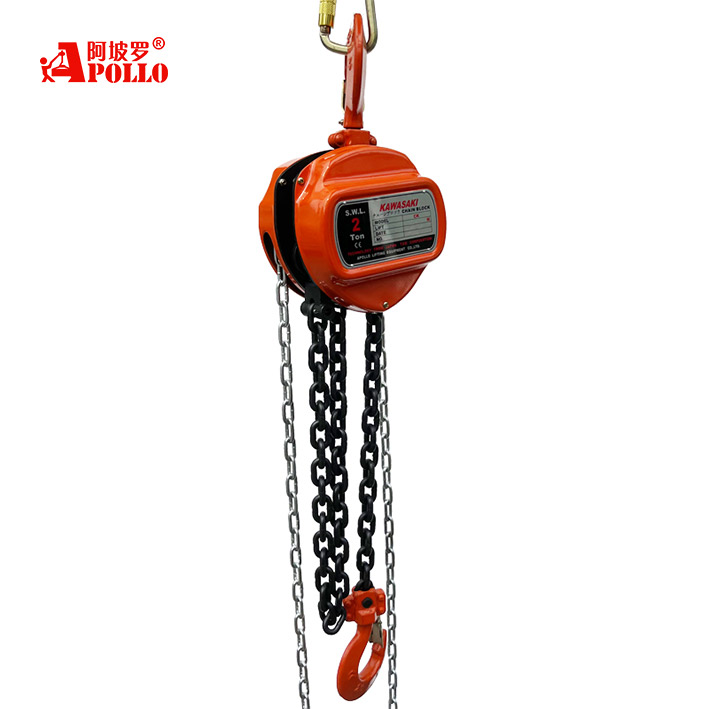
Strength is vital in rough industrial spots. Apollo electric chain hoists provide material changes with top-quality chains (T80/T100 alloy steel options). These give great pulling power and resistance to wear. Hard gears and strong aluminum alloy covers (e.g., heat-dissipating in KKBB models) hold up to ongoing use. Treatments like galvanization or nickel plating are on hand for rust protection in damp places. Manual hoists are also available, maintaining the same high-standard durability and alloy steel quality.
Customization and Innovation
Apollo’s design flexibility shows up in OEM/ODM solutions fitted to work needs, from custom colors that match company branding to special materials for harsh conditions. Appearance customization: Customize the appearance color, logo, etc. of the electric hoist according to the customer’s preferences. Each unit can get set up with extra features like rainproof casings or frequency conversion drives. These help with even load shifts.
Efficiency
Energy efficiency is not only a goal for the environment. It also makes good business sense. Strong motors teamed with tuned gearboxes provide solid torque and cut power use. Shorter times between upkeep also reduce running costs as time goes on.
Align with 2026 Industrial Trends
Sustainability and Electrification
As industries move to cleaner work by 2026, electric lifting options like Apollo’s turn into key tools for cutting carbon marks. Designs that save energy lower electricity use. They also aid company goals for sustainability reports.
Safety and Compliance
Rules are getting stricter around the world on work safety and equipment checks. Our company has passed ISO9001, ISO2000 quality system certification, and obtained European Community CE/GS safety certification. These checks confirm that Apollo electric chain hoists meet tough European safety marks. This is a key point when trying for global projects.
Versatility for Automation
Smart factories rely on hardware ready for automation that can link with PLCs or IoT tracking systems. Apollo models with exact control back up timed multi-hoist work. This is a must in automated assembly lines where timing precision counts.
Value Assessment
While starting costs affect choices, the full cost over time gives a better view of worth. A solid Apollo (Kawasaki-authorized) electric chain hoist offers long service life and little downtime. It does this through strict design and factory tests, plus options for changes that improve ROI with better output.
Selection Checklist and Apollo Recommendations
Choosing the right model gets simpler when led by clear check points:
| Selection Factor | Considerations | Example Configuration |
| Capacity | Match load weight + safety margin | From 0.5T (e.g., KKBB0.5) up to 2T+ (higher in series) |
| Safety Features | Overload limiter, limit switch, emergency stop, thermal protection | Standard across models; dual brakes in KKBB |
| Environment | Dusty/wet/explosive zones | Dust-proof/rain-proof/explosion-proof variants |
| Voltage | Facility compatibility | Single/three-phase 110–575V |
| Certifications | CE/GS/ISO compliance | Meets EU/international standards |
| After-Sales Support | Warranty & parts availability | One-year warranty + global support |
For instance:
- KKBB series suits heavy-duty applications with dual brakes, limit switches, and IP/weather-resistant features.
- DCEK or DECK models fit general/hook-type needs with customization options.
- Custom configurations (e.g., explosion-proof) are ideal for hazardous zones like chemical plants or refineries.
Packaging customization: Customize the packaging method of electric hoist according to customer needs, ensuring secure transport globally while maintaining brand presentation consistency.
Conclusion
Selecting an Apollo electric chain hoist goes beyond just picking a lifting tool. It means choosing trustworthiness that fits future industrial needs. With its stress on safety updates, worldwide voltage fitting, material strength (like T80/T100 chains), and OEM-level change skills, Apollo gives solutions set for 2026’s automation-focused world. Companies that invest now put themselves in front for both rule following and work efficiency later.
Contact Apollo today for expert consultation on tailoring your next industrial electric hoist solution that meets your specific operational goals while staying compliant with upcoming standards.
FAQs
Q1: What load capacities do Apollo electric chain hoists support for industrial applications?
A: Apollo electric chain hoists cover a wide range from light-duty 0.5-ton units up to several tons suitable for continuous heavy-load operations across industries like manufacturing or construction.
Q2: How do Apollo electric chain hoists ensure safety in demanding 2026 environments?
A: They integrate overload protection systems, limit switches, automatic brakes, friction clutches, and thermal safeguards designed specifically to meet enhanced global safety regulations expected by 2026.
Q3: Can Apollo electric chain hoists be customized for explosion-proof or dust-proof use?
A: Yes. Function customization: such as explosion-proof, dust-proof, rain-proof allows adaptation for hazardous areas like chemical plants or outdoor sites exposed to harsh weather conditions.
Q4: What voltage options are available for Apollo electric chain hoists?
A: Models support single-phase or three-phase setups ranging from 110V up to 575V worldwide—ideal for multinational facilities operating under varied electrical standards.
Q5: Why choose Apollo electric chain hoists over manual or wire rope alternatives?
A: Electric versions deliver faster speeds, greater lifting heights (tens of meters), higher efficiency through motorized operation, plus built-in automation compatibility that manual systems simply cannot match—all contributing to safer and more productive workflows in modern industry contexts.