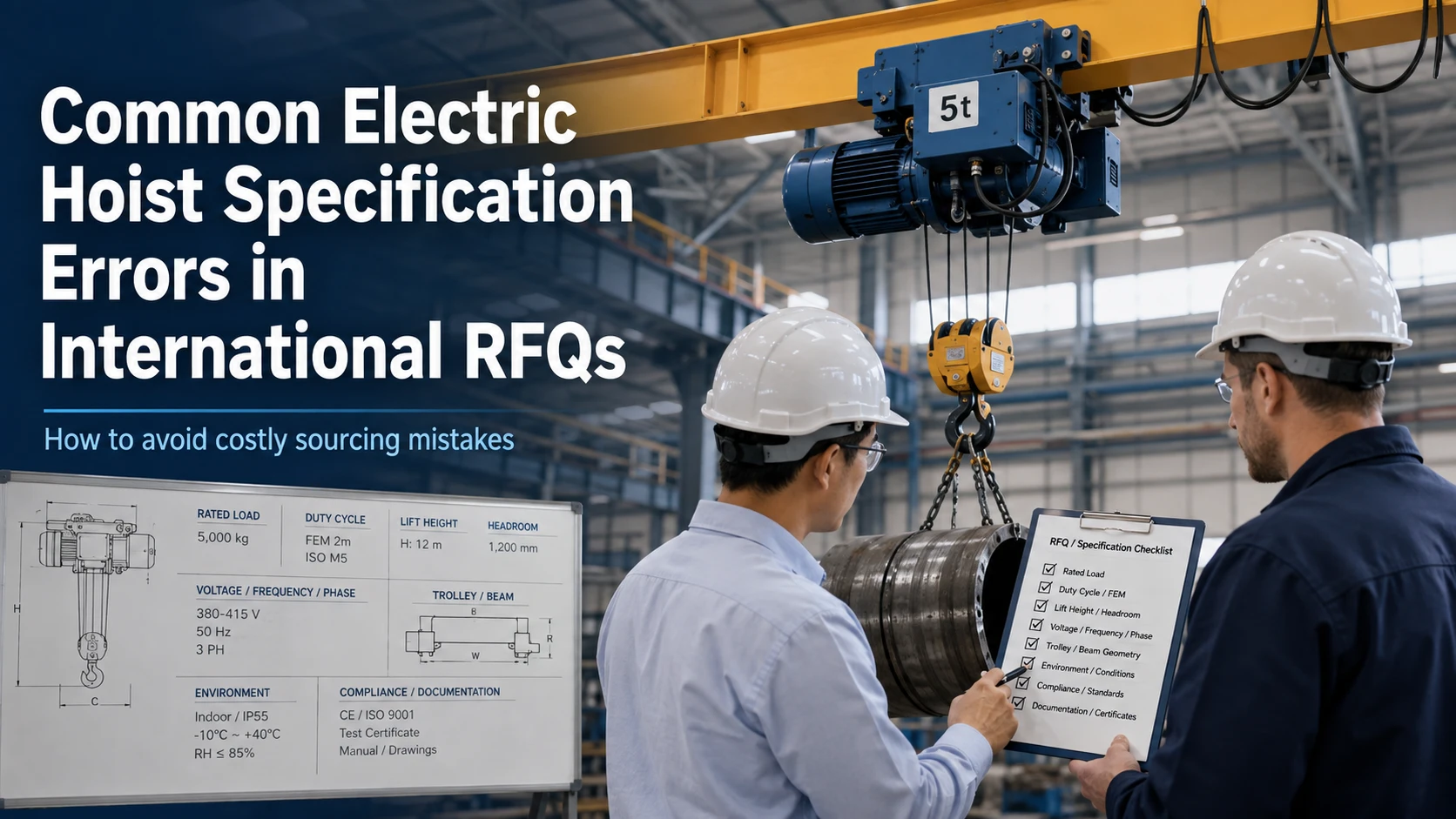
An international request for quotation can look complete and still produce incomparable electric hoist offers. The usual cause is not a missing model number; it is an ambiguous specification that lets each supplier make a different engineering assumption. A reliable RFQ states the load case, operating duty, electrical supply, installation geometry, environment, controls, documentation, and acceptance criteria in one consistent set of units.
This guide explains the most common specification errors and a practical way to correct them before the RFQ reaches suppliers. The goal is a technically comparable response, fewer clarification cycles, and a hoist that fits the actual lifting system rather than only the headline capacity.
Why specification errors persist in global sourcing
Electric hoist terminology changes across countries, industries, and supplier catalogs. “Capacity” may mean rated load, while a buyer may be thinking about the heaviest load including below-the-hook equipment. “Lift” may describe hook travel, overall headroom, or the available building height. Voltage can be listed without frequency or phase, and a duty label can be copied without describing cycles per hour. These shortcuts create a false sense of precision.
The remedy is to write each requirement as a measurable condition and to identify what must be verified by the supplier. A good RFQ makes assumptions visible so that deviations can be priced, documented, and approved rather than hidden in a quotation.
Eight common electric hoist specification errors
Confusing rated load with the real working load
A capacity number without a load definition is incomplete. State the maximum lifted mass, the normal operating mass, the weight of hook blocks, grabs, magnets, slings, or fixtures, and whether the load is centered or can introduce side pull. Ask the supplier to confirm the rated load on the nameplate and the intended design margin. OSHA defines rated load as the maximum load for which the hoist is designed and identified by the manufacturer, so the RFQ should not substitute a rough project estimate for that controlled value.
Omitting duty cycle and frequency of operation
A hoist that lifts a load once per shift has a different thermal and brake requirement from one that runs continuously. Specify lifts per hour, average lift duration, idle time, load spectrum, daily hours, and expected service life. If a classification such as FEM, ISO, or an equivalent local class is required, name the exact standard and ask for the supplier calculation. Do not accept “heavy duty” as a substitute for a stated duty profile.
Treating lift height as the only dimensional requirement
List hook travel, lowest hook position, highest hook position, headroom, beam or trolley clearance, and any obstructions. Include the available runway length and whether the hoist is fixed, push-trolley, geared-trolley, or power-travel. A technically correct lift height can still fail when the hook cannot reach the load or the hoist body collides with the structure.
Mixing metric and imperial units without a controlling unit
International RFQs often combine tonnes, short tons, kilograms, feet, meters, millimeters, and inches. That invites rounding differences and transcription errors. Choose one primary unit system, show conversions in parentheses only when useful, and require the supplier drawing and data sheet to use the same primary units. Never let a converted value silently change the requested capacity or dimensions.
Leaving voltage, frequency, and phase ambiguous
“380 V” is not enough. State nominal voltage, allowable tolerance, frequency, phase, incoming supply arrangement, control voltage expectations, and plug or hardwire requirements. Note whether the equipment will operate on a generator, through a variable-frequency drive, or in a region with unstable supply. Apollo lists electric-hoist voltage customization from single- to three-phase and 110 V to 575 V, but the buyer still needs to specify the exact site supply and the required confirmation.
Ignoring the load path and trolley geometry
A hoist is part of a system. Include beam flange width, beam type, curve radius if any, runway slope, end stops, approach dimensions, and the distance from the hook centerline to the supporting structure. If a trolley is included, request wheel load, wheel material, travel speed, and compatibility with the beam. A supplier cannot validate fit from capacity and lift alone.
Using environmental labels as adjectives
Words such as outdoor, washdown, corrosive, dusty, or hazardous area must be converted into conditions. State temperature range, humidity, rain or spray exposure, dust type, corrosive chemicals, altitude, noise limits, and any hazardous-area classification. Apollo identifies options such as explosion-proof, dust-proof, rain-proof, and frequency conversion in its ODM service; the RFQ should still define the environment and required evidence instead of selecting a label by appearance.
Writing compliance as shorthand
“CE certified” or “meets standards” does not identify the legal or technical basis. Name the market, applicable directives or standards, required language for manuals, inspection records, nameplate markings, and test certificates. Ask suppliers to list the exact standard edition and any exceptions. For US projects, the OSHA overhead-crane requirements are a useful reference for issues such as rated-load marking, brakes, controls, inspection, and testing, but the project engineer must determine which provisions apply to the complete installation.
Build an RFQ that survives supplier review
Use a short specification schedule with one line per requirement and a response column. Require suppliers to mark each line as compliant, deviating, or not applicable, with a comment and document reference. A practical sequence is:
- Describe the load, center of gravity, below-the-hook equipment, and lifting points.
- Define hook travel, headroom, runway geometry, trolley arrangement, and installation limits.
- State duty cycle, load spectrum, operating hours, ambient conditions, and noise expectations.
- Give the exact electrical supply, control philosophy, travel speeds, and emergency-stop needs.
- List documentation, inspection, test, marking, language, packaging, and import requirements.
- Ask for a dimensional drawing, data sheet, deviations list, estimated mass, and a complete bill of supply.
How to compare supplier replies
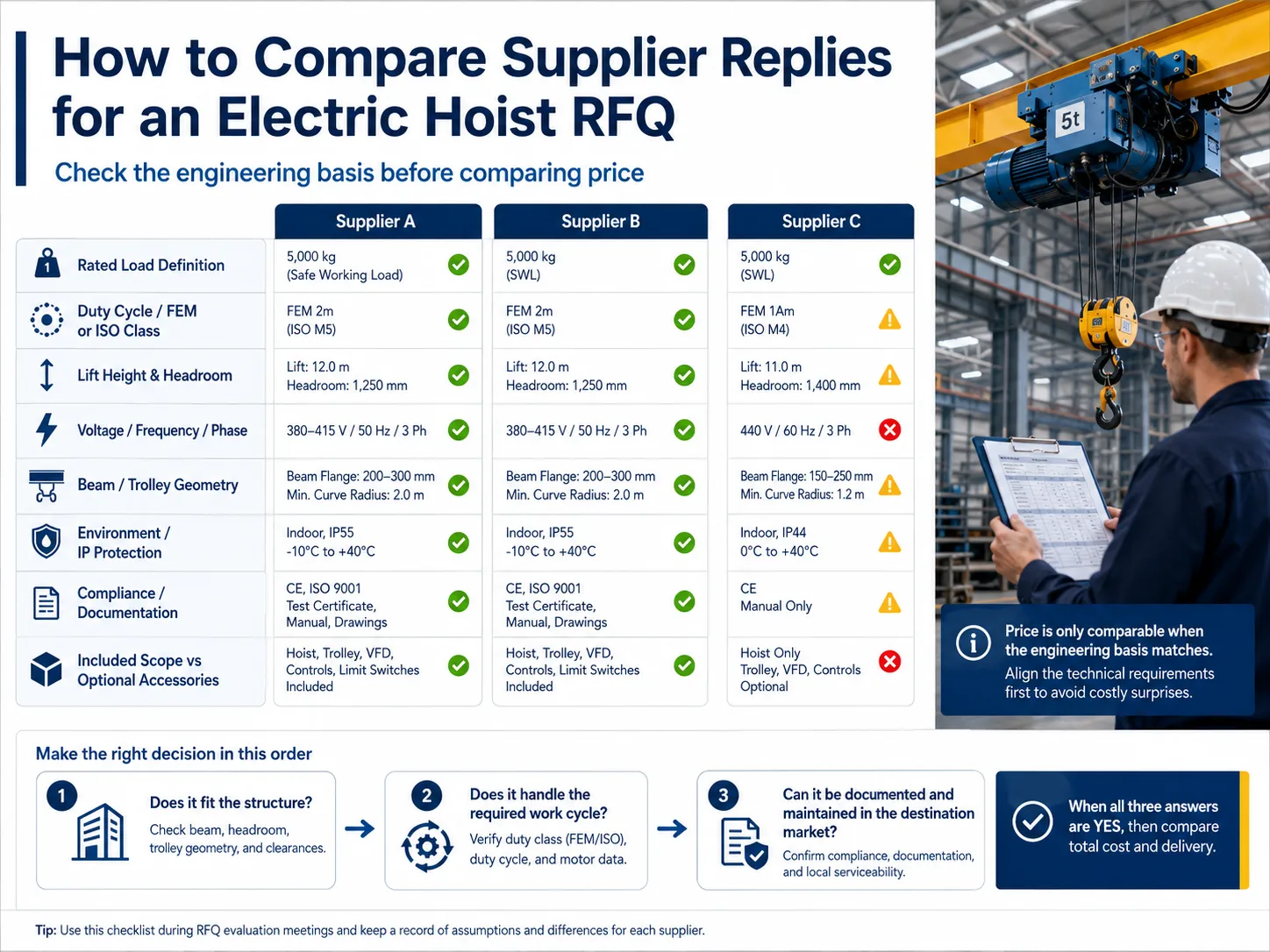
Compare the engineering basis before comparing price. Check that every quotation uses the same rated load definition, duty assumptions, units, electrical supply, and installation arrangement. Separate included equipment from optional accessories, and record every deviation in a clarification log. The final comparison should answer three questions: Does the hoist fit the structure? Does it perform the required work cycle? Can the buyer document and maintain it in the destination market?
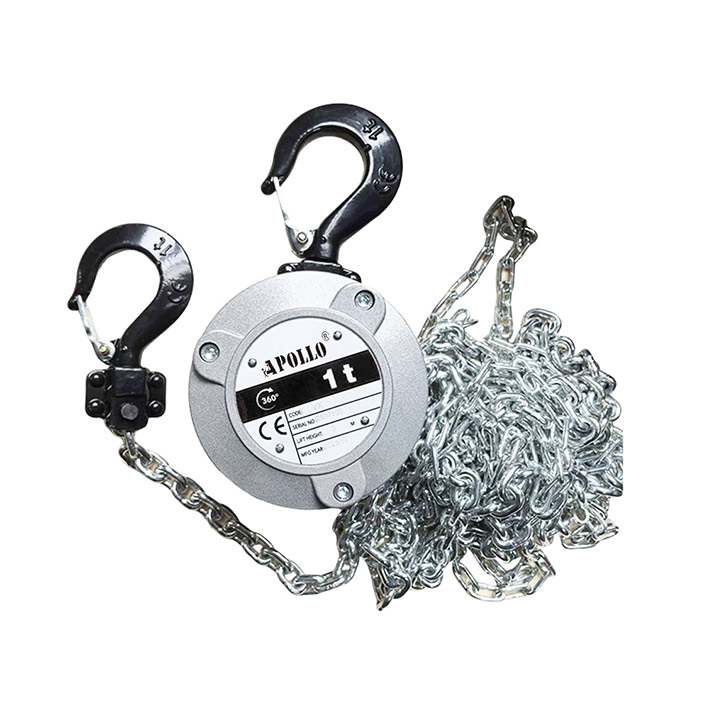
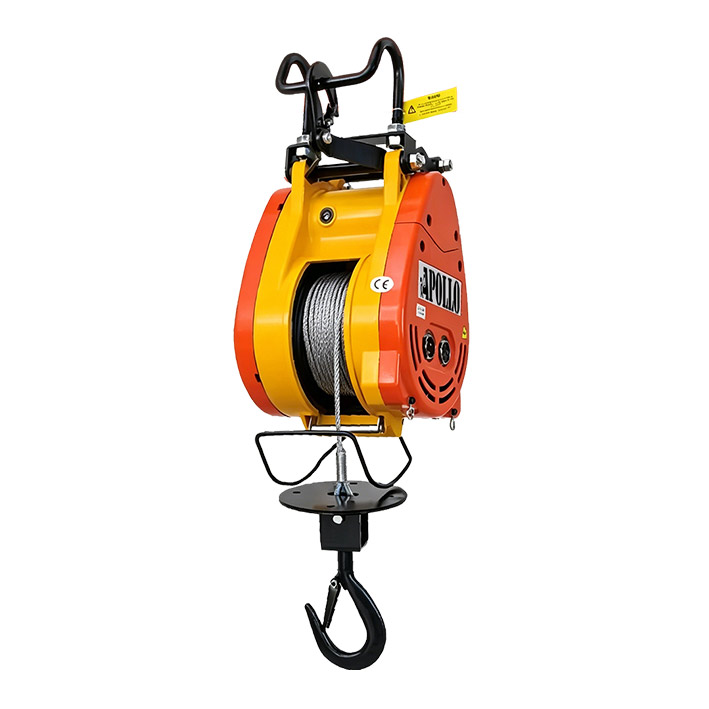
For a first supplier screen, Apollo’s electric hoist product category shows the relevant families, including electric chain hoists, electric wire rope hoists, European wire rope hoists, winches, and explosion-proof hoists. The category is a starting point, not a substitute for project engineering. Product selection should follow the RFQ schedule and the supplier’s model-specific data sheet.
When customization or private-label packaging is part of the project, Apollo’s ODM and OEM service describes customization areas such as function, voltage, surface treatment, and packaging. Treat these as options to confirm against the requested quantity, destination requirements, and final approved drawing. Apollo also presents R&D capabilities around electric hoists and new product development, which can be relevant when the standard catalog does not match the application.
Conclusion
The most expensive RFQ error is an unspoken assumption. Capacity, duty, dimensions, power, environment, compliance, and documentation must describe the same operating case. Once those fields are explicit, suppliers can quote on comparable terms and the buyer can evaluate deviations without guessing. A disciplined specification schedule also creates a useful record for installation, inspection, and future replacement.
FAQs
What is the most important field in an electric hoist RFQ?
Define the real lifted load and the duty cycle together. Capacity without operating frequency does not establish the required hoist design.
Should an RFQ request a chain hoist or wire rope hoist by default?
Specify the load path, lift, duty, environment, and geometry first. The supplier can then confirm whether chain or wire rope is the suitable product family.
How should international voltage be written?
State nominal voltage, phase, frequency, tolerance, control voltage, and site power constraints. Do not rely on a single voltage number.
What documents should accompany a quotation?
Request a model-specific data sheet, dimensional drawing, bill of supply, deviations list, test and inspection documents, manuals, and nameplate details.
To request an application fit-check, contact the Apollo technical team with the model or product family, rated load, hook travel, duty cycle, power supply, beam or mounting details, environment, destination market, quantity, and any drawing or packaging requirement.