Why the test load figure decides a site approval
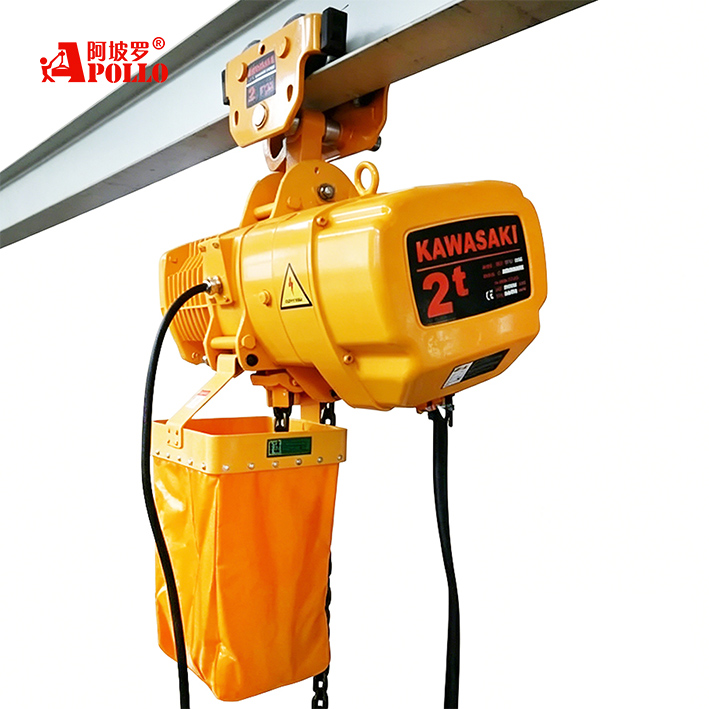
A production cell installs a new electric chain hoist on an overhead monorail. The unit runs well for a month, then the site inspector asks two questions nobody in the project team can answer: what load was the unit tested at, and what duty cycle is it rated for. The invoice lists a capacity and a voltage. It does not list a test load, and it says nothing about how many starts per hour the hoist can survive. The install is paused until the paperwork catches up with the machine.
That pause is avoidable, and it is not a rare story. Test load and duty cycle are the two numbers that decide whether a powered hoist is approved for production use, and both are usually missing from a quotation written around price and capacity.
Safety questions get left out of the specification for four reasons:
- The quotation lists capacity and voltage, but not the load the unit was proof tested at before it left the factory.
- Duty cycle is treated as a detail, even though it decides whether a hoist lasts two years or ten on the same rail.
- Overload protection is assumed rather than specified, so nobody checks what device is fitted or how it was verified.
- The chain fall configuration is chosen by habit, without checking the speed and capacity trade-off it creates.
This guide is written for production engineers, maintenance planners, plant buyers, and distributors who specify powered lifting equipment into a live production environment. It explains what a test load actually proves, what overload protection does and does not do, and which figures to demand before a hoist is approved for continuous work.
Get a free load assessment: send the capacity, the voltage and phase at the panel, the cycle time, and the beam flange width to sales@apollohoist.com, and receive a matched hoist recommendation with the test load figures within one business day.
Why every electric chain hoist is tested above its rating
A test load is the weight a hoist is loaded with to prove that it carries more than it is sold to lift. It is applied before dispatch, and it is not the same number as the capacity on the badge. Apollo proof tests every model in the motorized trolley range at 125 percent of rated capacity, which makes the arithmetic simple to check on a quotation. A 0.3 tonne unit is tested at 0.375 tonnes. A 3 tonne unit is tested at 3.75 tonnes. A 10 tonne unit is tested at 12.5 tonnes. The unit is not sold as a 12.5 tonne hoist, and it must never be used at the test load, but the test is what tells a buyer that the brake, the chain, and the body assembly all carried more than the rating on the day the unit left the factory.
Write the test load into the specification for three reasons:
- It is a check on the brake, which is the component that holds the load when the operator releases the control.
- It is a check on the chain and the load path, including the end anchorages that a visual inspection cannot load test.
- It is a check on assembly, because a proof test on a completed unit catches what a parts inspection cannot.
What a test load does not do is equally important. It does not make the hoist safe to run above its rating, it does not extend the duty cycle, and it says nothing about the beam, the monorail, or the anchor the hoist hangs from. A tested hoist on an untested beam is still an unfinished lift, and the beam is inspected by someone else.
What overload protection actually protects
It protects the hoist, not the load
The name leads buyers to the wrong conclusion. Overload protection exists to stop the machine being asked to lift more than it is rated for, because a hoist overloaded on every cycle wears its brake and its chain at a rate no maintenance schedule can absorb. It does not make an overloaded lift safe, it does not warn anyone that a load is unstable, and it does not replace rigging judgement. When a load is too heavy, the correct answer is a larger hoist, not a device that interrupts the lift after the fact.
Test load, rated capacity, and working limit in one line each
Three numbers sit close together in a quotation and mean different things. The rated capacity is the load the hoist is sold to lift in normal service. The test load is the weight it was proven at before dispatch, which on this range is 1.25 times the rated capacity. The working limit is your own figure: the heaviest load you allow the crew to lift with that unit, which should leave margin for rigging weight and for a load that is not perfectly balanced. Buyers who specify all three on the purchase order get a cleaner inspection conversation than buyers who specify one.
What to ask the supplier about the protection set
Protection features vary between manufacturers, so the questions matter more than the marketing. Ask which overload device is fitted and whether it is adjustable, ask what happens to the load when the device operates, ask whether the limit switch arrangement stops the hook in both directions, and ask what documentation accompanies the device. A supplier who answers those four questions from a wiring diagram is a supplier whose unit will survive an audit.
The numbers that decide whether a hoist survives production use
Duty cycle, explained plainly
Duty cycle is simply how much of the working hour the hoist is actually running. A hoist that lifts for 6 minutes in every 30 is working at 20 percent duty; one that lifts for 20 minutes in every 30 is working at about 67 percent. The figure matters because a motor generates heat while it works and sheds that heat while it rests, and a hoist rated for occasional lifts will not survive an eight hour shift of continuous cycling. Before ordering, write down your cycle time: how many lifts per hour, how long each lift takes, and how long the hoist rests between them. Then compare that with the duty rating the supplier publishes for the model, and treat a missing duty figure as a question that has not been answered.
Chain falls and the speed capacity trade-off
A chain fall describes how many chain lines carry the load. A single fall hoist runs one chain line over the load sheave, which is fast for its capacity. A two fall or four fall arrangement shares the load across several chain lines, which raises the capacity without a proportionally larger chain, at the cost of lifting speed. On this range the light models are single fall at 7.1 or 6.6 metres per minute, while the 5 tonne model uses two falls and lifts at 2.7 metres per minute, and the 10 tonne model uses four falls at the same speed. The choice is not a preference. It is a decision about whether the job values speed or capacity, and it should be made from the cycle time, not from the price list.
Travel speed and line cadence
On a motorized trolley hoist, the travel motor moves the load along the rail, and the trolley is the part that decides throughput on a line. Most models in this range run a dual speed travel motor at 11 and 21 metres per minute, which gives a fast approach and a slow final placement. Before purchase, compare the fast travel speed with the distance between workstations and the takt time of the line. If a move takes 40 seconds at 11 metres per minute and the line allows 30, the hoist is not the problem; the layout is.
Headroom and the ceiling you cannot change
Headroom is the vertical space between the top of the lifted load and the underside of the structure, and it is the constraint that kills more powered hoist projects than any other. On this range the light models are built with an H dimension as low as 630 mm, so a motorized hoist can be fitted into buildings that were originally laid out for manual equipment. Measure the available height before the hoist is selected, not after, and include the hook block and the load in the calculation.
| Capacity | Chain falls | Lift speed | Test load | Beam flange range |
| 0.3 t | 1 | 7.1 m/min | 0.375 t | 60 – 190 mm |
| 1 t | 1 | 6.6 m/min | 1.25 t | 60 – 190 mm |
| 2 t | 1 | 6.6 m/min | 2.5 t | 82 – 228 mm |
| 3 t | 1 | 5.4 m/min | 3.75 t | 82 – 228 mm |
| 5 t | 2 | 2.7 m/min | 6.25 t | 100 – 256 mm |
| 10 t | 4 | 2.7 m/min | 12.5 t | 100 – 294 mm |
Read the table from left to right and the design logic shows up: capacity rises, chain falls increase, lifting speed falls, and the beam the hoist needs gets wider and heavier. A buyer who checks those four columns against the job and the rail will not be surprised after installation.
Get a free load assessment: send your cycle time, the lift height, and the beam flange width, and Apollo’s engineers will confirm the capacity and the chain fall configuration that fits, with the test load figures in writing within one business day, at no cost.
Voltage and phase: the specification that stops projects
A powered hoist is an electrical installation as well as a lifting machine, and a mismatch between the supply and the unit is discovered on the day of commissioning rather than on the day of ordering. The lift motors in this range are rated at 1440 RPM and take three phase input from 200 to 460 volts at 50 or 60 hertz, which covers the common industrial supplies in North America, Europe, and Asia from one design. That range removes the need for a voltage specific sub-model, but it does not remove the need to check your own supply first. Read the voltage, the phase, and the frequency from the panel that will feed the hoist, and if the site has unstable power, ask the supplier for the tolerance band the drive will accept before you sign.
What Apollo builds into a motorized electric chain hoist
Four design decisions separate a powered hoist that suits a production line from one that suits occasional use:
- Lifting and travel are both motorized, so the operator controls the load along the rail as well as up and down from one pendant or remote, rather than pushing a trolley by hand.
- One electrical design for a global supply range, which means fewer regional variants to stock and one spare parts list across a distributor’s territory.
- A chain fall architecture that runs from single fall to four fall, so speed and capacity can be matched to the job inside one product family.
- Compact headroom on the light models, which keeps powered lifting feasible in older buildings with low structures.
The range covers 0.3 tonnes to 10 tonnes with net weights from 40 kg to 440 kg, and the beam flange ranges run from 60 mm to 294 mm across the series, so one product family covers a workshop’s monorail fleet.
Why the supplier matters as much as the test load
A test load figure on a quotation is worth exactly as much as the document behind it. Ask any electric chain hoist supplier for the test load and the duty rating of the exact model being quoted, in writing, before the purchase order is raised. Ask for a sample of the conformity documentation that will ship with the unit, and ask which spare parts are held in stock for that model. A serious electric hoist manufacturer answers all three without a technical meeting, because the figures are part of the product file rather than a sales position.
Apollo is an overhead lifting equipment manufacturer that has built lifting equipment for more than 20 years, exports to over 50 countries, and holds ISO9001, CE, and GS. Motorized trolley electric chain hoists are produced in the Apollo factory across the 0.3 tonne to 10 tonne range, so the test load standard, the chain fall conventions, and the documentation package stay consistent as a fleet grows. As an established heavy duty lifting equipment manufacturer, Apollo also builds the beam trolleys, manual hoists, and wire rope hoists that share the same rails and the same inspection paperwork, which means one supplier and one document set for the whole overhead lifting installation. The full range, with lift speeds, chain falls, and beam flange ranges for every model, is listed on the electric chain hoist category page (https://www.apollohoist.com/product-category/electric-hoist/electric-chain-hoist/). Duty and duty cycle questions are covered in more depth in the guide to how ambient temperature affects capacity and duty cycle (https://www.apollohoist.com/product-news/how-ambient-temperature-affects-electric-hoist-capacity-and-duty-cycle/), and the wider powered range sits on the electric hoist category page (https://www.apollohoist.com/product-category/electric-hoist/).
How to buy from Apollo: choose your channel
Plant, production, and project procurement
Get a free load assessment: send the capacity, the lift height, the cycle time, the supply voltage and phase, and the beam flange width. Within one business day you receive a matched hoist recommendation with the test load figures, the chain fall configuration, and the conformity documents for the project file.
Distributors and dealers
One electrical design and one chain fall architecture across the range reduce the number of variants to stock, and pairing the hoist with Apollo beam trolleys, manual hoists, and lever hoists keeps one documentation set for the customer. Test load figures are published per model, which makes quotations easier to defend.
OEM and private label
Custom branding, packaging, and documentation are produced at the Apollo factory, built to the compliance requirements of your market.
Request conformity document samples now
- Get a free load assessment via WhatsApp / Phone: +86 18989488615
- Request conformity document samples by email: sales@apollohoist.com
- Submit an online inquiry: https://www.apollohoist.com/contact-us/
- Browse the full product range: https://www.apollohoist.com