Two numbers, one beam, and nobody agrees which is which
A maintenance engineer orders a 2 tonne chain hoist and, on the same page of the catalogue, a 2 tonne trolley. The pair looks consistent. Then the beam arrives, the assembly is hung, and the question comes from the fitter: the trolley rating, does it mean the load hanging under it, or the load plus the hoist sitting on top of it? Nobody in the room can answer from the paperwork, and the answer changes whether the arrangement is compliant or not.
This is the most common specification gap in overhead handling, and it is not a knowledge gap. It is a convention gap. Different suppliers describe trolley capacity against different reference points, and the difference between the two readings is the weight of the hoist itself, which on a 2 tonne unit is not a rounding error.
This guide is written for plant engineers, maintenance planners and the distributors who quote overhead packages. It sets out what the beam actually carries, why the curve radius decides feasibility before the capacity does, and which figures to put in the enquiry so the answer comes back in writing rather than from memory.
What the beam actually carries
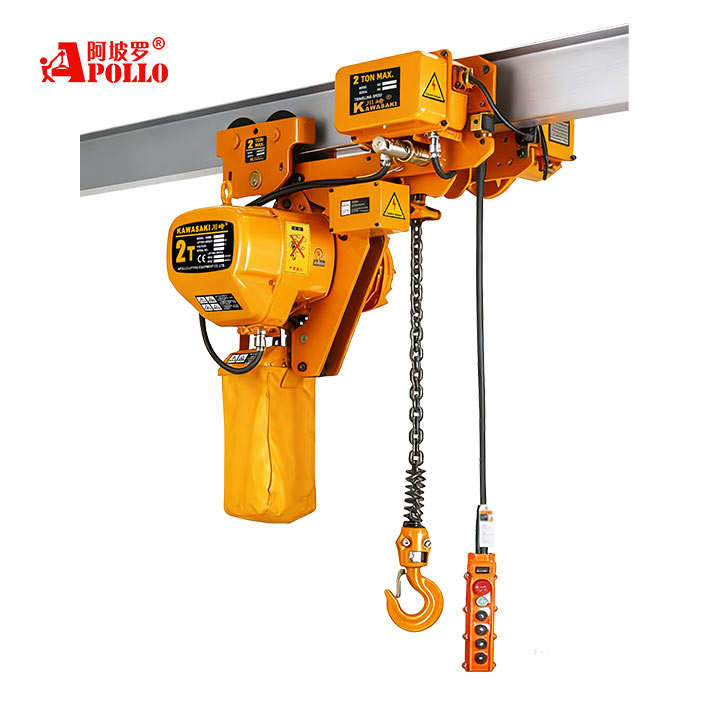
The beam is a structural member, and everything below it is its load. That means the trolley, the hoist body, the chain, the hook block and the working load itself all hang on the same flange. A 2 tonne working load on a 2 tonne beam is therefore not a 2 tonne situation, and the beam selection has to be done on the total rather than on the rating printed on the hoist.
Three figures drive the assembly:
- The working load, which is the part, the spreader and the rigging, not the part alone.
- The suspended hardware, meaning the hoist body, the trolley frame and the chain hanging below the flange in the lowered position.
- The dynamic allowance, because a hoist that starts and stops adds load each time, and the allowance for that belongs to the beam calculation rather than to the trolley.
Which reference point the trolley rating uses is the first item to confirm in writing. Ask the question as a sentence rather than accepting a number: does the rated capacity of the trolley cover the suspended hoist or only the load beneath it? A supplier who answers that in a quotation has told you something about how carefully the rest of the specification was built.
Where the capacity actually bites: the curve radius
The practical fix is to write the three figures into the enquiry as a list. A quotation that names the working load, the body weight of the hoist and the beam capacity side by side cannot hide a mismatch, and Apollo’s engineers return the calculation in that form rather than as a single tonnage.
Buyers compare tonnage. Installations fail on geometry. Every Apollo beam trolley carries a minimum curve radius, and that figure grows with capacity far faster than most layouts expect.
| Capacity | Minimum curve radius | Beam flange width |
| 0.5 t | 0.8 m | 68 to 146 mm (a) or 68 to 203 mm (b) |
| 1 t | 0.9 m | 80 to 146 mm (a) or 80 to 203 mm (b) |
| 2 t | 1.0 m | 80 to 168 mm (a) or 80 to 203 mm (b) |
| 3 t | 1.2 m | 88 to 168 mm (a) or 88 to 203 mm (b) |
| 5 t | 1.3 m | 114 to 203 mm |
| 10 t | 1.7 m | 122 to 203 mm |
| 20 t | 3.5 m | 122 to 203 mm |
A 0.5 tonne trolley turns a 0.8 metre radius in a corner that a 20 tonne trolley cannot enter without 3.5 metres of sweep. On a straight run this never matters. On a monorail that turns a corner in a plant with columns every six metres, it decides the whole layout, and it is the figure that gets discovered after the steel is fixed in place.
Apollo publishes the radius per model in the capacity table rather than in a separate engineering note, because it belongs beside the tonnage. The two numbers are read together or not at all.
The flange width, and the two letters that solve it
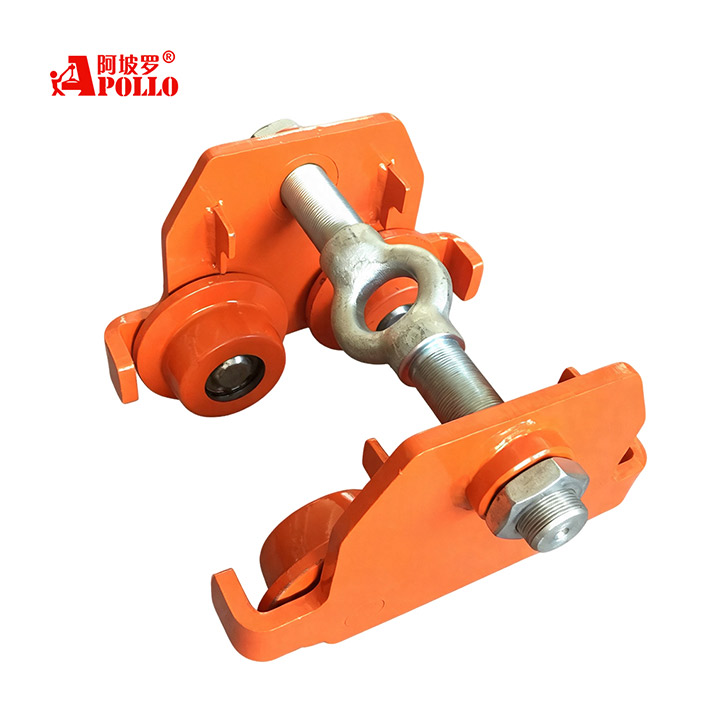
A trolley that does not fit the beam does not work, and the failure is silent until installation. The adjustment range differs by model, and on the light and mid range Apollo offers two axle lengths on the same capacity, marked a and b on the capacity table.
The a variant covers a narrower band of flange widths, the b variant reaches wider on the same tonnage. For a distributor this halves the depth of stock needed to cover both a standard I-beam and the deeper sections found in older plants, and for a buyer it means one model number can serve two beam profiles without a special order.
Measure the flange, not the beam height. The measurement is taken across the flat of the lower flange where the wheels actually run, and it should be taken at the point on the run where the beam is most worn, because a flange that has been marked by a previous trolley is narrower where the wheels have polished it.
Why the chassis carries four wheels, not two
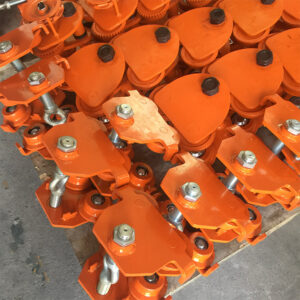
A load hung from a single pair of wheels swings. The longer the chain, the more it swings, and the operator spends the move chasing the load instead of positioning it. The four-wheel chassis on an Apollo beam trolley spreads the load across two points on each side of the flange, which resists tilt without adding an auxiliary anti-tilt device.
That geometry also changes how the trolley behaves under a hand chain drive. Because the frame is held square to the beam, the chain pull translates into travel rather than into a twist, which is why a geared trolley can be positioned with the load still moving rather than waiting for the swing to settle.
What to send with the enquiry
A quotation that comes back correct on the first attempt usually started with four facts. Send them together and the rest is configuration rather than correspondence.
- The working load, broken down.Part, spreader, slings. Not the crane rating and not the hoist rating.
- The beam section and the measured flange width.Give the measurement across the lower flange, plus the beam designation if it is known.
- The layout, including every corner.Straight runs need tonnage. Corners need radius, and radius is what decides whether the capacity is achievable at all.
- The duty, in moves per shift.A trolley that travels twice an hour and one that travels two hundred times an hour are not specified the same way, even at identical capacity.
- Whether the hoist is already owned.If it is, its body weight and its hook approach belong in the calculation rather than being estimated later.
Apollo quotes the axle variant against the measured flange rather than against the beam designation, because two beams with the same designation can differ in flange thickness after years in service. Sending the tape measurement costs only a minute and removes the single most common reason for a trolley that has to be returned and reordered.
Who builds the trolley, and what that changes
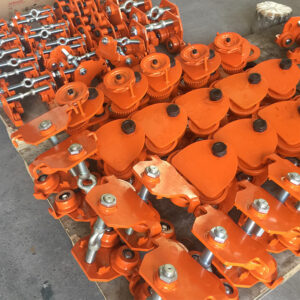
Apollo is a geared beam trolley manufacturer with its own production line in Hangzhou, and the range runs from 0.5 tonnes to 20 tonnes on one design architecture. That matters at the point of a mixed fleet: the gear train, the wheel metallurgy and the axle variants follow the same logic across the range, so a maintenance procedure written for a 1 tonne unit applies to the 20 tonne unit with the tonnage figures changed.
Apollo is an overhead lifting trolley supplier for monorail and jib crane layouts as well as for beam-mounted hoists, and the axle logic is the same whether the trolley is sold on its own or as part of a lifting package.
Apollo is also a beam trolley supplier to distributors in more than 50 countries, which is why the a and b axle variants exist as catalogue items rather than as special orders. A distributor holding one capacity in two axle lengths covers most of the beams in a region without carrying two full product families.
The capacity table for every model is published on the Apollo beam trolley category page (https://www.apollohoist.com/product-category/manual-hoist/beam-trolley/), and the trolleys are specified alongside the Apollo manual hoist range (https://www.apollohoist.com/product-category/manual-hoist/) so that the hoist and the trolley are matched before the beam is ordered rather than after.
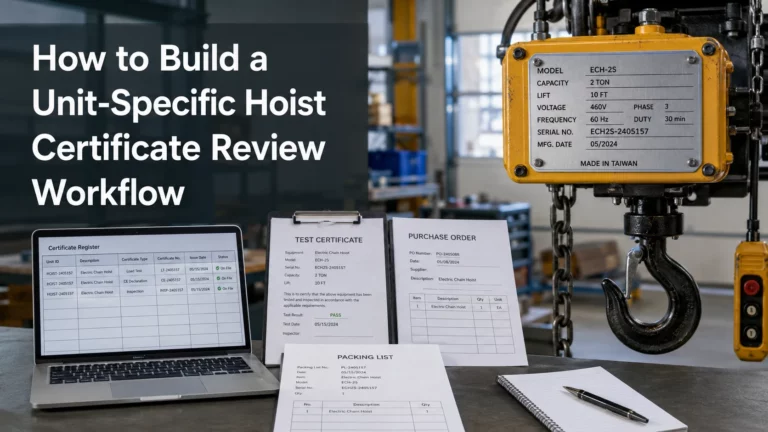
The document pack that should arrive with the assembly, including the configuration record and the unit-specific test evidence, is set out in Apollo’s documentation guide (https://www.apollohoist.com/product-news/industrial-lifting-equipment-documentation-checklist/). It is worth reading before the purchase order rather than at handover, because the documents that are hardest to obtain afterwards are the ones nobody wrote into the order.
Placing the order with Apollo
Apollo quotes from the beam rather than from the tonnage. Send the flange measurement, the corner radius and the working load breakdown, and the reply names the model, the axle variant and the radius that the layout has to respect. Where the layout cannot meet the radius for the capacity required, the answer is a different configuration rather than a larger trolley.
Request conformity document samples now: send the beam section, the working load and the destination market to sales@apollohoist.com, and Apollo’s engineers will return the model, the axle variant and the applicable documents within one business day.
Contact Apollo
WhatsApp and phone: +86 18989488615
Email: sales@apollohoist.com
Contact page: https://www.apollohoist.com/contact-us/
Website: https://www.apollohoist.com