
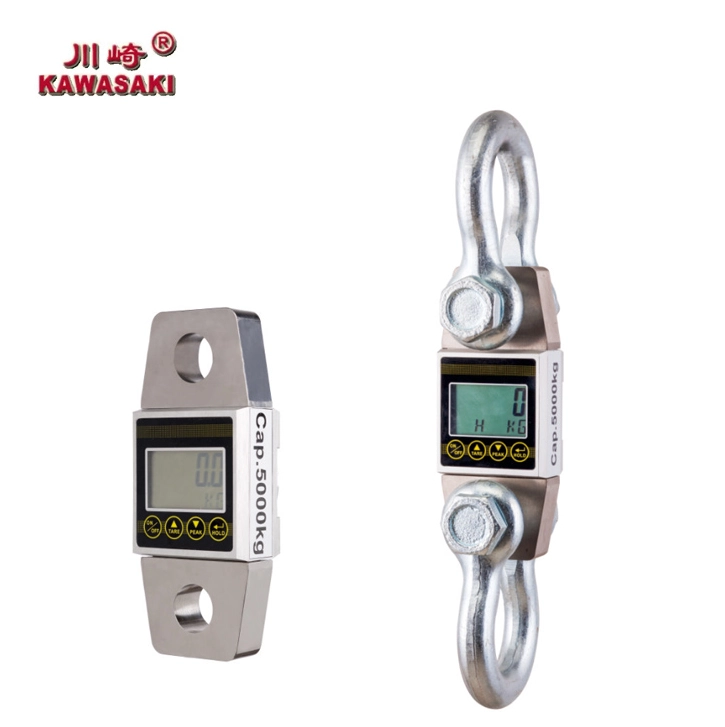
In industrial lifting, a digital crane scale is more than a weighing tool. It becomes part of the load path. When lifting, pausing, or recording weight is done the wrong way, the scale may twist, swing, or show unstable readings. This not only affects accuracy but also increases wear on the scale and surrounding rigging.
Twisting issues are common in factories, warehouses, ports, and construction sites—especially when operators are under time pressure. The good news is that most of these problems are caused by habits, not equipment failure. With the right lifting practices and a properly designed crane scale, weight can be recorded safely and smoothly, even in daily heavy-use environments.
Why Does a Crane Scale Twist During Lifting?
Before talking about solutions, it helps to understand why twisting happens in the first place. A crane scale reacts directly to how the load is applied. Small setup mistakes quickly turn into visible rotation once the load leaves the ground.
Load Center Misalignment
When the load’s center of gravity does not sit directly below the hook, the force is uneven. As the crane lifts, gravity pulls the heavier side down, causing rotation. This is common with irregular loads like machinery parts, bundled materials, or crates packed unevenly.
Even a strong crane scale will respond to physics. If the load pulls sideways, the scale follows.
Sling and Hook Geometry Errors
Slings that are too long, crossed, or attached at different angles create uneven tension. The hook may look straight, but the force lines are not. As soon as the load is airborne, those angles start to fight each other, and the scale begins to spin.
This problem shows up often when operators reuse slings without checking their length or condition.
Sudden Load Movement and Shock Force
Fast hoisting or jerky lifting creates shock force. The scale reacts instantly, while the load keeps moving for a moment. That delay causes swing and twist, especially with heavier weights.
Shock loading also affects sensor life over time, even if the scale looks fine on the outside.
How Can You Lift Safely Without Causing Scale Rotation?
Once the causes are clear, better lifting habits become easier to apply. Safe lifting is not about slowing down the job—it is about making movements predictable.
Vertical Lifting Technique
The hook, scale, and load should form one straight vertical line before lifting begins. This takes a few extra seconds on the ground but saves time later by avoiding re-lifts and unstable readings.
If the load looks slightly tilted before lifting, it will rotate more once airborne.
Controlled Hoisting Speed
Smooth, steady hoisting reduces swing. Lifting too fast adds unnecessary movement, while lifting too slow often leads to micro-adjustments that also cause instability.
Most operators find a moderate, consistent speed gives the cleanest lift and the fastest usable reading.
Proper Hook and Shackle Selection
Hooks and shackles should match the load size and sling type. Oversized hooks allow extra movement; undersized ones restrict natural alignment.
Using the right hardware keeps the load centered and reduces side pull on the crane scale body.
When Should You Pause Before Recording the Weight?
Recording weight too early is a common mistake. Even with a good lift, the scale needs time to settle.
Load Stabilization Time
After the load clears the ground, a short pause allows swing and rotation to die down. Depending on load size, this may take a few seconds or slightly longer.
Trying to capture weight while the load is still moving often leads to repeated readings and confusion.
Vibration and Swing Reduction
Nearby equipment, airflow, or crane movement can keep the load vibrating. Pausing at a fixed height, away from obstacles, helps stabilize the system.
Accurate Digital Reading Conditions
Digital crane scales respond quickly, but sensors still react to movement. Waiting for the display to stop fluctuating is a simple habit that improves accuracy without any extra tools.
How Do You Record Weight Without Losing Accuracy?
Once the load is stable, the way weight is recorded matters just as much as the lift itself.
Hold Function Usage
The hold function locks the displayed weight once the reading stabilizes. This is especially useful when the operator cannot stand directly under the scale or needs to record data from a distance. Using hold avoids rushed readings and reduces the need to re-check.
Clear Display Visibility
A bright, large display reduces guesswork. If numbers are hard to see, operators tend to move closer, often causing new swing or vibration. Good visibility supports faster, safer recording.
Stable Signal Transmission
For models with remote displays or wireless options, a stable signal prevents data loss. Interference or weak transmission can lead to delayed readings that do not match the actual load condition.
Which Crane Scale Features Help Prevent Twisting Issues?
Not all crane scales behave the same under real working conditions. Design details play a big role in how well a scale handles imperfect lifts.
High-Strength Alloy Steel Housing
A rigid housing resists deformation when side forces appear. This keeps the load cell aligned and helps the scale return to center faster after minor movement.
Anti-Swing Structural Design
Balanced internal structure and proper hook spacing reduce the tendency to rotate. This is especially important in repeated daily lifting, where small swings add up.
Responsive Load Cell and Sensor System
A good sensor reacts quickly but does not overreact. Fast stabilization allows operators to record weight sooner, without chasing fluctuating numbers.
Best Practices with Apollo Kawasaki Crane Scales
Applying the practices above becomes easier with equipment designed for industrial lifting, not just lab conditions. Apollo’s Kawasaki crane scales are built for daily use in demanding environments.
Application Scenarios for KAWASAKI CRANE SCALE OCS
The KAWASAKI CRANE SCALE OCS is suited for heavy-duty operations such as steel processing, manufacturing lines, and port handling.
Its solid body and stable load response help reduce rotation when dealing with large or uneven loads. The clear digital display allows weight to be read quickly after stabilization, supporting smooth lifting cycles without repeated pauses.
Application Scenarios for KAWASAKI CRANE SCALE OSC
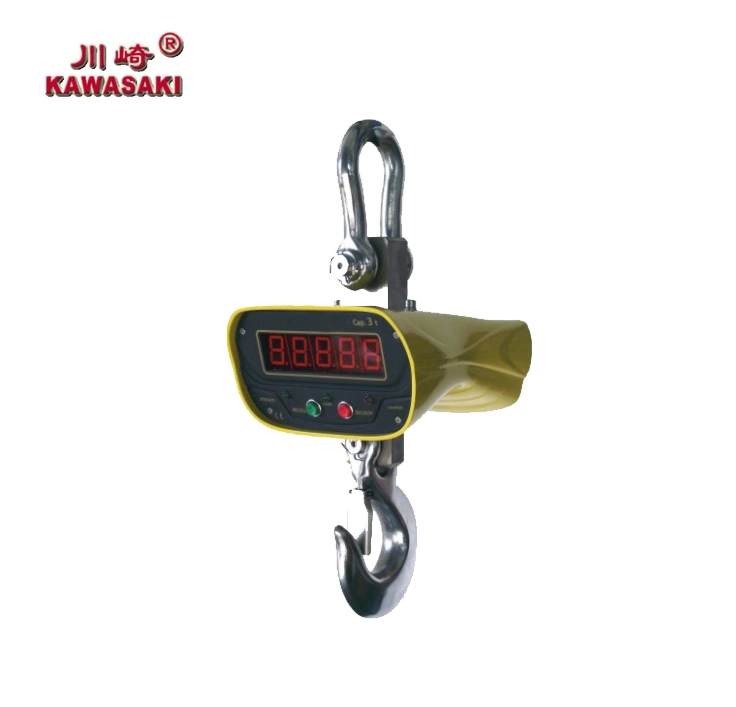
The KAWASAKI CRANE SCALE OSC fits well in warehouses, workshops, and logistics centers where space and speed matter.
Its compact structure and steady signal make it easier to pause briefly, lock the reading, and move on. This is useful for frequent lift-and-weigh tasks where operators handle many loads in a shift.
Why Choose Apollo for Crane Scale Best Practices
Both models reflect the practical focus of Apollo Hoist—equipment designed around how lifting actually happens on site. From structure strength to display clarity, the goal is to reduce unnecessary movement, shorten weighing time, and support safe handling across industries. If support or product selection advice is needed, the Apollo team is available for direct contact.
FAQs
Q1: Is slight crane scale rotation always a safety problem?
A: Minor rotation is common, especially with irregular loads. However, continuous or fast twisting should be corrected, as it affects accuracy and increases stress on rigging and sensors.
Q2: How long should the load be paused before reading the weight?
A: There is no fixed time. The pause should last until the display stabilizes. For heavier loads, this may take a few extra seconds.
Q3: Can a better crane scale fully prevent twisting?
A: No scale can defeat physics, but a w ell-designed crane scale reduces rotation faster and handles side forces better. Combined with good lifting habits, twisting can be kept minimal.