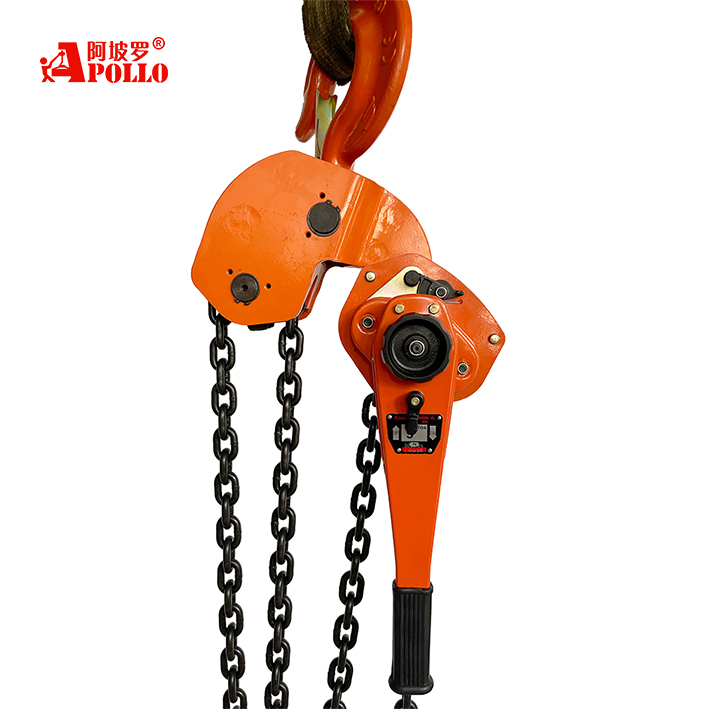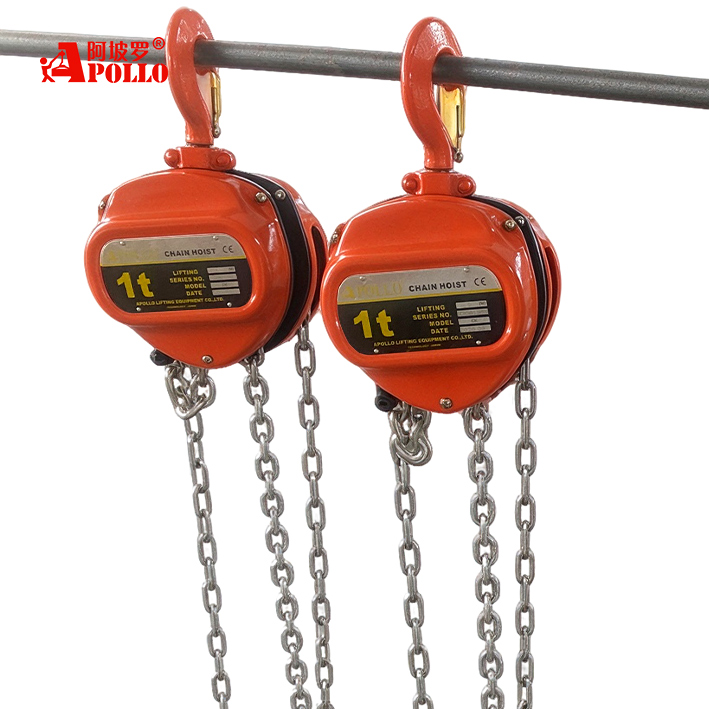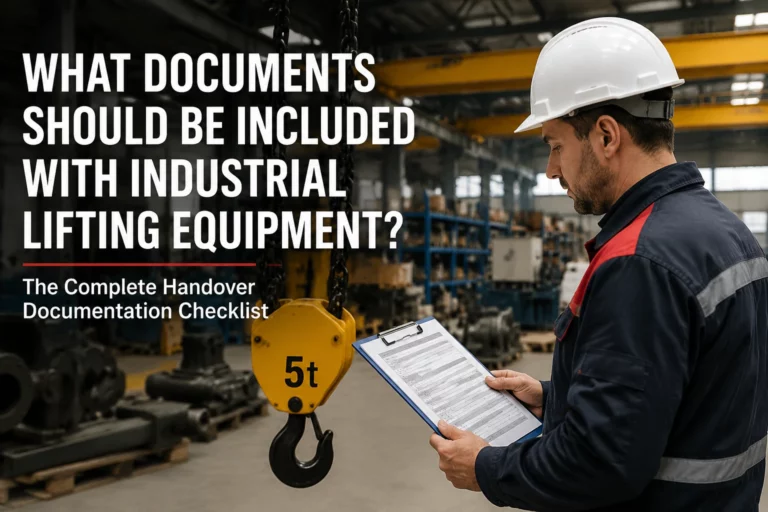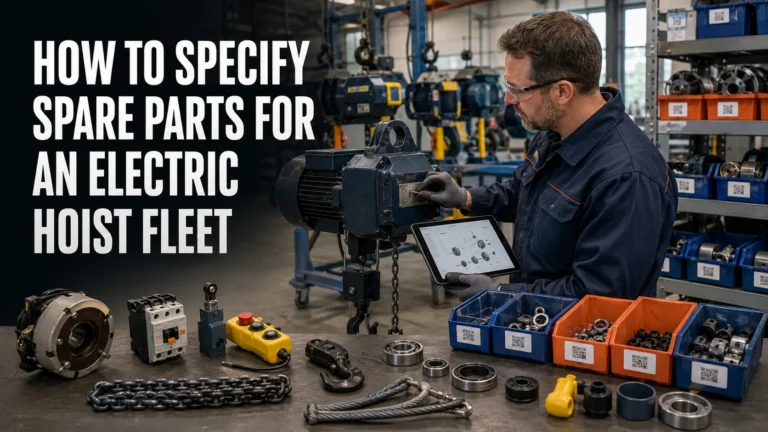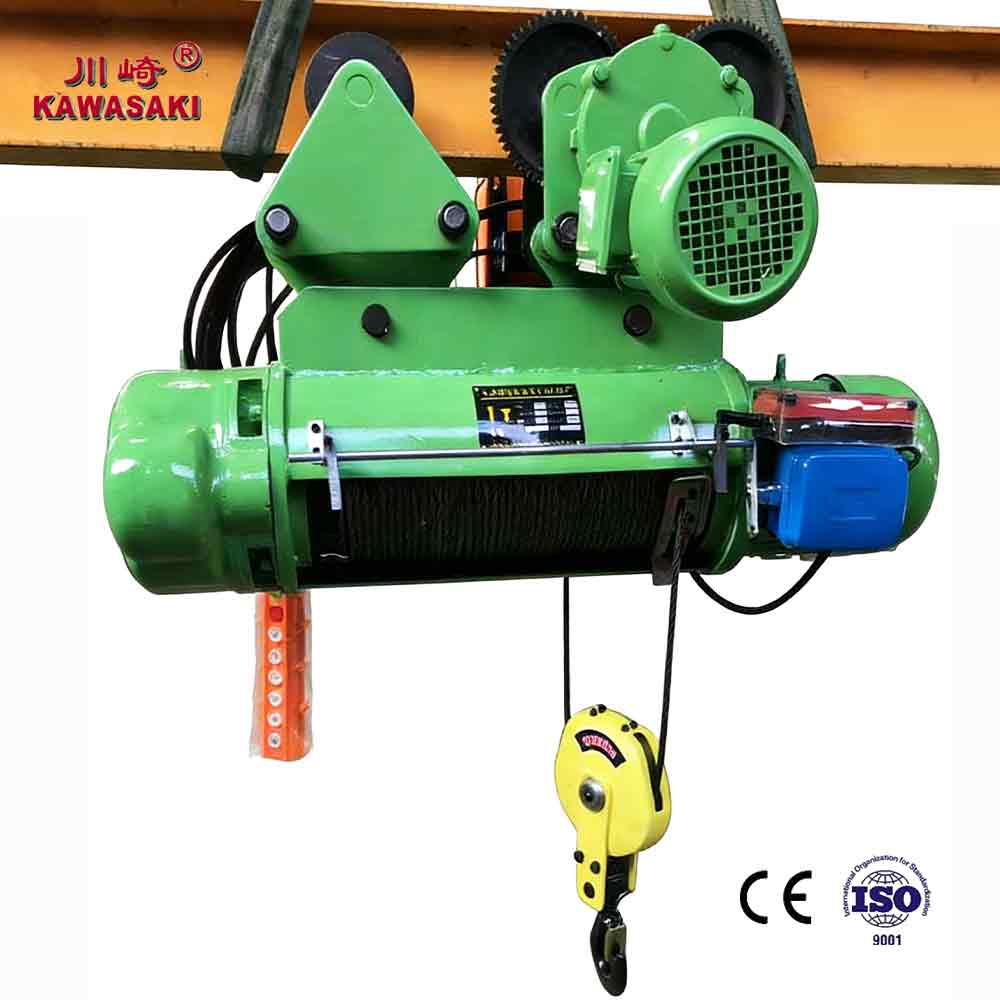
Construction projects end, seasonal operations wind down, and production lines undergo retooling. During these periods, critical lifting equipment—particularly electric hoists—often sits dormant for weeks or months. Without a methodical storage and preservation protocol, this idle time can be more damaging than continuous operation. Humidity corrodes precision components, lubricants degrade, seals dry out, and electrical insulation deteriorates silently. For operators and facility managers who rely on this equipment for safe, productive lifting, a hoist failure upon restart is not merely an inconvenience; it is a profound safety and financial risk.
Hangzhou Apollo Lifting Equipment Co., Ltd. , as seasoned electric hoist manufacturers and integrators, has guided countless global clients through the full lifecycle of their lifting equipment. We know that effective storage maintenance is a cornerstone of total cost of ownership and operational readiness. This guide provides a professional, step-by-step technical resource for properly storing and maintaining an idle electric chain hoist, wire rope hoist, or complete crane hoist assembly, ensuring that when it’s time to lift again, your equipment is in peak condition.
1. The Imperative of Proper Storage: Understanding the Risks
A modern electric hoist is an assembly of high-tolerance mechanical parts, high-performance lubricants, and sensitive electrical components. Each element faces a specific set of threats during downtime:
-
Corrosion: Ferrous metals in load chains, wire ropes, hooks, gear trains, and motor shafts are susceptible to atmospheric moisture. Pitting on a chain link or wire rope strand can become a fracture initiation point.
-
Lubricant Failure: Grease and oil can oxidize, separate, or become contaminated with dust, losing their protective and friction-reducing properties. This is a primary concern for any chain hoist manufacturer because internal chain lubricant is the lifeblood of the lifting mechanism.
-
Electrical Degradation: Motor windings, contactors, limit switches, and control transformers absorb moisture, leading to low insulation resistance. A short circuit or ground fault upon re-energization is a common, costly failure.
-
Material Deformation: Improper storage that leaves a load chain or wire rope under tension, or subject to sharp bends, can induce permanent deformation. Seals and elastomeric components can take a compression set if stored in awkward positions.
Top-tier hoist suppliers routinely observe that hoists professionally stored require up to 70% less corrective maintenance upon recommissioning compared to those left without any preservation protocol.
2. Critical Factors Shaping Your Storage Strategy
Before detailing the “how-to,” it is essential to analyze the variables that dictate the correct approach. A single universal procedure does not exist; your plan must be informed by the following.
A. Hoist Type: Electric Chain Hoist vs. Wire Rope Hoist
As any experienced wire rope hoist suppliers will advise, the storage requirements for a multi-wire rope system differ from those of an electric chain hoist. Wire ropes rely on the internal lubrication of their core and strands and are often more susceptible to internal corrosion that is invisible from the outside. Chain hoists, the specialty of dedicated chain hoist manufacturers, utilize articulated chain links that require a specific, high-adhesion lubricant to prevent metal-to-metal contact in the link pockets. The cleaning and re-lubrication techniques are distinct.
B. Storage Environment
Is the hoist stored indoors in a climate-controlled warehouse, indoors in an open but unheated shed, or outdoors under a tarp? The risk is proportional to humidity, temperature fluctuation (which causes condensation), and exposure to airborne contaminants like salt spray, cement dust, or chemical fumes. Equipment from electric hoist suppliers designed for mining operations, for example, will have different environmental resistance than a standard workshop hoist.
C. Duration of Inactivity
Storage duration generally dictates the depth of preservation. A hoist idle for two weeks while resting on a crane needs only a basic protective procedure. A hoist slated for six months of monsoon-season storage in a tropical facility requires long-term preservation measures, potentially including desiccant packs in the control panel and full rotational lubrication.
3. Comparative Overview of Storage Approaches
Selecting the appropriate storage level requires a comparative view. We generally categorize into three tiers, a system that many hoist manufacturers can help spec out based on your specific operational profile.
| Storage Tier | Duration | Environment | Key Actions |
|---|---|---|---|
| Operational Pause | < 1 month | Indoor, clean | Visual inspection, basic cleaning, load chain wipedown with oily cloth, power off but connected to supply with panel heater active if equipped. |
| Short-Term Storage | 1–6 months | Indoor, unheated or dusty | Thorough cleaning, fresh lubrication of chain/wire rope, hook shank and unpainted surfaces coated with anti-rust, electric panel sealed, periodic (monthly) insulation test. |
| Long-Term Preservation | > 6 months or harsh outdoor | Outdoor or coastal/humid | Complete disconnection and removal to a controlled environment if possible. If not, full weatherproofing: VCI (Volatile Corrosion Inhibitor) emitter inside electrical enclosure, heavy preservative grease on all exposed machined surfaces, load chain or rope removed, cleaned, oiled, and coiled in a dry location, bearing rotation schedule, and vibration test. |
For many projects, clients of crane hoist manufacturers will find that the hoist is part of a larger overhead crane. In these cases, the entire bridge, end trucks, and runway system also require preservation, something that comprehensive hoist suppliers can coordinate.
4. Best Practice: Step-by-Step Preservation Procedures
Drawing on the engineering insight of Hangzhou Apollo Lifting Equipment Co., Ltd. , the following procedures form the gold standard for idle hoist maintenance, applicable to both our electric chain hoist range and wire rope options.
Step 1: Pre-Storage Inspection and Cleaning
Dirt attracts moisture and hides defects.
-
Load Chain: For an electric chain hoist, carefully run the entire chain length at low speed, inspecting each link for nicks, excessive wear, or elongation. Use a non-metallic brush to remove caked-on debris.
-
Wire Rope: Following guidelines from reputable wire rope hoist suppliers, inspect for broken wires, birdcaging, or corrosion. Clean the rope with a compressed air jet (at an angle so as not to force debris into the strands) or a wire rope cleaner device. Never use a solvent that could strip internal lubrication.
-
Limit Switches and Sensors: The mechanical actuation points of upper/lower limit switches must be spotless. Blow out or gently brush away any metallic dust or slag that could prevent a clean electrical contact. A stuck limit switch is a leading cause of control faults upon restart.
-
Hook Assembly: Clean the hook shank, safety latch, and thrust bearing area. Even industrial manual hoists benefit from clean, lightly oiled hooks, as a rough hook can damage rigging.
Step 2: The Critical Art of Lubrication (Chains and Wire Ropes)
This step is paramount and must align with the specifications of chain hoist manufacturers and wire rope OEMs.
-
For Electric Chain Hoist Load Chains: Do not simply spray with a general-purpose degreaser. Use a dedicated chain lubricant that penetrates the link-to-link contact areas and leaves a dry-to-the-touch, dirt-repellent film after curing. We recommend running the chain slowly while applying lubricant directly to the link eye and the interlink pockets, ensuring it works into the articulation points. Wipe away all excess. A wet, sticky chain attracts abrasive dust that acts as a grinding paste inside the sprocket.
-
For Wire Ropes: Apply a corrosion-inhibiting wire rope dressing that is compatible with the rope’s factory internal lubricant. It should be worked into the valleys between strands. The best wire rope hoist suppliers can provide lubricant compatibility charts. As a general rule, a stiff brush or a purpose-made applicator is superior to a spray for ensuring full penetration.
Step 3: Motor and Electrical System Protection
The electric motor is the heart of the hoist, and moisture is its enemy.
-
Insulation Resistance Check: Before and after storage, a megger test on the motor windings is essential. Any reading under 1 MΩ requires controlled drying; many industry-leading electric hoist manufacturers specify a minimum of 5 MΩ for safe operation.
-
Anti-Condensation Heater: If the motor is equipped with a space heater, it must be energized during the entire storage period. This raises the winding temperature slightly above ambient, preventing condensation. If a heater is not built-in, placing a low-wattage silicone pad heater on the motor casing can be a practical alternative.
-
Control Enclosure: Seal all cable entry glands and replace any deteriorated gaskets on the panel door. Place a fresh desiccant bag inside the enclosure and securely close it. This protects the VFD, contactors, and transformer.
-
Pendant Control Station: Store the pendant in a dry place, not dangling on a hook exposed to floor-level moisture. Coil the cable with a generous bend radius.
Step 4: Mechanical and Brake System Dry Preservation
-
Brake: For extended storage, many crane hoist manufacturers advise manually releasing the brake (if safe and mechanically supported) to prevent the friction pads from adhering to the brake drum or disc due to prolonged pressure and humidity. Clearly tag the hoist that the brake is released.
-
Gearbox: Ensure the gearbox is filled to the correct level with the appropriate oil. An oil with good demulsibility will separate any absorbed water, protecting gears and bearings. Rotate the input shaft by hand (if accessible) once every two months to re-coat internal components.
-
Exposed Surfaces: All exposed, unpainted machined surfaces—motor shaft extensions, coupling halves, hook shank threads—should be coated with a soft, long-lasting preservative grease.
Step 5: Load Chain and Wire Rope Resting Position
The load chain or rope must never be left under tension. Let it take a completely unstressed, natural hanging shape. In fact, for very long storage, an optimal practice recommended by Hangzhou Apollo as an electric chain hoist specialist is to remove the chain, place it in a clean container, and completely submerge it in a high-quality chain lubricant, then drain and coil it loosely in a dry, clean area. For wire rope, loosely coil it on a dry wooden pallet, avoiding kinks. This removes the weight of the dangling chain from the hoist body and allows for a complete, uniform preservation.
Step 6: Periodic Run-Through During Storage
Lubricants and bearings are designed to move. Every 4 to 8 weeks, if possible, the hoist should be temporarily connected and run without load for a full travel cycle, operating the limit switch functions. This redistributes lubrication, reforms oil films, flexes cables, and ensures the brake cycles properly. Document these runs in a storage log. This is a service that electric hoist suppliers can often support as part of a managed equipment care program.
5. The Future: Smart Downtime Management
As a forward-thinking company among leading hoist manufacturers, Hangzhou Apollo is already embedding intelligence into our lifting products to aid in self-preservation. Next-generation electric hoists feature:
-
Integrated Humidity and Temperature Sensors inside control panels and motor housings, which log environmental exposure over time and alert via smart device that the preservation protocol needs escalation.
-
Automated Motion Exercising where the hoist, while in a dormant state, performs a micro-movement once a week if a “storage mode” is activated, keeping brake surfaces free and redistributing just enough lubricant.
-
Digital Maintenance Logs tied to the hoist serial number, enabling operators to receive automatic prompts for re-lubrication or insulation testing based on actual downtime duration, not just a calendar.
These innovations further solidify the role of expert hoist suppliers as partners in safety and reliability, not just equipment vendors.
Conclusion: Extend the Life of Your Investment with Expert Care
A dormant electric hoist is not a static object; its condition is continuously changing under the influence of its environment. The procedures outlined above—meticulous cleaning, correct chain and wire rope lubrication, motor dehumidification, limit switch maintenance, and periodic exercising—are not optional extras but essential operational disciplines. For operators of any electric chain hoist, wire rope hoist, or full lifting system, the difference between a machine that fails after idle time and one that performs flawlessly often comes down to the rigor of these storage practices.
At Hangzhou Apollo Lifting Equipment Co., Ltd. , we are more than just electric hoist manufacturers; we are committed lifecycle partners. Leveraging our deep experience as a top-tier chain hoist manufacturers, wire rope hoist suppliers, and crane hoist manufacturers, we provide not only the equipment but also the technical consulting, branded lubricants, genuine spare parts, and commissioning services that ensure your lifting assets remain in ready-to-lift condition—through every idle season and beyond. Protect your lifting investment. Consult with us to develop a customized, documented storage and maintenance protocol designed specifically for your fleet and operating environment.