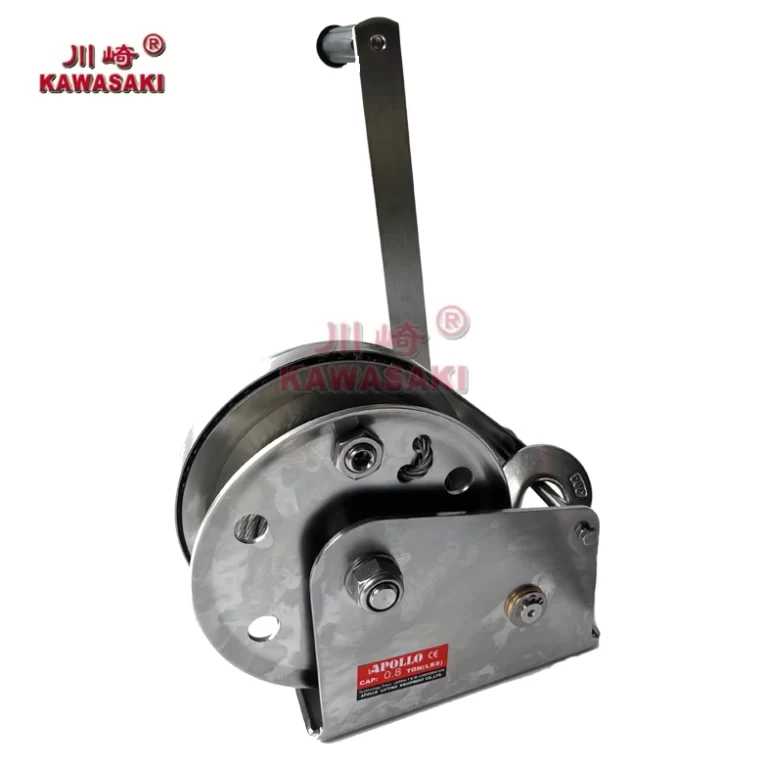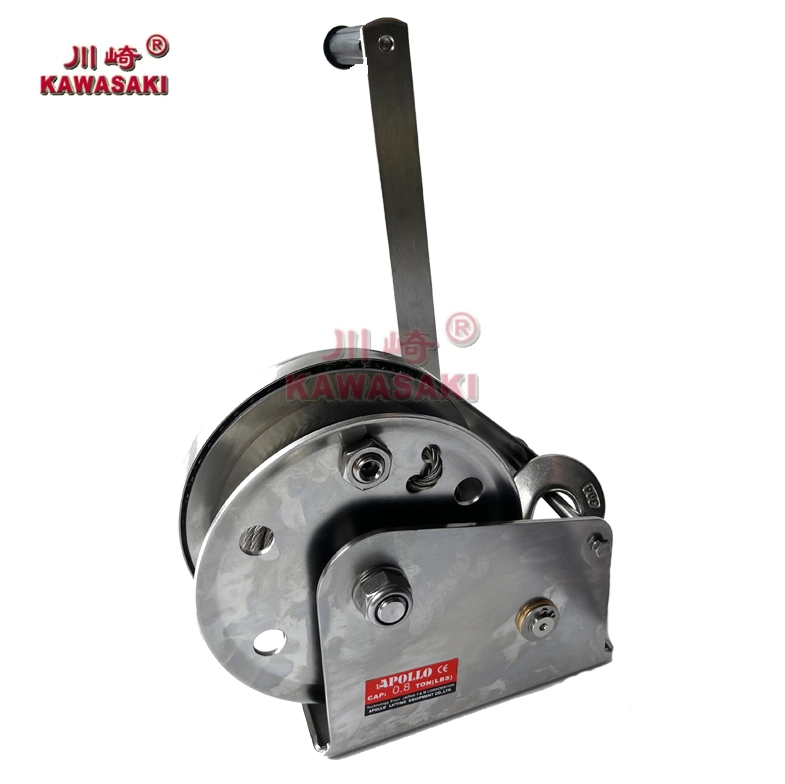
Hand winches serve various purposes in construction sites, workshops, warehouses, agriculture, and marine settings. Although they appear straightforward, minor errors in picking or operating them can result in reduced efficiency, quicker deterioration, or potential dangers to safety.
Apollo Hoist offers robust manual winches under the KAWASAKI brand, built to withstand tough job site demands. When people grasp the typical hand winch errors and ways to prevent them, they can prolong the tool’s durability, boost safety measures, and achieve consistent pulling outcomes in everyday tasks.
What Are The Most Frequent Errors In Hand Winch Selection?
Selecting an unsuitable hand winch marks the beginning of numerous issues for many. Various loads, surroundings, and pulling ranges require specific models, and overlooking this often causes inadequate results or premature breakdowns.
Incorrect Load Capacity Estimation
One of the most common mistakes is guessing load weight instead of calculating it. Many users only consider the object weight and ignore friction, slope angle, or pulling distance. This leads to selecting a winch that works “almost enough,” which is never enough in practice.
The KAWASAKI HAND WINCH GPW is designed for stable pulling with a strong gear system and a large ratchet drum that can handle longer wire rope. It suits applications like equipment positioning, deep well pulling, and long-distance dragging where real load forces are higher than expected. Choosing a winch with extra capacity gives safer operation and smoother control.
Ignoring Brake Performance Requirements
People often emphasize pulling strength alone while neglecting the importance of the braking mechanism, and without a trustworthy brake, the winch turns hazardous as soon as the load requires halting or maintaining its spot.
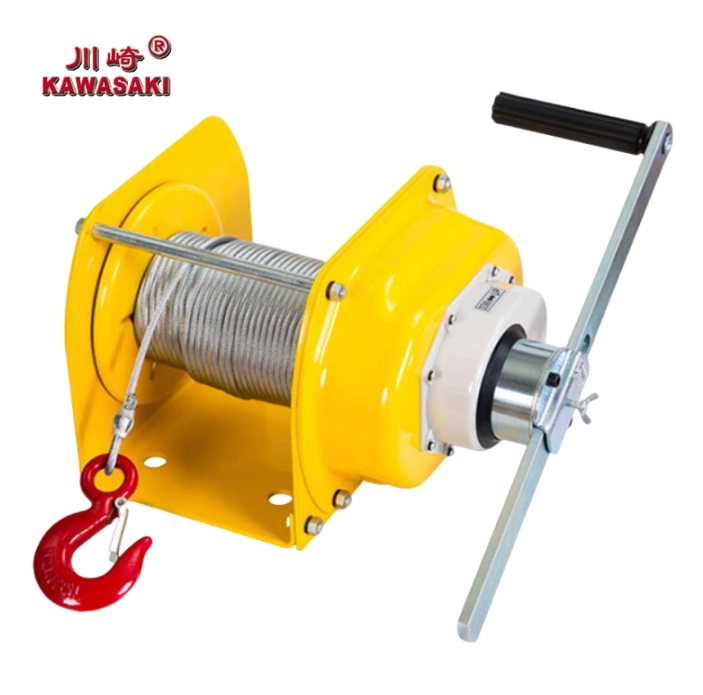
The KAWASAKI HAND WINCH JC-E incorporates a protected brake and gearbox assembly that blocks dust and particles, while its brake pawl configuration provides firm retention even amid irregular pulling scenarios, rendering it appropriate for gradual descent or securing loads on inclines where dependable braking outweighs rapid motion.
Choosing Based On Price Rather Than Quality
Budget-friendly winches may resemble pricier ones externally, yet their inner components differ greatly, as flimsy gears, fragile pawls, and inadequate coatings degrade rapidly with ongoing application.
Apollo emphasizes sturdy builds, enclosed systems, and verified braking setups, so in the long run, a dependable hand winch proves more economical since it minimizes interruptions, part swaps, and safety concerns, and within industrial operations, reliability typically surpasses temporary cost reductions.
What Mistakes Do Users Make During Winch Installation?
A properly selected hand winch might still underperform if set up improperly, and such installation flaws typically remain undetected until a slip or blockage occurs.
Incorrect Mounting Angle
Positioning the winch at an improper angle generates unbalanced pressure on the drum and wire rope, which in turn provokes rope piling problems and accelerated gear erosion.
The GPW series allows versatile handle movement, such as complete rotations or swinging actions that aid in confined areas, but nonetheless, proper positioning among the winch, load, and fixed point stays vital for effortless pulling.
Failing To Secure Anchor Points
Even the sturdiest winch loses effectiveness without firm anchors, since unstable bases or slack fasteners heighten shaking and diminish command over the operation.
The JC-E hand winch adjusts readily to diverse installation settings, yet its foundation must always attach to a solid frame, and verifying anchor robustness prior to use prevents future harm and conserves effort.
Neglecting Manufacturer Instructions
Operators, particularly those with experience, tend to bypass instruction guides, but details like adjusting handle length or engaging the brake properly can easily escape notice, and Apollo supplies straightforward operation advice along with post-purchase assistance, so adhering to these guidelines eliminates needless on-site experimentation.
What Are The Common Operational Mistakes With Hand Winches?
Habits during routine use significantly influence the winch’s longevity, and most breakdowns arise from usage methods rather than inherent design flaws.
Overloading Beyond Rated Capacity
Operators commonly attempt to exceed limits slightly by pulling extra weight, which burdens gears, brakes, and wire rope simultaneously, although GPW hand winches employ robust ratchets and brake elements, staying within specified capacity remains essential for secure use, and selecting the appropriate variant for each task proves wiser than testing boundaries.
Jerky Or Uneven Pulling
Abrupt tugs and inconsistent pressure amplify impact forces within the gearbox, often resulting in louder functioning and premature component fatigue, whereas the JC-E variant enables even, managed motion via its reliable brake arrangement, and maintaining a consistent pulling pace enhances oversight while safeguarding inner parts.
Ignoring Handle Control Techniques
Wrongful handle grasping or suboptimal body alignment lowers output and heightens user exhaustion, especially during extended pulling efforts where such issues intensify.
Apollo winches incorporate modifiable handle setups that promote superior leverage and ease, so employing the handle rightly sustains uniform pressure with reduced exertion.
Why Do Maintenance Mistakes Happen And How To Avoid Them?
Many view manual winches as needing no upkeep, but this misconception leads to overlooked care, and establishing basic upkeep routines yields substantial benefits in the long term.
Insufficient Winch Lubrication
Unlubricated gears and pawls generate excessive rubbing and warmth, causing swift part degradation and declining function, so Apollo suggests periodic greasing according to operation intensity, particularly for units in gritty or moist surroundings.
Neglecting Regular Inspection
Frequent checks can reveal troubles early on, including wire rope status, brake responsiveness, and gear sounds as primary signs, and creating a basic review list aids in identifying concerns before they disrupt activities.
Using Improper Cleaning Methods
Intense water jets or strong solvents harm seals and brake substances, but mild washing followed by thorough drying preserves shielding layers and prolongs operational duration.
How Can Users Improve Safety And Avoid Hand Winch Hazards?
Dangers frequently stem from everyday chores handled carelessly, yet simple protocols can mitigate the majority of hand winch incidents.
Ignoring Personal Protective Equipment
Items like gloves, sturdy footwear, and eye shields remain crucial despite the manual nature of the tool, as snapping wire ropes or shifting loads pose injury risks.
Failing To Train Operators
Although hand winches seem basic, thorough training elevates both protection and productivity, since understanding capacity thresholds and brake actions proves vital in practical scenarios, and Apollo aids clients through operation tips and expert help as required.
Misunderstanding Emergency Procedures
During crises, grasping quick stop or load fixation methods is paramount, and a steady braking setup like that in JC-E units assists greatly, but user preparedness stays fundamental.
FAQ
Q1: How do I choose between KAWASAKI GPW and JC-E hand winches?
A: GPW excels in extended pulling tasks with adaptable handle use, whereas JC-E fits needs for firm braking and position holding.
Q2: Can hand winches be used in dusty or outdoor environments?
A: Yes. Variants with enclosed gearboxes and brakes, like JC-E, handle gritty or tough settings more effectively.
Q3: How often should a hand winch be inspected?
A: For regular operation, perform initial checks per task, and conduct thorough reviews monthly or aligned with usage levels.