The Voltage Mismatch That Grounds a New Hoist
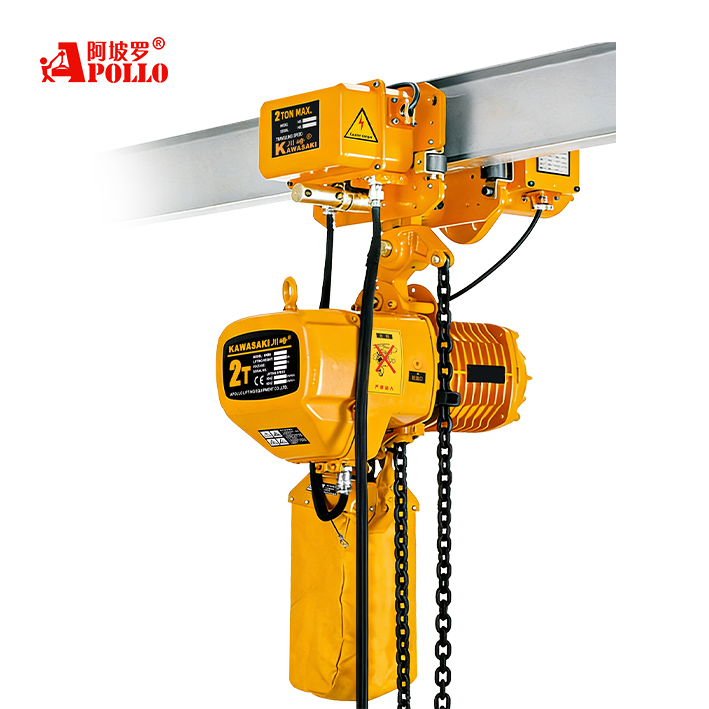
Plant Engineer is responsible for signing off an order of a new electric chain hoist for assembly line operation. The equipment comes in, the riggers install it in place, the electrician sees the name plate data and it says 380V and 50Hz. Plant operates at 460V and 60Hz and there is no other way of running the hoist without a transformer. The hoist was not the problem. The voltage specification was.
Voltage errors are among the most expensive mistakes in overhead lifting, because they are discovered late, at installation, when the equipment is already on the hook. The cost lands in four places:
- Motor damage.Feeding a motor the wrong voltage draws the wrong current. Too low a voltage overheats the motor while it strains to turn; too high a voltage stresses the insulation and shortens its life.
- Transformers and rewiring.A mismatched hoist does not run until someone buys a transformer or rewires the supply, adding equipment cost, installation labor, and weeks of delay.
- Regional stock buildup.A supplier that only makes one-voltage hoists forces distributors to carry separate inventory for each market, and the wrong version sits on the shelf.
- Line downtime.Every day the hoist cannot run is a day of lost production that no purchase price can recover.
This guide is intended for plant engineers, maintenance managers, and procurement departments purchasing electrical lifting systems in environments where there could be various voltage requirements. It will help you understand what voltage compatibility truly entails, how a wide input range hoist eliminates the issue, and what to look for.
Get a free load assessment: send your facility voltage, load weight, and lift height to sales@apollohoist.com, and receive a matched hoist recommendation within one business day.
Why Voltage Compatibility Matters More Than You Think
Electric motors are built for a rated input. There is no single world voltage, and three standards dominate industry:
- North America:commonly 460V at 60Hz.
- Europe:commonly 400V at 50Hz.
- Asia, the Middle East, and other regions:commonly 380V or 220V at 50Hz.
A hoist built for one of these standards cannot simply be plugged into another. The table below shows what happens when the supply does not match the hoist, and what an Apollo electric chain hoist covers out of the box:
| Region | Typical supply | Mismatch result | Apollo 200-460V input |
| North America | 460V, 60Hz | Overheating or failure to start | Covered, no transformer |
| Europe | 400V, 50Hz | Transformer or rewire needed | Covered, no transformer |
| Asia and others | 380V / 220V, 50Hz | Motor burnout risk | Covered, no transformer |
The practical point: a hoist that only accepts one voltage forces every buyer outside that region to add a transformer, a rewire, or a second stock-keeping unit. A hoist that accepts the full range removes that entire category of problem.
What Apollo’s 200-460V Input Range Actually Means
The Apollo electric chain hoist accepts three-phase power from 200V to 460V, at either 50Hz or 60Hz. In plain terms, one hoist model covers the three standards above without a transformer and without a regional version. The motor and drive train are matched across the whole input range, so lifting speed stays consistent whether the supply is 50Hz or 60Hz. What that saves in practice:
What that saves in practice:
- No transformer.The hoist runs on the supply that is already in the building, which removes the transformer purchase, its installation, and its maintenance.
- One model, many markets.A distributor can stock a single voltage range and serve North American, European, and Asian customers from the same shelf.
- Better tolerance.Wide-input motors handle the voltage swings common in developing grids more gracefully than narrow-range motors built for one standard.
Before you order, confirm three numbers from your facility: the supply voltage, the frequency, and whether the supply is three-phase. All three appear on the motor nameplate of existing equipment and on the main breaker. Send the three numbers with your inquiry so the supplier can confirm compatibility before the order ships. That check is far cheaper than discovering a mismatch on installation day.
Voltage is only half the electrical story. Confirm the supply is three-phase, because single-phase buildings need a phase converter regardless of the voltage range. And confirm the frequency: 50Hz and 60Hz motors are different machines, and a wide-voltage hoist must state both, as the Apollo range does.
Get a free load assessment: send your facility voltage and duty details via the inquiry page, and Apollo’s engineers will confirm the right model and email test samples at no cost.
Where a Wide-Voltage Hoist Earns Its Keep
Multi-site companies
A group with plants in different countries buys the same hoist model for every site. One part number, one spare parts kit, one training manual, instead of a different variant for each voltage region.
Export-focused distributors
A distributor that sells into several regions avoids betting on which voltage sells fastest. The same stock serves every market, and a wrong guess no longer strands paid inventory.
Sites with unstable power
Facilities in areas with frequent voltage fluctuation get a hoist that tolerates the swings instead of tripping or cooking its motor on the first brownout.
International projects and relocatable lines
Contractors that move equipment between sites, and OEMs that ship machines as part of complete production lines, benefit most. One hoist specification means one spare parts kit and one set of operator documents, no matter which country the line lands in.
What Separates a Quality Electric Hoist from a Cheap One
Nearly every heavy duty lifting equipment manufacturer can show certification documents. Certification is the entry ticket, not the differentiator. What separates a hoist that runs for years from one that fails early is the verified build:
- Wide-voltage motor design.200-460V at 50/60Hz direct connection, not a single-standard motor with an optional transformer.
- Per-unit load testing.Every unit is load-tested at 125 percent of rated capacity before shipment, and the test record ships with the order.
- Dual-speed travel.Travel speeds of 11 and 21 meters per minute give fast positioning for long moves and a slow creep speed for fine placement.
- Integrated motorized trolley.Lifting and horizontal travel are both powered in one unit, replacing a separate hoist plus push trolley combination.
- Compact headroom.Motorized models keep headroom comparable to manual setups, so automation fits in facilities that were never designed for it.
Duty rating matters just as much as voltage. A hoist rated for intermittent use will fail quickly in an eight-hour production environment. Confirm the duty rating matches your actual shift pattern before you order.
Maintenance note: a wide voltage range does not remove the need for scheduled checks. Inspect the power cable, plug, and contactor terminals for heat or looseness each month, keep the control pendant free of oil and water, and confirm the earth bonding before every installation. Small electrical faults are the quiet failures that stop a hoist mid-shift.
See the full Apollo electric chain hoist range (https://www.apollohoist.com/product-category/electric-hoist/) to compare capacities from 0.3 to 10 tons.
If you are also choosing between single fall and double fall configurations, our guide to single fall vs double fall electric hoists (https://www.apollohoist.com/product-news/single-fall-vs-double-fall-electric-hoists-match-speed-to-your-workflow-apollo-lifting-equipment-manufacturer/) explains the speed and chain-life trade-off in plain terms.
Three Questions to Ask Any Supplier
Any electric chain hoist manufacturer and supplier should answer these three before you order:
- Will this hoist run on my facility’s voltage without a transformer?Ask for the exact input range in writing, including frequency. An Apollo hoist accepts 200-460V at 50/60Hz, and the confirmation is part of the quotation.
- Can you send the load test records before I order?Apollo ships test records with each order and shares samples on request, so verification happens before payment, not after installation.
- What duty rating does this model carry, and what spares do you stock?Confirm the duty rating matches your shift pattern and that motors, chains, and controls are available as spares for the full range.
Apollo has manufactured lifting equipment for over 20 years, exporting to more than 50 countries, with factory-direct production and OEM support. Browse the complete product range (https://www.apollohoist.com/product/).
How to Buy from Apollo: Choose Your Channel
Project procurement and site teams
Get a free load assessment: tell us your facility voltage, load weight, lift height, and beam profile. Within one business day you will receive a matched hoist recommendation, a formal quotation, and the test documents your safety officer needs.
Distributors and dealers
Stock one voltage range that serves multiple markets, with multi-product quotes that combine electric hoists with manual hoists and trolleys. Factory-direct pricing protects your margin.
OEM and private label
Custom branding, packaging, and documentation are available from the Apollo factory, built to your market’s compliance requirements.
Request EN Certificate Samples Now
- Get a free load assessment via WhatsApp / Phone: +86 18989488615
- Request EN certificate samples by email: sales@apollohoist.com
- Submit an online inquiry: https://www.apollohoist.com/contact-us/
- Browse the full product range: https://www.apollohoist.com