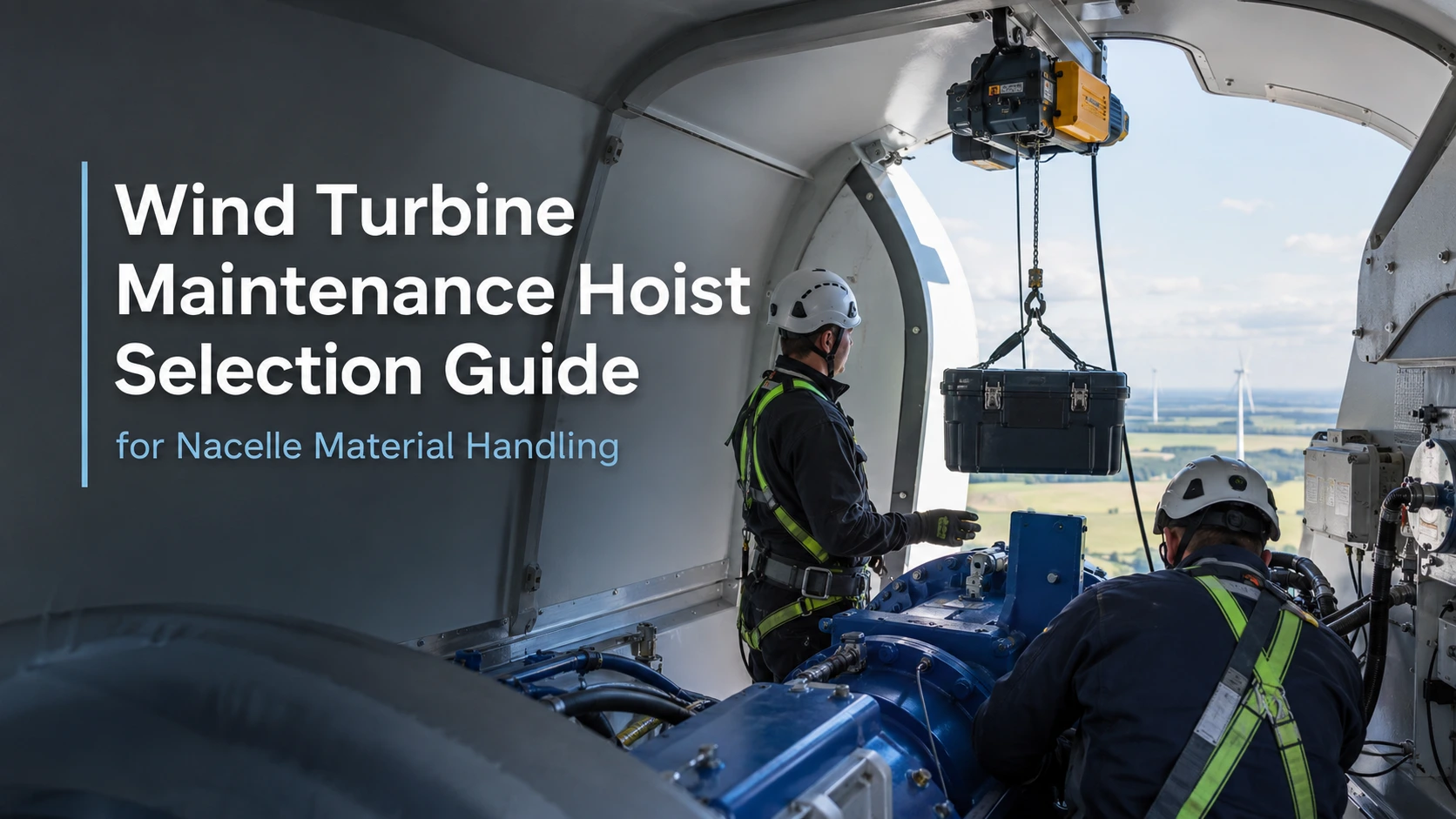
A wind turbine maintenance hoist should be selected around the actual lifting task, not nominal capacity alone. Tools, spare parts, and replacement components may travel a long vertical path while the equipment must fit within limited nacelle space. Lifting height, operating frequency, speed, power supply, suspension, headroom, and environment can all affect the decision. For engineers and procurement teams, the practical goal is to define the duty first and turn it into a complete specification before requesting a quotation.
What Type of Hoist Is Best for Wind Turbine Maintenance?
The right equipment depends on what is lifted, travel distance, operating frequency, and turbine integration.
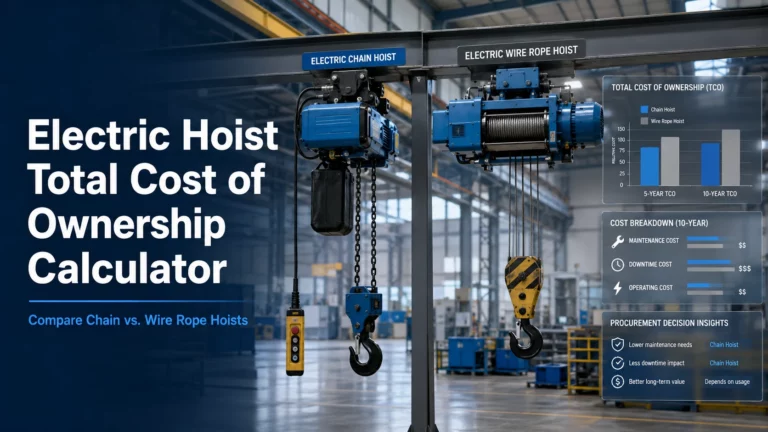
Electric Chain Hoist vs. Wire Rope Hoist for Nacelle Material Handling
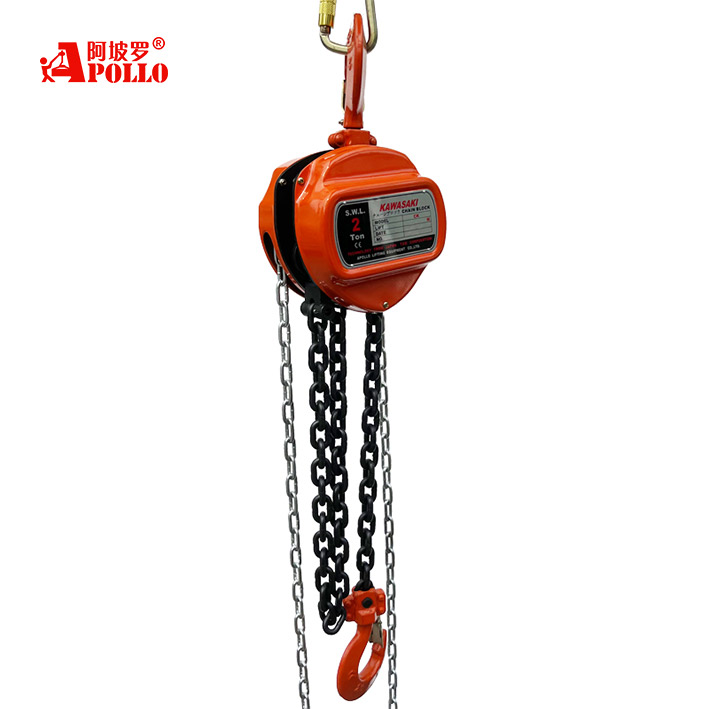
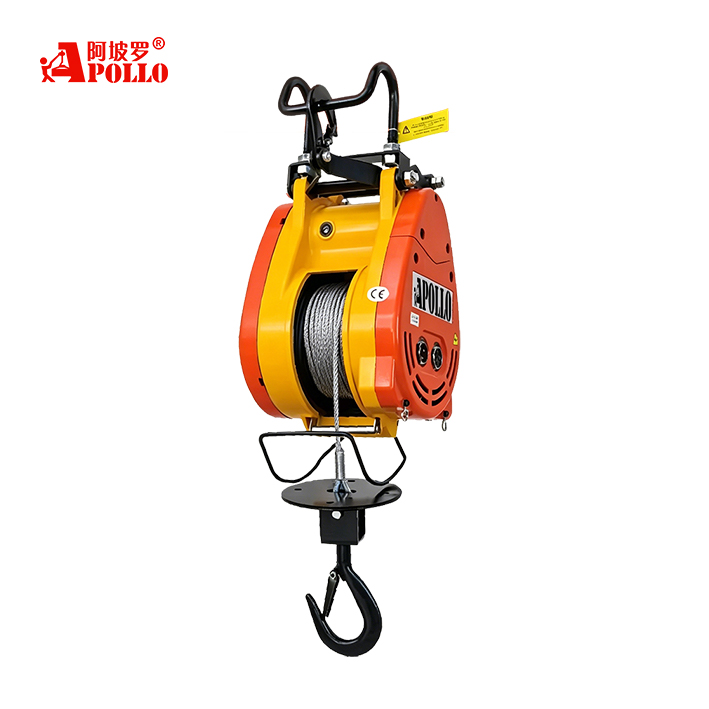
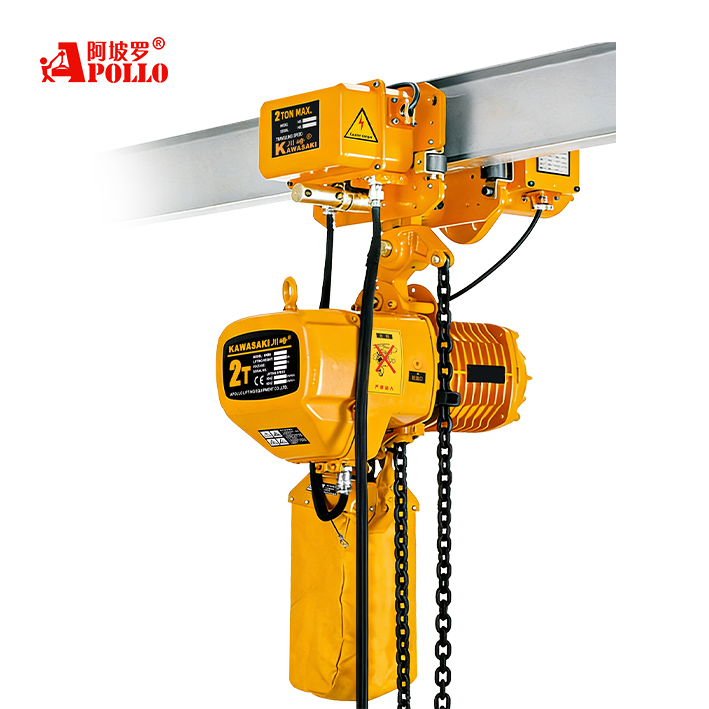
Electric chain and wire rope hoists perform the same basic function through different lifting and storage arrangements. Apollo’s technical comparison describes chain systems that collect excess chain in a container and wire rope systems that wind rope onto a drum, differences that influence installation space and application fit.
For wind turbine maintenance, compare the complete duty rather than assuming one technology is better. Check hook travel, load, operating frequency, target speed, headroom, and mounting. A chain system may suit restricted space; a wire rope system may deserve consideration where lift, duty, or installation geometry favors a drum-based arrangement. Apollo lists multiple electric chain hoist options and wire rope product families, but final configuration still needs project-specific verification.
| Selection Factor | Electric Chain Hoist | Wire Rope Hoist |
| Long vertical travel | Check chain length, storage, and duty | Check rope/drum capacity and duty |
| Limited space | Check body, headroom, and chain container | Check drum layout and mounting |
| Repeated lifting | Verify operating cycle | Verify operating cycle |
| Replacement | Match mechanical/electrical interfaces | Match mechanical/electrical interfaces |
For a broader equipment-level review, see the electric chain hoist vs. wire rope hoist guide.
When a Manual or Lever Hoist Makes More Sense
Manual or lever hoists can suit occasional positioning or temporary repair where powered lifting is unnecessary. They are less practical for repeated long-distance transfer. Confirm capacity, attachment points, travel, and access; for repeated lifting, evaluate powered equipment and verify duty, power, and lifting distance.
Why Standard Hoist Specifications Can Fail in Wind Turbine Applications
Matching only rated capacity can produce a poor technical fit. Two hoists with the same capacity may face very different demands if one lifts a few meters occasionally and another moves material through a long vertical path repeatedly. Wind turbine hoist specifications should describe operating conditions as well as load.
Long Lifting Distance, Duty Cycle, and Lifting Speed
Required lifting height should be based on actual hook travel, not total turbine height. Identify the pickup point, highest working position, rigging arrangement, and any extra travel needed to handle the load.
Long travel also makes frequency and speed more important. A faster hoist may reduce cycle time, but speed must be considered with load, duty, controls, and the approved configuration. An RFQ should state maximum load, hook travel, lift frequency, operating time, and target speed so the supplier can judge whether the proposed long-lift chain hoist or wire rope system fits the duty.
Power Supply, Mounting Space, and Environmental Conditions
A mechanically suitable hoist can still be unsuitable if it does not match the electrical supply or installation interface. Confirm voltage, phase, frequency, suspension method, beam or trolley interface, headroom, controls, and space for chain or rope management.
Moisture, temperature, corrosion exposure, and onshore or offshore use may affect configuration or documentation. Verify these conditions against the proposed specification rather than assuming a generic industrial hoist is suitable. Buyers considering a rope system can review Apollo’s electric wire rope hoists as a commercial starting point while treating final suitability as application-dependent.
How to Select the Right Wind Turbine Maintenance Hoist
A practical wind turbine hoist selection process should answer five questions: what is being lifted, what is the maximum actual load, how far does the hook travel, how often will the hoist operate, and how must it connect to the turbine structure and electrical system?
Match Capacity and Hoist Type to the Actual Maintenance Task
Rated capacity should reflect the real suspended load, including relevant lifting accessories. The goal is not to buy the largest hoist available, but to choose a suitable rating without creating unnecessary weight, headroom, or interface problems. For U.S. operations covered by OSHA’s overhead and gantry crane rules, rated loads must be marked and equipment may not be loaded beyond its rated load except under specified testing conditions. Applicable local rules and manufacturer instructions should also be followed.
The task determines the rest of the specification. Ground-to-nacelle tool movement, internal positioning, corrective maintenance, and replacement work may require different lifting approaches. Compare each task against load, hook travel, frequency, power, mounting, and controls.
If the maintenance team cannot confirm the actual load or lifting path, procurement should obtain component weights, drawings, equipment records, or verified maintenance information before final model selection. Simply increasing capacity does not resolve questions about duty, clearance, power, or mounting.
How to Replace an Existing Wind Turbine Hoist Without Specification Mismatch
Replacement requests often begin with “replace the old one-ton hoist,” but capacity alone is not enough. The old nameplate should be combined with current installation and operating information.
What to Record Before Requesting a Replacement Hoist
Record manufacturer and model, rated capacity, lifting height, speed, voltage, phase, frequency, suspension, trolley or beam interface, controls, and available space. Add photographs of the nameplate, mounting point, beam or trolley, control station, and surrounding structure.
State why the unit is being replaced. Obsolete parts, repeated faults, changed loads, longer lift requirements, or a different operating cycle can alter the decision. Repair may remain reasonable when the equipment still fits the duty; replacement becomes more relevant when parts are unavailable, failures recur, or the application has changed.
A replacement should therefore not be treated automatically as a like-for-like purchase. Recheck the current load, required lifting height, electrical supply, mounting arrangement, and operating frequency before releasing the specification.
What Should Buyers Verify Before Choosing a Wind Turbine Hoist Supplier?
Price should be compared only after technical scope is aligned. A wind turbine hoist supplier should ask enough questions to understand capacity, lifting height, duty, speed, electrical supply, mounting, controls, and environmental conditions before recommending a configuration.
Evaluate Technical Fit and Prepare a Complete RFQ
Request relevant product data and drawings. If a customized configuration is proposed, clarify what is standard, what changes, and which dimensions or operating conditions require confirmation. Procurement teams should also consider documentation and replacement support.
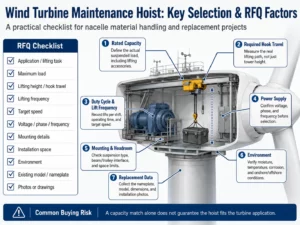
Img.Wind turbine maintenance hoist selection and RFQ checklist showing rated capacity, hook travel, duty cycle, power supply, mounting, and environment.webp
Apollo’s published range includes electric chain hoists, electric wire rope hoists, manual hoists, lever hoists, and beam trolleys. This range provides several starting points for industrial lifting selection, but it is not evidence that every configuration suits a wind turbine application.
A wind turbine hoist RFQ should include:
- Application and material or component being lifted
- Maximum suspended load
- Required hook travel or lifting height
- Expected lift frequency and operating time
- Required or preferred lifting speed
- Voltage, phase, and frequency
- Suspension, trolley, or beam requirements
- Available installation space
- Environmental conditions
- Required quantity
- Relevant drawings or technical documentation
For replacement projects, add the existing model, nameplate data, dimensions, reason for replacement, and photographs. Apollo’s inquiry form accepts product classification, quantity, and project messages. Buyers with a defined application can contact Apollo Hoist with these details for configuration review.
How to Reduce Hoist Selection and Maintenance Problems After Installation
If load, lifting path, frequency, mounting, or environment changes, review the hoist specification rather than assuming it remains valid. Follow manufacturer instructions, site procedures, and applicable regulations.
Repeated brake, chain, rope, control, or overheating problems can justify checking whether actual duty differs from the original specification. A recurring problem may involve operating conditions rather than only the failed component. Keeping nameplate data, drawings, maintenance records, and replacement information together also makes future troubleshooting and procurement easier.
Conclusion
Selecting a wind turbine maintenance hoist is a specification decision before it is a product decision. Define the load and task, measure actual hook travel, describe lifting frequency and speed, verify electrical and mounting constraints, and document the operating environment. For replacement work, include nameplate data and installation photographs.
Apollo Hoist supplies industrial chain and wire rope hoist categories that can be evaluated against these requirements. A quotation request should include the existing model when applicable, load, lifting height, operating frequency, voltage, mounting details, quantity, application description, drawings, and clear equipment photographs. Providing complete application data gives the supplier a better basis for discussing an appropriate configuration without assuming unverified wind-specific capabilities.
Frequently Asked Questions About Wind Turbine Maintenance Hoists
What type of hoist is used for wind turbine maintenance?
Electric chain and wire rope hoists can both be evaluated for nacelle material handling, while manual or lever hoists may suit occasional positioning. Capacity, lifting height, duty, mounting, power, and environment should determine the final choice.
How do you determine the required lifting height for a wind turbine hoist?
Measure actual hook travel from the pickup point to the highest required working position, including rigging and handling travel. Total turbine height is not a substitute for the actual lifting-path measurement.
Can a standard electric chain hoist be used for wind turbine maintenance?
Possibly, but suitability depends on the application. Verify capacity, lifting height, duty cycle, speed, electrical supply, mounting, chain management, and environmental conditions against the product specification before selection.
How do I choose a replacement wind turbine hoist?
Start with the existing nameplate and installation, then determine whether the duty has changed. Record capacity, lifting height, speed, voltage, controls, mounting dimensions, environment, and the reason for replacement. Photographs and drawings can reduce interface errors.
Is a wind turbine maintenance hoist the same as a service lift?
Not necessarily. This guide uses “maintenance hoist” for material handling such as tools, spare parts, and components. Personnel transport is a different application and should be evaluated under the applicable personnel-lifting requirements rather than treated as ordinary material handling.