When a Full-Size Hoist Is Too Much Equipment
A small workshop needs to lift a 300 kg machine guard onto a fixture bench. The crew has a two-ton chain hoist on the beam, and it does the job, but it does it badly. The hoist body is heavy enough that two people drag it into position. The fixed lifting speed overshoots the mounting bolts every time, so the team lowers and retries three or four times per lift. And when the part is finally seated, the operator has to hold it steady by hand while a second worker tightens the bolts.
This is the gap that a small wire rope electric hoist fills, and it is a gap many buyers discover late, after they have already bought equipment sized for a different problem. The symptoms are easy to recognise:
- The hoist is heavier than the loadand moving the unit costs more time than moving the part.
- Lifting speed is fixed, so a fast hoist overshoots and a slow hoist starves throughput.
- Positioning is a two-person jobbecause the load cannot be held at height while hands are free.
- Power is an afterthought, and the wrong voltage or phase stops the installation on day one.
This guide is written for the people who specify and buy lifting equipment: workshop owners, maintenance supervisors, and procurement teams sourcing compact hoists for production and service work. It explains how to match a small wire rope electric hoist to the real load, how to read speed and rope specifications without a degree in mechanics, and what to demand from a supplier before the order is placed.
Get a free load assessment: send your load weight, lifting height, and power supply details to sales@apollohoist.com, and receive a matched hoist recommendation within one business day.
Wire Rope or Chain: Which Mechanism Fits Your Job?
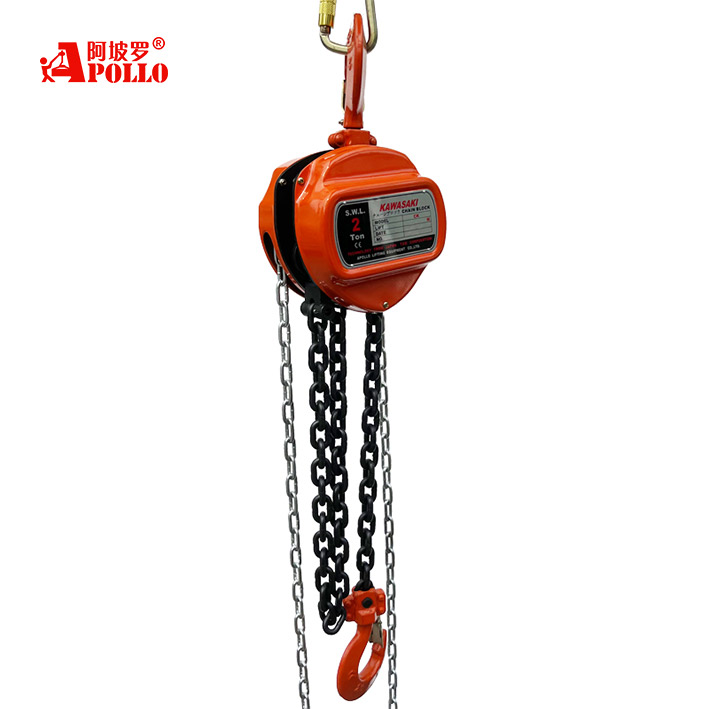
Both mechanisms lift a load. The difference is how the lifting line is built. A chain hoist pulls a steel chain over a pocket wheel, and the chain is made of hardened links that flex at every joint. A wire rope hoist winds a steel rope onto a drum. In plain terms, the chain works like a series of small hinges, and the rope works like a single continuous cable.
That difference decides which jobs suit which hoist:
| What it affects | Chain hoist | Wire rope hoist |
| Lifting line | Hardened steel chain links over a pocket wheel | Steel wire rope wound on a drum |
| Typical feel | Rugged, tolerates rough positioning | Smooth, quieter winding action |
| Speed control | Usually fixed speed | Often variable speed with an inverter drive |
| Best suited to | Rough duty, dusty or outdoor sites | Repetitive, precision, and compact lifting |
Neither mechanism is better in absolute terms, and a workshop that lifts machine parts all day has different needs from a site that moves crates outdoors. What matters is that the lifting line, the speed control, and the duty pattern match the work you actually do.
If your work is a mix of both, it is worth comparing the Apollo electric hoist range (https://www.apollohoist.com/product-category/electric-hoist/) before you commit to one mechanism.
What to Check Before You Order a Small Wire Rope Hoist
Five specifications decide whether a compact hoist becomes a labour-saving tool or an expensive lesson. Work through them in order.
1. Capacity and the real load margin
Capacity is the rated load, not the working load. A hoist that lifts 300 kg comfortably has a margin above the part weight, because the load in service is never exactly the load on the drawing. Add the weight of the lifting fixture, the slings, and any temporary attachments, then keep a margin above the total. A 500 kg part plus a 40 kg spreader beam is a 540 kg load, and a 750 kg rated hoist handles it with room to spare while a 500 kg unit is already at its limit before the day begins.
2. Speed control and positioning
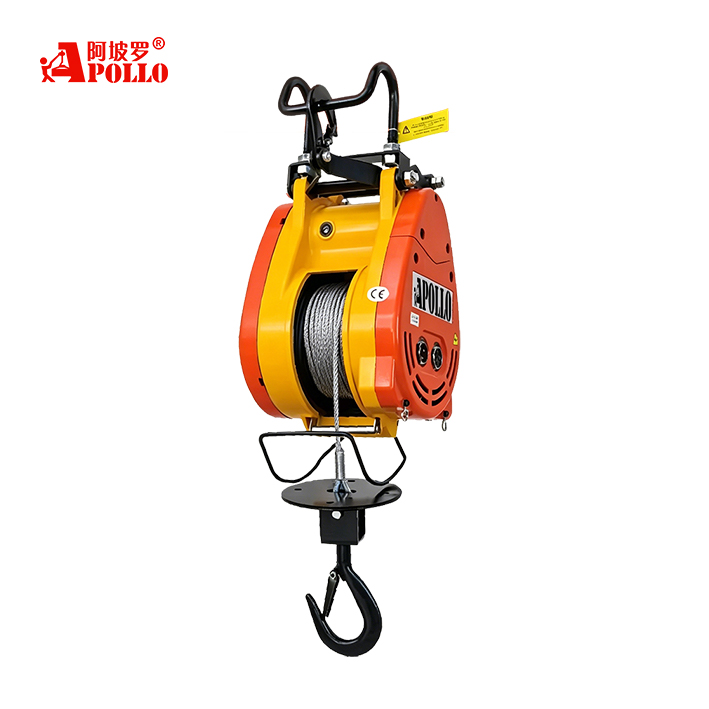
A fixed-speed hoist is either too fast for positioning or too slow for production, and most buyers discover which one only after installation. Variable speed solves both ends of the same problem: creep slowly onto a mounting pin, then travel quickly between stations. A practical speed split is 5 to 12 m/min for accurate placement and 14 to 34 m/min for moving the load across distance. The Apollo small wire rope electric hoist uses a permanent magnet inverter motor to deliver both ranges from one unit.
3. Single rope or double rope
Rope configuration changes what the same hoist can carry. In single rope mode the load hangs from one rope line and the hook travels faster. In double rope mode the rope passes through a pulley at the bottom block so two rope lines share the load, which raises usable capacity by roughly 85 percent while reducing lifting speed. This is the single most useful option on a compact hoist, because it lets one unit serve both light fast work and heavier occasional lifts.
4. Lifting height and headroom
Lifting height is the distance the hook can travel, and it is usually quoted as a rope length such as 20 m, 29 m, or 49 m. The number that matters on site is headroom, which is the space between the beam and the top of the load. A hoist body that is compact gains height that a bulky unit loses, and the difference shows up the first time you try to lift a tall component under a low beam. Rope diameter follows capacity: light units run 5 mm or 6 mm rope, heavier configurations use 8 mm.
5. Power supply and control
Confirm three numbers before ordering: voltage, phase, and control method. The Apollo small wire rope electric hoist ships with a default 220V supply and CE documentation, and control options cover a two-hole pendant lead, a pendant with an added remote, or a wireless remote, all running from a 4V safe control voltage at the operator’s hand. Write the voltage on the purchase order. A hoist that arrives wired for the wrong supply is not a delivery problem, it is a project delay.
Get a free load assessment: send your part weight, lifting height, and site power details through the inquiry page, and Apollo’s engineers will confirm the right capacity and configuration and email the CE documentation at no cost.
What Separates a Quality Small Hoist from a Cheap One
Nearly every heavy duty lifting equipment manufacturer can show a certificate and a CE mark. Certification is the entry ticket, not the differentiator. What separates a compact hoist that still positions smoothly after three years from one that fails early is how the design handles the two problems that kill small hoists: heat and control.
- Inverter motor driveinstead of a basic fixed-speed motor, which removes the start-stop shock that wears the gear train, and cuts energy use in continuous operation.
- Dual braking, with an electric brake for normal stops plus a mechanical brake that holds the load if power is lost mid-lift.
- Full protection set as standard, including overload protection, overheat protection, limit switch, and anti-reverse control, rather than sold as options.
- Safe control voltage: the pendant runs at 4V, which reduces electrical risk at the operator’s hand.
- Compact and light build, around 16 kg to 24 kg net weight, so one worker can hang it without a second lift or a crane.
- One-year warrantywith CE documentation supplied, so the compliance paperwork is ready before the safety audit, not after it.
Duty pattern matters as much as build quality. A hoist rated for intermittent work will struggle in an eight-hour production cell, and a hoist sized for occasional use in a maintenance bay is wasted money on a fast assembly line. State the number of lifts per shift and the average load weight when you ask for a quotation, and any competent supplier will match the unit to the duty, not just to the tonnage.
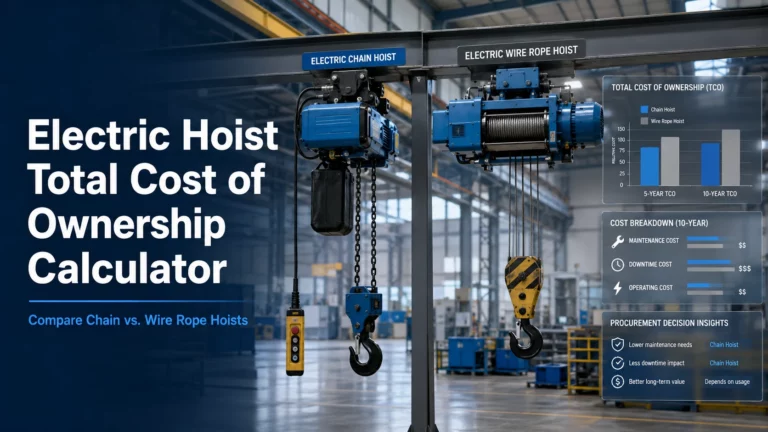
Buyers who compare hoists on total running cost rather than purchase price will find the calculation laid out in our article on electric hoist total cost of ownership (https://www.apollohoist.com/product-news/electric-hoist-total-cost-of-ownership-calculator-compare-chain-vs-wire-rope-hoists/), which works through chain versus wire rope economics line by line.
Three Questions to Ask Any Supplier
Any electric hoist manufacturer and supplier should answer these three before you place an order:
- What is the rated capacity, and what margin does it leave above my actual load?A general answer about tonnage is not enough. Apollo quotes a model against the real load weight, the lifting fixture, and the duty pattern.
- Which rope configuration is quoted, and what changes in double rope mode?This confirms whether the capacity figure you are comparing applies to single rope or double rope operation. Apollo supplies both configurations and states the resulting capacity and speed for each.
- What documentation arrives with the hoist?CE documentation and a one-year warranty ship with the Apollo small wire rope electric hoist, along with operating and inspection guidance for the maintenance file.
Apollo has manufactured lifting equipment for over 20 years, exporting to more than 50 countries, with factory-direct production and OEM support. The full range is listed on the product overview page (https://www.apollohoist.com/product/).
How to Buy from Apollo: Choose Your Channel
Workshop and facility procurement
Get a free load assessment: tell us the load weight, lifting height, power supply, and how many lifts you perform per shift. Within one business day you will receive a matched hoist recommendation, a formal quotation, and the CE documentation your safety officer needs.
Distributors and dealers
Stock one compact hoist family that covers 100 kg to 750 kg, with control options that let you quote pendant, remote, or wireless configurations from the same product line. Light net weights of 16 kg to 24 kg keep freight and warehouse handling simple, and factory-direct pricing protects your margin.
Custom branding, packaging, and documentation are available from the Apollo factory, built to the compliance requirements of your market.
- Get a free load assessment via WhatsApp / Phone: +86 18989488615
- Submit an online inquiry: https://www.apollohoist.com/contact-us/
- Browse the full product range: https://www.apollohoist.com