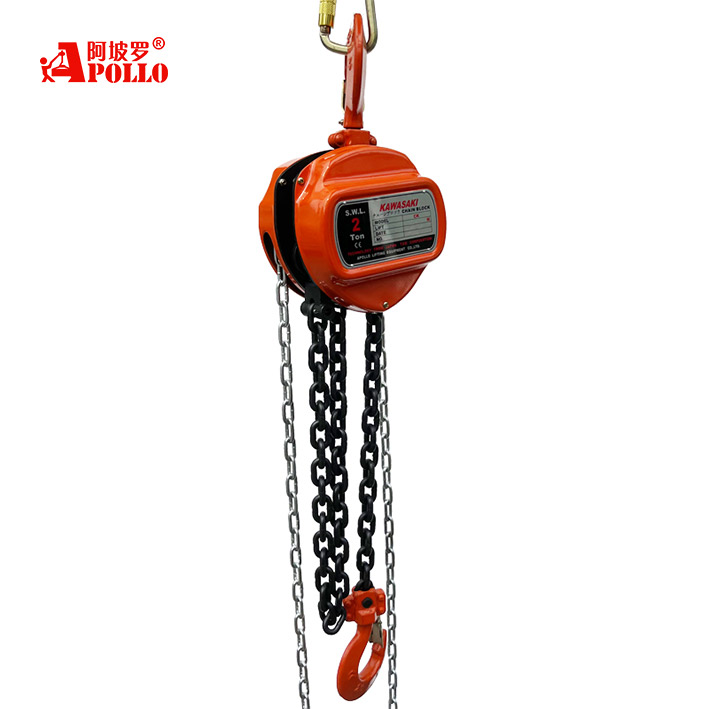
The Job That Stops When the Power Does
A maintenance crew shows up Monday morning ready to pull a pump out of a pit. The crane on site is electric, the power is out across the block, and the crew chief is already on the phone pricing a generator that costs more per day than the lift is worth. A few miles away, a contractor on a remote water project has no grid connection at all. At a coating line in another plant, the rule is simple: nobody brings a spark-producing tool into the zone.
All three crews have the same answer sitting in a crate. A hand chain hoist lifts the load on human effort plus a gear reduction: no motor, no cable, no power supply waiting to fail. Not having one on site carries its own costs:
- Work stops when the power stops, and standby generators are expensive for a two-hour lift.
- Remote sites have no grid, so any electric hoist needs a power solution before it can lift anything.
- Restricted areas ban powered toolswhere spark risk or moisture makes electric equipment unsuitable.
- Rental costs accumulateevery time a job needs a crane call-out for a load that a manual hoist could lift.
This guide is written for the people who keep those jobs moving — maintenance managers, site supervisors, and procurement teams equipping crews that work away from reliable power. It covers how to size a hoist, what the hand-pull effort really means for your operators, and the checks worth making before you buy.
Get a free load assessment: send your load weight, lifting height, and site conditions to sales@apollohoist.com, and receive a matched hoist recommendation within one business day.
How a Hand Chain Hoist Lifts Without Electricity
The working principle is easier to follow than the parts list suggests. The operator pulls a light hand chain in a continuous loop. That chain turns a pocket wheel, the pocket wheel drives a gear train, and the gear train turns the load sheave — the wheel that carries the heavy load chain. The gear reduction is what turns a normal pull into enough force to lift the load. No electricity enters anywhere in that sequence, and the load holds its position because a brake locks the sheave as soon as the operator stops pulling.
That design has three practical consequences:
- The hoist works anywhere, from a concrete plant to a field site with no infrastructure at all.
- The lifting speed follows the operator, which makes fine positioning easier on some jobs than a powered hoist.
- Nothing electrical to fail, so there is no motor to burn out and no control panel to fault.
| Site condition | Powered hoist | Hand chain hoist |
| Power available | Required, with correct voltage and phase | Not required at all |
| Power outage | Work stops | Work continues |
| Explosive or wet areas | Restricted or unsuitable in many cases | Suitable for manual use |
| Positioning feel | Depends on speed control | Direct, step by step control |
The trade-off is speed and effort. A powered hoist moves a long travel faster; a manual hoist needs someone to pull the chain. That is why hand-pull effort is the first number to check on any manual unit.
The full Apollo hand chain hoist range, from 0.5 tons to 20 tons, is listed on the manual hoist category page (https://www.apollohoist.com/product-category/manual-hoist/chain-hoist/).
What to Check Before You Order
Four specifications decide whether a manual hoist suits the crew that will use it, and none of them needs an engineering background to check.
1. Capacity and the hand-pull effort
Capacity is how much the hoist can lift. Hand-pull effort is what the operator has to pull to make it lift, and the two figures move together. At half a ton the pull is gentle, around 221 N; at twenty tons it takes a firm two-handed pull, roughly 392 N. As a working rule, keep the pull on routine lifts under about 300 N so a single operator can get through a shift without wearing out, and treat anything above that as a two-person or occasional-use tool. If your crew moves 200 kg parts twenty times a shift, a hoist that pulls hard will slow the whole line down.
2. Single fall or double fall
In a single fall hoist, the load chain runs straight from the top hook to the bottom hook and one chain line carries the whole load. In a double fall hoist, the chain loops through the bottom block so two lines share it. The difference at the same capacity is weight and size: a two-ton double fall unit can weigh around half the single fall version and use a smaller chain, which matters when the hoist is carried up scaffolding or hung in a confined space. The double fall body is taller, so check headroom first.
3. Lifting height and headroom
Lifting height is how far the hook travels. Headroom is the space between the beam and the top of the load — the number that decides whether a hoist physically fits. When headroom is tight, a double fall configuration may be out of the question no matter how attractive its weight looks. Check both figures against the highest load the crew will lift, not the average one.
4. Working environment
Manual hoists tolerate conditions that stop powered equipment. Outdoors in the rain, in a dusty quarry, or in a zone where spark-producing tools are restricted, having no motor and no cable works in your favor. Tell the factory what environment the hoist will live in, and add covers or stainless components where moisture and corrosion are part of daily life.
Get a free load assessment: send your load weight, lifting height, and working environment through the inquiry page, and Apollo’s engineers will confirm the right capacity and configuration and email the EN 13157 documentation at no cost.
What Separates a Quality Hand Chain Hoist from a Cheap One
Nearly every heavy duty lifting equipment manufacturer can show EN certification. Certification gets you in the door; it does not tell you which hoist will still hold load after a decade of site work and which one fails in its second year. That comes down to how the certified design is built and how honestly the effort figure is quoted.
- Double-pawl brake system, so two independent mechanical locks hold the load and a single pawl failure does not drop it.
- Grade 80 alloy load chainwith calibrated link geometry, which keeps engagement with the load sheave consistent and makes wear predictable.
- Four-to-one safety factoracross the range, a conservative design margin above the legal minimum.
- Per-unit testing, with each hoist load-tested above its rated capacity and fatigue-tested at 1.5 times the rated load through 2,000 cycles.
- Cast one-piece bodyinstead of bolted plate construction, removing bolt loosening as a failure mode.
- Full capacity coverage from 0.5 to 20 tons, so the same product family serves workshop maintenance and heavy rigging without a second supplier.
Ergonomics deserve as much attention as metallurgy. A hoist with excellent internals but a pull that exhausts the operator will get used badly, and a badly used hoist is an unsafe hoist. Ask for the hand-pull effort at rated load in newtons, then compare it with what the crew actually does in a shift.
If you are also deciding between a hand chain hoist and a lever hoist for a particular job, our comparison of Apollo lever hoists and Apollo chain hoists (https://www.apollohoist.com/product-news/apollo-lever-hoist-vs-apollo-chain-hoist-which-manual-lifting-tool-fits-your-job-apollo-lifting-equipment-manufacturer/) explains which tool suits pulling, tensioning, and vertical lifting work.
Care and Inspection Without a Power Supply
A manual hoist has no electrical maintenance to speak of, which makes the mechanical checks more important, not less. The routine is short and can be handled by the crew that uses the equipment.
- Before every use: check the hand chain for twists and stiff links, confirm the load chain runs freely, test that the brake holds a light load, and inspect both hooks for latch damage or deformation.
- Chain wear: measure elongation and replace the load chain when it reaches the replacement limit, because a stretched chain does not sit correctly in the sheave and wears faster as it runs.
- Lubrication: keep the gear train and chain bearing surfaces lubricated to the manufacturer’s interval, which keeps the hand-pull effort close to its original figure.
- Annual inspection: have a competent person inspect the brake, hooks, chain, and body, and re-inspect after any overload or unusual event.
A hoist that fails an inspection comes out of service until it is repaired. Parts availability decides how long that takes, so it is a question worth asking before you buy — not after something fails.
Three Questions to Ask Any Supplier
Before you order, any hand chain hoist manufacturer and supplier should be able to answer these three:
- What is the hand-pull effort at rated load, in newtons?A vague answer about ease of use is not enough. Apollo quotes the pull figure for each capacity so buyers can check it against the crew and the shift pattern.
- Which chain and brake system does the hoist use?This confirms the wear parts and their replacement intervals. Apollo hand chain hoists use Grade 80 load chain with a double-pawl brake system across the range.
- What documentation ships with the unit?EN 13157 certification and inspection guidance arrive with the hoist, which keeps the maintenance file complete for audits and site inspections.
Apollo has manufactured lifting equipment for over 20 years, exporting to more than 50 countries, with factory-direct production and OEM support. The complete product range is listed on the product overview page (https://www.apollohoist.com/product/).
How to Buy from Apollo: Choose Your Channel
Maintenance and site teams
Get a free load assessment: tell us the load weight, lifting height, headroom, and working environment. Within one business day you will receive a matched capacity recommendation, a formal quotation, and the EN 13157 documentation your safety officer needs.
Distributors and dealers
Stock the full 0.5 to 20-ton range under one certification package, with multi-product quotes that combine Apollo hand chain hoists with lever hoists, trolleys, and electric hoists. Factory-direct pricing protects your margin, and a single spare parts list covers the family.
OEM and private label
Custom branding, packaging, and documentation are available from the Apollo factory, built to the compliance requirements of your market.
- Get a free load assessment via WhatsApp / Phone: +86 18989488615
- Submit an online inquiry: https://www.apollohoist.com/contact-us/
- Browse the full product range: https://www.apollohoist.com