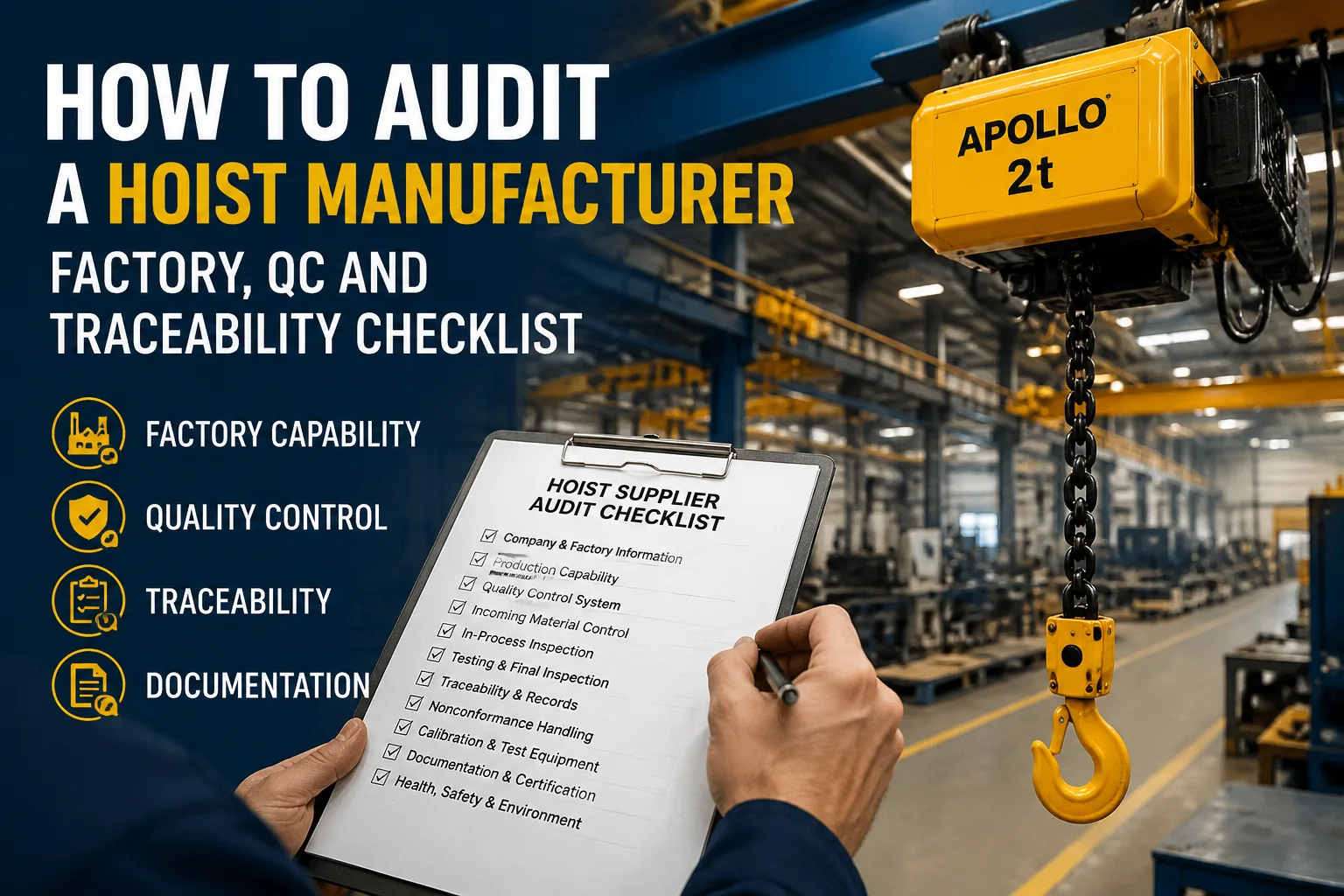
A hoist manufacturer’s brochure can show a product range, but it cannot prove that a specific factory can deliver repeatable, traceable lifting equipment. A practical supplier audit connects what the company promises with what an auditor can see: controlled production, competent inspection, documented tests, and records that follow each unit from incoming material to shipment.
Use this checklist before approving an electric chain hoist, wire-rope hoist, winch, or lifting supplier. It is designed for procurement, engineering, and quality teams planning an on-site visit or a remote evidence review. The checklist does not replace a jurisdiction-specific legal assessment; it helps you collect the evidence needed for a defensible decision.
Define the audit scope before the visit
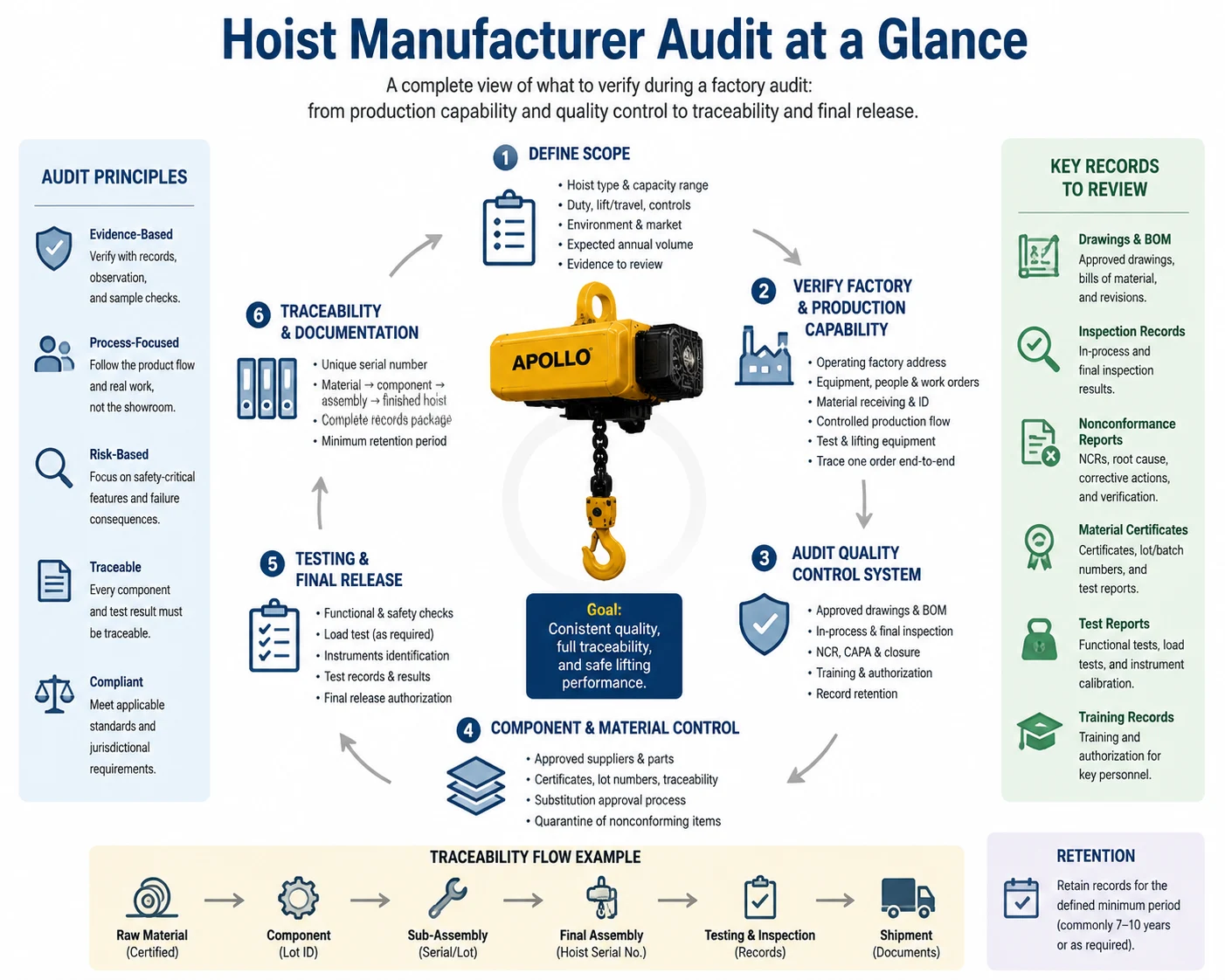
Start with the exact equipment and business risk. Record the hoist type, rated capacity range, duty or usage profile, lift and travel configuration, controls, environmental conditions, destination market, and expected annual volume. A factory may be suitable for standard electric hoists but not for a project requiring a special enclosure, hazardous-area configuration, or integrated trolley. Scope the audit around the products and processes that will actually be purchased.
- Identify the legal entity, manufacturing address, sales entity, and any outsourced processes.
- List the models, options, accessories, and critical components within the purchase scope.
- Define evidence to review: organization chart, process map, drawings, inspection plans, test records, nonconformance logs, and sample serial-number files.
Verify the factory and production capability
The walk-through should follow the product flow rather than a showroom route. Confirm that the address is an operating production site and that the observed equipment, people, and work orders match the supplier’s declared scope. Look for defined work areas, material identification, orderly movement of parts, and protection against mix-ups between models or customer orders.
- Incoming materials have a receiving area, purchase reference, inspection status, and segregation for rejected items.
- Machining, fabrication, painting, assembly, and testing areas have visible work instructions and controlled job travelers.
- Lifting and test equipment has an identification label and a current calibration or verification status where applicable.
Ask to see one completed order and trace it backward: finished hoist, final inspection, assembly records, component lots, and incoming checks. This reveals whether the process works in practice or only exists as a quality manual statement.
Audit the quality-control system
A quality certificate may indicate a management framework, but the audit must test how that framework controls the hoist’s safety and performance. Request the quality manual or process overview, then sample records at the workstation. Effective controls should define acceptance criteria, responsibilities, inspection frequency, reaction plans, and record retention.
Quality-control evidence to sample
- Approved drawings, bills of material, specifications, and revision histories for the sampled model.
- In-process checks for dimensions, welds, fasteners, gearing, brakes, load-chain or wire-rope installation, and electrical connections as applicable.
- Final inspection plans that cover nameplate data, direction of travel, limits, emergency stop, brake holding, controls, guarding, and visible damage.
- Nonconformance reports showing containment, root-cause analysis, corrective action, verification of effectiveness, and closure approval.
- Training and authorization records for inspectors, testers, welders, and other roles that affect product conformity.
Check component and material control
Many hoist failures begin with an uncontrolled component substitution or an unidentified material lot. Review how the manufacturer approves suppliers and verifies safety-relevant parts. The level of evidence should match the risk: a load-bearing chain, hook, rope, brake, limit device, or control component deserves stronger identification and acceptance records than a non-critical packaging item.
- Incoming certificates, inspection results, and lot or batch identifiers are linked to the received item.
- Substitutions require engineering review, documented equivalence, and controlled approval before use.
- Nonconforming or suspect materials are physically or electronically quarantined to prevent accidental release.
Witness testing and final release
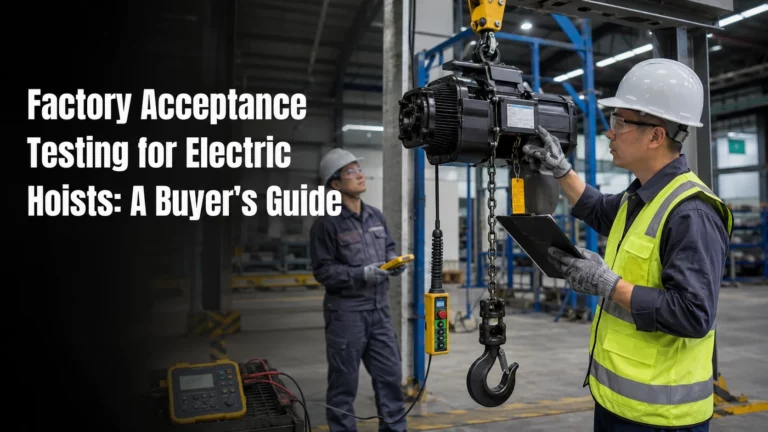
Ask the supplier to demonstrate how a hoist is tested before release and how the result is recorded. The exact tests depend on the design, configuration, contract, and destination requirements, so the audit should verify the approved procedure rather than impose an invented test list. Observe whether the test setup is suitable, the instruments are identified, and failures trigger a documented hold and investigation.
- Functional checks cover controls, travel direction, limits, brake response, abnormal noise, and other applicable safety functions.
- Load or proof testing, when required by the approved specification, identifies the unit, method, load or setting, date, result, and responsible person.
- Final release is approved by an authorized person after open nonconformances are resolved or formally accepted.
- The shipped configuration, nameplate, manual revision, certificates, and test record agree with the released order.
Confirm end-to-end traceability
Traceability is the ability to answer, for one finished hoist, what it is, how it was built, which components entered it, who checked it, and what documents were shipped with it. Ask the supplier to demonstrate the chain using a real serial number. The system may be electronic, paper-based, or hybrid; the test is whether records are complete, legible, retrievable, and protected from unauthorized changes.
- A unique serial number or asset identifier is assigned consistently and appears on the nameplate, traveler, inspection report, test record, and packing documents.
- Critical component lots, revisions, and supplier certificates can be retrieved without relying on one employee’s memory.
- Rework, repair, replacement, and engineering changes are added to the unit history with approval and date.
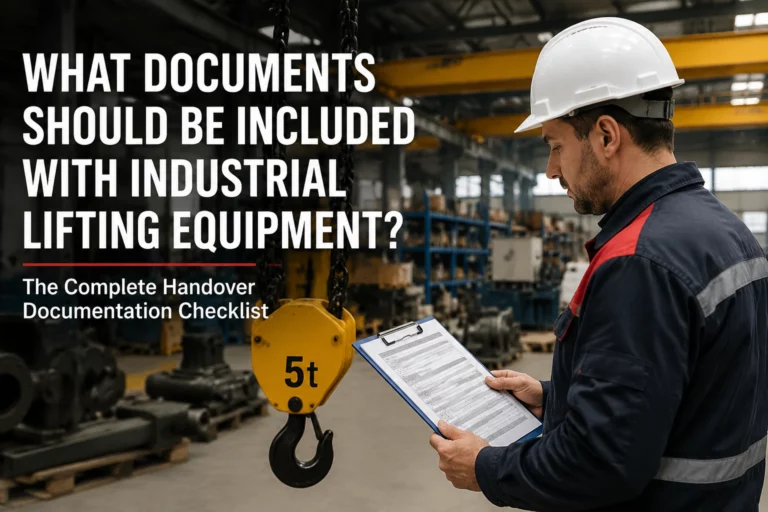
- The supplier can issue a complete document index for each shipment and explain how corrections are made.

Review corrective action and after-sales controls
Audit the supplier’s response when something goes wrong. Review complaint logs, returns, field failures, and corrective-action trends for the product family in scope. Look for evidence that the supplier separates containment from root-cause correction and checks whether the fix worked. Ask how safety notices, revised manuals, superseded parts, and engineering changes reach customers with affected serial numbers.
Common red flags and how to respond
- The factory refuses a production-floor visit or offers only a sales showroom: require an independent audit or pause approval.
- Serial numbers are missing, duplicated, or absent from test records: treat traceability as a major finding until corrected.
- Inspectors cannot explain acceptance criteria or show current calibration status: verify competence and measurement control before release.
- Critical parts are described only by generic names: require approved part numbers, revisions, and supplier evidence.
How Apollo fits the audit conversation
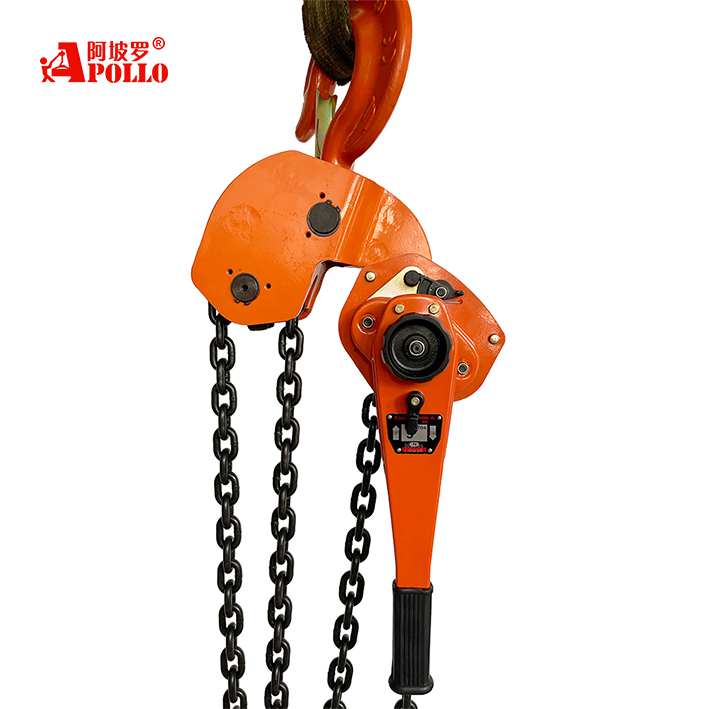
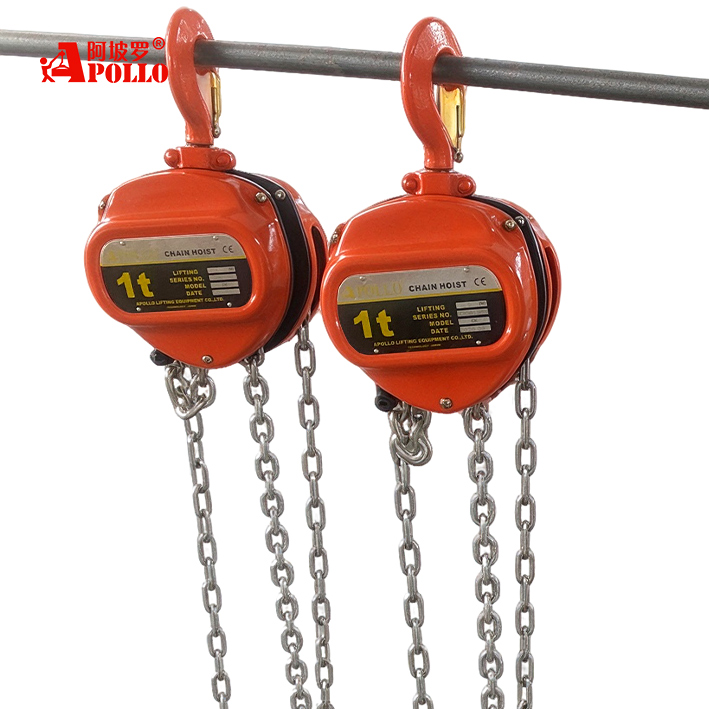
Apollo’s website identifies Hangzhou Apollo Lifting Equipment Co., Ltd. and describes lifting-equipment research, development, and production. It also presents a design team, mold workshop, professional QC team, and three production workshops. Use those published statements as an initial scope reference, then verify the current factory, personnel, equipment, and records during due diligence. The company’s electric hoist product categories include electric chain hoists, electric wire-rope hoists, electric winches, and explosion-proof hoists.
For a formal review, request the model-specific drawings, inspection plan, test evidence, component traceability, and document index for the units in your purchase scope. Apollo also describes R&D capabilities and service and customization capabilities; confirm which capabilities and support commitments apply to your configuration rather than assuming a category page proves conformity. Send the audit agenda and evidence request through Apollo’s contact channel before the visit.
Conclusion
A reliable hoist manufacturer audit is an evidence exercise. Walk the production flow, sample quality records, verify critical components, witness release testing, and follow one serial number from incoming material to shipment. Score findings by safety and business impact, assign corrective actions with deadlines, and make unit-specific documentation a contract deliverable. This approach gives procurement a defensible supplier decision and gives engineering a clearer basis for approving the equipment in service.
FAQs
Is an ISO certificate enough to approve a hoist manufacturer?
No. It may describe a management framework, but you still need evidence that the in-scope hoist model is controlled, tested, traceable, and released against defined requirements.
What is the most important traceability test?
Select one finished serial number and ask the supplier to retrieve its configuration, critical component records, inspection results, test record, release approval, and shipped document index.
Should a remote audit replace a factory visit?
A remote review can be useful for screening or follow-up, but the right approach depends on risk, product complexity, history, and available independent evidence. High-consequence or new-supplier decisions may justify an on-site assessment.
What happens after a supplier fails the audit?
Classify the finding, contain immediate risk, agree on corrective action and evidence, set a due date, and verify effectiveness. Do not close a safety-critical finding solely because the supplier promises improvement.