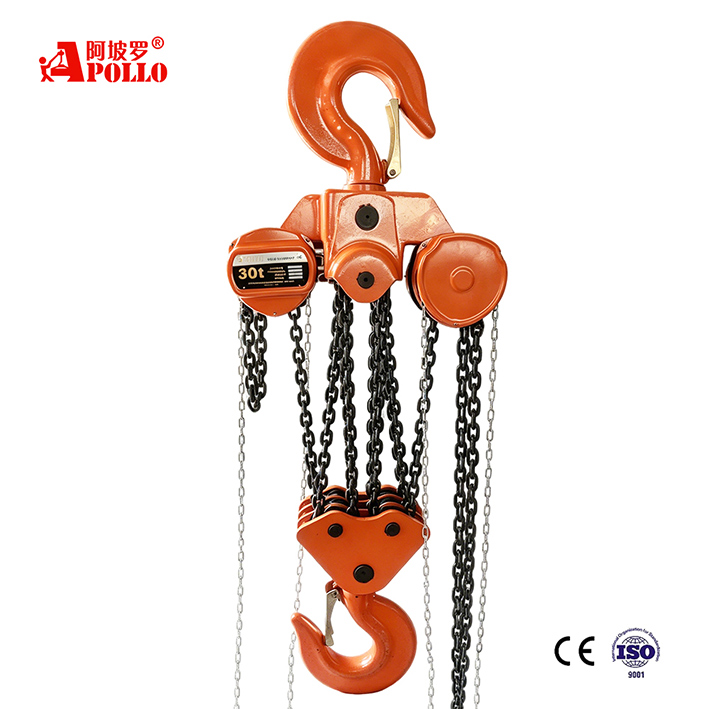
1. When Reliability Is the Only Specification That Matters
There are cases where speed is important, the process is automated and electrical energy makes sense. And then there are jobs where nothing of that holds true: a construction site off the power grid, a mine where the equipment needs expensive explosion-proof certification, a confined space in a shipyard where a motorized hoist just won’t fit, or an instance where a hoist will remain idle for many months before being deployed.
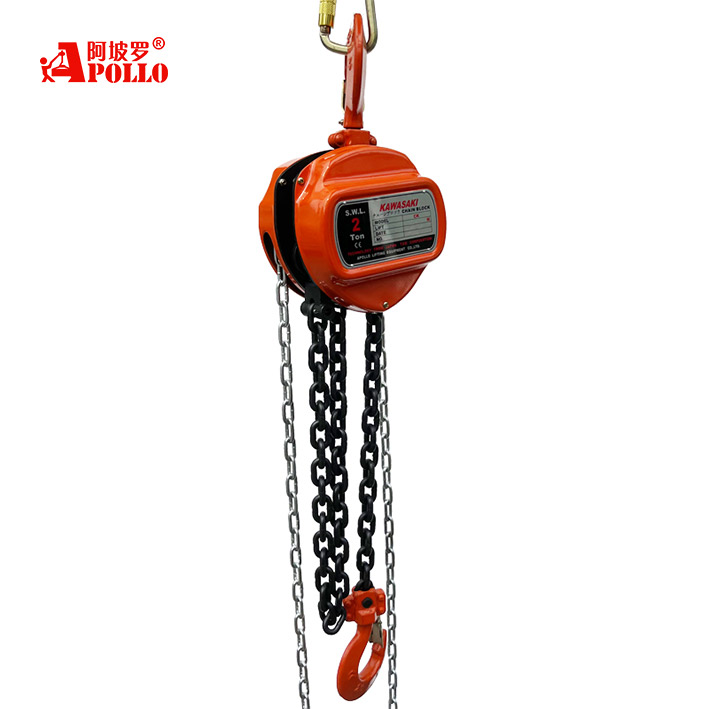
In all those cases, the manual chain hoist is no second-best solution. It is the perfect one. No wiring. No controller. No overheating. A chain, gears, a brake and a load hook – all built to the same standards and metallurgy of any other lifting equipment.
However, choosing the right chain hoist needs some knowledge about the engineering standards of the chain hoist itself, metallurgy behind it and the application itself. This guide covers all six essential factors of chain hoist selection, a matrix to resolve conflicting criteria and the regulations that distinguish a certified industrial tool from unregulated uncertified equipment.
2. The Six-Parameter Selection Framework
2.1 EN 13157 Compliance and the 4:1 Safety Factor: The Regulatory Baseline
EN 13157 is the European standard governing manually operated chain hoists. It mandates specific requirements that define the minimum acceptable engineering baseline: a static test load of 1.5 times the rated capacity, a dynamic test at 1.1 times rated capacity, a minimum 4:1 safety factor between breaking force and working load limit, and a double-pawl brake system that prevents load drop in the event of a single pawl failure.
These are not aspirational targets. They are the minimum legal requirements for CE marking under the Machinery Directive 2006/42/EC. A hoist that lacks EN 13157 compliance documentation cannot legally be placed on the European market, and buyers in other regulated jurisdictions (UK, Australia, GCC) increasingly require equivalent certification as a condition of import.
The procurement question: does the supplier provide EN 13157 certification documentation with the shipment, or just a CE logo printed on the nameplate? The difference determines whether the hoist passes a workplace safety inspection or gets red-tagged on arrival.
2.2 Grade 80 Load Chain per EN 818-7: The Metallurgy That Determines Service Life
Load chain for lifting applications is governed by EN 818-7, which specifies Grade 80 (G80) alloy steel with calibrated link geometry, controlled case depth, and minimum breaking force proportional to chain diameter. The breaking force for a 6 mm G80 chain link is approximately 36 kN, while the 10 mm link will exceed 100 kN. Those values provide a safety margin between a hoist that can safely lift cargo over a decade and one that experiences chain elongation after its first year of operation.
Chain elongation is the main parameter of wear in manual hoists. EN 13157 requires that the chain should be replaced in case the chain elongation is more than 5% of the pitch length for 11 links. The rate of elongation depends on three parameters: the load in relation to capacity (%), the diameter of the chain (the larger the diameter, the bigger cross-section the chain will have and the more evenly it will distribute the load) and the grade of material used.
Apollo hand chain hoists use G80 alloy steel load chain in diameters from 6 mm to 10 mm, with the 2-ton dual-fall variant achieving capacity with thinner 6 mm chain by splitting the load across two chain legs. This configuration reduces hoist weight by nearly half compared to the single-fall 2-ton model while maintaining full G80 chain integrity.
2.3 Capacity Selection: Why the Rated Load Is Not the Recommended Load
A 2-ton manual chain hoist with a rating of 2 tons will be able to lift 2 tons safely. However, it was not built to lift 2-ton loads 20 times a day, seven days a week, year after year. Running the hoist constantly at its maximum rated capacity will hasten wear on all of the loaded parts, from the chain links to the brake pawl contact surfaces to the gear tooth engagement surfaces.
Guideline for practical choice: if used in a production environment or frequently, choose a capacity that is 50% greater than your heaviest regular lifting requirement. In a workshop that regularly lifts 1-ton assemblies, you should choose a hoist capable of lifting 1.5 or 2 tons, not 1 ton. The extra cost is minimal, while the service life extension is significant.
Apollo manual chain hoists span 0.5 tons to 20 tons with a consistent 4:1 safety factor across every model. This uniform safety margin means all hoists in the product line meet the same certification requirements, simplifying the compliance documentation package for multi-model orders.
2.4 Lifting Height and Headroom: Clearance Calculations That Prevent Installation Surprises
The standard lift height of a manual chain hoist, typically 2.5 meters or 3 meters, is the length of load chain that can be raised before the chain stop contacts the hoist body. It is not the usable working height, because the hoist body, top hook, and any suspension trolley consume vertical space between the beam and the load hook.
Headroom calculation example: In a facility with a 4.5-meter beam height, a hoist with 450 mm of headroom leaves the load hook at approximately 4.05 meters at full lift. With 3 meters of lifting height, the hook reaches down to 1.05 meters above the floor. If the task requires lifting from floor level, a longer chain or a different suspension arrangement is required.
- Measure from beam bottom to the lowest point the load must hang.
- Subtract hoist headroom (body height plus top hook dimension).
- Verify that the chain length covers the required range, plus a safety margin of at least 300 mm.
2.5 Hand-Pull Effort and Operator Ergonomics
Manual chain hoist hand-pull effort is the force the operator applies to the hand chain to lift the rated load. It ranges from approximately 221 N at 0.5 tons (equivalent to lifting a 22.5 kg weight with each pull) to 392 N at 20 tons (approximately 40 kg of pull force).
Ergonomic assessment rule: any sustained hand-pull effort above 300 N should trigger a review. Solutions include using a two-operator procedure (chain hoists support this by design), switching to a dual-fall configuration that reduces the required effort through mechanical advantage, or moving to a powered hoist for high-frequency or high-effort applications.
2.6 Scenario Decision Matrix
Scenario A: Remote Construction Site, No Power
- Priority:EN 13157 certification (safety-first for unregulated work environments), then lift height (structure heights vary by project), then hand-pull effort (workforce may not be trained).
- Configuration:dual-fall 2-ton or 3-ton model for reduced operator effort. Standard 3-meter lift unless the structure exceeds two stories.
Scenario B: Workshop Maintenance Bay, Mixed Loads
- Priority:capacity range (1T-5T covers most maintenance tasks), then G80 chain for longevity, then mounting flexibility (trolley-compatible for overhead rail use).
- Configuration:single-fall 2-ton or 3-ton model for general use. Add a 5-ton unit if heavy diesel engine lifting is routine.
Scenario C: Multi-Branch Industrial Distributor
- Priority:full EN 13157 + CE certification package, then G80 chain traceability, then standardized lifting height (3 meters covers most workshops).
- Configuration:stock 0.5T, 1T, 2T, 3T, 5T as core inventory. Offer 10T and 20T on indent. Standardize on the lower-weight dual-fall 2-ton model to minimize freight costs.
3. Certifications, Traceability, and the Real Cost of Cutting Corners
A manual chain hoist is mechanically simple, which makes it easy to manufacture and easy to manufacture badly. The differences between an industrial-grade unit and a commodity import are concentrated in three areas that are invisible without certification documentation.
- Chain metallurgy.G80 alloy steel chain has a defined chemical composition, heat-treatment protocol, and breaking force verification per EN 818-7. Non-G80 chain may look identical but lacks the ductility and fatigue resistance to survive years of cyclic loading. Chain that elongates past the 5% threshold must be replaced; the replacement cost for a 3-meter, 10 mm G80 chain is typically 20-30% of the hoist purchase price. Over a 10-year service life, chain replacement frequency is the single largest lifecycle cost variable.
- Brake design.EN 13157 requires a double-pawl brake, meaning two independent pawls engage the ratchet at all times. If one pawl fails, the second holds the load. Single-pawl designs, which are common on uncertified imports, have a single-point failure mode. The cost difference between single and double-pawl mechanisms at the manufacturing level is measured in dollars. The liability exposure difference is measured in orders of magnitude.
- Material traceability.An ISO 9001-certified facility maintains traceability from raw material certificate to finished product serial number. If a batch of chain or hooks is later found to have a material defect, the affected units can be identified and recalled. Without traceability, a defect discovered in the field becomes an open-ended liability for the distributor.
Apollo manual chain hoists are manufactured in an ISO 9001-certified facility with third-party-verified CE and GS certification. Every hoist ships with EN 13157 compliance documentation. G80 chain material certificates are available on request. These are not marketing differentiators. They are the minimum evidence package that a professional buyer should require from any industrial lifting equipment supplier.
4. From Specification to Safe Operation
The six parameters and three scenarios in this guide provide a structured selection framework. But every procurement decision involves site-specific constraints: non-standard beam sizes, regional certification reciprocity, or packaging requirements for containerized shipping.
Apollo’s engineering team works directly with industrial buyers and distributors to validate manual chain hoist specifications against real operating conditions.
Specify Your Manual Chain Hoist with Apollo
- WhatsApp / Phone: +86 18989488615
- Email: sales@apollohoist.com
- Online Inquiry: https://www.apollohoist.com/contact-us/
- Website: https://www.apollohoist.com
Tell us your capacity requirements, lifting height, and certification needs. We will recommend the correct configuration, provide a tailored quotation within one business day, and ship with full EN 13157 compliance documentation ready for your workplace safety inspection.