Introduction
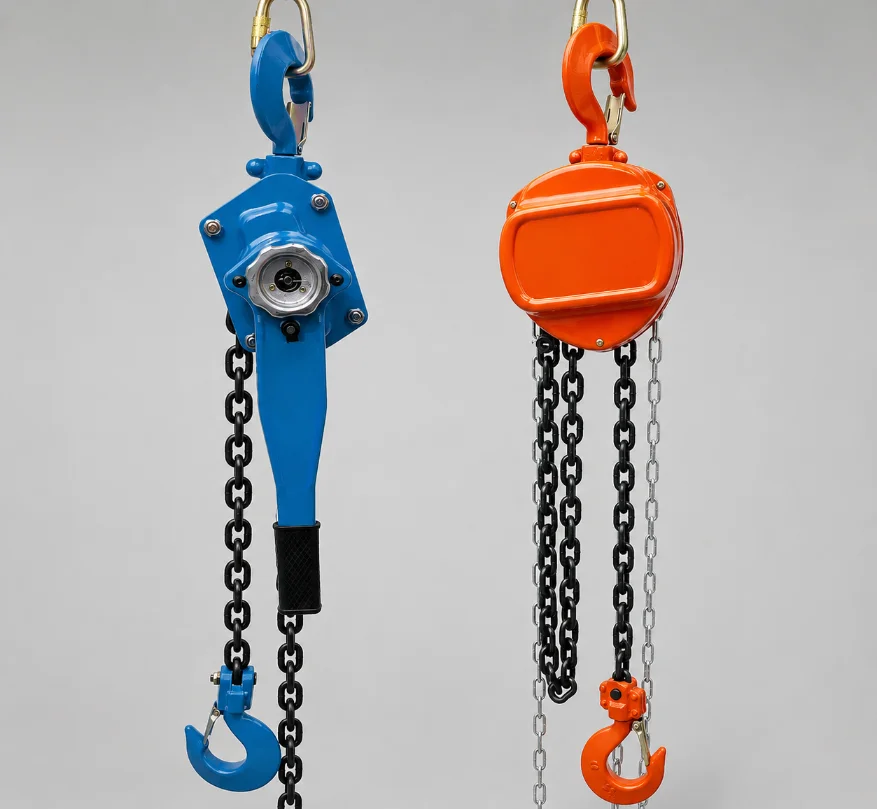
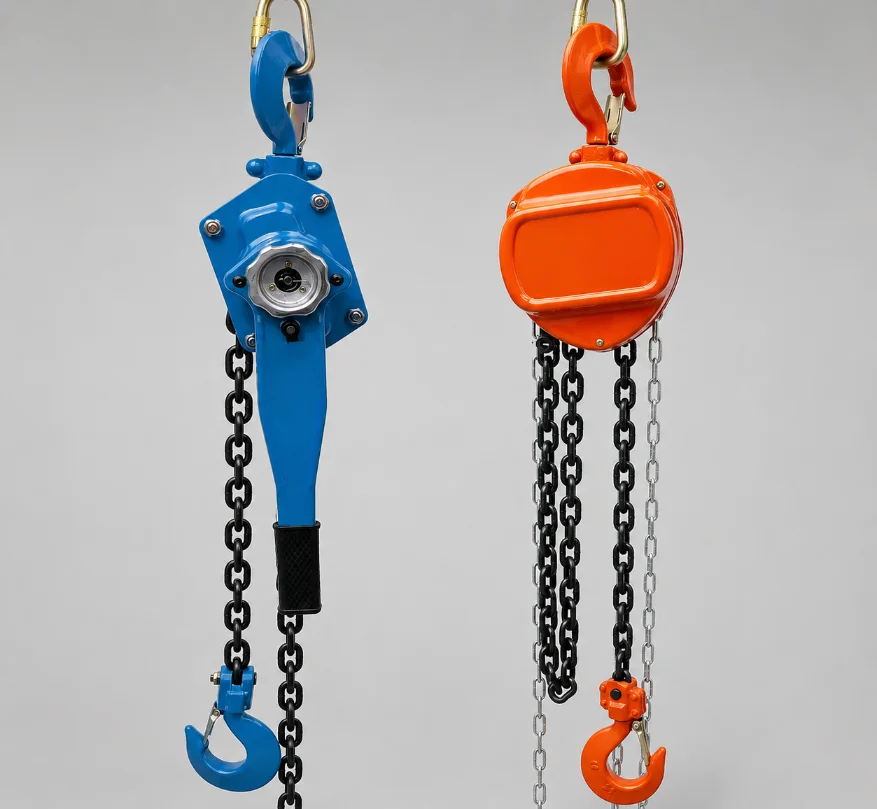
Manual chain hoists and lever hoists are key tools for heavy lifting in industrial and construction settings. They both aim to lift and shift loads in a safe manner. However, their ways of working and best uses vary a lot. A manual chain hoist usually handles steady vertical lifts from a steady spot. On the other hand, a lever hoist fits better for dragging, tightening, or placing loads at different angles.
In places like factories, warehouses, workshops, and repair groups, picking the correct hoist type can boost safety, speed, and value over time. Apollo offers both manual chain hoists and lever hoists made to meet various heavy lifting demands.
Understanding Manual Chain Hoists and Lever Hoists
What Is a Manual Chain Hoist?
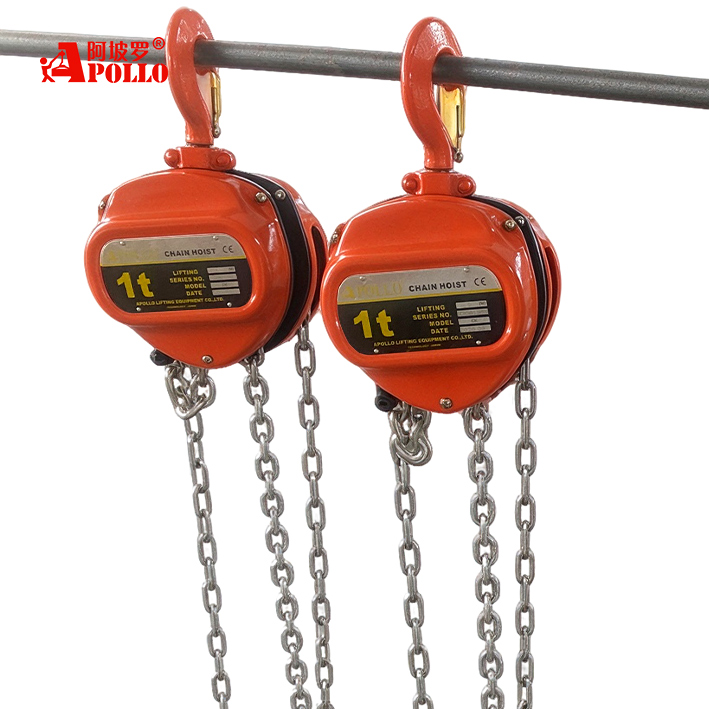
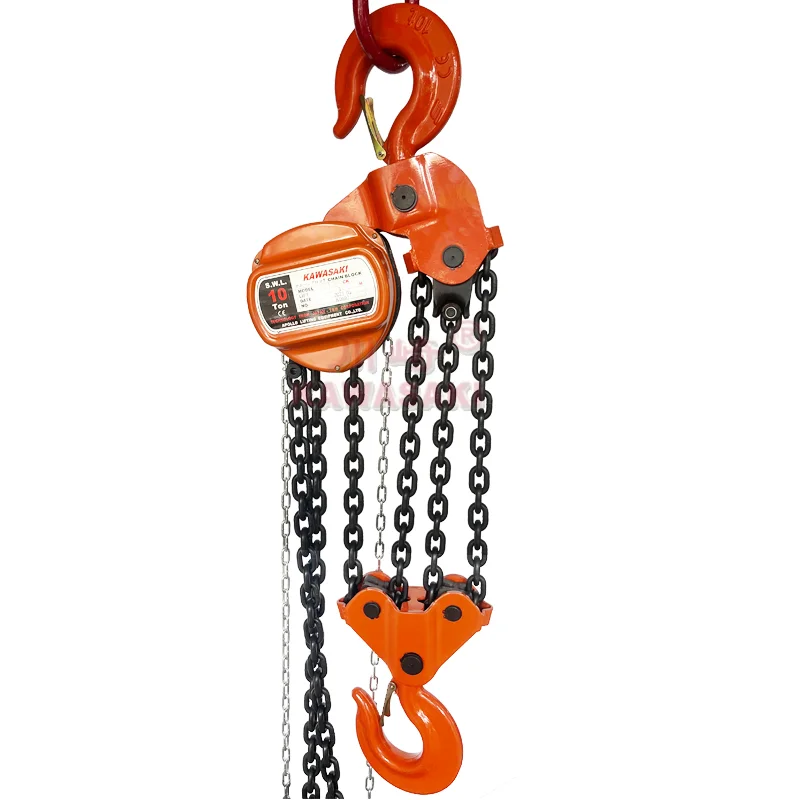
A manual chain hoist relies on a hand chain setup to raise loads straight up. It often gets attached to an overhead beam or trolley system. The operator pulls the hand chain to rotate gears inside the housing that multiply force and lift the load smoothly. This makes it ideal for applications where precision vertical movement is required—assembly lines, equipment repair stations, or fixed lifting points in factories.
KAWASAKI MANUAL HOIST CHAIN HOIST CK provides brand customization (OEM), appearance color and logo customization options with material customization including chain T80 T100, copper alloy, stainless steel and aluminum alloy. These features make such manual chain hoists adaptable to various industrial setups.
What Is a Lever Hoist?
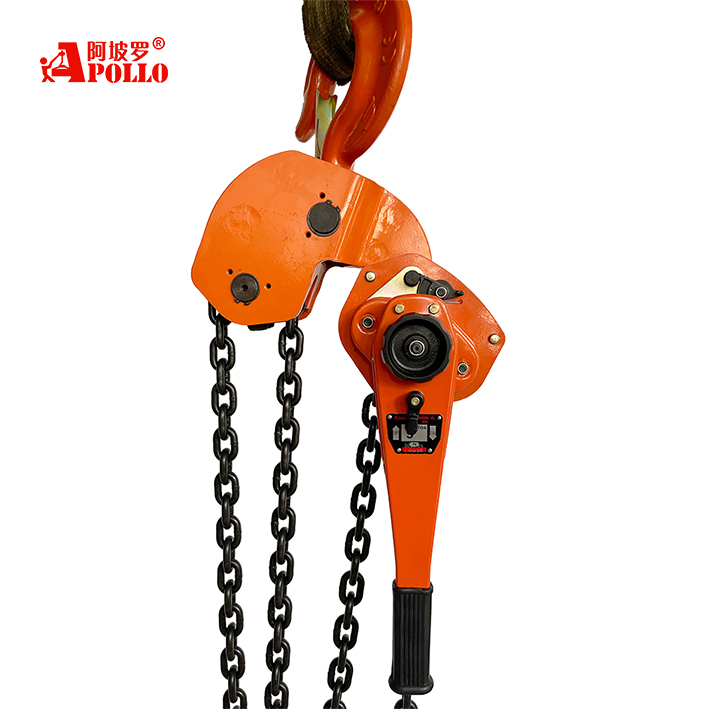
A lever hoist works with a ratcheting handle setup rather than a hand chain. Operators crank the handle forward and back. This lets them raise or drag loads up, across, or at angles with good control. Lever hoists are especially useful in rigging work or tight spaces where there’s limited overhead clearance.
Wire rope hand hoists and lever-operated tools are designed with sealed gearboxes to prevent foreign matter entering the mechanism. This design feature highlights their durability in outdoor or dusty environments.
Why the Difference Matters
Even though both fall under manual lifting gear groups, their basic ways of working differ. One depends on steady chain tugging. The other uses step-by-step handle pulls. Understanding this difference prevents mismatched purchases that could compromise efficiency or safety during heavy lifting operations.
Manual Chain Hoist vs Lever Hoist: Core Differences
| Feature | Manual Chain Hoist | Lever Hoist |
| Operation Method | Uses a hand-pulled chain for vertical lifts | Uses a ratcheting lever handle for pulling or tensioning |
| Lifting Direction | Primarily vertical | Vertical, horizontal, angled |
| Load Capacity | Handles heavier loads over longer distances | Ideal for moderate loads and precise adjustments |
| Portability | Requires overhead support structure | Compact and portable for fieldwork |
Manual chain hoists stand out for reliable vertical raises. For instance, they lift engines or machine parts in workshops. Meanwhile, lever hoists do well at tweaking building parts during setup or pulling cables over rough ground.
Application Comparison: Which Hoist Fits Different Heavy-Duty Jobs?
Factory and Workshop Lifting
Factories often use fixed lift spots above assembly lines. In those cases, manual chain hoists give steady results with less tiredness for the worker. Repair teams can count on them for repeated use. They don’t need to worry much about moving them around.
Lever hoists help when shifts in position are key. For example, they adjust machine frames during checks.
Construction and Fieldwork
Building sites seldom have lasting overhead aids. Here, lever hoists turn essential because of their small size and range in angled drag work. Such tasks include lining up beams or securing cable lines on scaffold frames.
Machinery Installation and Maintenance
In machine setup projects, both up lifts and side shifts may be needed. So, using both kinds of gear can be the best choice. Manual chain hoists manage the main raises. Then, lever hoists aid in the last tweaks.
Confined-Space Operations
In tight spots like ship rooms or underground paths, where space above the head is short, a lever hoist’s brief handle move offers better grip. Workers get more say without big room to move.
How to Choose Between a Manual Chain Hoist and a Lever Hoist
When picking between these two heavy-lift tools:
- Lifting Direction: Pick manual chain types for direct up-and-down action. Go for lever types if angled drags or tightening happen often.
- Load Weight & Height: For bigger weights over far reaches—for example, 10 tons across a few meters—a manual chain setup gives stronger edge in effort.
- Mobility: If jobs move to new sites each week, ease of carry matters a lot. In that case, the lever type comes out ahead.
- Frequency: For repeated up lifts, like in warehouse loading, select manual. For now-and-then setup changes, like in rigging, choose lever.
Safety and Maintenance Comparison
Both tools call for close attention to their set load limits. Going over those limits risks breakdown in the machine. It also puts nearby staff in harm’s way.
Load Capacity Safety
Always stay under the rated limit. Even tiny extras can bend hooks or harm stop systems.
Load Alignment Safety
Manual types need to run in a straight up line to avoid side pull on chains. Lever types handle more bend in paths. Still, they demand firm tie-down spots before starting.
Inspection Before Use
Check these items:
- Chains
- Hooks
- Safety latches
- Brakes
- Gear motion
Any signs of rust or bends mean parts need quick swap-out.
Maintenance Requirements
Add oil now and then. Keep storage neat. Do regular tests with loads in safe setups. Kawasaki brand lifting machinery goes through tough checks before shipping from the plant. Following such close check habits is wise for all brands seeking ISO9001-style dependability.
Cost Efficiency and Long-Term Value Comparison
Starting costs change based on load ratings. But in general:
- Manual types run cheaper at first. Yet they need set-up frames that stay in place.
- Lever types cost a bit more each. However, they cut down on prep time at various spots.
Choosing correctly minimizes downtime caused by unsuitable equipment while improving overall operational safety metrics—a key factor in industrial ROI calculations.
Why Apollo Supports Reliable Heavy-Duty Lifting
Apollo’s product line covers both manual chain hoists for firm vertical work and lever types built for bendy pull angles at work sites. These options fit factories, building areas, workshops, mines, shipyards. They even suit field repair jobs that call for movable heavy-lift power.
The company started in 1986 in Kaohsiung, Taiwan. It set up an R&D department in Osaka Japan in 2001. This history points to Apollo’s drive to mix Taiwanese build skill with Japanese design smarts. That blend leads to safer lift tools around the globe.
By aiding clients to pair load needs with site setups—capacity from 1T up to 20T—Apollo makes sure each buy aids output aims. It does so without cutting corners on staff safety rules.
Conclusion
Both manual chain hoists and lever hoists serve vital roles in modern industry but do best under different conditions. The former suits stable vertical tasks from fixed points. The latter shines where flexibility matters most—angled pulls or confined-space work. Buyers should compare load capacity, lifting height, working direction, operating frequency, and job site conditions before making a decision.
Apollo provides reliable manual chain hoist and lever hoist solutions for different industrial applications. Contact Apollo to choose the right hoist for safer and more efficient heavy-duty lifting.
FAQs
Q1: What is the main difference between a manual chain hoist and a lever hoist?
A: A manual chain model handles primarily vertical lifts using hand chains; a lever version uses a ratcheting handle suitable for pulling or positioning loads horizontally or at angles.
Q2: Which type works best for heavy-duty vertical lifting?
A: The manual chain type performs better because it offers steady control from fixed overhead points during repetitive heavy-lift cycles common in factories or warehouses.
Q3: Can a lever model replace a manual one entirely?
A: Not always—it depends on job requirements. A lever version excels at tensioning cables or aligning components but isn’t ideal for continuous high-capacity vertical lifts.
Q4: Which one is easier to carry between different work locations?
A: The compact design of the lever type makes it easier to transport across job sites compared with heavier stationary setups used by manual models.
Q5: How should buyers decide which tool fits their operation best?
A: Evaluate direction (vertical vs angled), weight range per task cycle, available mounting space, frequency of use per shift—and consult experts like Apollo who specialize in matching equipment specifications with real-world site demands.