The choice most teams make by habit
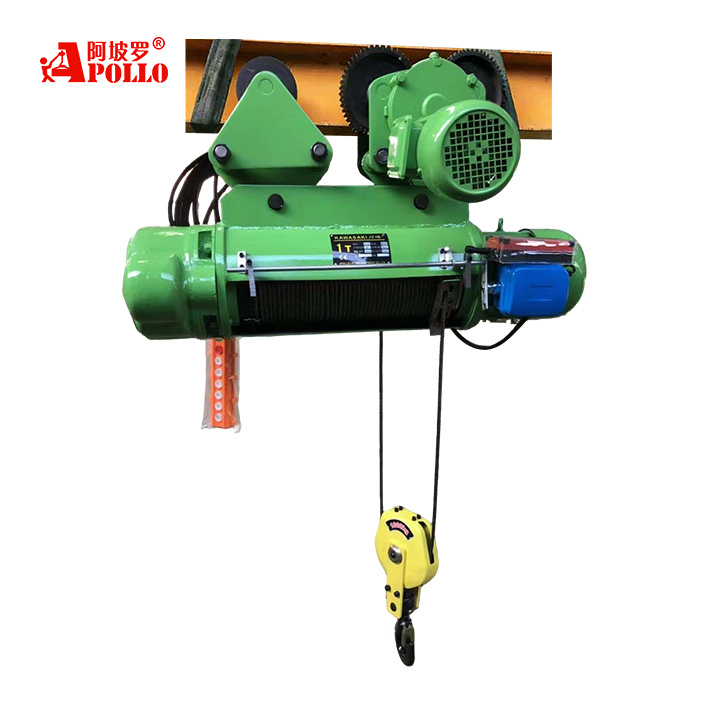
Take a workshop that has to lift a 500 kg pump housing off a bench, turn it, and land it within a few millimetres of the mounting face. The chain hoist on that beam has been there eleven years, so that is what gets ordered again. The new unit runs at one fixed speed and overshoots the mounting face on the first lift. Over in the next bay, a small wire rope hoist finishes the same job in one pass — it can creep the last 20 mm on low speed.
Nobody in that story picked the wrong tool on purpose. The chain hoist got the order because it was familiar, and familiarity is usually a fair reason to buy. It only turns into a bad reason when the job changes and the tool stays the same.
This kind of decision usually gets settled late, and it comes down to four things:
- The team has only ever bought one type— the other option never even gets compared on paper.
- Duty cycle is never written down, and a hoist meant for occasional lifts ends up running a full shift.
- The load has to land precisely, but the quotation lists a single lifting speed in metres per minute.
- Nobody knows the replacement rulesfor rope or chain, so wear gets judged by eye until an inspection finally flags it.
This guide is aimed at workshop supervisors, maintenance planners, plant buyers, and distributors who spec lifting gear for light loads. It puts the two mechanisms side by side, walks through the numbers that actually decide the choice, and is clear about where a small wire rope electric hoist wins over a chain hoist — and where it does not.
Need a second opinion on the load? Send the load weight, lifting height, and lifts per shift to sales@apollohoist.com and get a matched hoist recommendation within one business day.
How each mechanism moves a load
Inside a chain hoist
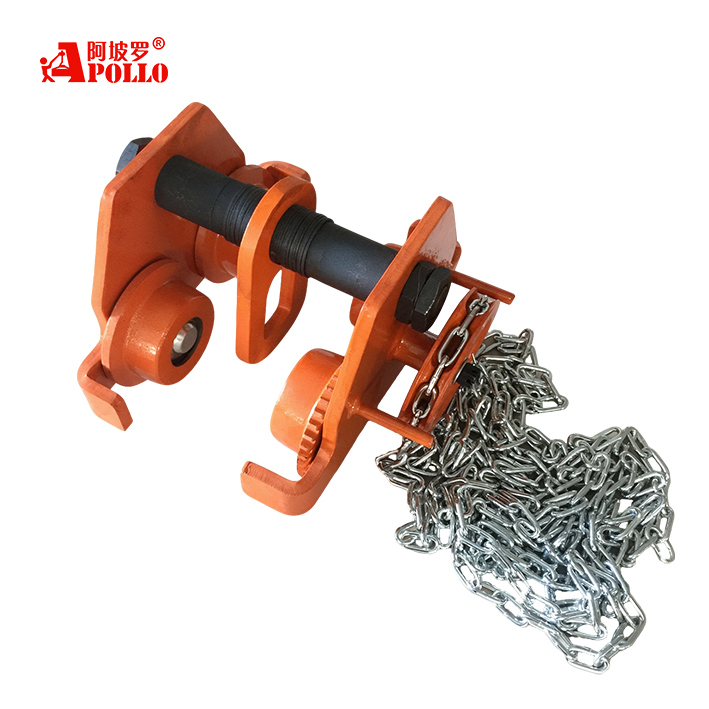
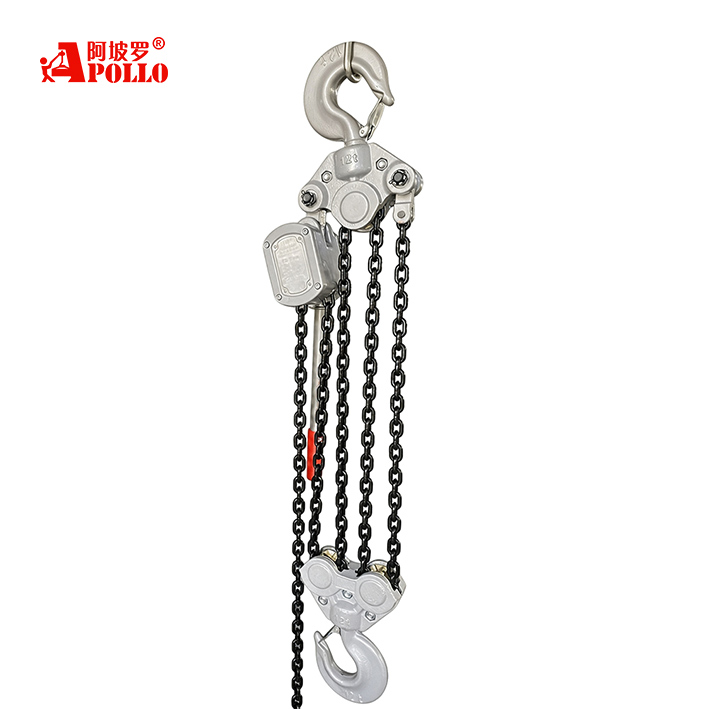
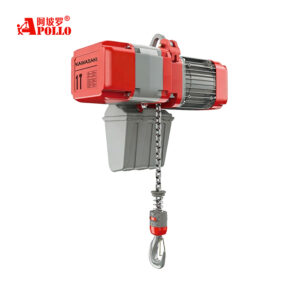
A chain hoist pulls the load chain over a toothed sheave, and each link seats in a pocket, so the load is carried link by link. It is a simple mechanism: it puts up with dust and rough handling, and a worn chain can usually be swapped on site with hand tools. The downsides are just as real — the chain is heavier than a rope of the same strength, and every link is a joint that wears against the links beside it. As a rough rule, a load chain is due for replacement once it has stretched by about 5 percent of its original length, or when 11 links now span what 10 links spanned when it was new.
Inside a wire rope hoist
A wire rope hoist winds a steel rope onto a grooved drum. Because the rope bends over the drum and sheave instead of seating link by link, the same lifting capacity takes up less weight and less space in the body. That is usually why a wire rope hoist is the lighter option for a given light load, and why one person can hang a compact unit on a beam. The catch is that rope does not forgive rough treatment: sharp edges, kinks, and corrosion all cut into its strength, and when a rope goes it is replaced as a complete assembly, not link by link.
| What you compare | Chain hoist | Wire rope hoist |
| Weight for the same load | Heavier body and chain | Lighter body and drum |
| Speed control | Usually one fixed speed | Variable speed is common with an inverter motor |
| Precise positioning | Needs jogging or a second tool | Low speed creeps the load into place |
| Wear parts | Load chain, hooks, brake | Wire rope, drum grooves, brake |
| Suits best | Rough sites, occasional lifts | Light loads, frequent lifts, tight headroom |
Which job belongs to which hoist
Duty: how hard the hoist works in a shift
Duty cycle just means how much of the working hour the hoist actually spends moving a load. A hoist that runs for 6 minutes out of every 30 is working at 20 percent duty. A manual chain hoist has no real duty limit beyond the operator’s arm, because the person sets the pace. An electric hoist has a hard limit set by the motor, the brake, and the gearing. If you are running continuous lifts all shift, a light-duty electric hoist will overheat and slow down — the honest fix is a chain hoist or a heavier-rated electric unit.
Speed and positioning
An inverter motor sets its speed electronically rather than being locked to the mains supply. In plain terms, the hoist runs slow or fast on demand, with no extra control box. That matters when a load has to stop within a few millimetres. With a fixed-speed hoist you move at one rate, so hitting the mark comes down to timing and luck. Two speeds, or stepless control, turn that final 20 mm into a controlled movement.
Headroom and hook approach
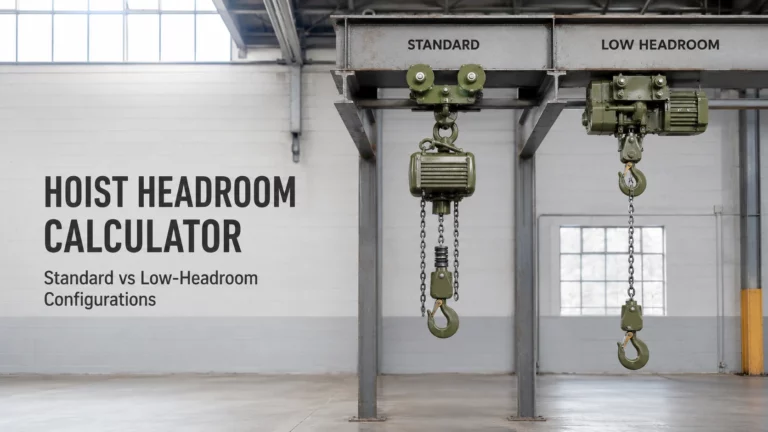
Headroom is the vertical gap between the beam and the highest point the load has to reach. Hook approach is how close the hook pulls in to the body of the hoist. Together, those two numbers decide whether a hoist physically fits a bay. A compact wire rope hoist with a short body and a tight hook approach can work in a bay where a taller chain hoist body hits the beam first.
Environment: dust, moisture, and heat
Foundries, wash bays, and outdoor yards treat rope harder than chain. Chain shrugs off grit and light knocks and wipes down easily. Rope needs protection from sharp edges and standing moisture, and a rope running over a rusty drum groove wears faster than the same rope on a clean one. Match the mechanism to the environment first, then to the price list.
Maintenance reality
Both mechanisms need a short routine, and the routines differ. On a chain hoist you measure the chain, lubricate it, and check the brakes. On a wire rope hoist you inspect the rope along its full length, test the limit switches, and check the drum and sheave. Either way, write the replacement interval into the maintenance schedule on day one — do not leave it to be discovered the day a load has to move.
For sites with no power and for occasional heavy lifts, manual chain hoists (https://www.apollohoist.com/product-category/manual-hoist/chain-hoist/) are still the right call. The range runs from 0.5 tonnes up to 20 tonnes for exactly that reason.
Apollo small wire rope hoists: what changes under 750 kg
Apollo makes a small wire rope electric hoist for the load band most workshops actually work in — 100 kg to 750 kg. Four design points matter there.
- A body weight of 16 kg to 24 kg— light enough that one technician can hang it on a beam without a lifting frame or a second pair of hands.
- Variable speed from an inverter motor— 5 to 12 metres per minute on the low range, 14 to 34 on the high, so that last 20 mm of a lift is a controlled movement instead of a guess.
- Single rope or double rope operation— run the rope double and the same unit gains about 85 percent capacity, so one stock item covers a wider spread of jobs.
- Dual braking with a full protection set— an electric brake for normal stops, a mechanical brake that holds the load if power drops out, and overload, overheat, limit, and anti-reverse protection as standard.
The control pendant runs at a safe 4 volt control voltage, which cuts the electrical exposure at the operator’s hand. Ropes run from 5 mm to 8 mm, with standard lifting heights of 20 m, 29 m, and 49 m. Standard supply is 220 volts; every unit ships with CE documentation and a one-year warranty, and the pendant comes as a two-button cable control, a cable control with a remote, or a wireless remote. Body weights and rope options for the compact range are listed on the mini wire rope hoist category page (https://www.apollohoist.com/product-category/electric-hoist/electric-wire-rope-hoist-mini/).
A straight answer on load margin
The most expensive mistake here is picking a capacity to match the load by eye. Add up everything the hoist actually carries — the load, the spreader bar or lifting beam, the slings, and any attachment — before you size it.
The maths is simple once the parts are listed. Say the heaviest part is 480 kg, the spreader bar adds 40 kg, and the slings add 20 kg — the hoist carries 480 + 40 + 20 = 540 kg on the first lift of the day. A 600 kg unit handles that with about 11 percent spare, which is thin if the load is not perfectly balanced. A 750 kg unit gives about 39 percent spare, and that is the difference between a lift nobody thinks twice about and one everybody argues about.
Two more checks belong in the same conversation. First, treat the rated figure as a ceiling for an evenly balanced load, not a target for every lift. Second, watch the height: the lifting height on a datasheet is measured from the lowest hook position to the highest, so a hoist mounted high on a beam uses part of that travel just reaching the floor. The usable lifting height ends up smaller than the spec suggests.
Not sure of the sizing? Send the load weight, the spreader bar and sling weights, and the lifting height to sales@apollohoist.com, and get a capacity confirmation within one business day.
What a supplier adds beyond the datasheet
Every supplier publishes a capacity and a speed. A supplier worth dealing with will also publish — or answer when asked — the three things that decide whether the unit is still working in year five.
Before you order from any heavy duty lifting equipment manufacturer, ask three questions: which rope diameter and construction is fitted and where the rope comes from; whether the brake set is electric, mechanical, or both; and exactly what the protection set covers. The answers are what separate a hoist you can repair easily from one you end up replacing early.
Apollo has built lifting equipment for more than 20 years, exports to over 50 countries, and holds ISO9001, CE, and GS. The small wire rope electric hoist is made in Apollo’s own factory, ships with CE documentation on every unit, and carries a one-year warranty. For a distributor, that adds up to one source for the hoist, the spare rope, and the paperwork a customer’s safety team will ask for.
Living with the hoist: the checks that keep it working
A wire rope hoist is low-maintenance, but low-maintenance is not the same as no-maintenance. The routine is short enough to fold into a weekly schedule:
- Look at the rope before every shift— broken wires, kinks, flat spots, and corrosion are the four things that take a rope out of service.
- Test the upper limit switchonce a week — run an empty hook up to the stop on low speed.
- Check brake holdingwith a rated test load before a heavy job, so a holding question gets answered on the bench instead of over a machine.
- Inspect the hook latchand make sure it closes fully under its own spring pressure.
- Check the pendant cable and controls, and check that the hook returns when a button is released.
- Record every check— a written history turns a wear question into a planned replacement.
The same discipline applies to a chain hoist, with two numbers to watch: measure the chain at the start and compare the same section later, and replace it at about 5 percent stretch. If your crew runs both mechanisms, keep a separate inspection sheet for each — that is what an auditor asks for and what a supervisor reaches for the day a load has to move.
The wider Apollo electric hoist range — chain hoists and European-style wire rope units included — is on the electric hoist category page (https://www.apollohoist.com/product-category/electric-hoist/).
How to buy from Apollo: choose your channel
Plant, workshop, and project procurement
Get a free load assessment: send the load weight, lifting height, headroom, and the number of lifts a shift will see. Within one business day you get a matched hoist recommendation, a formal quotation, and the CE documents and warranty terms in writing.
Distributors and dealers
The compact wire rope range runs 100 kg to 750 kg, with body weights of 16 kg to 24 kg and small carton sizes — a good fit for dealers who ship by parcel carrier rather than pallet. Pair it with Apollo chain hoists and lever hoists in one order, and the customer keeps a single documentation set.
OEM and private label
Custom branding, packaging, and documentation are all produced at the Apollo factory, built to the compliance requirements of your market.
Request EN certificate samples now
- Get a free load assessment via WhatsApp / Phone: +86 18989488615
- Request EN certificate samples by email: sales@apollohoist.com
- Submit an online inquiry: https://www.apollohoist.com/contact-us/
- Browse the full product range: https://www.apollohoist.com