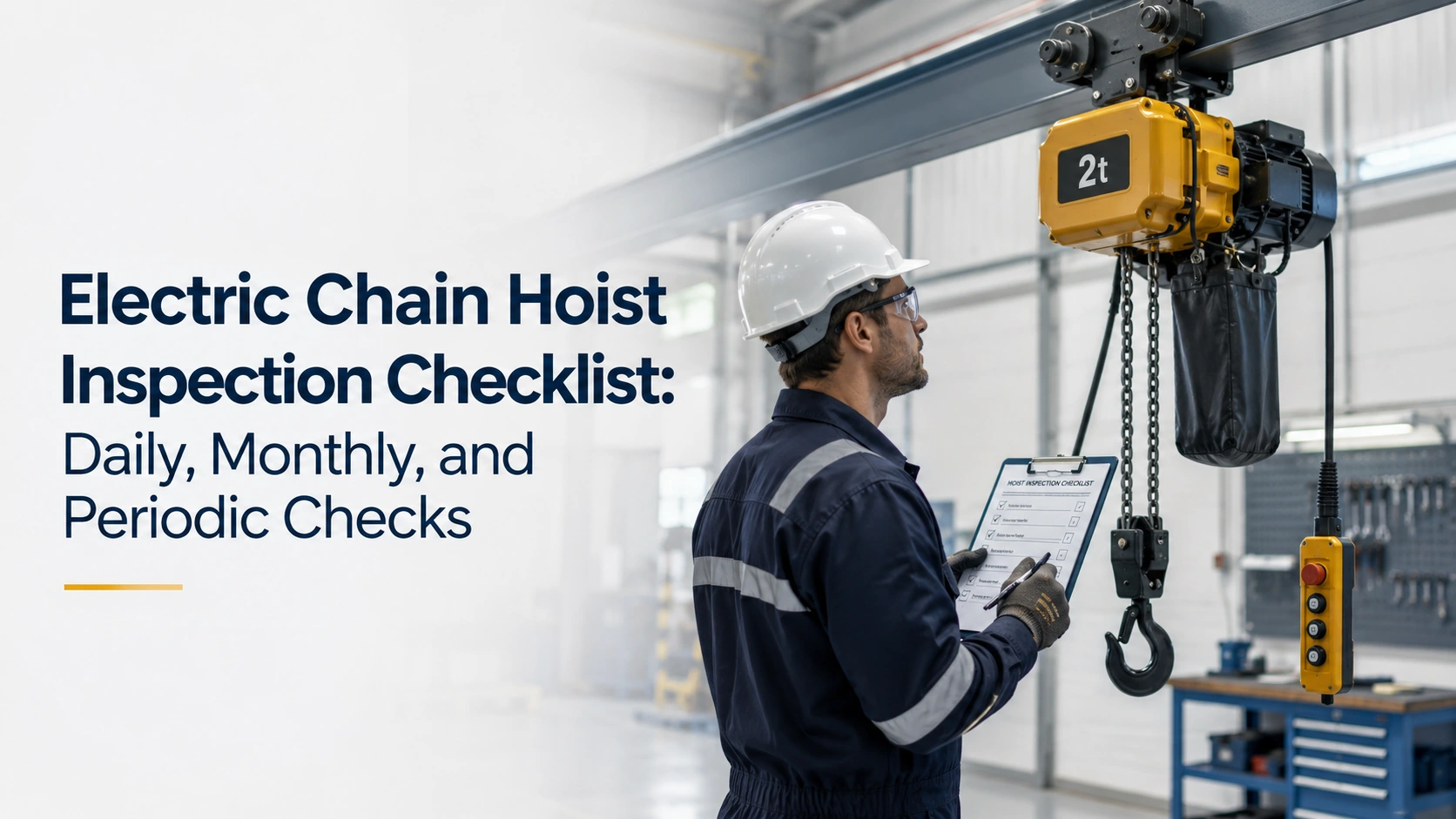
An electric chain hoist inspection checklist should define more than the parts to examine. It should establish when each check occurs, who performs it, what defects require removal from service, and how corrective action is recorded. In U.S. terminology, OSHA classifies frequent inspections at daily-to-monthly intervals and periodic inspections at one-to-twelve-month intervals where its overhead-crane rule applies. The final schedule should also reflect the manufacturer’s instructions, operating intensity, environment, and inspection history. ASME B30.16 covers the construction, operation, inspection, testing, and maintenance of electric-powered chain hoists.
How Often Should an Electric Chain Hoist Be Inspected?
Daily, Frequent, Monthly, and Periodic Checks
A pre-shift inspection is a short visual and functional review intended to identify conditions that could affect the next lift, such as a twisted chain, damaged hook, unreliable pendant, or brake that does not hold.
“Frequent” is an inspection classification, not another fixed calendar event. OSHA 1910.179 defines frequent intervals as daily to monthly and periodic intervals as one to twelve months. Where applicable, hooks and hoist chains receive daily visual checks and monthly certified inspection records.
| Inspection level | Typical timing | Main purpose | Typical responsibility |
|---|---|---|---|
| Pre-shift | Before use or each shift | Find visible or functional hazards | Trained operator |
| Frequent | Daily to monthly | Monitor operating condition and wear | Designated personnel |
| Monthly documented | Monthly where required | Record hook, chain, and key-system condition | Designated or qualified person |
| Periodic | Based on service conditions | Detailed mechanical, structural, and electrical review | Qualified inspector |
How Service Severity Changes the Schedule
A clean indoor hoist used occasionally does not experience the same deterioration as a unit operating near rated load across several shifts. High cycle counts, frequent jogging, shock loading, heat, abrasive dust, moisture, corrosive chemicals, and outdoor exposure may justify shorter intervals.
Repeated brake adjustment, accelerated chain wear, loose connections, or recurring control faults may indicate that the schedule is too long. Record the application, operating frequency, environment, and known overload or impact events as the inspection baseline. OSHA also states that periodic inspection intervals depend on equipment activity, service severity, and environment.
Daily or Pre-Shift Electric Chain Hoist Inspection Checklist
Visual Checks Before Energizing the Hoist
Do not energize a hoist carrying an out-of-service tag or an unresolved defect record. Confirm that identification and rated-capacity markings are readable and that the planned load is within the stated capacity.
Inspect the suspension, trolley or mounting point, housing, visible fasteners, chain container, pendant, and control cable. The chain should enter the guide correctly without knots, twists, obvious distortion, heavy corrosion, or foreign material that affects movement. Examine the upper and lower hooks for cracking, twisting, abnormal throat opening, load-point wear, and a latch that does not close.
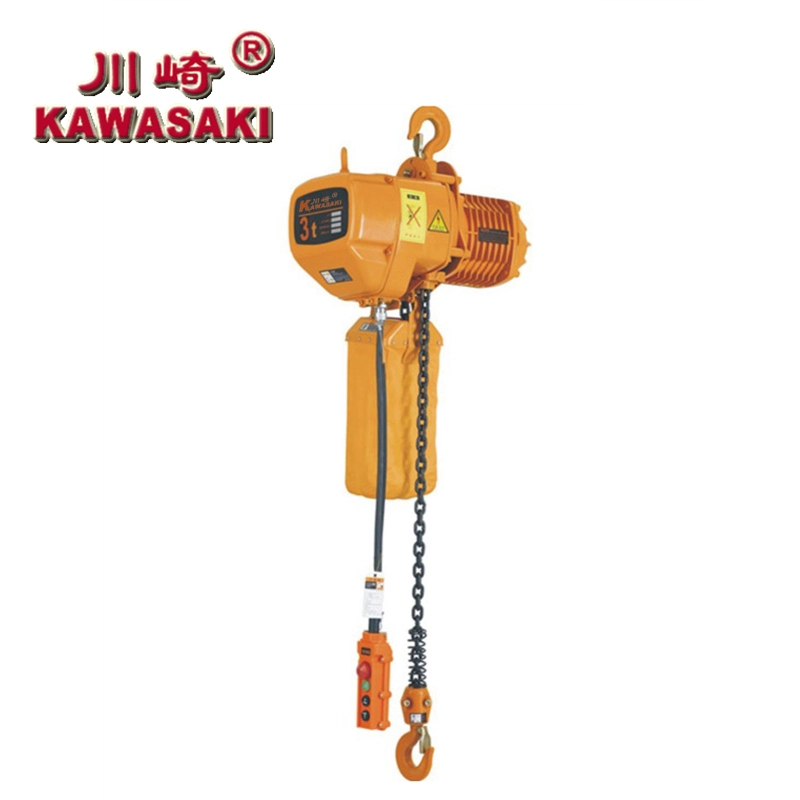
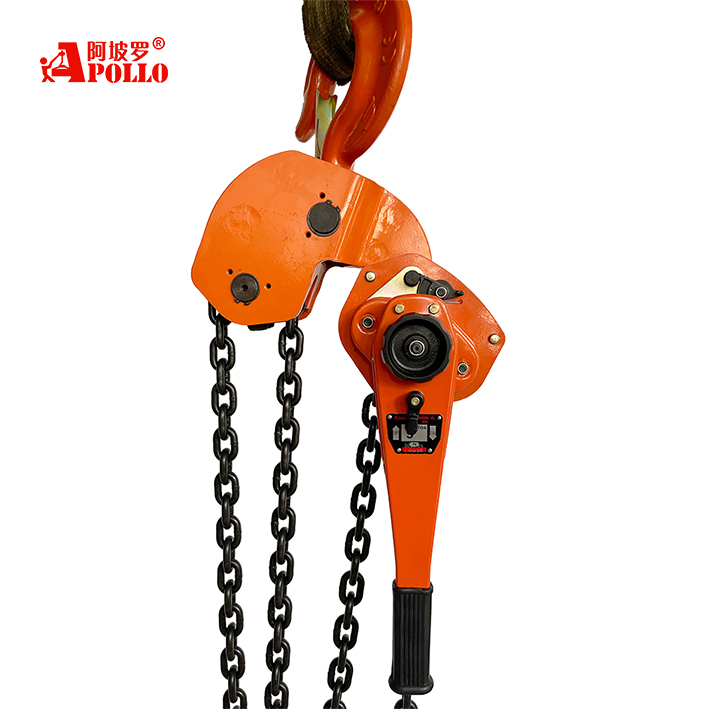
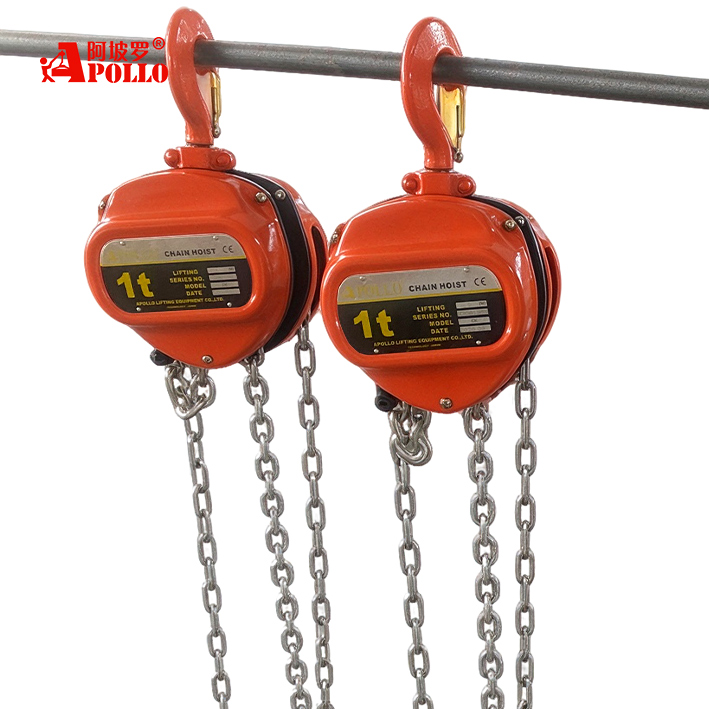
The KKBB electric chain hoist page identifies inspection-relevant systems including dual braking, a limit device, pendant controls, hooks, and a load chain. The exact arrangement and acceptance criteria should be checked against the supplied model and manual.
No-Load Functional Checks Before the First Lift
Run the hook through a short, controlled no-load movement. Controls should produce the indicated direction and stop motion when released. Listen for grinding, clicking, intermittent operation, or abnormal vibration, and watch for chain jumping or binding.
Check that the brake stops motion and holds the hook without drift. Remove the hoist from service if it continues moving, lowers unexpectedly, or responds inconsistently. Test upper and lower limit functions according to the manufacturer’s procedure; a limit device is protective equipment, not the normal stopping method. If the unit has a powered trolley, also check travel direction, stopping, cable condition, and unusual wheel or gearbox noise.
Monthly Electric Chain Hoist Inspection Checklist
Load Chain, Hook, Latch, and Chain Guide Inspection
A monthly check should examine more of the chain than is visible during a pre-shift review. Clean it as specified, then look for wear, stretch, distortion, corrosion, gouges, cracks, and weld-area damage. Inspect end connections, the guide, load-sheave interaction, and chain container.
Visual judgment may not be enough. If wear or deformation is suspected, use the manufacturer’s measuring method and limits for the exact chain size and model. OSHA’s cited provision directs inspectors to identify excessive wear, twist, distorted links, and stretch beyond the manufacturer’s recommendations.
Inspect the hook body, load point, neck, swivel area, and latch. Do not weld, heat, straighten, or field-repair a load chain or hook unless an authorized procedure specifically permits it. Isolate the equipment and obtain a qualified assessment when the condition is uncertain.
Brake, Limit Switch, Pendant, and Control Checks
Document whether the brake stops and holds correctly, whether stopping performance has changed, and whether abnormal noise, heat, or drift is present. Internal brake adjustment or disassembly belongs to authorized maintenance personnel.
Inspect limit devices, emergency-stop functions where fitted, pendant buttons, cable strain relief, enclosures, and visible wiring. Cracked housings, unreliable switching, damaged insulation, or exposed conductors require correction before further use. De-energize and isolate the hoist before examining internal electrical parts.
What Is Included in a Periodic Electric Chain Hoist Inspection?
Structural, Mechanical, and Electrical Components
Periodic inspection covers parts that cannot be fully assessed during routine operation: suspension hardware, trolley connections, frames, housings, fasteners, pins, shafts, bearings, gears, sprockets, guides, brakes, and locking devices. Check for cracking, deformation, corrosion, looseness, overheating, contamination, and wear.
OSHA’s periodic list includes deformed or corroded members, loose fasteners, worn pins, bearings, shafts, gears, rollers, brake-system parts, chain-drive sprockets, excessive chain stretch, and deterioration of contactors, limit switches, and push-button stations. The required depth depends on activity, service severity, environment, and whether a defect can be detected visually.
Qualified personnel should also examine contactors, wiring, terminals, grounding, insulation, cable entries, and signs of heat or moisture damage. A condition that cannot be confirmed without opening the enclosure should be recorded and escalated rather than marked “pass.”
Idle, Repaired, or Modified Hoists
Idle, repaired, or modified equipment requires a return-to-service decision. The scope depends on the inactive period, storage environment, component replaced, and applicable rule and manufacturer procedure. Replacement of a chain, hook, brake, control, or suspension component should be traceable in the maintenance record.
Additional operational or load testing may be required after certain repairs or alterations, but that decision belongs to the applicable standard, manufacturer instructions, and qualified personnel. A general inspection article should not substitute a fixed test load or procedure for model-specific requirements.
When Should an Electric Chain Hoist Be Removed From Service?
Immediate stop-use conditions include a brake that does not hold, a cracked or visibly deformed load-bearing part, a severely damaged or twisted chain, unreliable controls, exposed conductors, failed limit protection, or unexplained operation that may affect load control. Tag and isolate the equipment so another operator cannot use it.
Other findings may be monitored only after a qualified person determines that they do not create a hazard.
Repair-versus-replacement decisions should consider defect severity, repeated failures, parts availability, documentation, downtime, repair history, and whether the existing unit still matches the application. When replacement is appropriate, compare the electric chain hoist range using the original capacity, lift height, voltage, suspension, trolley arrangement, duty, controls, headroom, and environment—not capacity alone.
How to Create an Electric Chain Hoist Inspection Record
A useful record connects the inspection to a specific asset and closes the corrective-action loop. Include the asset ID, manufacturer, model, serial number, rated load, location, inspection type, date, inspector, findings, measurements, photographs, pass/fail result, corrective action, repairs, reinspection, approval, and next due date.
Where OSHA 1910.179 applies, monthly hook and hoist-chain certification records identify the inspection date, inspector, and inspected component. Electronic records may support traceability when they clearly identify the responsible person and asset.
What Buyers Should Check When Selecting a Serviceable Electric Chain Hoist
A serviceable hoist is not simply one that can lift the rated load. Buyers should confirm that inspection points are accessible, identification remains readable, and model-specific operating, maintenance, and parts information will be supplied. Ask how chains, hooks, brakes, pendant components, and electrical parts are identified, and whether configuration changes are reflected in the documentation.
Hangzhou Apollo Lifting Equipment Co., Ltd. presents multiple chain-hoist series through its industrial lifting equipment manufacturer website. Product and inspection requirements should still be checked against the final quotation, exact model, and supplied documentation.
After an inspection failure, provide the model, serial number, load, lift height, voltage, mounting method, environment, defect photographs, measurements, and repair history. This helps identify a compatible part or replacement.
Conclusion
An effective electric chain hoist inspection program separates quick pre-shift checks from documented monthly work and qualified periodic inspection. It also connects every failed item to isolation, repair, reinspection, and return-to-service approval.
For help identifying a compatible part or replacement configuration, use request an electric chain hoist review and submit the model, serial number, load, lift height, voltage, mounting arrangement, service conditions, defect photographs, measurements, and repair history.
Frequently Asked Questions
How often should an electric chain hoist be inspected?
The interval depends on regulations, manufacturer instructions, service severity, environment, and inspection history. Under OSHA 1910.179 where applicable, frequent inspections range from daily to monthly and periodic inspections from one to twelve months.
Does a daily hoist inspection need a written record?
Company procedures may require one. The cited OSHA provisions specifically require certification records for monthly hook and hoist-chain inspections, and defects or corrective actions should remain traceable.
Who can perform a periodic electric chain hoist inspection?
Periodic inspection should be completed by personnel able to identify defects and judge their effect on safe operation. Internal examination may require additional authorization and lockout procedures.
What defects require immediate removal from service?
Examples include brake failure or load drift, cracked or deformed load-bearing parts, severe chain damage, unreliable controls, exposed conductors, failed limit protection, or unexplained operation affecting control of the load.