Why EN 13157 turns up in a quotation
A maintenance manager asks for a quotation on twenty hand chain hoists. The reply that comes back lists three numbers: capacity, lift height, and price. Nothing else. Two weeks later the same hoists are stopped at the site gate, because the safety officer cannot find a standard reference in the paperwork and the contractor’s inspection procedure is built around EN 13157.
That gap is common, and it is avoidable. Buyers ask for a capacity; sites check for a standard. When the two sides are not using the same words in the first email, the order waits while documents are chased across three inboxes.
Compliance questions tend to arrive late for four reasons:
- The quotation says ‘high quality’and never names the standard the units are built and tested to, so the buyer has nothing to hand to the safety team.
- The datasheet says ‘equivalent to EN 13157’, a phrase an inspector cannot match to any certificate.
- Nobody in the buying team is sure what the standard covers, so the question travels upward and the order sits still.
- No test record is supplied, so the site cannot show that a unit was loaded above its rating before a crew was allowed to use it.
This guide is written for the people who sign off manual lifting equipment: maintenance supervisors, plant buyers, safety officers, and distributors quoting into regulated sites. It explains what EN 13157 covers in plain words, what it does not cover, and how to verify a supplier’s claim in one email.
Get a free load assessment: send the capacity, the lift height, and the standard your site requires to sales@apollohoist.com, and get a matched recommendation with the document list within one business day.
What EN 13157 covers, in plain words
EN 13157 is the European safety standard for hand powered cranes. That is the category manual lifting tools sit in, which is why a hand chain hoist, a lever hoist, and a hand-operated trolley are all judged against the same document.
The standard is written for the machine and not for the lift. It deals with three things a buyer can check:
- Load holding: how the unit keeps a load where it was put, including brake behaviour and what happens when the operator releases the hand chain.
- Structure and components: the strength and testing of the body, the load chain, the hooks, and the load sheave.
- Information for use: the capacity marking, the manual, and the inspection and maintenance instructions that ship with the unit.
Read those three headings again and notice what is missing. EN 13157 says nothing about the beam the hoist hangs from, the anchor point it is fixed to, how often your site inspects it, or how your crew is trained. A compliant hoist hanging from a weak beam is still an unsafe lift. This is not a technicality. It is the most common misunderstanding between a supplier and a site.
The four checks behind every EN 13157 claim
Load holding: what keeps the load up
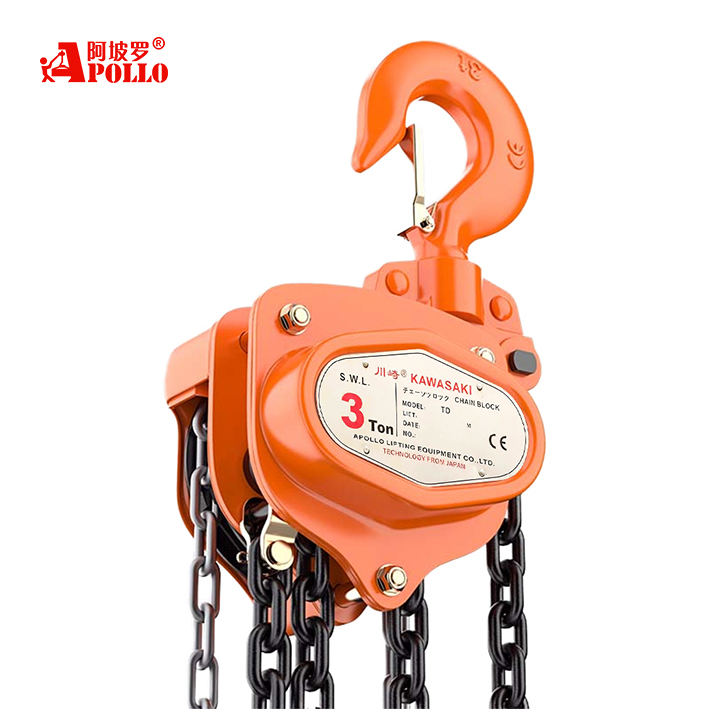
The brake is the part that decides whether a load stays where it was put. In a single-pawl design, one locking element carries the whole holding function. In a double-pawl design, two independent elements share it, so no single component releases the load on its own. Apollo hand chain hoists use a double-pawl brake as standard across the range, from the smallest unit to the largest.
Proof load and fatigue testing
Testing matters as much as design. Each Apollo hand chain hoist is proof loaded before dispatch, and the range is fatigue tested at those loads across 2,000 cycles. In plain terms, every unit is loaded above the weight it is sold to lift, again and again, so the first time it sees a heavy load is not on your site. The range is also built to a 4:1 safety factor, which means the chain and the body are sized to withstand four times the load they are sold to lift.
Structure, chain, and hooks
A manual hoist is a set of parts that has to keep its shape for years. Apollo hand chain hoists use a cast body with an integrated gear housing, so there are no bolted plate joints to work loose. Load plates, gears, and shafts are heat treated to hold their dimensions and tooth profile after thousands of lifts. The load chain is high-tensile alloy steel with calibrated link geometry, and both hooks are forged with steel safety latches that meet the latch requirements of the standard rather than relying on a bent wire.
Documentation and marking
A standard that cannot be shown is worth nothing in an audit. Every Apollo hand chain hoist carries a capacity marking, ships with operating and inspection instructions, and its conformity documentation is available as a sample before you order. Ask for it early: a supplier who can send document samples within a day is usually a supplier who can deliver a crate on time as well.
What compliance does not prove
Every heavy duty lifting equipment manufacturer can show certification documents, and almost all of them will. Compliance is the entry ticket, not the reason to choose one factory over another.
The differences that decide whether a manual hoist is still working in year ten sit in the parts, and none of them appear on a certificate:
- A double-pawl brake, fitted as standard rather than offered as an upgrade.
- A cast body with an integrated gear housing, which removes bolted joints as a source of looseness.
- Forged hooks with real steel safety latches, not bent wire hooks that distort the first time they take a shock load.
- High-tensile load chain in 6 mm to 10 mm diameters, with calibrated link geometry so every link engages the load sheave the same way.
- A gear ratio matched to each capacity, which keeps the pull effort manageable: about 221 newtons at 0.5 tonnes, rising to about 392 newtons at 20 tonnes.
None of those five items can be certified into a product. They are decided in the factory, and they show up in your workshop five years later whether or not you asked about them at the quotation stage.
Five questions that verify a claim in one email
These five questions separate a serious industrial lifting equipment supplier from a trading company with a catalogue:
- Which standard are these units built and tested to, and can you send a certificate sample?A short answer here is the fastest signal you will get all week.
- What proof load is applied to each unit before dispatch, and is it recorded per unit or per batch?Per unit records are what a site inspection file actually needs.
- Is the brake single-pawl or double-pawl?If the supplier cannot answer, the holding design was probably never specified.
- What is the hand-pull effort at rated capacity for the size I am buying?This number decides whether one operator or two will run the job.
- Which documents ship with the crate, and what does the warranty cover?Apollo supplies conformity documents with every order and confirms the warranty terms in writing before the hoists leave the factory.
A hand chain hoist supplier who answers all five in writing will usually survive an audit without drama. A supplier who answers two and deflects on the rest is showing you how the next five years will go.
Why the supplier matters as much as the standard
Apollo is a manual lifting equipment manufacturer that has built lifting equipment for more than 20 years, exports to over 50 countries, and holds ISO9001, CE, and GS. Hand chain hoists are produced in the Apollo factory rather than assembled from bought-in parts, and that matters because the brake and the body are the two parts a buyer can never inspect after delivery. As a material handling equipment supplier, Apollo also builds electric chain hoists, beam trolleys, and hydraulic floor jacks, so a fleet can be standardised with one vendor and one documentation set.
For a purchasing team that adds up to three practical things:
- One documentation set across a 0.5 tonne to 20 tonne range, so an inspection file stays consistent as the fleet grows.
- Factory-direct pricing with OEM and private label support, so a distributor can sell under its own brand without an extra layer of margin.
- One point of contact for spares and warranty, instead of a chain of traders when a single part is needed.
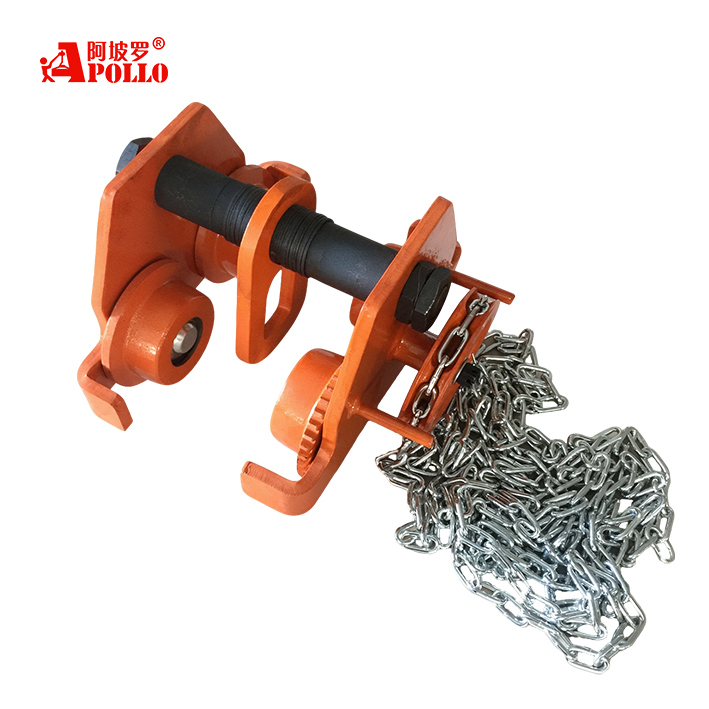
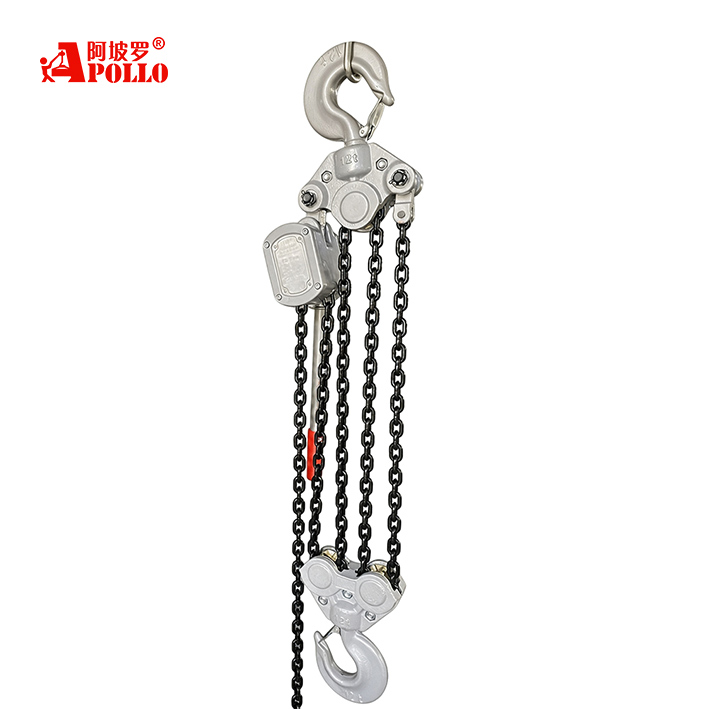
The full range, with capacities, chain sizes, and hand-pull effort figures, is listed on the hand chain hoist category page (https://www.apollohoist.com/product-category/manual-hoist/chain-hoist/). Crews that pull as well as lift usually pair these units with an Apollo lever hoist (https://www.apollohoist.com/product-category/manual-hoist/lever-hoist/) carrying the same documentation, which keeps one inspection procedure for both tools.
Matching the size to the job
Capacity is the first number buyers check and the one most often chosen by habit. Two numbers decide the choice: the load, and the effort.
| Capacity | Hand-pull effort at rated load | Typical job |
| 0.5 t | 221 N | Machine maintenance and light positioning |
| 1 t | 304 N | Workshop lifting and fixture handling |
| 3 t | 343 N | Assembly work and machine repair |
| 5 t | 382 N | Heavy components and die changes |
| 20 t | 392 N | Shipyard and heavy fabrication work |
Use the middle column as an ergonomic test. As a planning rule, assume an operator can hold a steady pull of about 200 newtons in a comfortable standing posture. If the heaviest lift on your schedule needs 380 newtons, plan for two operators, a slower and longer stroke, or a larger unit working below its rating. Choosing capacity this way costs far less than discovering the problem with a crew standing under a load.
Get a free load assessment: send the load weights, the lift height, and the headroom above the beam through the inquiry page, and Apollo’s engineers will confirm the size and the rigging method within one business day, at no cost.
When a manual hoist is the wrong answer
Honest advice saves more money than a bigger catalogue. A hand chain hoist is the wrong tool in three situations. If the lift runs for hours at a time, an electric hoist pays for itself in crew time. If the load has to move sideways or at an angle rather than straight up, a lever hoist is the right tool. If the load is above 20 tonnes, or the beam cannot take the point load, the answer is a different lifting system altogether.
None of those cases are arguments against manual lifting. They are the reason a supplier should ask about the job before quoting a capacity, and the reason a site should keep manual and powered options on the same approved supplier list.
For the jobs where there is no power at all, see how Apollo hand chain hoists work in no-power zones (https://www.apollohoist.com/product-news/manual-lifting-without-power-how-apollo-hand-chain-hoists-work-apollo-lifting-equipment-manufacturer/).
How to buy from Apollo: choose your channel
Plant, shutdown, and project procurement
Get a free load assessment: send the load, the lift height, the headroom, and the standard your site requires. Within one business day you receive a matched hand chain hoist recommendation, a formal quotation, and the conformity documents your inspection team needs.
Distributors and dealers
The full 0.5 tonne to 20 tonne range is available under one documentation set, which lets you quote maintenance contractors and fabricators from a single product family. Combining hand chain hoists with Apollo lever hoists and Apollo beam trolleys in one order protects margin and simplifies the customer’s spares list.
OEM and private label
Custom branding, packaging, and documentation are produced at the Apollo factory, built to the compliance requirements of your market.
- Get a free load assessment via WhatsApp / Phone: +86 18989488615
- Request EN certificate samples by email: sales@apollohoist.com
- Submit an online inquiry: https://www.apollohoist.com/contact-us/
- Browse the full product range: https://www.apollohoist.com