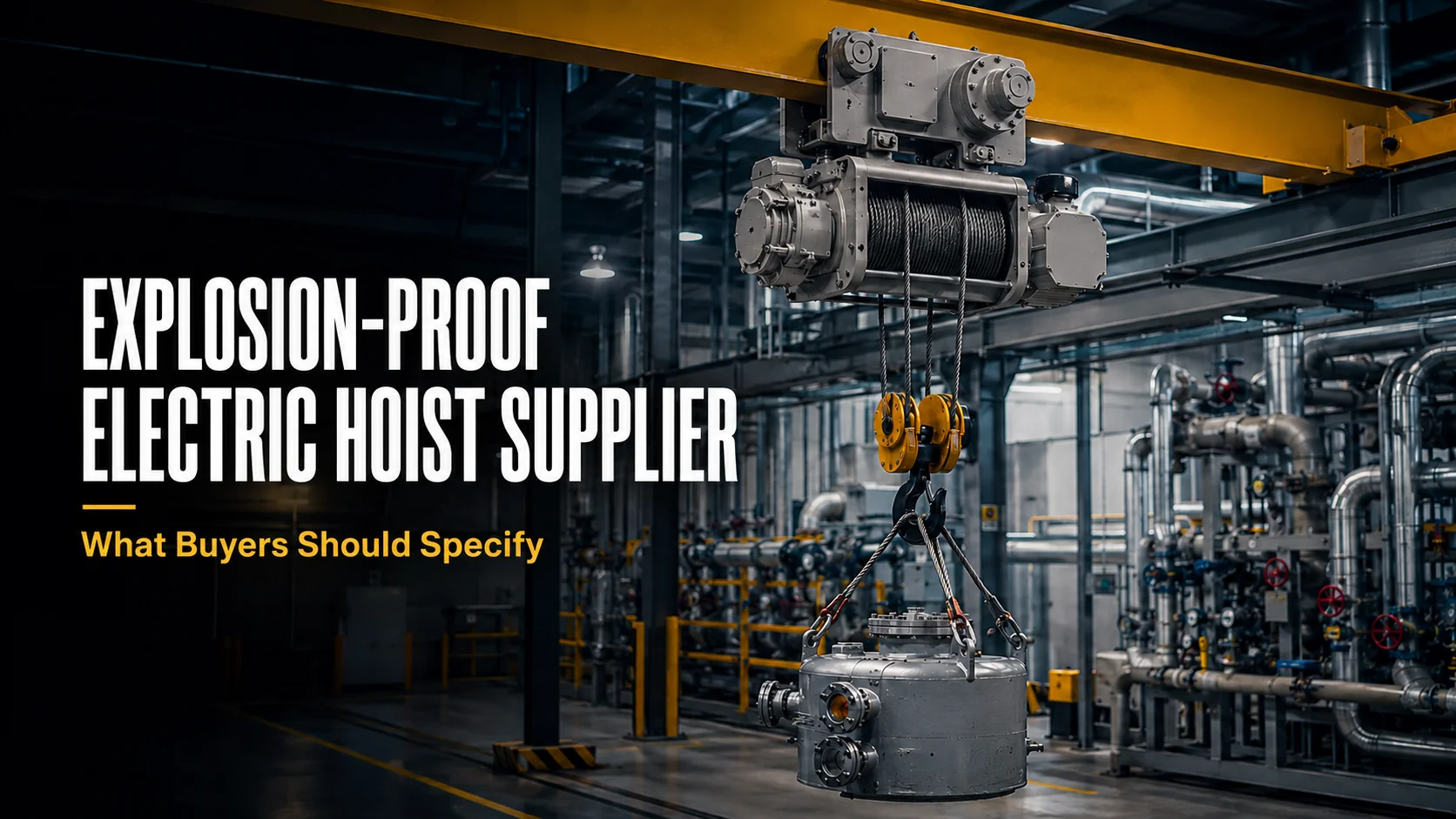
Choosing an explosion-proof electric hoist supplier differs from choosing a normal electric hoist based on capacity and cost. When dealing with a potentially dangerous environment, the customer needs to inform the supplier about the working area, chances of explosion, load conditions, power source, type of installation, and document requirements in order to obtain an accurate quotation. This is especially important when purchasing equipment for chemical plants, oil and gas companies, mines, metallurgy workshops, power stations, docks, coating departments, and other places with flammable substances present.
A qualified buying decision starts with one question: what exactly must the hoist be protected against?
Why Hazardous Industrial Environments Need a Properly Specified Explosion-Proof Hoist
An explosion-proof hoist is required in a situation when normal electrical equipment poses a danger due to ignition hazards caused by sparks, arcs, hot spots, or electrical controls. At many sites, the problem is not with the lifting itself but with the environment in which this happens. An installation of a hoist in an area with solvents, fuel fumes, combustible dust, or process gases will require a motor, control, enclosures, and marking different from those of a normal electric hoist.
Professional practice of industries, including standards like IEC 60079 and Class/Division approach in North America, exists since hazardous locations differ according to chemicals involved, frequency of their presence, and sensitivity to ignition. Buyers don’t have to become certification engineers, but they must supply the correct information to the vendor.
When Is an Explosion-Proof Electric Hoist Required?
An explosion-proof electric hoist is needed when handling equipment is operating in a hazardous area, where there is flammable gas, flammable vapor, flammable mist, combustible dust, or explosive fibers. B2B applications include handling drums in chemical shops, equipment maintenance in petroleum facilities, lifting in proximity to coating lines, material handling in mining areas, and replacing existing hoists in plants that have hazardous area requirements through safety audits.
It may not be suitable or necessary for ordinary warehouses, general assembly areas, or outdoor lifting points that are not classified as hazardous. Buying an explosion-proof hoist without confirming the site classification can increase cost and still fail to meet project requirements. The next step should be to confirm the hazardous area classification with the plant’s engineering, EHS, or electrical safety team.
Why “Explosion-Proof” Cannot Be Treated as a Generic Label
“Explosion-proof” is not a single universal specification. A hazardous area hoist may need to match a specific gas group, dust group, temperature class, equipment protection level, or regional approval requirement. A hoist suitable for one classified area may not be acceptable for another.
This is where many RFQs fail. Buyers often send only “need explosion-proof hoist, 2 tons” or “for chemical plant,” but that is not enough for selection. The supplier still needs to know the area classification, load type, lifting height, power supply, mounting method, and working environment. Without that information, the quotation may be incomplete, delayed, or based on assumptions that must later be corrected.
What Buyers Should Specify Before Requesting a Quote
RFQ for a hoist in a hazardous location should turn the site requirements into procurement terms. It is not necessary to provide detailed explanations, but you need to supply the vendor with enough details to understand which product to consider—explosion-proof electric chain hoist, explosion-proof wire rope hoist, overhead trolley hoist, or special product.
Hazardous Area Classification, Gas or Dust Group, and Temperature Class
The most important specification is the hazardous area classification. Depending on the project market, this may be described using Class/Division, Zone, gas group, dust group, temperature class, or ATEX/IECEx-related markings. These details should come from the site’s hazardous area classification drawings, safety documents, or electrical engineering team.
Buyers should avoid asking the supplier to guess the classification from the industry name alone. “Oil and gas,” “chemical plant,” or “paint workshop” describes the application, but it does not define the exact explosion risk. For international projects, the end user may also require a specific documentation format or certification system, so the RFQ should state the destination market and approval expectations.
Load, Lifting Height, Speed, Duty, and Power Supply
After the hazardous area information, the supplier needs the lifting data. The basic items include rated capacity, lifting height, lifting speed, travel distance if a trolley is required, operating frequency, duty requirements, and load characteristics. A maintenance hoist used occasionally for equipment removal is different from a hoist used repeatedly in production.
Power supply also matters. Buyers should confirm voltage, phase, frequency, control voltage if required, and whether the site has any restrictions on pendant control, remote control, or electrical enclosure placement. These details affect both product selection and installation planning.
Installation Conditions and Operating Environment
Hazardous area lifting projects often fail at the installation stage because the RFQ ignores site geometry. Buyers should provide beam size, available headroom, hook path, mounting type, trolley requirement, and any space limitations. For replacement projects, photos of the old hoist, nameplate, rail, hook position, and control box can reduce uncertainty.
Operating environment should also be described: indoor or outdoor use, ambient temperature, humidity, dust level, corrosive gas, washdown exposure, and nearby process equipment. Surface treatment, packaging, and spare parts expectations may vary by material, size, load, operating environment, or configuration.
Explosion-Proof Chain Hoist vs Wire Rope Hoist: Which Type Fits the Application?
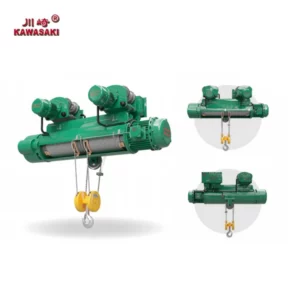
“Explosion-proof electric chain hoist” and “explosion-proof wire rope hoist” are two terms that buyers look for while undertaking a similar project since both are quite ideal in terms of performance. However, one is better than the other depending on the weight to be lifted, lifting height, lifting frequency, and space available.
When to Consider an Explosion-Proof Electric Chain Hoist
An explosion-proof electric chain hoist is often considered for compact lifting points, maintenance stations, moderate lifting heights, and applications where simple vertical lifting is required. It may be suitable when space is limited and the buyer needs a relatively compact hazardous area hoist.
However, it should not be selected only because it is compact. The buyer still needs to verify load capacity, chain specification, lifting height, duty cycle, voltage, control method, and hazardous area suitability against the product specification. If the project involves longer lifting height, heavier loads, or continuous production use, a wire rope design may need to be evaluated.
When to Consider an Explosion-Proof Wire Rope Hoist
An explosion-proof wire rope hoist is commonly considered for heavier industrial lifting, longer lifting heights, bridge crane applications, and fixed production or maintenance areas where stable travel and structured installation are required. For buyers comparing wire rope options, a product example such as explosion-proof wire rope electric hoist can help connect the selection discussion with a real product category.
The decision still depends on the project. A wire rope hoist may not be the most practical choice where headroom is extremely limited, the lifting task is light, or the application needs a different mounting style. Buyers should confirm rope arrangement, trolley type, lifting height, working class, control method, power supply, and hazardous area marking before issuing a purchase order.
How to Evaluate an Explosion-Proof Electric Hoist Supplier
A supplier for hazardous industrial lifting should do more than reply with a price. The supplier should be able to review the RFQ, ask for missing classification data, confirm the intended application, and explain which product type may fit the operating conditions.
What Technical Documents Should a Qualified Supplier Provide?
The buyer should ask for the product specification, applicable marking, installation manual and/or maintenance manual, drawing if required, and any documentation required by the project related to certification/conformity. These may differ according to the market and project configuration, but the supplier should be able to tell what can be provided and what needs to be verified before manufacture or delivery.
It is particularly relevant for replacement projects. If there is not enough information regarding the hoist to be replaced, then the supplier may require some photos, dimensions, and operational details to make a recommendation. The quote based only on capacity may not take into consideration mounting and electrical control aspects.
Why Customization and Engineering Communication Matter
Hazardous area projects often involve more variables than standard lifting applications. Voltage, control method, installation space, surface condition, packaging, and replacement dimensions may need to be reviewed before the buyer can approve a solution.
HANGZHOU APOLLO LIFTING EQUIPMENT CO., LTD. provides lifting equipment including electric hoists, manual hoists, lifting clamps, beam trolleys, winches, jacks, and related lifting products. Its website includes an explosion-proof electric hoist category for flammable and explosive hazardous places, with applications described for petroleum, chemical, metallurgy, mining, electric power, and docks. Buyers who need a broader view of available hazardous area lifting options can use this category as the main internal reference point before narrowing down to a specific model.
Common Buying Mistakes to Avoid
The most common mistake is choosing by capacity and price only. Capacity is necessary, but it does not define explosion protection, installation fit, power compatibility, or documentation suitability. A low initial price can become costly if the hoist cannot pass site review or needs to be replaced after technical clarification.
Another common error is overlooking the need for replacement information. During the process of replacing the previous hoist in a dangerous area, the customer needs to provide the hoist’s nameplate, drawings if any, voltage, type of controls, beam size, lift height, approach angle of hook, and pictures from the area of installation.These details help the supplier check whether a new hoist can physically and electrically match the existing system.
A third mistake is treating ATEX, IECEx, Class I Division 2, and Zone requirements as interchangeable. These systems are related to hazardous areas, but they are not identical purchasing labels. The project owner or local authority may specify which system applies.
RFQ Checklist for Hazardous Area Hoist Projects
| RFQ Item | What Buyers Should Provide |
| Hazardous area classification | Class/Division or Zone, gas or dust group, temperature class, required approval system |
| Load requirement | Rated capacity, load type, lifting frequency, safety or project requirements |
| Lifting requirement | Lifting height, lifting speed, travel distance, duty cycle |
| Power supply | Voltage, phase, frequency, control voltage if required |
| Installation | Hook mounted, fixed, trolley, beam size, headroom limit |
| Environment | Indoor/outdoor, humidity, corrosion, dust, ambient temperature |
| Documentation | Product specification, marking needs, manuals, drawings, certification requirements |
| Replacement data | Old model, nameplate, photos, dimensions, installation layout |
Conclusion
Buying an explosion-proof electric hoist starts with specification, not price. Before contacting a supplier, buyers should confirm hazardous area classification, gas or dust group, temperature class, load capacity, lifting height, voltage, mounting method, and operating environment. These details help reduce quotation delays and lower the risk of selecting the wrong hazardous area hoist.
For projects involving chemical plants, oil and gas facilities, mining, metallurgy, power plants, or dock operations, HANGZHOU APOLLO LIFTING EQUIPMENT CO., LTD. can be reviewed as a lifting equipment supplier with explosion-proof hoist product coverage. Buyers can contact Apollo for a hazardous area hoist quotation with project details such as model requirements, drawings, installation photos, working conditions, target quantity, and replacement data.
FAQs
What are the things I need to specify when purchasing an explosion-proof electric hoist?
Hazards area class, gas or dust group, temperature class, capacity, lifting height, lifting speed, voltage, phase, frequency, mount system, operating environment, and documentations. If replacing an old hoist, supply nameplate pictures and installation dimensions.
Is one explosion-proof hoist suitable for use in all hazardous areas?
No. It depends on the classed hazards area, explosive atmospheric types, gas or dust group, temperature class, and markings of the equipment. This information needs to be checked against the specifications of the product being purchased.
Should I choose an explosion-proof chain hoist or wire rope hoist?
Choose based on load, lifting height, duty cycle, installation space, and crane or trolley arrangement. Chain hoists may suit compact lifting points, while wire rope hoists are often considered for heavier loads, longer lifts, or crane-mounted applications.
Is an ATEX hoist the same as an IECEx hoist?
Not exactly. ATEX and IECEx are both related to equipment for explosive atmospheres, but they follow different approval frameworks and market requirements. Buyers should confirm which system the project or destination country requires.
What information helps a supplier quote a hazardous area hoist faster?
A complete RFQ should include hazardous area data, load, lifting height, power supply, installation method, duty cycle, environment, required documents, and photos or drawings for replacement projects.