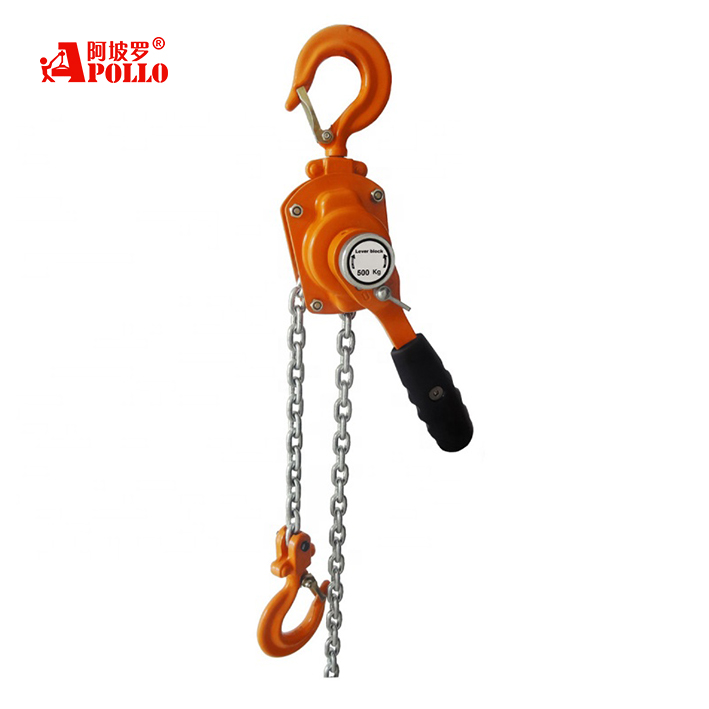
The Wrong Tool Stops the Job
A maintenance crew must first tension the conveyor belt before moving the motor into place using the chain hoist. The chain hoist is selected since it is capable of lifting heavy loads. However, the chain hoist is meant for vertical lifting purposes, while the team pulls at an odd angle. The chain binds, the load swings, and the job stops. The tool is not faulty. It is the wrong tool for the job.
Apollo lever hoists and Apollo chain hoists both lift heavy loads by hand, but they are not interchangeable. The choice changes the angle you can work at, the speed of the job, the weight of the tool you carry, and the price you pay. Get it wrong and the cost shows up in four places:
Wrong angle. A chain hoist lifts vertically. Use it sideways or on a slope and the chain binds and the load drifts off line.
Speed versus precision. An Apollo chain hoist raises a load fast with continuous hand-chain pulling. An Apollo lever hoist moves in small strokes, slow but easy to control to the millimetre.
Carried weight. An Apollo lever hoist is lighter than an Apollo chain hoist of the same capacity – a 1.5-ton unit weighs about 11.65 kg versus 16 kg – because it has no hand chain and a simpler frame. That gap decides who can carry it between jobs.
Wrong purchase. Buying on capacity alone and ignoring working angle means a second purchase and a stopped job.
This guide is for maintenance supervisors, workshop owners, riggers, and procurement teams choosing Apollo manual lifting tools. It explains what Apollo lever hoists and Apollo chain hoists actually do differently, how to match the tool to the angle, speed, and weight of your job, and the design details that separate an Apollo hoist that lasts from one that gets replaced.
Get a free load assessment: send your working angle, lifting height, and typical load weight to sales@apollohoist.com, and receive a matched recommendation within one business day.
Apollo Lever Hoist vs Apollo Chain Hoist: What Is the Difference?
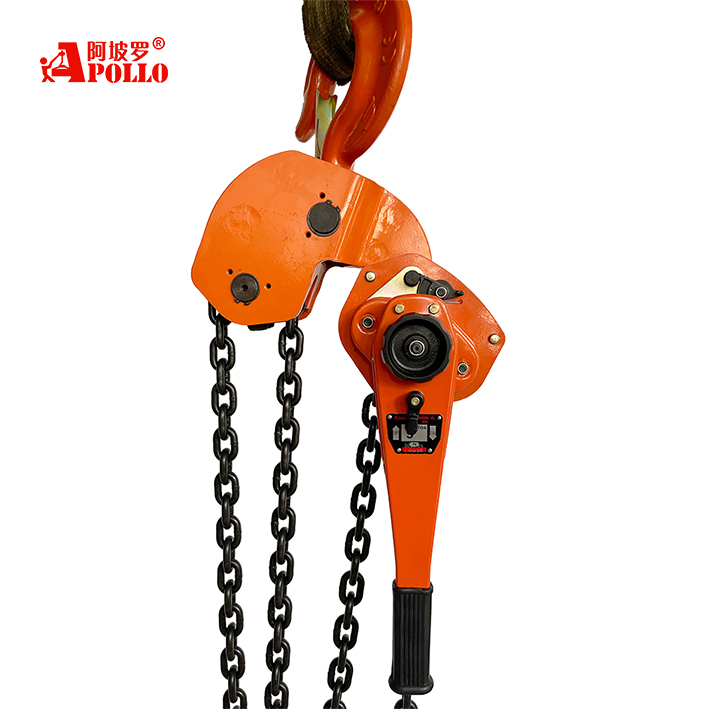
An Apollo lever hoist, also called an Apollo ratchet lever hoist, lifts by a lever you pump back and forth. Each stroke pulls a short length of chain through the mechanism. Because the lever works in any direction, an Apollo lever hoist can pull horizontally, lift vertically, or tension a line at an angle – which is why it is the standard tool for rigging, tensioning, and positioning.
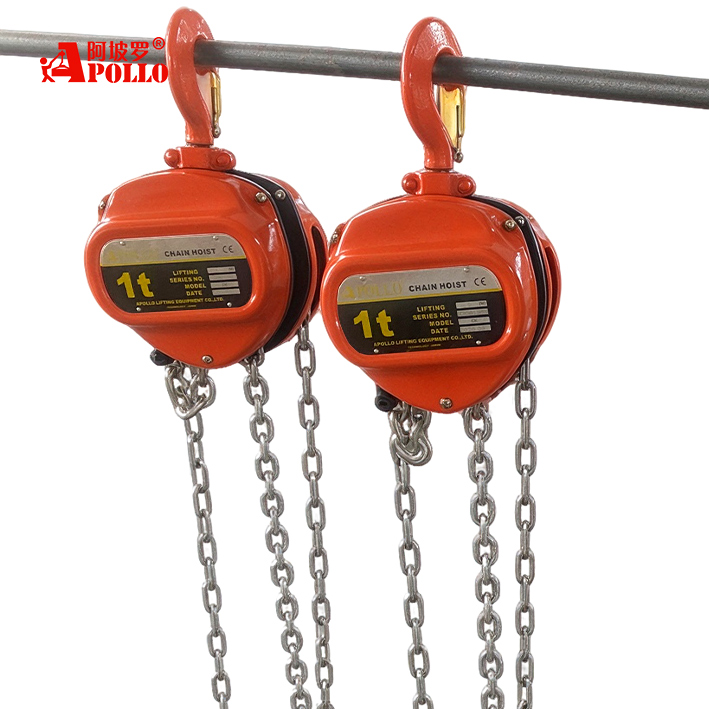
An Apollo chain hoist, also called a hand chain block, lifts by pulling an endless hand chain that drives the load chain through a gear train. It is designed for vertical lifting, and it raises a load faster because the pull is continuous rather than stroked.
The trade-off is direct: the Apollo lever hoist gives you angle flexibility and precision at slower speed; the Apollo chain hoist gives you speed and simplicity for straight-up lifting. Neither is better on its own. The right one is the one that matches the angle, the speed, and the people who carry it.
Quick decision guide
Choose an Apollo lever hoist when you pull horizontally, tension a line, work on a slope, or need fine control to position a part. Choose an Apollo chain hoist when you make repeated straight-up lifts to a set height, such as loading a machine or hanging a beam. When in doubt, send your working angle and load weight to the supplier for a fit check before ordering – it costs nothing and prevents returns.
How to Choose: Match the Tool to the Job
Check the working angle first
An Apollo lever hoist pulls in any direction – vertical, horizontal, or sloped – which is why it is the standard choice for tensioning and positioning. An Apollo chain hoist lifts vertically and works best when the load hangs straight below the unit. If the job is a straight vertical lift, an Apollo chain hoist is faster. If the pull is at an angle or level, choose an Apollo lever hoist.
Decide between speed and precision
An Apollo chain hoist raises a load quickly with continuous hand-chain pulling, ideal for repeated lifts to a set height. An Apollo lever hoist moves in small lever strokes, which is slower but gives fine control – useful for aligning flanges, seating bearings, or tensioning to a precise point. If the job is repetitive lifting, choose an Apollo chain hoist. If it is precise positioning, choose an Apollo lever hoist.
Weigh the tool you carry
An Apollo lever hoist is about 27 percent lighter than an Apollo chain hoist at the same capacity – a 1.5-ton lever hoist weighs about 11.65 kg against 16 kg for the chain hoist. For crews who carry the tool between stations, that difference decides who can carry it and how far. If the tool stays on one hook all day, weight matters less; if it travels with the crew, the lighter Apollo lever hoist wins.
Match capacity to the real load
Never size on the nameplate alone. Add the weight of the load, the rigging, and any friction or drag. If the load can bind or jerk, add headroom and choose the next capacity up. Both tool types should be load-tested at 125 percent of rated capacity before shipment – confirm this in writing with the supplier.
Get a free load assessment: send your working angle, lifting height, and typical load weight via the inquiry page, and Apollo’s engineers will confirm the right tool and email test samples at no cost.
What Separates a Quality Apollo Manual Hoist from a Cheap One
For hand-powered Apollo hoists the governing European standard is EN 13157, which sets the safety requirements and test loads. Nearly every heavy duty lifting equipment manufacturer can show it, so certification is the entry ticket, not the differentiator. What separates an Apollo hoist that still holds load in year ten from one that slips in month six is how the certified design is built:
Double-pawl brake. Two independent mechanical locks hold the load in both lever and Apollo chain hoists, so a single part failure does not drop it.
Grade 80 load chain. High-tensile alloy chain with calibrated link geometry engages the sprocket consistently.
4:1 safety factor. The design margin is conservative across the whole range, not just at the top of the line.
Per-unit testing. Each Apollo hoist is load-tested at 125 percent of rated capacity before shipment, with records available per order.
Cast one-piece frame. A single casting means no bolted joints to loosen, one less failure mode in the field.
Clear chain rules. Replace the load chain when elongation reaches 3 percent or when link diameter wears by 10 percent, whichever comes first.
Both tools also share one more consideration: the cost of downtime. A stopped production line waiting for the right tool costs far more than the tool itself. When you choose, price the whole lifecycle – the tool, the chain spares you will buy, and the minutes a slow or wrong tool adds to every job. A quality Apollo hoist from a supplier that stocks spares usually pays for itself in the first busy season.
Apollo Manual hoists share the same safety basics, whichever type you choose. Inspect the load chain and hooks before every lift, keep the load path clear of people, and never exceed the rated working load. Follow the manufacturer’s inspection interval for the brake, and store the Apollo hoist dry and free of grit. These rules cost nothing and prevent most field failures.
Installation and Inspection Checklist
Before first use and on a regular schedule, run through this checklist. It takes a few minutes and catches the failures that cause most field incidents.
Secure the suspension point. Confirm the hook or beam anchor is rated for the working load and fully closed. A hoist is only as strong as what it hangs from.
Check the chain path. Run the chain through by hand and confirm it is free of kinks, twists, and knots, and seats evenly in the sprocket before any load is applied.
Test the brake. Lift a light test load a few centimetres, hold it, and confirm the brake locks the instant you release the lever or hand chain. Never put a full load on an untested brake.
Inspect hooks and chain. Look for cracks, deformation, or an opened hook throat, and measure chain wear – replace the chain when elongation reaches 3 percent or link diameter wears by 10 percent, whichever comes first.
Listen to the mechanism. Grinding, binding, or a rough pull during use signals internal wear; stop work and inspect before continuing.
Apollo has manufactured lifting equipment for over 20 years, exporting to more than 50 countries, with factory-direct production and OEM support. See the full product range at https://www.apollohoist.com/product/.
How to Buy from Apollo: Choose Your Channel
Project procurement and site teams
Get a free load assessment: tell us your working angle, lifting height, and typical load weight. Within one business day you will receive a matched recommendation, a formal quotation, and the test documents your safety officer needs.
Distributors and dealers
Stock the full Apollo manual hoist range under one certification package, with multi-product quotes that combine Apollo lever hoists with Apollo chain hoists and Apollo trolleys. Factory-direct pricing protects your margin.
OEM and private label
Custom branding, packaging, and documentation are available from the Apollo factory, built to your market’s compliance requirements.
Request EN Certificate Samples Now
Get a free load assessment via WhatsApp / Phone: +86 18989488615
Request EN certificate samples by email: sales@apollohoist.com
Submit an online inquiry: https://www.apollohoist.com/contact-us/
Browse the full product range: https://www.apollohoist.com