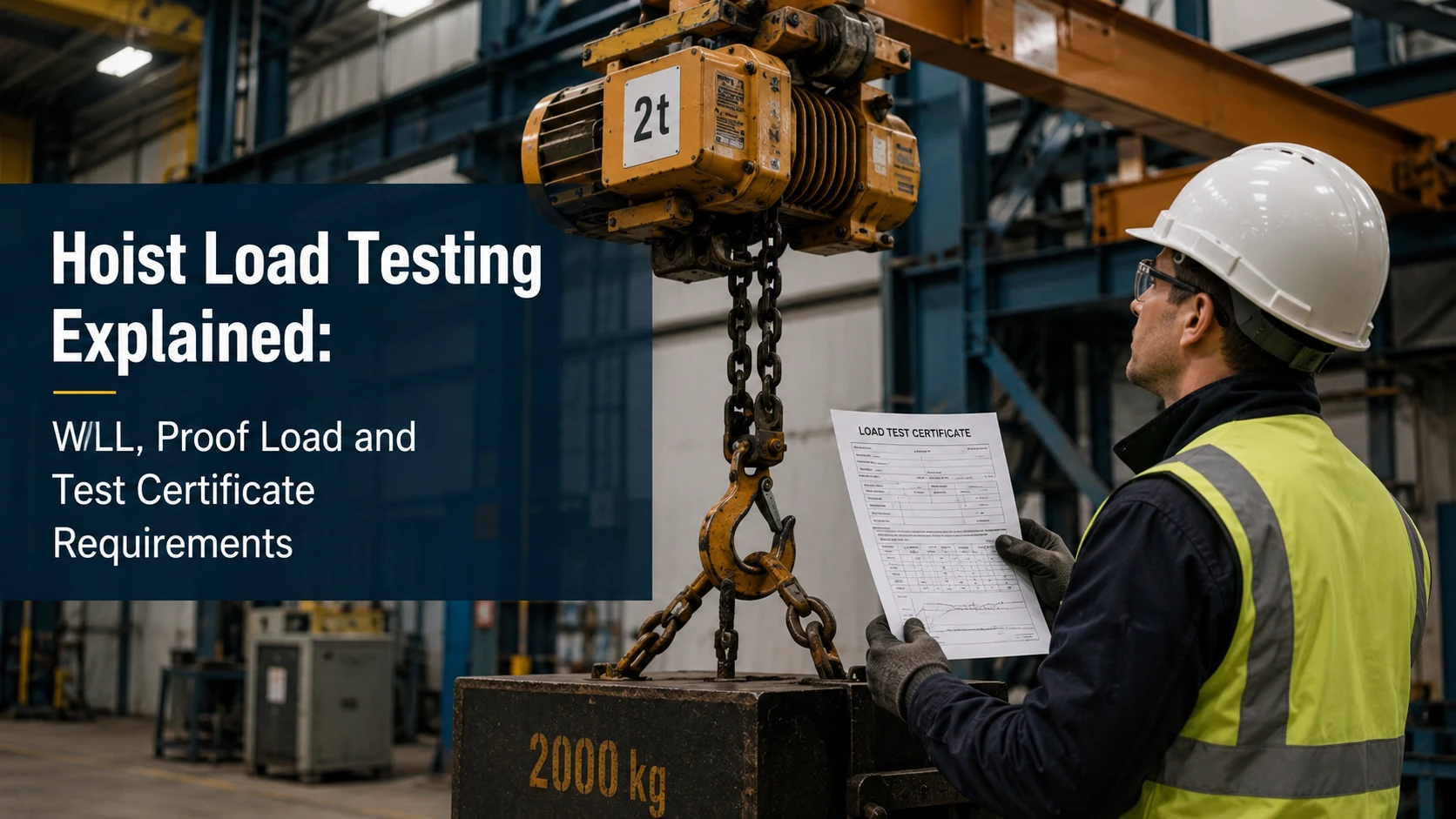
Hoist load testing matters when a buyer, engineer, or maintenance team must confirm that a hoist’s rated capacity matches the test load and supporting certificate. WLL, proof load, and a test certificate answer different questions: what the hoist is rated to lift, what load was applied during verification, and what evidence records that test. For purchasing, commissioning, or post-repair acceptance, all three should be checked together.
WLL vs Proof Load: What Do the Numbers on a Hoist Actually Mean?
How to Read WLL, Rated Capacity and Proof Load
WLL or rated capacity is the intended operating limit under the conditions defined for the hoist. Proof load or test load is a temporary load used for verification; it is not a higher operating capacity. Breaking load relates to failure strength and should not be treated as a working value.
| Term | Buyer Meaning | Operating Capacity? |
|---|---|---|
| WLL / Rated Capacity | Intended operating limit | Yes, within specified conditions |
| Proof / Test Load | Load applied during verification | No |
| Breaking Load | Failure-related strength value | No |
Confirm that the model, capacity, and equipment identity match across documents. A proof-test value above WLL does not authorize lifting above rated capacity. Resolve any PO, nameplate, or certificate discrepancy before acceptance.
How to Check Whether the Test Load Is Reasonable
Start with rated capacity, then identify the manufacturer instructions, product specification, project requirement, and test scenario. A factory test, commissioning test, and post-repair retest may not follow the same requirement.
A percentage alone is insufficient. A certificate stating only “125% tested” gives less decision value than a traceable record showing the unit, WLL, actual test load, and test basis. Product documentation may list capacity and test-load data separately; chain hoist test load specifications can show how those values are presented for a specific product family.
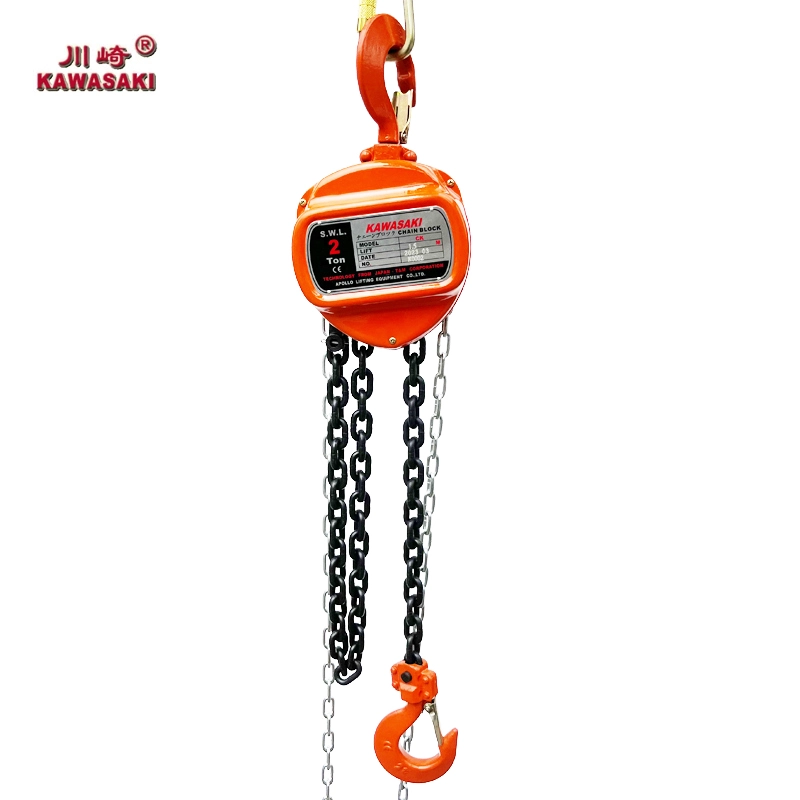
When Is Hoist Load Testing Required?
New, Installed or Commissioned Hoists
For a new hoist, determine what factory testing and documentation are included. After installation, a project or site may impose additional commissioning or acceptance requirements, so a factory record and a site test should not automatically be treated as the same scope.
Before shipment, confirm the model, WLL, required certificate, and unit-specific identification. At receiving, compare them with the physical equipment. A broader electric hoist receiving inspection can cover the nameplate, serial information, PO, visible condition, and supporting records.
After Repair or Modification
Retesting decisions should depend on what changed. Work involving load-bearing components, braking or load-path functions, structural changes, or capacity-related modifications deserves different consideration from routine lubrication or minor service.
Review the manufacturer’s instructions and applicable workplace or project requirement, record what work was completed, and determine whether a test is required before return to service. The equipment type, repair scope, and governing requirement should drive the test plan—not a percentage chosen in advance.
Is a 125% Hoist Load Test Always Required?
No universal 125% rule should be assumed. In the United States, OSHA rules illustrate why scope matters. For derricks, OSHA states that new hoists must be tested to at least 110% but not more than 125% of rated capacity unless the manufacturer recommends otherwise. A separate rule for overhead and gantry cranes states that test loads shall not exceed 125% unless otherwise recommended by the manufacturer. These provisions have defined scopes and should not be generalized to every hoist.
Why Proof-Load Percentages Differ
Different values can result from equipment type, governing standard, jurisdiction, manufacturer procedure, and test purpose. The useful question is not “What percentage is normal?” but “What requirement applies to this hoist in this situation?”
For procurement, ask the supplier to identify the rated capacity, proposed test load, applicable procedure or requirement, and certificate format before the order is finalized. If witness testing or special documentation is required, define it before production or shipment.
What to Confirm Before a Load Test
A useful test plan identifies the specific hoist, WLL, test load, responsible party, method, acceptance criteria, and required records. Where calibration or traceability of test equipment is required by the project or procedure, define that requirement in advance.
This reduces two risks: using an unsupported test percentage and receiving a certificate that is too vague for acceptance. The goal is evidence that matches the equipment and purchase requirement.
How to Verify a Hoist Load Test Certificate
What Information Should the Certificate Contain?
Depending on the applicable requirement, a useful record should identify the model, serial number or other traceable ID, rated capacity or WLL, actual test load, test date, result, and relevant test method or reference. Where required, it may also identify the responsible tester and test-equipment traceability.
Missing information does not prove failed testing, but it can make the record insufficient for acceptance. Generic certificates are especially weak when the PO requires unit-level traceability.
How to Match the Certificate to the Actual Hoist
Match the model, serial or equipment ID, rated capacity, recorded test load, date, and result. If any item conflicts, request clarification before releasing the hoist for service.
This check is particularly useful when purchasing multiple electric chain hoists: category selection is only the first step, and each model still has to fit the application, capacity, installation conditions, and documentation requirement. Apollo lists multiple electric-chain-hoist product families on its category page.
How B2B Buyers Should Evaluate Hoist Testing Before Purchase
What to Include in an RFQ
State the hoist type, required WLL, application, relevant project or regulatory specification, factory-test requirement, certificate requirement, and any unit-level traceability or witness-testing needs. Add document language, format, or pre-shipment approval requirements when they matter.
Avoid vague wording such as “certificate required.” A buyer may mean an individual load-test record while a supplier interprets the request as a general product document. Defining expected fields early reduces acceptance disputes and document rework.
How to Compare Suppliers Beyond a “Load Tested” Claim
A supplier should be able to explain how rated capacity relates to the proposed test load, identify which documentation applies to the selected unit, and confirm what can be traced to the model or serial number. When certificate content is contractual, request a sample before ordering.
Apollo Hoist supplies electric and manual lifting equipment and publishes OEM/ODM service information. The same purchasing standard should still apply: match the selected product specification to the application, define documentation needs in advance, and confirm project-specific testing instead of assuming it is included.
Common Hoist Load-Test Documentation Problems and Prevention
Common problems include WLL mismatches, missing equipment IDs, certificates saying “tested” without an actual test load, and disagreement over the required percentage. Prevent them by defining test and document requirements in the RFQ or PO, clarifying nonstandard requirements before shipment, and keeping factory records separate from site commissioning documents.
Conclusion
Hoist load testing should be treated as a verification chain: identify the WLL, determine which testing requirement applies, confirm the actual proof or test load, and match the certificate to the physical hoist and purchase documents. This is more reliable than applying one percentage to every situation.
For an RFQ, provide the hoist type, required capacity, application, operating conditions, quantity, applicable specification, and required test documentation. Apollo Hoist product options can be reviewed from the main site, while project-specific testing and documentation questions can be submitted through contact Apollo Hoist.
FAQs
What is the difference between WLL and proof load on a hoist?
WLL or rated capacity is the intended operating limit under specified conditions. Proof load is a temporary test load used for verification and should not be treated as permission to operate above rated capacity.
Is a 125% load test required for every hoist?
No. The applicable percentage depends on equipment, governing rules, manufacturer instructions, and the test scenario. A single value should not be generalized to every hoist application.
Does every new hoist need a load test certificate?
Not necessarily in the same form. Required documentation depends on the applicable specification, project requirement, manufacturer documentation, and jurisdiction. Define expected certificate content and traceability before ordering.
Does a hoist need to be load tested after repair?
It depends on repair scope and applicable requirements. Work affecting load-bearing, braking, structural, or capacity-related functions may require different verification from routine maintenance.
Is a CE certificate the same as a hoist load test certificate?
No. They are different types of documentation. Verify what each document covers and whether the purchase specification requires an individual load-test record.