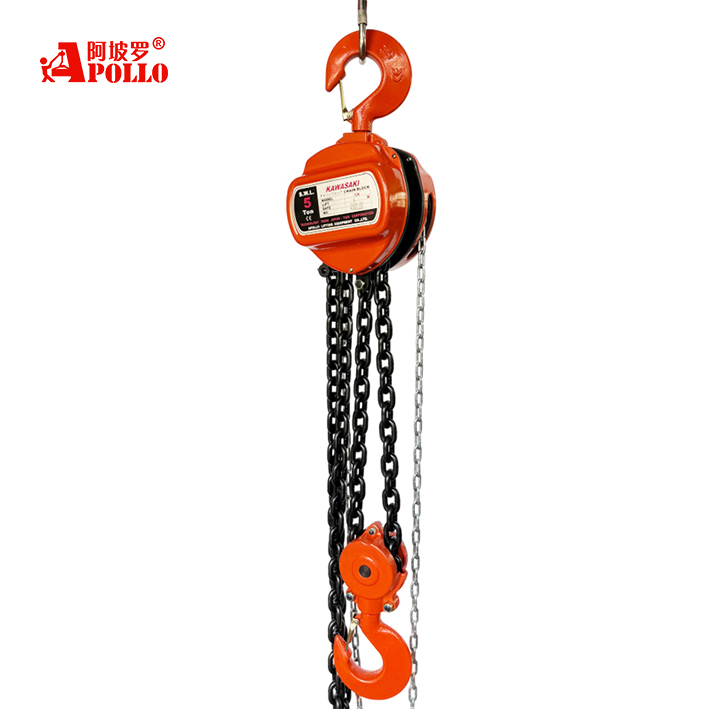
The Configuration Mistake That Wastes Your Lifting Budget
A maintenance supervisor purchases a 2-ton hand chain hoist, and during the installation process it fails to fit. The headroom space is sufficient, but the hoist body is long enough to fail to fit or is so heavy that even two persons cannot carry it upstairs. The hand chain hoist is not defective. It is the configuration which is not correct for the application.
There are two configurations which a hand chain hoist uses for loading chain, namely single fall and double fall, and each configuration affects the weight, headroom, chain life, and cost. A mistake in the configuration will cost in the following four areas:
- A double-fall hoist needs more room below the beam for its longer body. In a low building, it simply does not fit.
- The same 2-ton capacity at 3-metre lift comes in around 15 kg single fall and 18 kg double fall. For crews who carry the hoist between jobs, that gap decides who can lift it.
- Chain wear.A single-fall hoist hangs the full load on one chain line. Under heavy daily use, that chain wears faster.
- A hoist that does not fit or is too heavy to use means returns, stopped jobs, and a second purchase decision.
This guide is for maintenance supervisors, workshop owners, and procurement teams choosing manual lifting equipment. It explains what single fall and double fall actually change, how to match the configuration to your building and your crew, and the design details that separate a hoist that lasts from one that gets replaced.
Get a free load assessment: send your lifting height, ceiling clearance, and typical load weight to sales@apollohoist.com, and receive a matched configuration recommendation within one business day.
Single Fall vs Double Fall: What’s the Difference?
In a single-fall hoist, the load chain runs in one line from the top hook to the bottom hook, and the full load hangs on that single chain. In a double-fall hoist, the chain loops through a pulley at the bottom so two chain lines share the load. Two lines carrying the load means the hoist can use a thinner, lighter chain, which is why the same capacity weighs less in a double-fall version.
The trade-off is direct: more chain lines mean less load per line and a lighter body, but also a longer hoist body and more chain to pull for each metre of lift.
| Factor | Single fall | Double fall |
| Body weight (2-ton example) | About 27 kg | About 14 kg |
| Chain diameter (2-ton example) | 8 mm | 6 mm |
| Headroom needed | Shorter body, fits tighter spaces | Longer body, needs more clearance |
| Chain wear under heavy loads | Full load on one chain, faster wear | Load shared, longer chain life |
| Best suited to | Fixed workstations with enough headroom | Portable use and weight-sensitive crews |
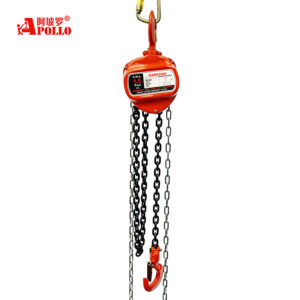
Neither configuration is better on its own. The right one is the one that fits your building, your lifting height, and the people who carry it.
Quick decision guide: choose single fall when ceiling clearance is tight (under 3 metres), when the hoist travels between job sites, or when lift height is under 2 metres. Choose double fall when you lift at or near rated capacity daily, when chain wear cost is a concern, and when you have at least 4 metres of clear headroom below the mounting beam. When in doubt, send your beam height and lift requirements to the supplier for a fit check before ordering – it costs nothing and prevents returns.
How to Choose: Match the Configuration to Your Job
Measure headroom first
Headroom is the distance from the underside of the beam to the top of the tallest load you lift. A double-fall hoist needs more of it because its body is longer. Measure before you order: beam height minus hoist body length must clear your load. If it does not, choose the single-fall version.
Concrete numbers help. A typical 2-ton double-fall hoist with 3-metre lift needs about 650 mm from beam underside to the top of your load. The single-fall version needs roughly 480 mm. That 170 mm difference is often the deciding factor in low-ceiling workshops – measure twice, order once.
Weight matters when the hoist travels with the crew
A hoist that stays on one beam can be heavy. A hoist that gets carried between work areas cannot. The weight gap is real: the same 2-ton capacity at 3-metre lift is about 15 kg single fall versus 18 kg double fall. The double-fall unit carries a longer chain and a bottom pulley block, so it adds bulk that crews notice on stair climbs even when the raw weight gap is small.
Chain life follows the load per line
Chain wear is driven by tension, and a double fall halves the tension on each chain line. If the hoist moves heavy loads every day, the double-fall configuration extends the interval between chain replacements. Budget for the replacement either way: replace the chain when elongation reaches 3 percent or when link diameter wears down by 10 percent, whichever comes first. For the full replacement rules, see our guide on when a hoist load chain should be replaced (https://www.apollohoist.com/product-news/when-should-a-hoist-load-chain-be-replaced-wear-elongation-corrosion-and-oem-compatibility/).
Environment accelerates wear on any configuration. Outdoor use, welding dust, paint fumes, and coastal salt air all shorten chain life, so increase inspection frequency to monthly in those conditions and budget for earlier chain replacement.
Pull effort adds up over a full lift. A single-fall hoist pulls one metre of chain per metre of rise; a double-fall hoist needs two metres of pull for the same lift, so the operator makes twice as many strokes. The force per stroke is lower, but the extra motion adds fatigue on long lifts. Match the fall count to how often your crew lifts to full height.
Get a free load assessment: send your lifting height, ceiling clearance, and typical load weight via the inquiry page, and Apollo’s engineers will confirm the right configuration and email test samples at no cost.
What Separates a Quality Hand Chain Hoist from a Cheap One
Nearly every heavy duty lifting equipment manufacturer can show EN certification. Certification is the entry ticket, not the differentiator. What separates a hoist that still holds load in year ten from one that fails in month six is how the certified design is built:
- Double-pawl brake.Two independent mechanical locks hold the load, so a single part failure does not drop it.
- Grade 80 load chain.High-tensile alloy chain with calibrated link geometry engages the sprocket consistently.
- 4:1 safety factor.The design margin is conservative across the whole range, not just at the top of the line.
- Per-unit testing.Each hoist is load-tested at 125 percent of rated capacity, plus 1.5 times rated load across 2,000 lift cycles.
- Cast one-piece body.A single casting means no bolted joints to loosen, one less failure mode in the field.
Hardened load sprocket. Heat-treated steel teeth engage every chain link evenly, preventing slipping, pinching, and link deformation under repeated full-load lifts — a common failure point on cheap hoists.
Certification depth matters beyond the stamp. A credible supplier provides EN 13157 compliance, a CE declaration of conformity, and per-unit load test certificates – not a single factory-wide document. Ask for the test record serial number matched to your hoist, and confirm that the 125 percent overload test was performed on your exact unit before shipment.
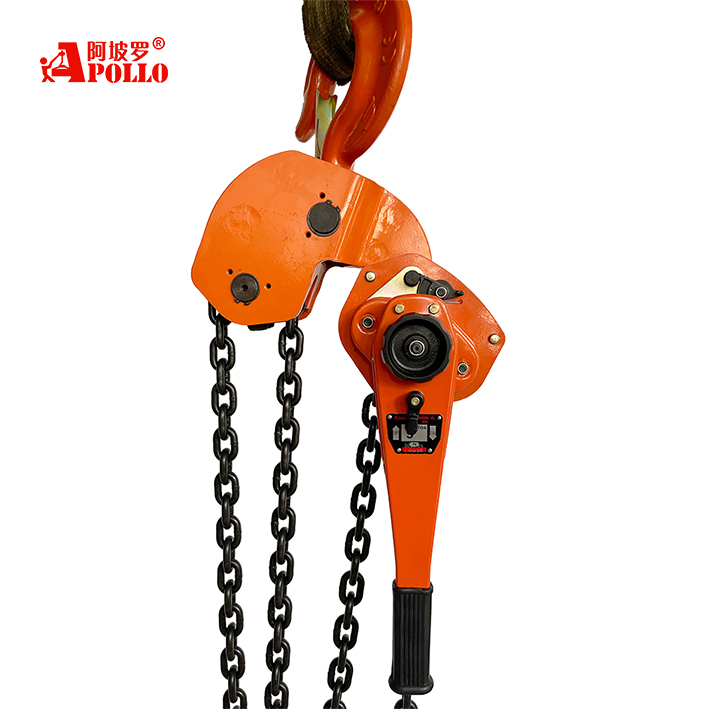
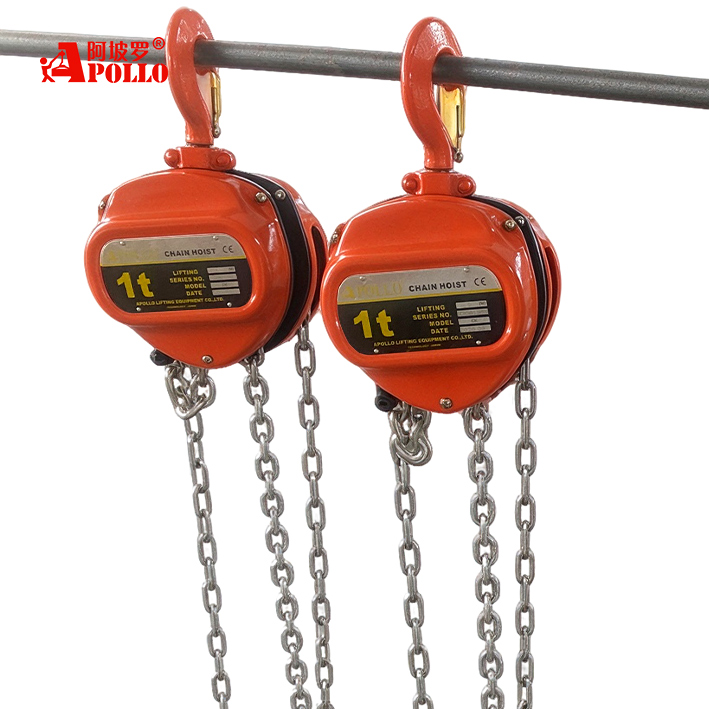
Browse the Apollo hand chain hoist range (https://www.apollohoist.com/product-category/manual-hoist/chain-hoist/) to compare capacities from 0.5 to 20 tons before you commit.
Three Questions to Ask Any Supplier
Any hand chain hoist manufacturer and supplier should answer these three before you order:
- Can you send the test and certification documents before I order?Apollo ships test records with each order and shares samples on request.
- Which chain does this hoist use, and what is the replacement interval?Chain grade and configuration both drive wear; Apollo specifies the chain and stocks spares for the full range.
- How much headroom does the double-fall version need in my building?Send your beam height and lift requirements, and Apollo confirms fit before you commit.
Apollo has manufactured lifting equipment for over 20 years, exporting to more than 50 countries, with factory-direct production and OEM support. See the full product range (https://www.apollohoist.com/product/).
How to Buy from Apollo: Choose Your Channel
Project procurement and site teams
Get a free load assessment: tell us your lifting height, ceiling clearance, and typical load weight. Within one business day you will receive a matched configuration recommendation, a formal quotation, and the test documents your safety officer needs.
Distributors and dealers
Stock the full 0.5 to 20-ton range under one certification package, with multi-product quotes that combine chain hoists with lever hoists and trolleys. Factory-direct pricing protects your margin.
OEM and private label
Custom branding, packaging, and documentation are available from the Apollo factory, built to your market’s compliance requirements.
Request EN Certificate Samples Now
- Get a free load assessment via WhatsApp / Phone: +86 18989488615
- Request EN certificate samples by email: sales@apollohoist.com
- Submit an online inquiry: https://www.apollohoist.com/contact-us/
- Browse the full product range: https://www.apollohoist.com