News

Apollo Custom Wire Rope Hoist OEM for Steel Structure & Warehouse Projects

Apollo Custom Wire Rope Hoist OEM for Steel Structure & Warehouse Projects

Table of Contents

Why Choose Apollo as Your Wire Rope Hoist Manufacturer

Apollo has built its name in the industrial lifting sector through decades of steady engineering and manufacturing quality. The company’s focus on wire rope hoists for steel structure and warehouse projects has placed it as a trusted OEM supplier for global contractors and equipment distributors.

With solid expertise in OEM customization and bulk orders, Apollo delivers hoisting systems that match project needs closely. The brand’s method follows standards seen in industry leaders. It offers both technical accuracy and flexible production capacity.

Apollo offers comprehensive customization options, including brand customization as well as functional modifications such as explosion-proof, dust-proof, rain-proof, frequency conversion, and two-speed configurations. This broad range demonstrates the company’s capability to address complex industrial demands effectively.

Factory-direct support also means B2B clients gain from lower procurement costs and quicker delivery cycles. Picking the right manufacturer supports better performance and long-term industrial ROI.

Product Range and Technical Specifications

Apollo puts out different wire rope hoists for various lifting tasks.

Standard Wire Rope Hoists
 

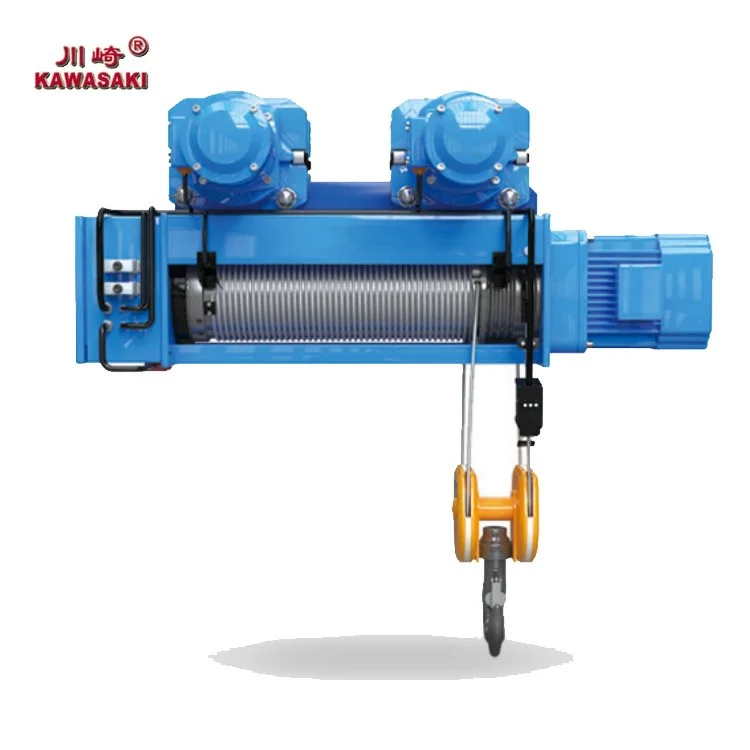
apollo-kawasaki-planetary-electric-wire-rope-hoist

Standard models cover most common lifting work. Lifting capacity runs from 0.5 tons to 20 tons. Buyers pick motor power, speed, and voltage from 110V single phase up to 575V three phase to fit site power.

Rope diameter, chain type, and hook design come in several options. These details help match the hoist to actual beam sizes and load shapes on site. Basic safety parts like overload protection and limit switches are included in most units.

Custom and Heavy-Duty Hoists

For steel structure work or tall warehouse storage, Apollo makes custom and heavy-duty versions. These can have dual speed motors, extra rust protection, or special setups for tough conditions.

Buyers sometimes add beam trolleys, remote controls, or stronger overload systems. This way the hoist fits the exact job instead of making do with standard models.

Specification Standard Range Custom Options
Lifting Capacity 0.5 – 20 tons Project specific needs
Lifting Speed Single or dual speed Variable frequency available
Voltage 110V – 575V Matched to site power
Rope & Hook Standard grades Reinforced for heavy use

OEM Services and Bulk Orders

Apollo’s OEM services go beyond simple branding. Each wire rope hoist can be fully tailored from function to finish. Options include:

  • Logo printing or branding on equipment housings
  • Custom packaging designs for retail or export markets
  • Surface treatments such as spray painting, electroplating, or oxidation finishes

Packaging customization: Customize the packaging method of electric hoist according to customer needs

The company maintains a minimum order quantity (MOQ) of 50 units for customized models while supporting large-scale production runs up to 5,000 units per month efficiently.

The RFQ process stays straightforward. Clients submit design requirements, receive detailed quotations within days, then move through prototype approval before mass production begins. By offering tailored OEM solutions, Apollo simplifies procurement for industrial projects.

Quality Assurance and Certifications

Every Apollo wire rope hoist undergoes rigorous inspection before shipment. The factory performs full assembly verification, load performance testing, and safety checks on all electrical components.

Apollo holds ISO9001, CE, and GS certifications. These help buyers in different markets feel confident about safety requirements. Motors and brakes get extra attention since they see the most daily wear.

Warranty usually covers one year. Spare parts stay available and technical help is there when needed. Many buyers say consistent quality across bulk orders cuts down on site problems later.
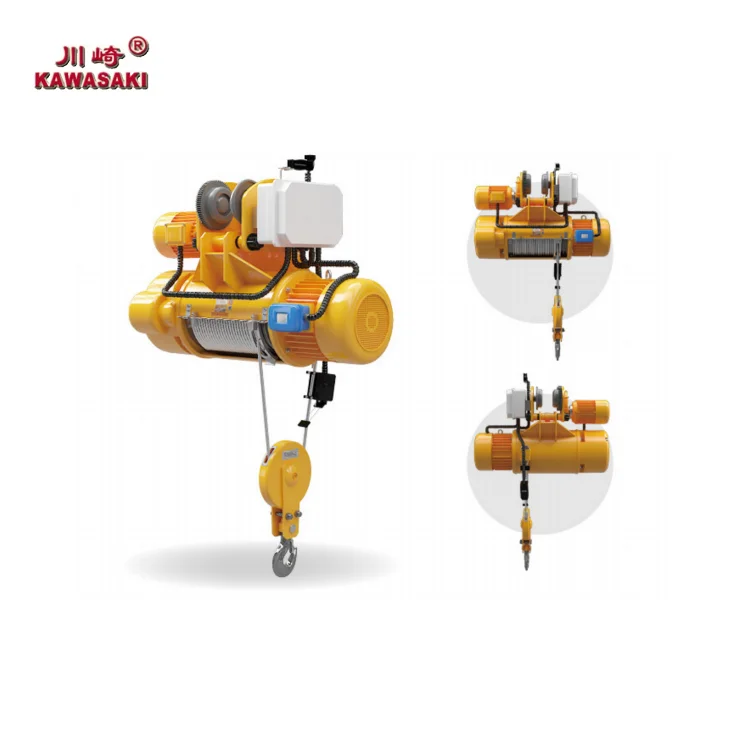
 

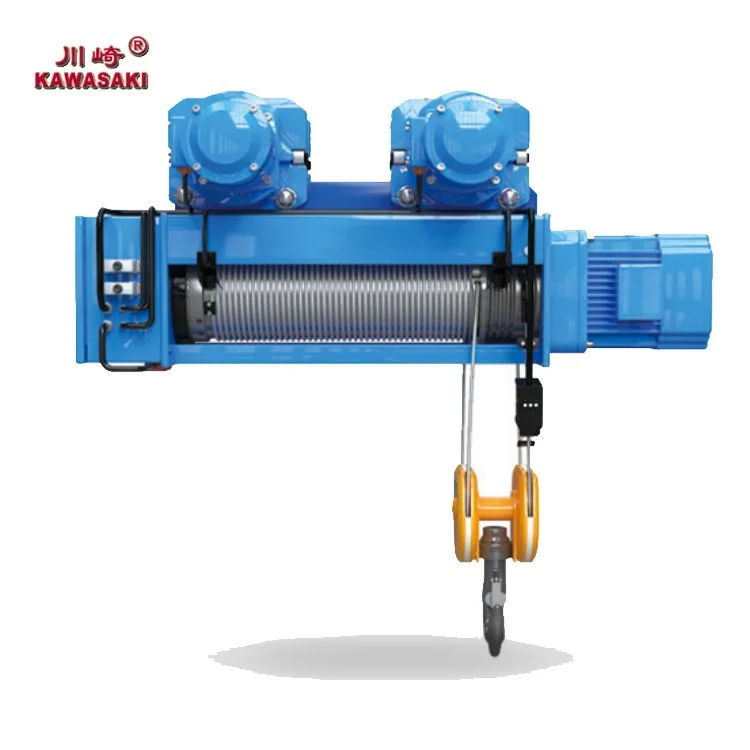
apollo-kawasaki-longitudinal-wire-rope-electric-hoist

Applications in Steel Structure and Warehouse Projects

Apollo wire rope hoists see wide use across heavy industries where precision lifting matters most:

Industry Typical Use Case
Steel Structure Fabrication Beam assembly, column positioning
Warehousing & Logistics Pallet handling, mezzanine loading
Construction Lifting rebar bundles or prefabricated panels
Ports & Shipyards Container maintenance operations

Integration with cranes such as single-girder overhead systems or gantry cranes works well thanks to modular mounting options.

Real-world case studies include bulk orders supplied to Southeast Asian steel fabricators where Apollo’s custom voltage configuration (three-phase 440V) met local grid requirements while maintaining high lifting efficiency.

Practical applications demonstrate the versatility and industrial value of Apollo hoists.

Ordering Process, Delivery, and Lead Time

The ordering workflow stays streamlined for both domestic distributors and international contractors:

  1. Inquiry submission through Apollo’s sales portal
  2. RFQ review by engineering team
  3. Customization confirmation (capacity, color, voltage)
  4. Production scheduling
  5. Final inspection & shipping arrangement

Standard wire rope hoists typically ship within 2–4 weeks, while fully customized OEM orders may take 4–8 weeks depending on complexity and volume.

Shipping options include sea freight (FOB/CIF), air cargo for urgent deliveries, or consolidated container shipping for bulk orders destined for multiple project sites.

Efficient delivery helps industrial projects stay on schedule.

Conclusion

Apollo proves to be the dependable choice in custom wire rope hoists due to its technical prowess along with OEM services and bulk orders. Whether it’s a steel structure or a warehouse automation system, all products are assured of certified quality along with after-sales service. Reach out to Apollo right now to discuss your project requirements and get a competitive quote for wire rope hoist solutions.

FAQ

Q1: What range of lifting capacity do Apollo wire rope hoists have?

A: Apollo wire rope hoists provide the option of lifting capacity between 0.5 to 20 tons, with options for higher loads in custom configurations.

Q2: Does Apollo offer customization options for wire rope hoists based on industrial projects?

A: Yes, as a seasoned OEM manufacturer Apollo offers customization services in the form of branding, custom attachments, and performance changes among others for bulk purchases.

Q3: What industries commonly use Apollo wire rope hoists?

A: Apollo wire rope hoists are widely applied in steel structure projects, warehouses, manufacturing plants, ports, and construction sites.

Q4: How long does it take to deliver bulk OEM orders?

A: Standard wire rope hoist models usually ship in 2–4 weeks while custom bulk orders take approximately 4–8 weeks depending on specifications.

Q5: Are Apollo hoists tested for safety and durability before shipment?

A: Yes, each Apollo wire rope hoist undergoes full assembly inspection, load performance testing, and certified safety checks prior to delivery.
You might also enjoy

load chain
Chain Hoist Load Chain Grades Explained: G80, G100, and Other Options Introduction The load chain is the most important bearing element of every chain hoist. Although customers always check the lifting capacity, lifting height, and price, the quality of the load chain influences its strength, reliability, safety, and performance. For distributors, wholesalers, industrial contractors, and OEM brand owners, the knowledge about chain grades is vital in terms of procuring chain hoists in different markets. Using an incorrect chain grade may cause problems including low lifespan, non-certification of the product, warranties claims, and more operating costs in the future. This guide explains the differences between G80, G100, and other chain grades, helping international buyers choose the most suitable option based on application requirements, regulatory standards, and procurement objectives. Why Load Chain Grade Matters The load chain transfers the entire lifting force during operation. Its quality directly affects: Lifting safety Working load limit (WLL) Fatigue resistance Wear resistance Product lifespan Certification compliance Maintenance costs Although two chain hoists may have the same rated capacity, differences in chain material and manufacturing quality can significantly impact performance. For B2B buyers, chain grade should be considered alongside supplier quality control, testing procedures, and certification documentation. Understanding Chain Grades Chain grades indicate the mechanical properties and strength level of alloy steel lifting chains. The most common grades used in lifting applications include: Chain Grade Typical Strength Level Common Applications G43 Medium strength Transport and general utility G70 Transport chain Cargo securing G80 High-strength lifting chain Most manual chain hoists G100 Premium lifting chain Heavy-duty lifting systems G120 Ultra-high-strength chain Specialized lifting equipment Not all chain grades are suitable for overhead lifting applications. For industrial chain hoists, G80 and G100 remain the most widely used options. G80 Chain: The Industry Standard G80 chain is the most commonly used load chain for manual chain hoists and many electric chain hoists worldwide. Key characteristics include: Heat-treated alloy steel construction High tensile strength Good fatigue resistance Proven lifting performance Broad international acceptance Advantages: Cost-effective Widely available Suitable for most industrial lifting tasks Compatible with common international standards Typical applications: Manufacturing plants Construction sites Warehouses Maintenance operations Equipment installation projects For many distributors and importers, G80 chain hoists provide the best balance between performance and cost. G100 Chain: Higher Strength, Lower Weight G100 chain represents a newer generation of lifting chain technology. Compared with G80 chain, G100 generally offers approximately 20–25% higher strength. Advantages include: Higher working load capacity Improved strength-to-weight ratio Reduced chain weight Enhanced lifting efficiency Better performance in demanding applications Typical applications: Heavy industrial environments Offshore projects Mining operations Steel fabrication facilities High-frequency lifting operations However, G100 chain hoists typically carry a higher purchase price. For buyers targeting premium industrial markets, the increased performance may justify the additional investment. G120 Chain: Is It Necessary? Some manufacturers now offer G120 lifting chain systems. Benefits include: Higher strength levels Reduced chain size requirements Weight reduction opportunities However, G120 remains relatively uncommon in standard chain hoists. Challenges include: Higher cost Limited availability More specialized replacement requirements For most distributors and industrial buyers, G80 and G100 remain the most practical choices. Comparing G80 and G100 Chains Feature G80 G100 Strength High Very High Cost Lower Higher Market Availability Excellent Good Replacement Parts Availability Excellent Good Industrial Applications General Heavy-duty OEM Demand High Growing Global Acceptance Very High High For most standard lifting applications, G80 provides excellent value. For premium lifting equipment and specialized industrial sectors, G100 may offer competitive advantages. How Certifications Affect Chain Selection International buyers often require compliance with recognized standards. Depending on the target market, chain hoists may require: CE compliance ISO 9001 manufacturing systems GS certification UKCA compliance Third-party testing reports Certification requirements often influence the choice of load chain supplier and manufacturing process. Buyers should request: Material certificates Mechanical property reports Load test records Quality inspection documentation Reliable documentation simplifies customs clearance, market entry, and customer acceptance. OEM and Private Label Considerations For distributors and brand owners, chain grade selection also affects OEM projects. Common OEM customization options include: Private logo branding Customized load chain specifications Branded packaging Instruction manual localization Product labeling Market-specific compliance markings When evaluating OEM suppliers, buyers should confirm whether chain grades can be customized according to local market requirements. Some regions may primarily demand G80 products, while others increasingly favor G100 lifting systems. Quality Control: What Buyers Should Verify Chain quality varies significantly among manufacturers. Before placing bulk orders, buyers should assess: Raw Material Traceability Quality manufacturers maintain complete records for: Steel sourcing Heat treatment processes Batch identification Material testing Load Testing Procedures Every chain hoist should undergo appropriate testing before shipment. Typical tests include: Proof load testing Functional testing Brake testing Visual inspection Production Consistency Consistent manufacturing reduces: Warranty claims Product recalls Customer complaints Unexpected failures For long-term distributors, supplier quality consistency is often more important than achieving the lowest purchase price. Lead Time and Supply Chain Considerations Reliable supply is critical for distributors and project contractors. When sourcing chain hoists, buyers should evaluate: Monthly production capacity Standard lead times Peak-season delivery performance Inventory management capabilities Emergency order support Manufacturers with stable production systems are better positioned to support long-term partnerships. After-Sales Support and Spare Parts Availability The availability of replacement chains and spare parts directly impacts product lifecycle value. Buyers should confirm: Replacement chain availability Spare part inventory Technical support response times Warranty policies Product documentation support Strong after-sales support can significantly reduce downtime and maintenance costs. How to Choose the Right Chain Grade The optimal chain grade depends on application requirements. Choose G80 If: Cost efficiency is important Applications are general industrial lifting Replacement parts availability is a priority Broad market acceptance is required Choose G100 If: Higher lifting performance is needed Weight reduction is important Equipment operates under demanding conditions Target customers require premium specifications Consider G120 Only If: Specialized applications justify the investment Engineering requirements demand maximum strength Long-term replacement support is available Need Help Selecting the Right Chain Hoist for Your Market? The selection of the right load chain grade is an exercise of compromise between safety considerations, certification standards, positioning strategy, and overall acquisition costs. If you are looking for chain hoists for any industrial use, distribution channels, rent-a-warehouse or OEM branding programs, our team can help to select the best chain hoist for your business. We offer: G80 and G100 chain hoists OEM and private label manufacturing Custom packaging and branding CE and ISO-compliant production Bulk order support Technical documentation and testing reports Flexible lead times Spare parts and after-sales support Contact us today to discuss your requirements, request product specifications, or receive a customized quotation. Website: Apollo Hoist Official Website Inquiry Page: Contact Apollo Hoist Today Email: sales@apollohoist.com WhatsApp / Phone: +86 18989488615 Conclusion Chain grade is among the critical considerations that affect the performance, safety, and longevity of a chain hoist. While the G80 grade chain continues to be the standard in many industrial settings, G100 chain has continued to win favor in more rigorous settings where higher efficiency is needed. For international buyers, it is important that chain selection goes beyond just technical specifications and includes certification conformity, OEM customizing capability, manufacturing quality, reliable supply chain, and post-sales service. Through cooperation with a reputable manufacturer and choosing the right chain grade, buyers can gain more competitive products and minimize risks.
Introduction The...
Must-Have Safety Features for Modern Electric Hoists in 2026
Introduction Electric...
lever hoist
How to Select the Right Lever Hoist Rated Load for Vertical Lifting, Horizontal Tensioning, and Equipment Positioning
Introduction Choosing...
Apollo Electric Chain Hoist Manufacturer for OEM Bulk Orders
Why Choose...